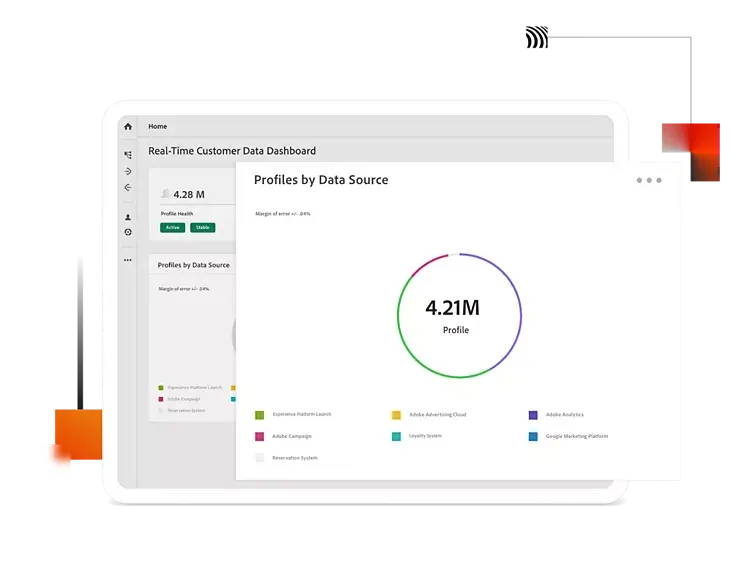
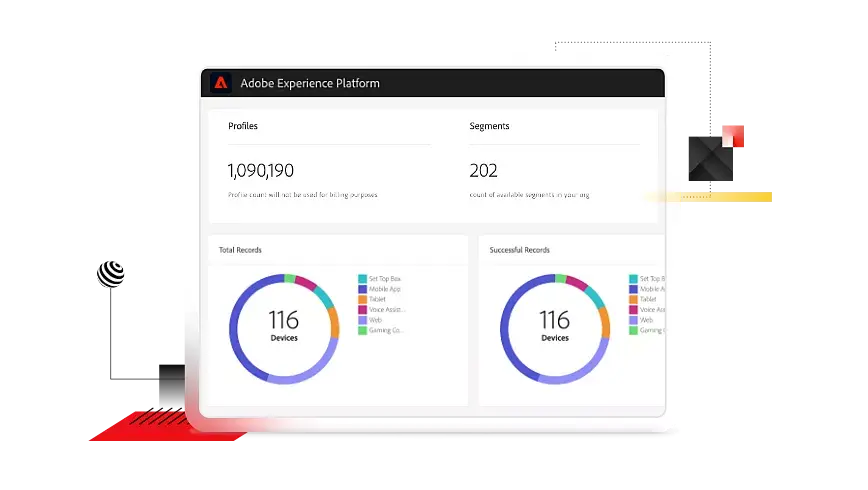
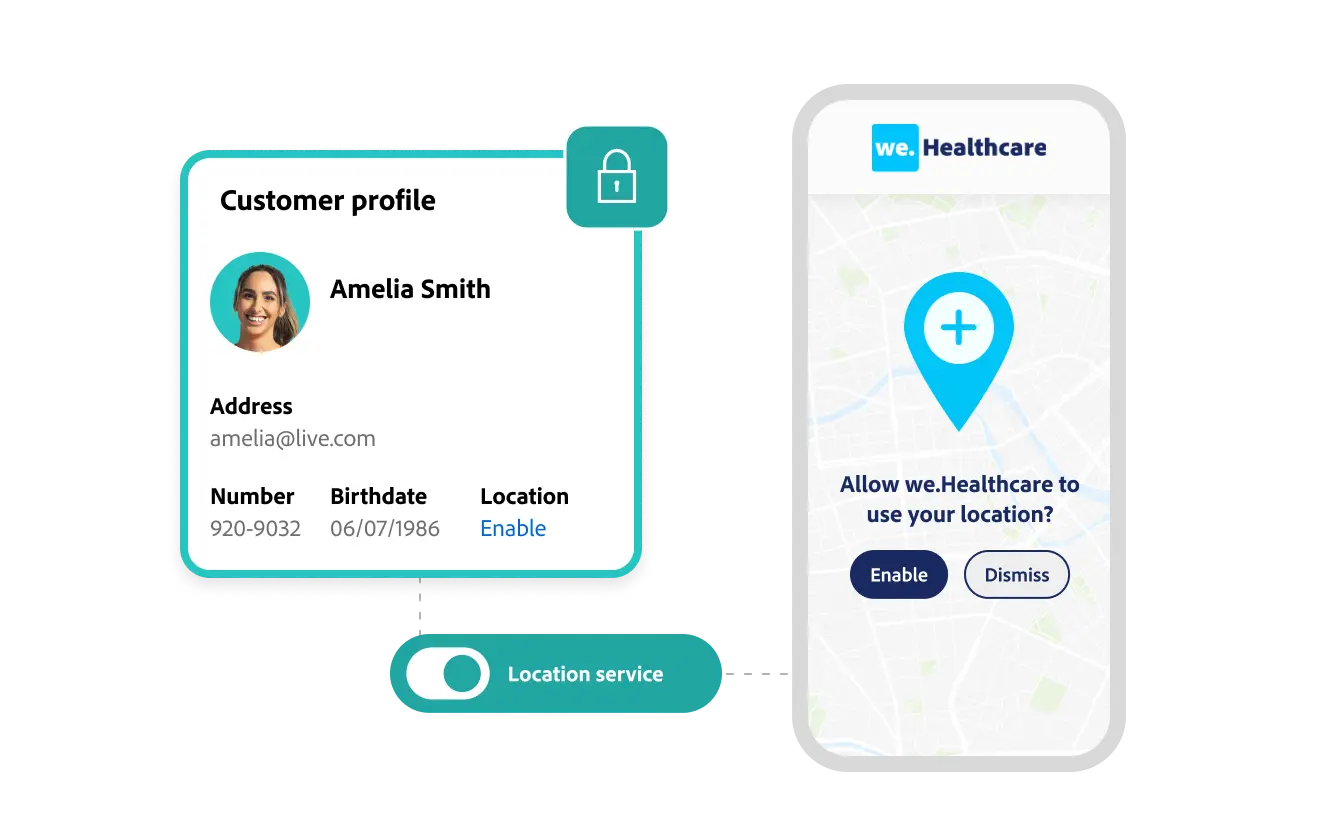
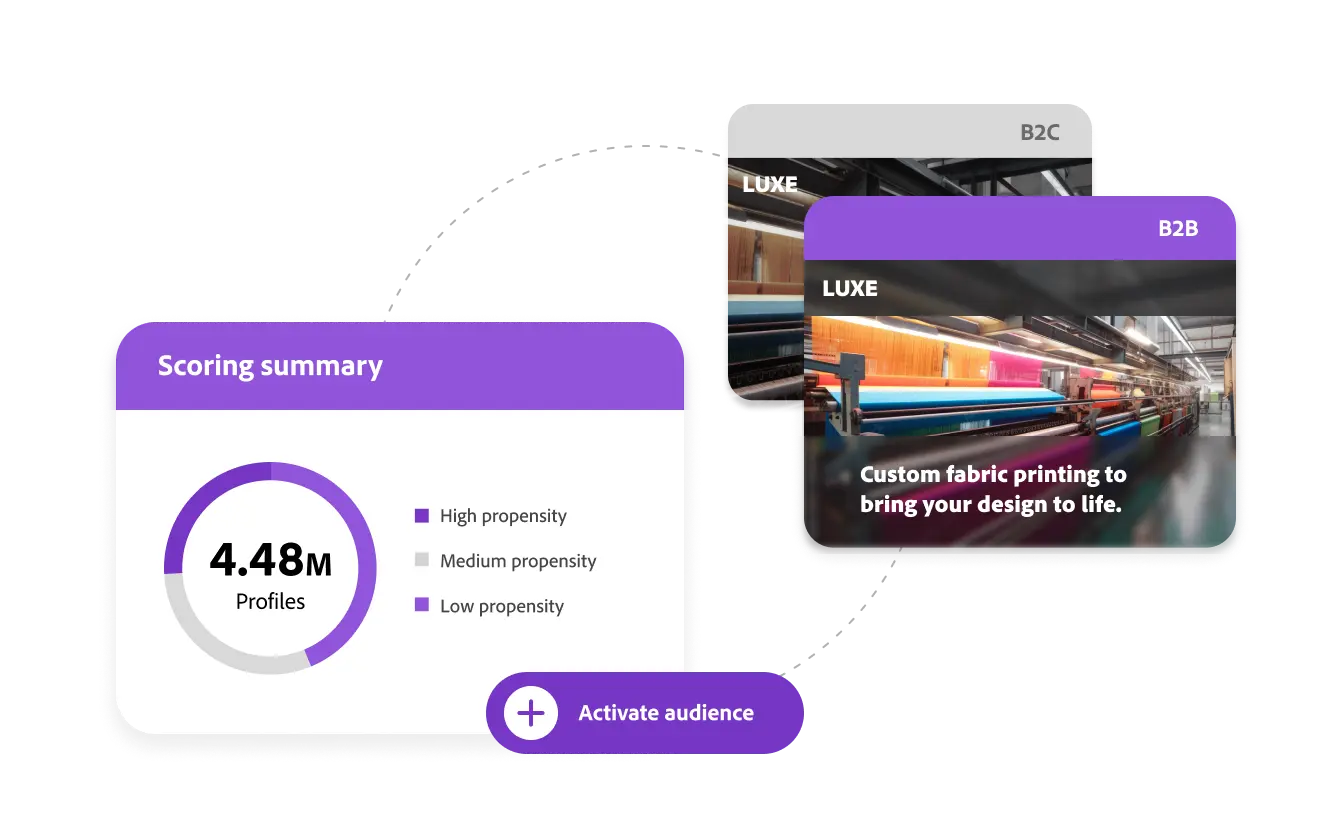
Adobe's Real-Time Customer Data Platform allows marketers to collect, normalize, and unify known and pseudonymous consumer and professional data into real-time profiles. These person or account-based profiles then power B2B, B2C, and hybrid customer experiences at scale.
N/A
Appian
Score 8.2 out of 10
N/A
Appian is a low-code development and business process management platform. It features drag-and-drop design for app building, automated work processes, unified data management, and cloud-based deployment.
The Salesforce Platform is designed for building and deploying scalable cloud applications with managed hardware provisioning and app stacks. Lightning Web Components are used by developers to build reusable UI components.
Adobe offers three tiers of Real-Time CDP tailored for any type of business wanting to power their customer experience management strategy with unified customer data. The Business-to-Consumer Edition is for B2C brands wanting to personalize experiences for consumers. The Business-to-Business Edition is for B2B brands wanting to personalize experiences for leads and accounts. The Business-to-Person Edition is for combined B2C and B2B brands wanting to personalize experiences for the same person across all lines of business.
In any scenario where we have a unique offline and online 'Person ID,' we are able to see great results with profile stitching within CDP. In cases where we do not have a unique Person ID between datasets, we find ourselves at a point where we would need to change our architecture to have the same Person ID to see results.
Appian works great for automating manual processes and integrating multiple systems through its toolset. It gives great flexibility for establishing rules for approvals, routings, escalations, and the like. Because of the low code toolset, it's very easy to deploy and make changes as needed as processes evolve and as the organization learns to utilize the system better. Minimal maintenance is required to support the applications build on the platform. Some of the automated testing integration with tools like Jenkins is limited so that may be an issue for some.
If you have a large customer base and a large amount of data on each of your customers, it is really strong in creating personalized content that your salespeople can use in their pitch meetings—and then setting up workflows for automated for lifecycle journey creations to automatically go out to customers.
Allows at a glance workflow documentation which assists in the need we have for information readiation.
Drag and drop interface for workflow development greatly speeds our apps time to market.
Using the advanced features of Appian, we are able to create working sites in a fraction of the time it would take to do so using "traditional" development.
Search issues when type ahead and database search are used in the same field.
Buttons implementation where user is require[d] to click on the button description - if clicks on the button outside that text - button will not work.
Problems with using certain off-the-shelf performance tools like WebLoad or Neoload. That is because of different dynamic variables being used internally in Appian - which these tools are unable to correlate. We are still investigating using other tools like Jmeter to overcome dynamic correlation problem for performance testing.
It is valuable to us like large organizations where it provides continuous values in situations and customer data is continuously changing and lot of operations required. It adds value in organisation with active users across online and marketing levels. It's really useful when team rely on fresh data to make the decision each and everyday
We recently renewed our license with Appian. We are convinced that its flexibility, relative ease of use, the support they provide, there mobile advancements and their general willingness and desire to see us succeed all contributed to our reason to renew our agreement with Appian
Activation - great Segmentation - in UI, there should be the possibility of writing advanced code Tags. Both Mobile and Desktop Data Ingestion - might be pain in the ass. Changing one customer attribute is time-consuming. It should be some super admin or some feature. One user can change some customers' attributes easily. Data Transformation - Maybe there are some modules for that in AJO?
Appian is a low code environment, because of this, a very good visual interface is required. Appian is providing a feature-rich dashboard [that] we can use for building the dashboards and other interfaces. Appian also provides patches and releases to enhance these features. A developer can start off development just by going through a basic course from the Appian learning community.
It's very good, but it's still living in a little bit in an older design aspect, but I think a lot of it is about to come out, just hasn't quite gotten there yet. Still a little clunky from a you have to know it to know it or you know it to use it. It takes a little bit of training to get into it. It's not quite the, anybody can come in and start using it immediately, type feel.
Appian is one of the leading low code business automation platforms that support RPA, decision rules, case management, workflow automation, and machine learning all in a single bundle. But it is also harder to implement and replace the traditional business process.
I am not an administrator so there may very well be outstanding Support and I am just not privy to it. On a user level it's hard to gauge the effectiveness and responsiveness of Support because nearly everything has to go through an administrator
As analyst I participated in a developer boot camp. At times it was hard to keep up but most of the time it made sense. Trainer took the time to explain and slowed pace down to answer questions etc.
Compared to competitors like Salesforce Data Cloud and Twilio Segment, RT-CDP is strongest in real-time segmentation, audience activation, and deep integration with digital experience tools. It was purpose-built to stream data, unify profiles, and activate them quickly for personalization and marketing use cases. By contrast, Salesforce Data Cloud emphasizes broader enterprise data unification across sales, service, and analytics, with strengths such as extensive connectors and zero-copy data access, while Segment is more developer-centric and focused on event collection and routing rather than full-scale activation. In practical terms, Adobe tends to outperform when the goal is orchestrating customer experiences across channels in near real time, whereas Salesforce may be stronger for CRM-centric organizations, and Segment for data pipeline flexibility and engineering-led teams.
Appian has enormously transformed and keeps on updating the product every quarter to meet the latest needs of the world with new innovations & technologies being integrated within the platform. What gives more pleasure than a product that keeps on continuous[ly] improv[ing]?
We were previously using an older version prior to it becoming Salesforce Lightning Platform so we were well adverse on the advantages of using a CRM, to begin with. It made sense to convert to Salesforce Lightning Platform after we were given a free trial of the platform. Certain reps were chosen to experiment with it and from there a decision was made to move forward. We've been customers ever since.
I believe it has negatively impacted our release dates. There may have been a misunderstanding as to the learning curve, even though it is "low code."
The look and feel of the applications created using Appian have uniformity and it's easier to have "reuse" between applications.
There is less developer control when it comes to features. I think this mainly has to do with the amount of plugins available. I would think there should be many more available plugins. But again, our use case is probably different than most others.