Chose Amazon DynamoDB
DynamoDB provided an easy to use, schema-less, out of the box solution that can be used to spin up a full working implementation very easily. It doesn't require extra knowledge such as MongoDB query functions

| Product | Rating | Most Used By | Product Summary | Starting Price |
|---|---|---|---|---|
 Amazon DynamoDB | N/A | Amazon DynamoDB is a cloud-native, NoSQL, serverless database service. | $0 capacity unit per hour | |
 Amazon RDS | N/A | Amazon Relational Database Service (Amazon RDS) is a database-as-a-service (DBaaS) from Amazon Web Services. | N/A | |
 MongoDB | N/A | MongoDB is an open source document-oriented database system. It is part of the NoSQL family of database systems. Instead of storing data in tables as is done in a "classical" relational database, MongoDB stores structured data as JSON-like documents with dynamic schemas (MongoDB calls the format BSON), making the integration of data in certain types of applications easier and faster. | $0.10 million reads |
| Amazon DynamoDB | Amazon Relational Database Service (RDS) | MongoDB | ||||||||||||||||||||||
|---|---|---|---|---|---|---|---|---|---|---|---|---|---|---|---|---|---|---|---|---|---|---|---|---|
| Editions & Modules |
|
|
| |||||||||||||||||||||
| Offerings |
| |||||||||||||||||||||||
| Entry-level Setup Fee | No setup fee | Optional | No setup fee | |||||||||||||||||||||
| Additional Details | — | — | Fully managed, global cloud database on AWS, Azure, and GCP | |||||||||||||||||||||
| More Pricing Information | ||||||||||||||||||||||||
| Amazon DynamoDB | Amazon Relational Database Service (RDS) | MongoDB | |
|---|---|---|---|
| Considered Multiple Products |  Amazon DynamoDB  Izcóatl Estañol Interactive Experiences Architect Chose Amazon DynamoDB We are always assembling our solutions on AWS and DynamoDB is a better fit for us because of its simplicity. DynamoDB has its ow sets of triggers that make this an integrated solution on AWS. Besides, we wanted to use a key-value solution for our simple edge DB, and we didn't …  Richard Rout Software Developer Chose Amazon DynamoDB DynamoDB is a natural fit for anyone using the AWS environment for their code. If we were using Google or not tied to anything then Firebase might have been a better choice as it supports pub / sub among other things. It doesn't really act as a cache like redis does, but it can …  Mohammad Aarif Software Engineer Chose Amazon DynamoDB high scalability #single-digit latency. #so much flexile. #very easy to use. # low maintenance.#GLobal Access  Ejaz Hussain Professional Services Consultant Chose Amazon DynamoDB Haven't had a chance to use this up to an extent to be compared to DynamoDB.  RISHAB MADAAN Software Engineer Chose Amazon DynamoDB DynamoDB is slightly different than both the above-stated DBs, with RDS being a relational database and Redshift being a data warehouse used for heavier jobs and analytics and vast data. DynamoDB lies in between both, with it being a no SQL base that can relatively store … | Amazon RDS  Kyle Reichelt Senior Project Manager Chose Amazon Relational Database Service (RDS) The only direct comparison that I have professionally would be from a past life where we ran Microsoft SQL Server on Microsoft Servers, and while I served as a technical liaison between a vendor and my customers, there were constant issues within my customers' technical teams …  Nir Levy VP R&D, DevOps, and Products Chose Amazon Relational Database Service (RDS) Running MySQL RDS was a simpler solution than running standalone MySQL servers as the semi-managed nature of RDS saved us the need to install, maintain, secure, and backup our database servers. Using MySQL RDS was in addition to running MongoDB Atlas workloads and allowed us to …  Vishwa Ratna Senior Associate Chose Amazon Relational Database Service (RDS) MongoDB is nosql database and some clients prefer it. In our presentation we try to persuade them to use RDS with its pros and cons. The type of selection depends upon the actual need.  Aman Makwana DevOps Engineer Chose Amazon Relational Database Service (RDS) Because we have our whole architecure on AWS cloud so to provide close connectivity we have choose AWS RDS and also due to Features offered by AWS RDS.  Adrián Rivelli Technical Leader (Citibank) Chose Amazon Relational Database Service (RDS) Although the Rackspace service is not comparable, even though it is very good, it requires a lot of administration on my part. Regarding Atlas, although it is not the same as RDS in terms of provisioning and administration panel, I mention it because I found it simpler and more …  Rohan Kumar Software Engineer Chose Amazon Relational Database Service (RDS) Installing, configuring, and managing Oracle Database can be challenging, especially for people who are new to Oracle products. Longer learning curves and higher operational overhead can be caused by this complexity. Amazon Relational Database Service is easy to understand and …  Harshal Sanap Cloud Engineer Chose Amazon Relational Database Service (RDS) 1: If your company is already deeply involved in the AWS ecosystem, such as AWS Lambda, Amazon S3, or Amazon Redshift, leveraging Amazon RDS might result in a more seamless integration of services. AWS offers a broad set of cloud services, which makes it easier to design and …  Salam Mohammed Product Solution Architect Chose Amazon Relational Database Service (RDS) Every traditional rational Database requires server installation & accessing needs to be monitored periodically manually. But Amazon provides easy-to-access and monitor health and scale-up and scale-down option just by clicks without adding any additional hardware.  Anthony Aziz Senior Software Engineer Chose Amazon Relational Database Service (RDS) We prefer RDS to spin up our own MySQL instances via traditional servers, EC2 instances, or containers, and RDS provides all of our DB needs compared to other database products AWS offers. As mentioned, the manageable, operational, security, and reliability features of RDS that …  Bill Starling Cloud Engineer Team Lead Chose Amazon Relational Database Service (RDS) I've used on-site MSSQL, Oracle, and IBM DB2 as well as MSSQL and postgresql in Azure, and RDS is much easier to setup than any of those aforementioned engines/setups. This includes initial setup, maintenance, security, and configurations. RDS also makes it easy to get …  Manthan Dhola Solutions Architect Chose Amazon Relational Database Service (RDS) amazon provides wide range of support for multiple database engines so we dont have to look for any other providers integration with aws ecosystem so we can seemlessly use other aws services connected to database aws have data points globally so it if data needs to be in …  Rahul Chhajed Software Engineer Chose Amazon Relational Database Service (RDS) People use both RDS and Redshift and both allow you to use your traditional database over cloud. But both RDS and Redshift have their own different usages. RDS is particularly suit[ed] for Online Transaction processing systems ( OLTP) whereas, Redshift is used for analytics and …  Bob Smith Tech Co-Founder Chose Amazon Relational Database Service (RDS) It's hard to identify how Amazon RDS stacks up against the databases they support, because to install and use a relational database in a production environment you need a Database Administrator to help install, configure and manage. Amazon RDS keeps the details simple enough …  Dylan Cauwels DevOps Engineer Chose Amazon Relational Database Service (RDS) We mainly used RDS because our infrastructure was already up and running on AWS so the networking between the systems was quite easy to set up and manage. For our Azure infrastructure, we used their SQL database option instead for the same reasons. If AWS made it easier to use …  Gabriel Samaroo Senior Software Engineer Chose Amazon Relational Database Service (RDS) Amazon Relational Database Service will probably give you everything you need from a traditional manual DB setup, except everything is managed for you. The only downside is having to pay the premium for the service; however, the trade-off of not having to deal with the …  Eric Mann Tekton Chose Amazon Relational Database Service (RDS) Our other application components are all hosted within Amazon's systems already, and the tight coupling of RDS with the security groups and virtual private cloud offerings made locking down privacy and security much easier than integrating with an outside provider. The deeper … |  MongoDB  Arnold Daniels Freelance web developer Chose MongoDB  Sagiv Frankel Senior Software Engineer Chose MongoDB Your default choice should not be MongoDB in my opinion. Most user-facing systems are relational by nature so a well known and reliable SQL database would be easier to maintain and simpler to develop long term. If you highly value speed of development go with Firebase. If you …  Jeff Sherard Senior Leader Chose MongoDB MongoDB was the most full-featured NoSQL database we evaluated - that offered atomic transactions at a document level, built-in HA & DR, open source, robust queries, and enterprise level support. Other platforms had specific parts of what we were looking for - MongoDB had it all. |
| Amazon DynamoDB | Amazon Relational Database Service (RDS) | MongoDB | |||||||||||||||||||||||||||||||
|---|---|---|---|---|---|---|---|---|---|---|---|---|---|---|---|---|---|---|---|---|---|---|---|---|---|---|---|---|---|---|---|---|---|
| NoSQL Databases |
|
| Amazon DynamoDB | Amazon Relational Database Service (RDS) | MongoDB | |
|---|---|---|---|
| Small Businesses |  IBM Cloudant Score 7.4 out of 10 |  InterSystems IRIS Score 8.0 out of 10 | IBM Cloudant Score 7.4 out of 10 |
| Medium-sized Companies | IBM Cloudant Score 7.4 out of 10 | InterSystems IRIS Score 8.0 out of 10 | IBM Cloudant Score 7.4 out of 10 |
| Enterprises | IBM Cloudant Score 7.4 out of 10 |  SAP IQ Score 10.0 out of 10 | IBM Cloudant Score 7.4 out of 10 |
| All Alternatives | View all alternatives | View all alternatives | View all alternatives |
| Amazon DynamoDB | Amazon Relational Database Service (RDS) | MongoDB | |
|---|---|---|---|
| Likelihood to Recommend | 8.9 (79 ratings) | 8.9 (131 ratings) | 10.0 (79 ratings) |
| Likelihood to Renew | 10.0 (34 ratings) | 8.4 (5 ratings) | 10.0 (67 ratings) |
| Usability | 9.1 (4 ratings) | 8.7 (8 ratings) | 10.0 (15 ratings) |
| Availability | - (0 ratings) | 9.0 (1 ratings) | 9.0 (1 ratings) |
| Performance | 9.1 (42 ratings) | 7.0 (1 ratings) | - (0 ratings) |
| Support Rating | 5.2 (4 ratings) | 9.6 (13 ratings) | 9.6 (13 ratings) |
| Online Training | - (0 ratings) | 10.0 (1 ratings) | - (0 ratings) |
| Implementation Rating | - (0 ratings) | - (0 ratings) | 8.4 (2 ratings) |
| Product Scalability | 9.1 (42 ratings) | 9.0 (1 ratings) | - (0 ratings) |
| Amazon DynamoDB | Amazon Relational Database Service (RDS) | MongoDB | |
|---|---|---|---|
| Likelihood to Recommend | Amazon AWS
| Amazon AWS
| MongoDB
 Kendal Droddy Senior System Engineer |
| Pros | Amazon AWS
| Amazon AWS
| MongoDB
 Ronald Melendez Desarrollador de software |
| Cons | Amazon AWS
Izcóatl Estañol Interactive Experiences Architect | Amazon AWS
 Animesh Kumar Senior Member of Technical Staff | MongoDB
 Joshua Weaver Developer |
| Likelihood to Renew | Amazon AWS
 Chris Moyer VP of Technology | Amazon AWS
Rahul Jain Software Engineer | MongoDB
 Jon Kern Manager Strategic Products |
| Usability | Amazon AWS
| Amazon AWS
 Erlon Sousa Pinheiro Senior Devops Engineer | MongoDB
 Jose Manuel Ortega Software Engineer && Security researcher |
| Performance | Amazon AWS
| Amazon AWS No answers on this topic | MongoDB No answers on this topic |
| Support Rating | Amazon AWS
| Amazon AWS
 Michael Jenkins Senior Systems Reliability Engineer | MongoDB
 Mehmet Fatih Onal Technical Architect |
| Online Training | Amazon AWS No answers on this topic | Amazon AWS
 KAUSHIK DEBNATH SAP BASIS Consultant | MongoDB No answers on this topic |
| Implementation Rating | Amazon AWS No answers on this topic | Amazon AWS No answers on this topic | MongoDB
 Tom Maiaroto Sr. Platform Developer / UX Designer / Optimization Engineer |
| Alternatives Considered | Amazon AWS
| Amazon AWS
| MongoDB
 Oleg Chumin Java Software Engineer |
| Scalability | Amazon AWS
| Amazon AWS No answers on this topic | MongoDB No answers on this topic |
| Return on Investment | Amazon AWS
Bob Smith Founder, Owner | Amazon AWS
| MongoDB
Jeff Sherard Senior Leader |
| ScreenShots | Amazon DynamoDB Screenshots | Amazon RDS Screenshots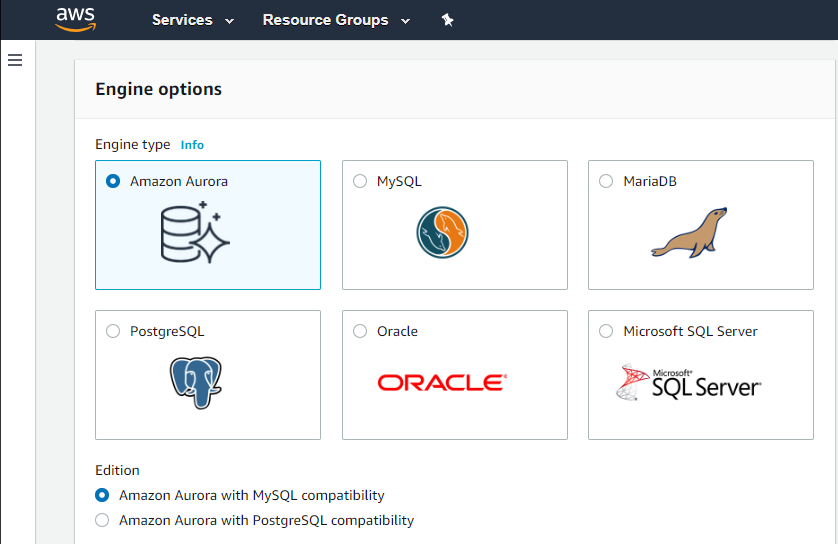 | MongoDB Screenshots     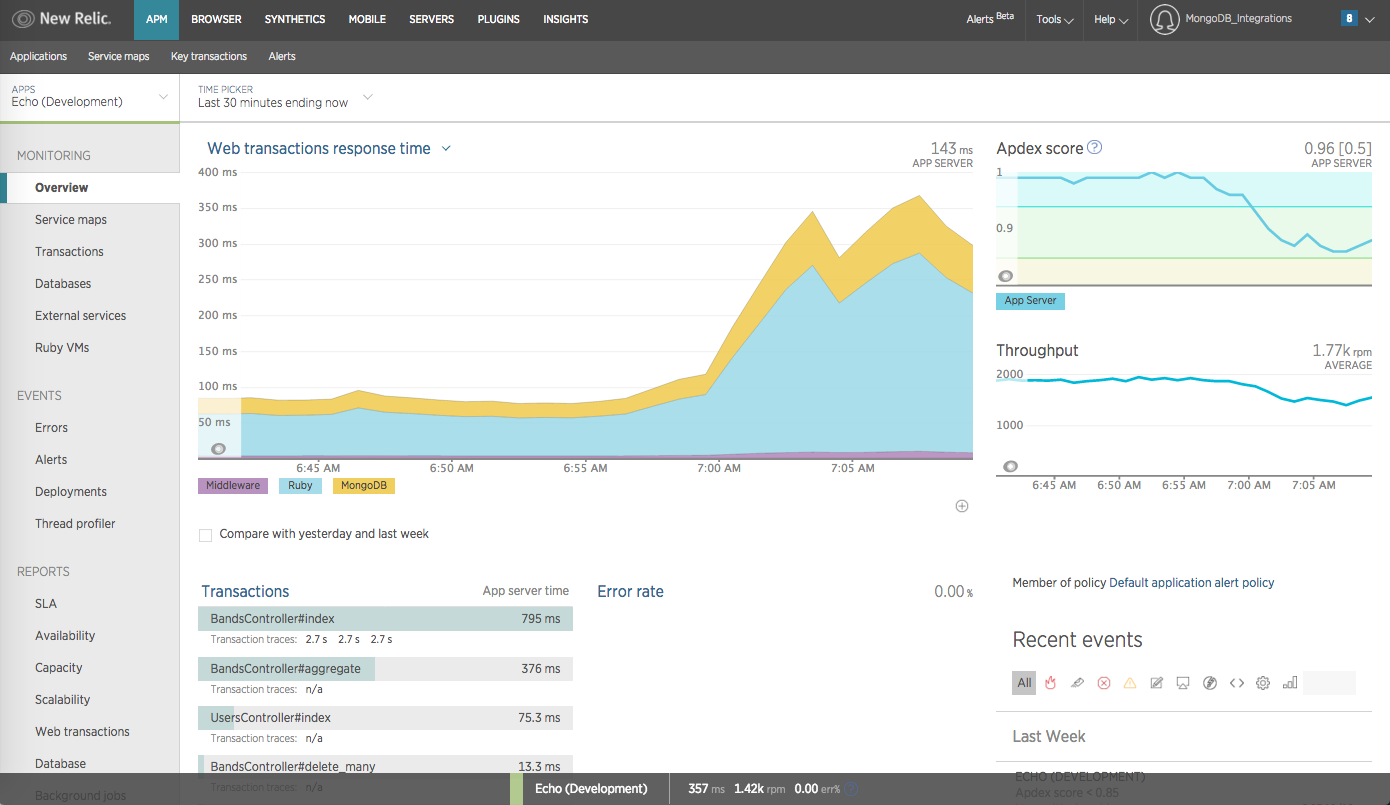 |