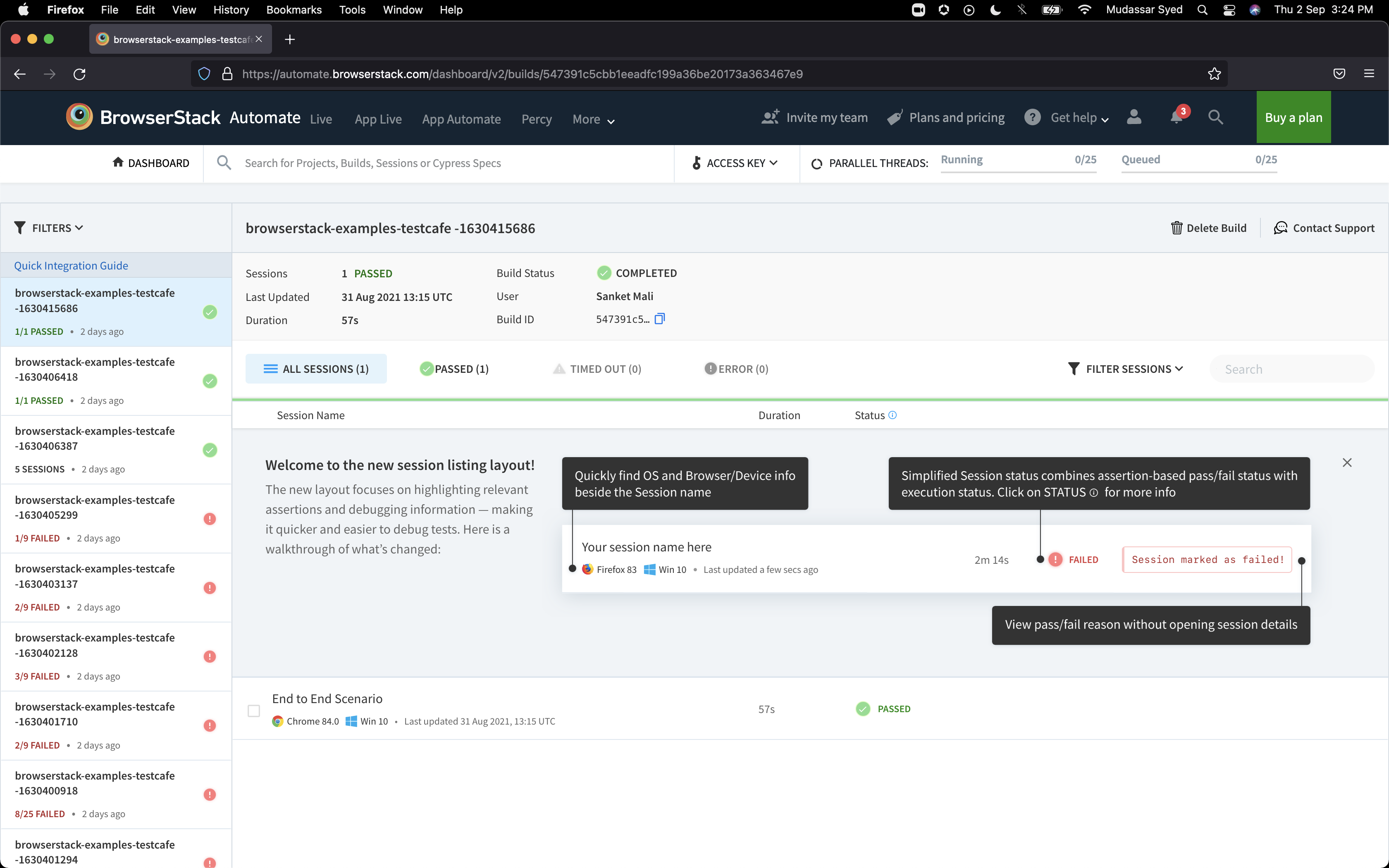
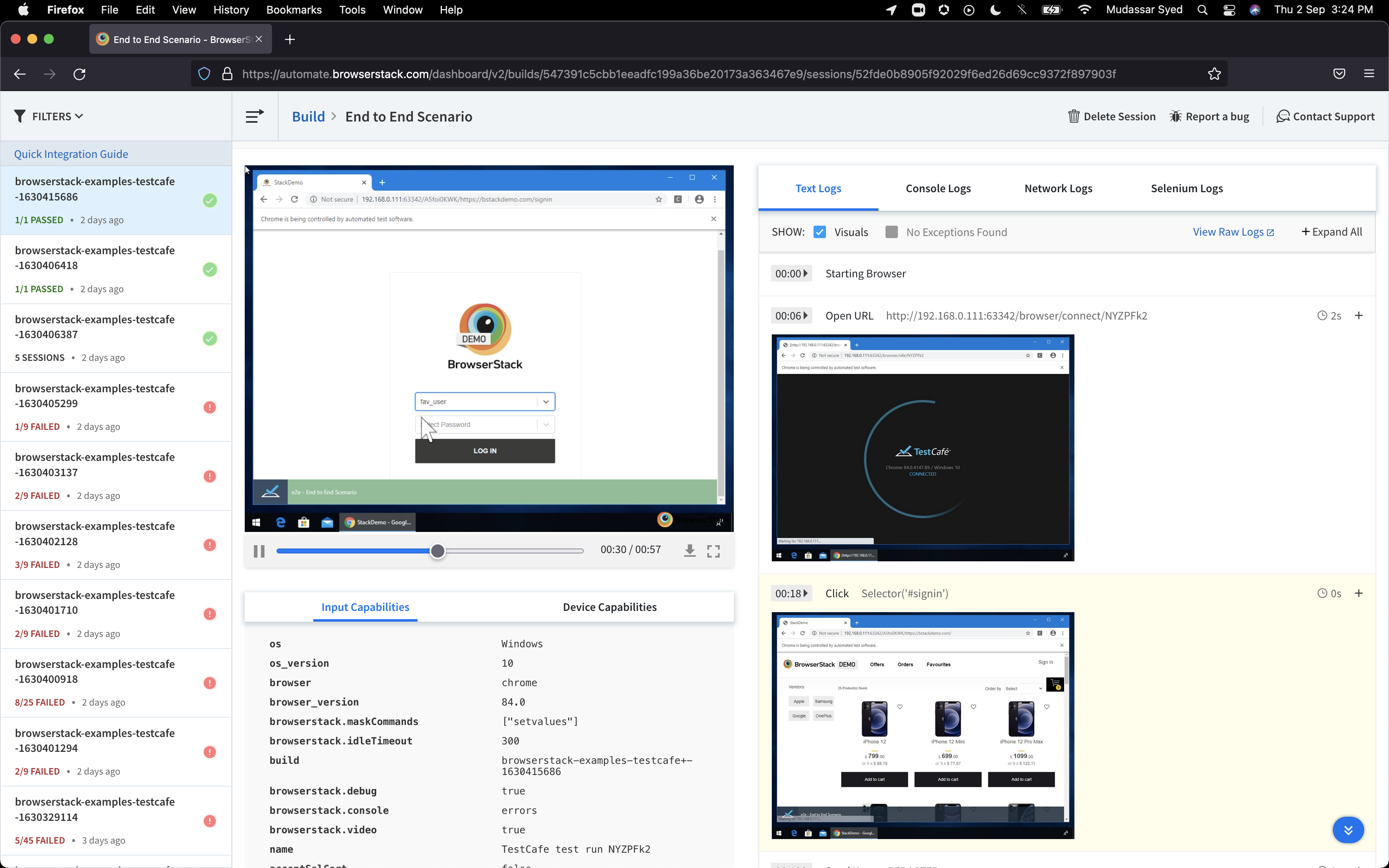
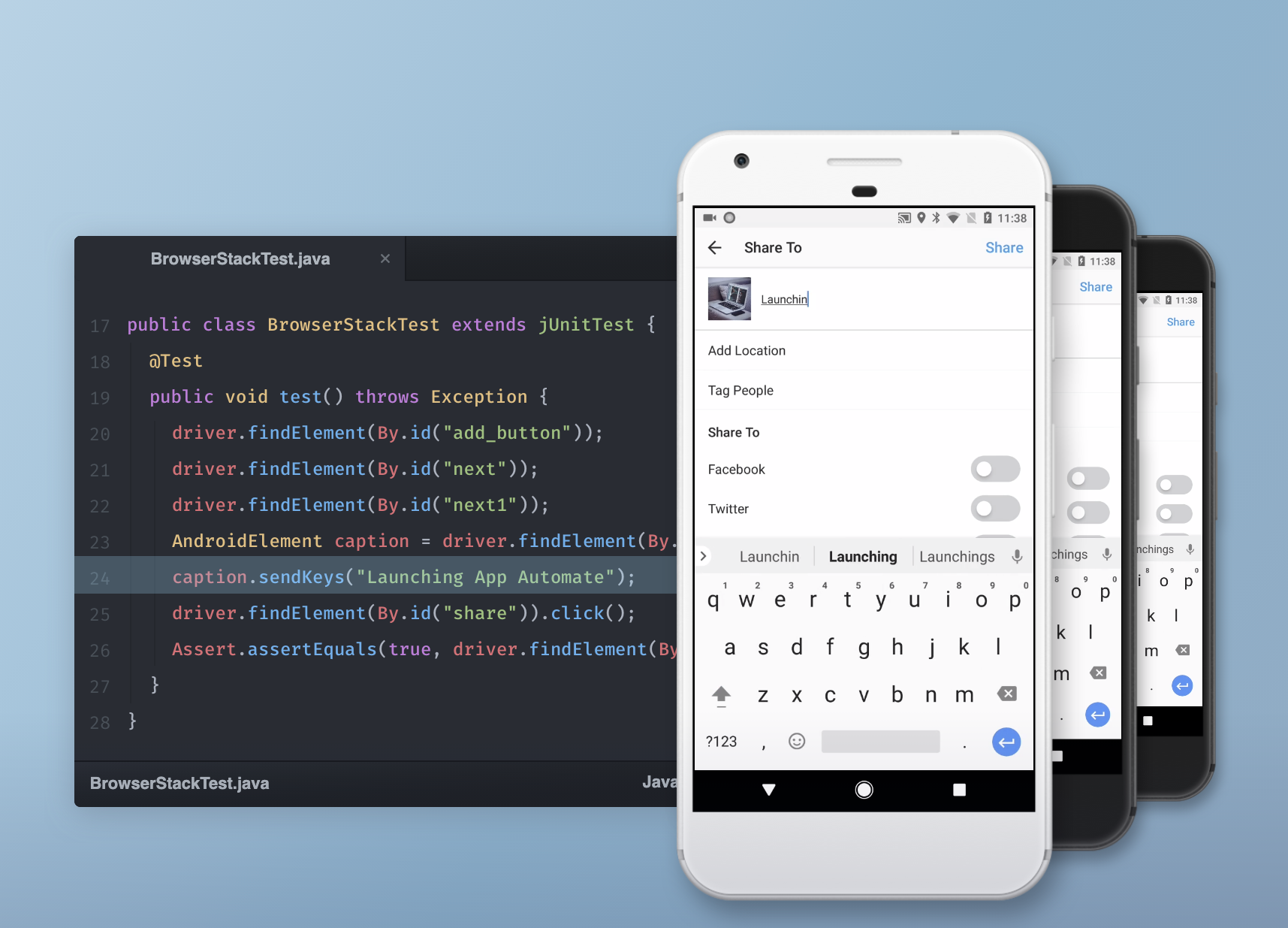
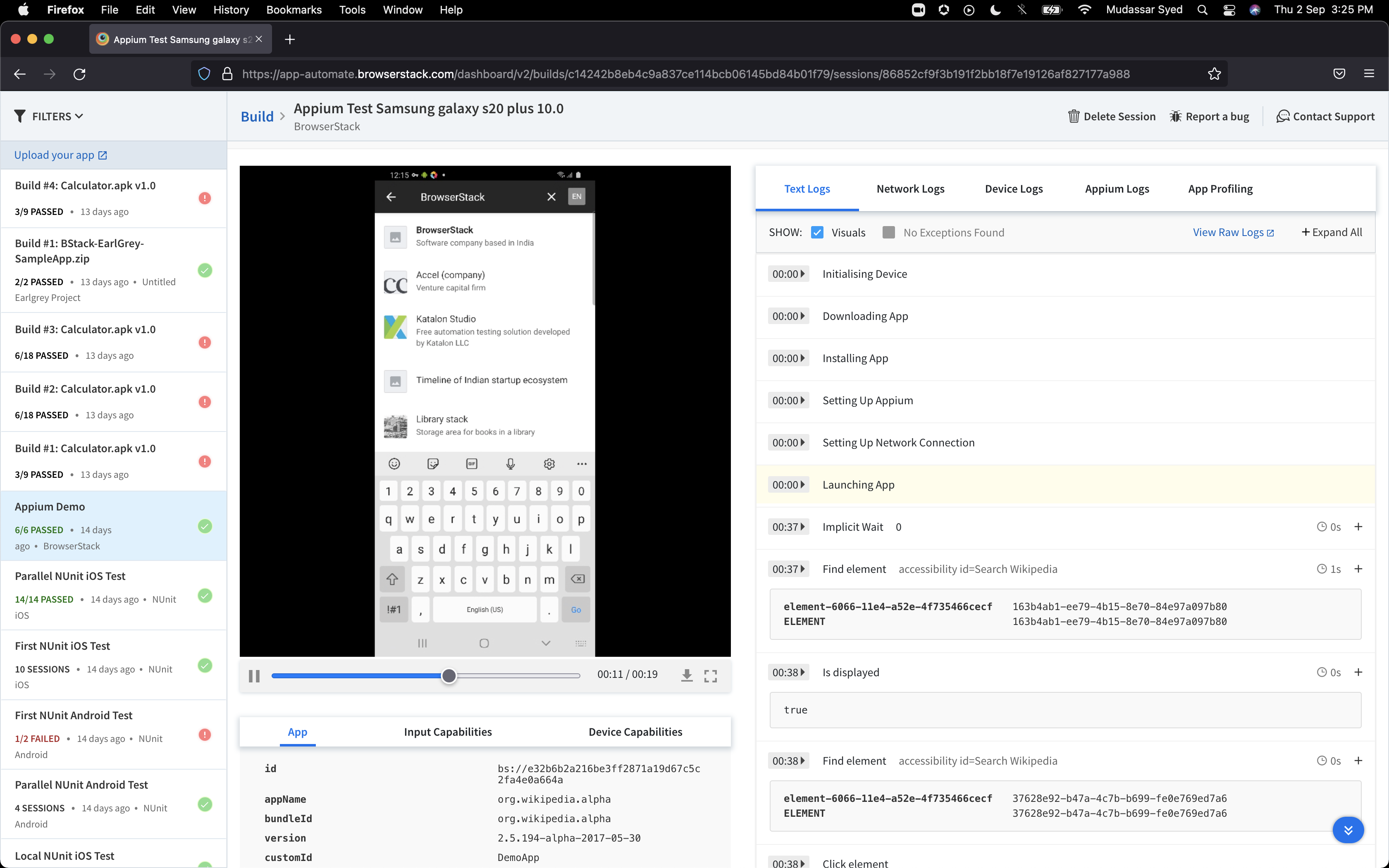
BrowserStack is a test platform built for developers and QAs to expand test coverage, scale and optimize testing with cross-browser, real device cloud, accessibility, visual testing, test management, and test observability. BrowserStack states it currently powers over a billion tests a year for customers who include Amazon, Paypal, Well Fargo Bank, Nvidia, MongoDB, Pfizer, GE, Discovery, React JS, Apache, JQuery and several others rely on BrowserStack to test their web and mobile apps.
$0
per month Unlimited users and 5000 free screenshots
OpenText UFT One
Score 8.0 out of 10
N/A
Unified Functional Testing (UFT, formerly known as HP UFT and before that QuickTest Professional or HP QTP) is a functional and performance testing tool acquired by Micro Focus from Hewlett-Packard Enterprise, now from OpenText.
N/A
Progress Telerik
Score 9.4 out of 10
N/A
With Telerik UI libraries, Progress aims to equip .NET ninjas with a full arsenal of weapons, helping to create beautiful, modern and future-proof applications quickly and intuitively. The vendor states that with its over 1,250 UI components for all .NET platforms, as well as various themes, skins and customization options, Telerik users report cutting development time by up to 50 percent. Web
$999
per developer, royalty-free
Pricing
BrowserStack
OpenText UFT One
Progress Telerik
Editions & Modules
Percy - Free
$0
per month Unlimited users and 5000 free screenshots
App Percy - Free
$0
per month 5000 free screenshots and 100 minutes of infrastructure
It is one of the product which each software organisation should include in their end to end product development journey. I have explored other products in this category and I can proudly say that BrowserStack is a clear winner in terms of its Features, Performance and Product …
BrowserStack is a renowned brand and has an excellent customer support who really cares that you get what you desired. If there are any setup issues or any other configuration issues that we encounter, the customer support team gets on the call and zoom meetings to resolve at …
As per my experience, BrowserStack is more suited for those organizations that have a remote work culture and also for those who need multiple device testing. Also, it is beneficial for those organizations that do not want to spend more on physical devices, as the devices update frequently in the market. It is not appropriate for those organizations which have lesser need of multi- device testing as the subscription model may not be feasible for them. Also a small organization with less number of employees would not opt for BrowserStack as it would be costlier for them.
UFT is well suited if the price is not an issue, and if the requirement is about testing different technologies. If the application is based on Legacy platforms like Siebel or Mainframe, UFT fares quite well. For low cost web-based projects, there are other cheap and open source tools available. If it is about API testing or Mobile Testing, it is better to use other tools like TOSCA.
We have used the Telerik UI controls for our Admin user experience. We found that this lead to consistent user experience, with feature rich functions already provided. Effectively this meant that hour for hour, using the Telerik UI improved productivity in creating screens with more functions than using the default controls in ASP.NET. At this point most of our focus with the Telerik controls is User Interface oriented.
The simple front end will allow novice users to easily grasp the basics of automation and give them confidence to try things for themselves.
UFT can scale up and run across multiple machines from a single controller, such as ALM, enabling hundreds of tests to be executed overnight.
There is an active support community out there, both official HPE based and independent users. This means if you do encounter a problem there is always someone out there to help you.
The later versions have many add-ins to plug in to other tools within the QA world.
Expert users are able to utilise the many native functions and also build their own to get the most out of the tool and impress people as they walk past and see the magic happening on the screen.
UFT also has LeanFT bundled with it, allowing automated testing at the api level - if you can convince the developers to let you in there.
Its licensing cost is very high making it a very expensive tool. due to this many organisations are exploring options of license free tools like Selenium for automation. Though learning curve is large in case of Selenium but it is very cost effective & you an get lot of support online for Selenium.
Though the scripting time is less since its easy to create automation scripts, the execution time is relatively higher as it takes the lot of CPU & RAM.
Though UFT is quite stable but during long execution cycles we do get frequent browser crashing issues.
In terms of costing TestComplete is also one option which is not free but comes with modular pricing. You can buy what you need, when you need.
It's almost the 3rd year for us and it's renewal time for us. So yes, we are already discussing how many licenses we need to increase as users are increasing internally. So it's 100% sure that we are already planning renewal this year as well BrowserStack with live and app automate.
The Telerik UI has become part of our staple development tools. We can not be as productive without the feature set available to us in the Telerik UI ASP.NET AJAX control package.
So many options that it can be a little overwhelming, but the core functions are easy to find and use and it's usually not too hard to figure things out for the more complex tasks. Very easy to boot up a device and a specific browser from the dashboard to begin a manual website test.
Progress Telerik UI is very usable and one of the best tools to use by the front-end development engineers in our team. It has helped us to improve the overall design of our existing and new applications. Also, the time to build applications has also been reduced effectively and we are able to focus on other areas of improvement to deliver a better user experience for our customers.
I rated BrowserStack's availability a 10 because it is consistently reliable, with minimal to no downtime or unplanned outages. The platform is accessible whenever needed, ensuring uninterrupted testing. Its robust infrastructure and proactive monitoring ensure a seamless experience, allowing us to meet deadlines without delays caused by availability issues and all
The tests are fast considering the fact that they're Appium tests. I've seen tests reliably pass or fail when they're supposed to, with next to zero issues on the BrowserStack side of things. Tests launch only seconds after I kick off them off from my CLI.
I've not had much direct interaction with the BrowserStack support team. The help and community are great and we've not run into any issue that has really required us to reach out. I guess having a stable and easy to use system means you may never need to contact support.
HPE are quick to reply and it's possible to get through to the actual developers shuold the case warrent it. Their online system allows updates and tracking of all incedents raised.
Telerik UI support is what you are paying for. If something does not work you ask them for an example of how to solve your use case. The SEO on their sites is awesome and so well bedded into Google. The videos are good, [they're] not used much but their examples and DoJo examples make all the difference.
Yes, it was online training on meet, and trainer looks like skilled and technical strong, he has covered end to end all the features and he has answers all the queries. because of this trainings we are able to implement it by our own in the organization, thank you for support and training.
It was a quick training from the support of browserstack, it was nice and easy to understand, thanks again for the support given by the team. and regularly I used to receive mails for training from support for any new feature they launch, I was able to spread same training to all my team and dev.
I rated the implementation satisfaction an 8 because while it went smoothly overall, there were some challenges during the initial learning phase and integration with existing tools. Key insights include the importance of providing sufficient training upfront and ensuring seamless integration with other systems to minimize disruptions and improve adoption speed.
BrowserStack products has been found better for low code automations and visual regression techniques. We have been struggling to maintain the API endpoint sanity tests and writing a lot of code for them while releasing the builds, while we chose BrowserStack accessibility solutions, we found it a way easier than we thought and worked it up.
1. It works solid for automate SAP and S/4 Hana applications and Fiori too. 2. Teams are well versed about UFT One 3. Able to handle maintained execution results 4. Publish Automation execution results in well manner to the leadership team/stake holders 5. More help content available 6. Able to understand non technical resources about normal view.
Progress Telerik UI provides a large amount of language support, demos, and documentation. While the competition is still great in their own right, Progress Telerik UI has provided enough resources to cover a number of current and future projects without having to expand to other libraries.
I may not be the best person to answer this as I am only using it for 1 department and at 1 site but will still try my best As far as Scalability for Devices for Mobile Automation is concerned, it gets a Solid 10, as the users can run cases on upto 10 device parallel and also have the best choices of devices to choose
Reduces the total workload of keeping the team to test older (regression) functionality. QA testers can concentrate on ad-hoc and exploratory testing, saving time and effort across the entire project.
Has built a better infrastructure for the client applications on which we can rely on for stability and providing regression results for any new features being developed.
Led the applications a step closer to implementing agile practices and DevOps across the entire organization. Thus, providing a better turnaround time of new features to the customers and less maintenance headaches for the BAU team to address.