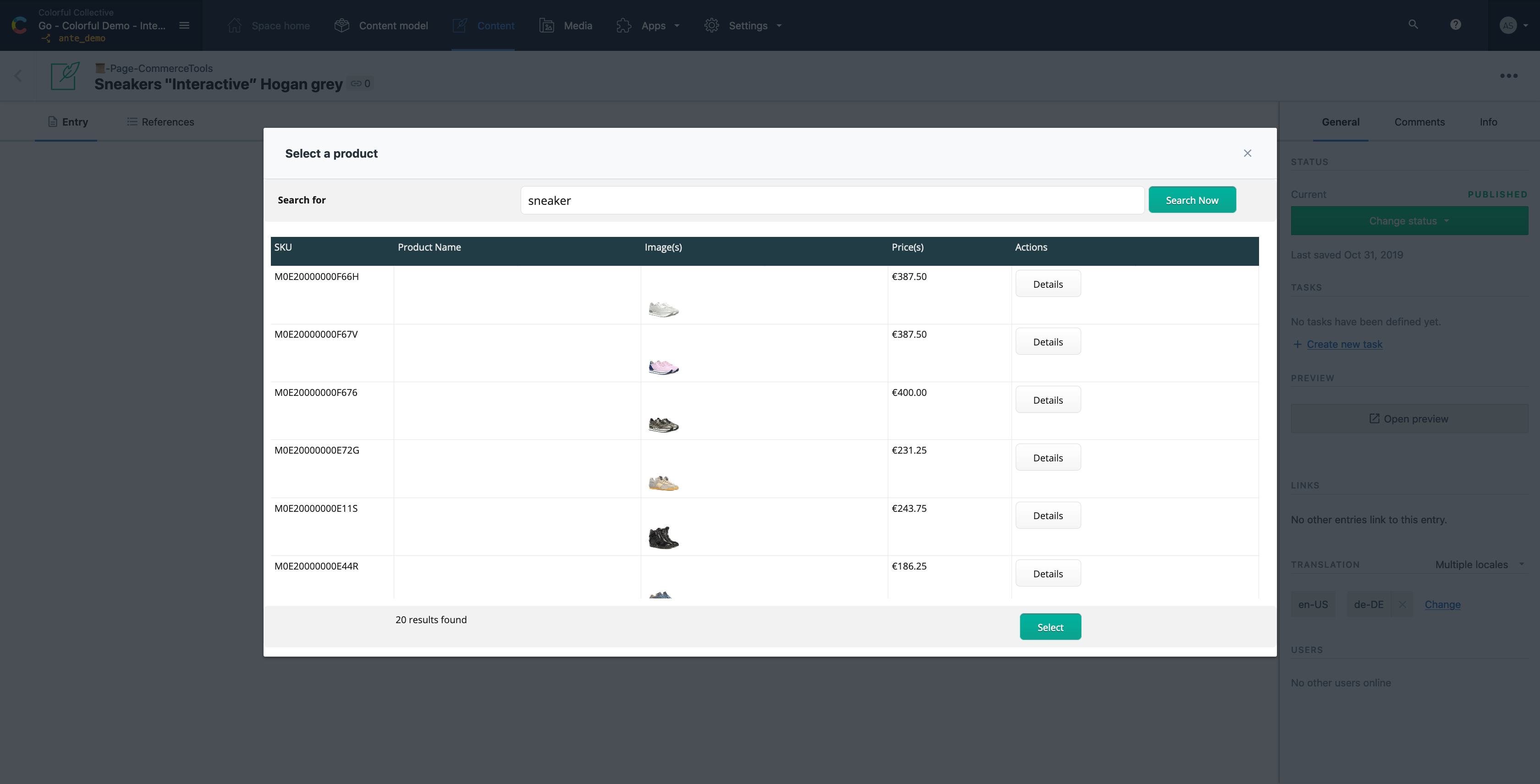
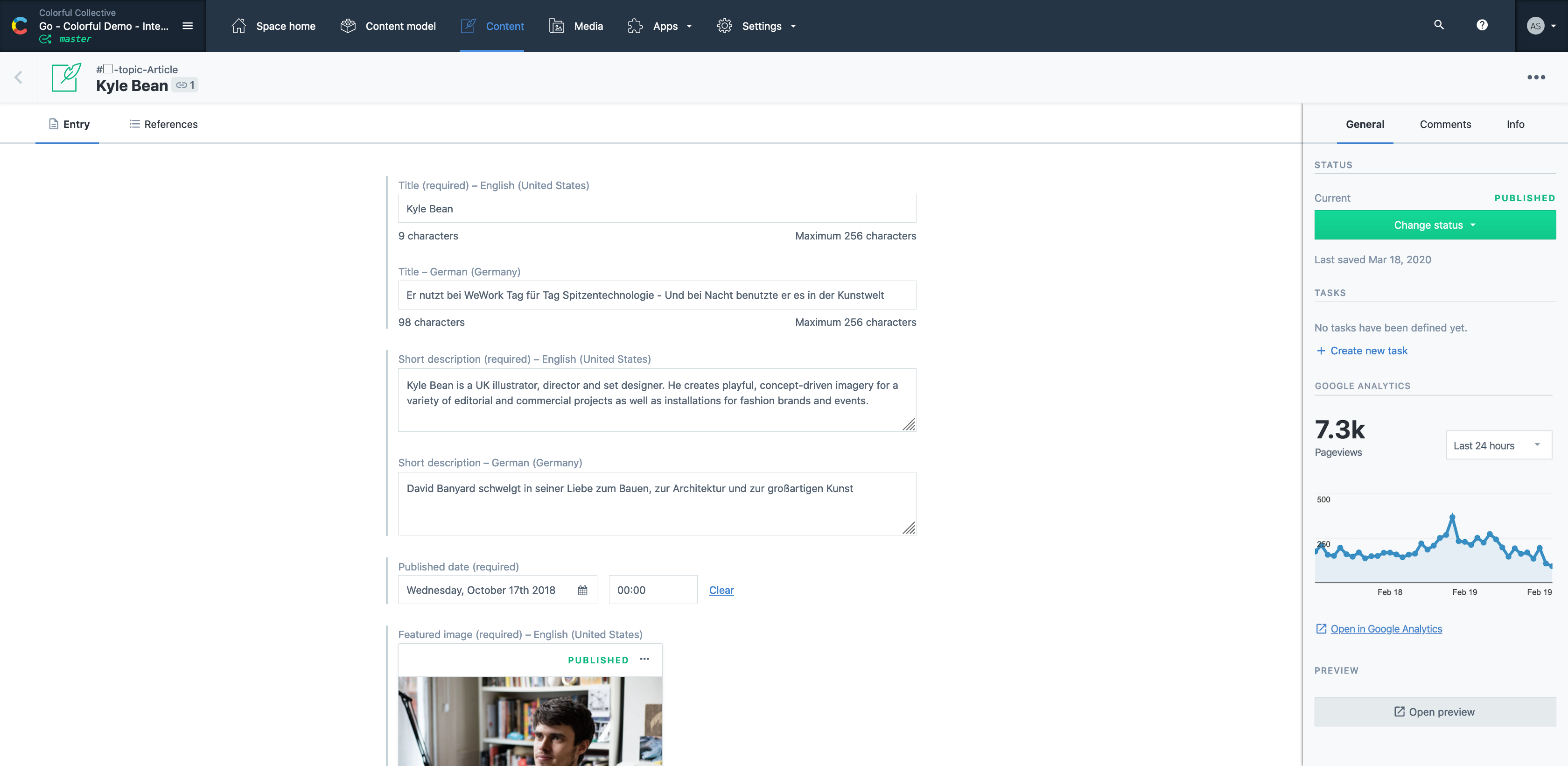
Contentful is a cloud based CMS solution that provides the ability to manage content across multiple platforms.The editing interface allows for managing content interactively and provides developers the ability to deliver the content with the programming language and template framework of their choice.
$0
HubSpot Content Hub
Score 7.9 out of 10
N/A
Hubspot Content Hub is used to take control of content assets. The unified platform is used to manage, update, and distribute content from a central location, ensuring everyone has access to the most up-to-date and relevant materials.
$20
per month
WordPress
Score 8.6 out of 10
N/A
Wordpress is an open-source publishing platform popular with bloggers, and a content management system, known for its simplicity and modifiability. Websites may host their own blogging communities, controlling and moderating content from a single dashboard.
$3
per month 6 GB storage
Pricing
Contentful
HubSpot Content Hub
WordPress
Editions & Modules
Lite
$300
per month
Community
Free
Enterprise
Custom
Starter
$20
per month per seat
Content Hub Professional
$500
per month 3 seats included, $50 for each additional seat
Content Hub Enterprise
$1500
per month 5 seats included, $75 for each additional seat
Personal
$4
per month 6 GB storage
Premium
$8
per month 13 GB storage
Business
$25
per month 50 GB storage
Commerce
$45
per month 50 GB storage
Enterprise
Contact for pricing
Offerings
Pricing Offerings
Contentful
HubSpot Content Hub
WordPress
Free Trial
Yes
Yes
No
Free/Freemium Version
Yes
Yes
No
Premium Consulting/Integration Services
Yes
No
No
Entry-level Setup Fee
Optional
No setup fee
No setup fee
Additional Details
—
Annual commitment required. A discount is offered for annual billing.
Pricing for Business and Commerce plans vary on number of GB.
More Pricing Information
Community Pulse
Contentful
HubSpot Content Hub
WordPress
Considered Multiple Products
Contentful
Verified User
Strategist
Chose Contentful
Contentful was the most user-friendly platform that everyone in our company could understand. It doesn't have the integrations that WordPress does, but it was easier for everyone in our organization to use. We've also seen good ranking and traffic from the pages created in …
For custom solutions, Contentful blows every other CMS I've used out of the water. Unlike WordPress, there's no clutter to wade through, and you can simply build the infrastructure you need. It's more secure by far, and works seamlessly with modern frontend technologies, like …
In the past we've used WordPress to manage documentation content. WordPress was more flexible than Contentful but also prone to inconsistencies and we ended having a lot of hacks to accomplish various WordPress tricks. With Contentful there's less ambiguity so content producers …
Contentful offers a great deal of features for a relatively low price. This is what ended up persuading us to purchase it. We also gathered that this was one of the more well-rated products out there, which was encouraging. It definitely stacks up well against its competitors.
HubSpot has better SEO features than Squarespace. Alt text for instance. HubSpot has a fully built-in suite of basic tools that need a [variety] of plug-ins for WordPress. However, WordPress is ultimately more versatile. We've decided to keep our CRM with HubSpot, but will …
HubSpot CMS HUB by far is the most intuitive and robust platform of any I've used (canned WordPress sites and custom code-driven platforms alike). When you move to HubSpot, you're not only getting a great CMS, but an integrated CRM database, marketing tools, online forms, …
These ecosystems integrate with each other, the configurations and interface are simple compared to the HubSpot CMS HUB, or I used the HubSpot CMS HUB because I focused on creating landing pages and the website for the company I worked for but I was involved with the marketing …
For his service, interface so intuitive, the prebuild editor make work easier, the way that his platform manage the security you can live in peace without no worries because all your data live secure in HubSpot. Also the way of we create, edit, program and published content on …
Not as user friendly, and much more bloated than these other lighter-weight CRMs, but the available integrations and total customization available from WordPress is unmatched in the industry.
WordPress does well against HubSpot for support across a wide user base. It is easier to justify the cost for as opposed to needing to have a Web content platform and HubSpot in addition. HubSpot is a bit easier for end users to create, maintain and publish content vs. …
Features
Contentful
HubSpot Content Hub
WordPress
Security
Comparison of Security features of Product A and Product B
Contentful
8.5
10 Ratings
4% above category average
HubSpot Content Hub
-
Ratings
WordPress
8.1
159 Ratings
1% below category average
Role-based user permissions
8.510 Ratings
00 Ratings
8.1159 Ratings
Platform & Infrastructure
Comparison of Platform & Infrastructure features of Product A and Product B
Contentful
9.5
12 Ratings
20% above category average
HubSpot Content Hub
-
Ratings
WordPress
7.9
134 Ratings
2% above category average
API
9.311 Ratings
00 Ratings
7.9124 Ratings
Internationalization / multi-language
9.79 Ratings
00 Ratings
7.8103 Ratings
Web Content Creation
Comparison of Web Content Creation features of Product A and Product B
Contentful
7.8
13 Ratings
0% above category average
HubSpot Content Hub
-
Ratings
WordPress
8.1
166 Ratings
4% above category average
WYSIWYG editor
7.34 Ratings
00 Ratings
7.8151 Ratings
Code quality / cleanliness
9.58 Ratings
00 Ratings
7.3152 Ratings
Admin section
9.311 Ratings
00 Ratings
8.3164 Ratings
Page templates
7.64 Ratings
00 Ratings
8.7160 Ratings
Library of website themes
7.52 Ratings
00 Ratings
8.6162 Ratings
Mobile optimization / responsive design
4.57 Ratings
00 Ratings
8.5161 Ratings
Publishing workflow
9.312 Ratings
00 Ratings
8.1154 Ratings
Form generator
7.01 Ratings
00 Ratings
7.1131 Ratings
Web Content Management
Comparison of Web Content Management features of Product A and Product B
It's a great all rounder for content projects. It's easy in the basics and powerful in the complex, data heavy scenarios. Extending the platform is straightforward and the SDK gives you everything you need. If you have many many varying content types , it gets expensive and perhaps not the best choice .
If you want all your marketing activities to be in one place, where your CRM and customer data exist, go for Hubspot's entire suite, which could include CMS, depending on your needs. If you have to create a company blog, marketing landing pages for events or lead generation, or send decently designed newsletters, Hubspot does the job well. Any company that has grown to enterprise level or has fragmented marketing should probably not use Hubspot CMS because of the fragmented activities that might occur. Hubspot's reporting can also break. Also, if you want your designed pages to be very creative with many animations, Hubspot CMS is probably not the way to go. But for anyone who is still finding their footing, go for it.
Wordpress is a great solution for a website of nearly any type. It may not be as suitable if a fully custom solution or app is needed, and it does have some limitations when it comes to connecting it to external products (especially if the product doesn't have any support from a native system), and it does require a lot of testing. Multiple plugins in one install are common but also increase the risk of conflicts, and when those do occur, it can be exceptionally time-consuming and tedious to identify what is causing the issue. As third parties create many plugins, you're also at risk with each potential security breach, which needs to be kept in mind. I would be cautious to use WordPress to store any sort of sensitive PPI. That said, it's a wonderful, easily customizable solution for many, many different types of websites and can allow even inexperienced client users with low-tech knowledge to update basics.
Contentful uses "references" to allow you to build very modular content. If I have a "slider" content type, I can create a "slide" content type which references a "button" content type, and so forth. This works well, but I occasionally wish there was a better solution for one-off content, like a settings page. Currently, this is done for creating an entire content type called "settings" with a single entry. Not a big deal, but not ideal, either.
There are a few quirks with GatsbyJS integration, etc, but these issues are being fixed and improved upon very quickly.
A minor gripe, but Contentful does not have a way to organize fields within an entry. Entries with many fields are somewhat tiresome to scroll through.
Although you can integrate it with Google Analytics, there is still a significant difference between what each tells you about [a] number of visitors to a given page, etc.
There's a lot to the program and it's not always intuitive where to go for a feature. Though the help center and academy are good and usually have the answers, having to look things up isn't.
WordPress breaks often so you need to have someone who understands how to troubleshoot, which can take time and money.
Some plugins are easier to customize than others, for example, some don't require any coding knowledge while others do. This can limit your project if you are not a coder.
WordPress can be easily hacked, so you also need someone who can ensure your sites are secure.
I don't think we justify the amount of usage we have of CMS Hub professional. We might discontinue it to save some bucks. But if we ever need an extensive solution, we'll come back to it, as we already other products of Hubspot (Sales Hub, Reporting, Automations)
The complications we have and the lack of support. Every plugin has a differente team of support in charge and make one plugin work with the other one always affects the website performance. It's a thousand times better to have only one provider with all functionalities included unless you are an expert web developer or have a team dedicated to it
It is a very easy to use and configure application. I find that it is on the user to manage the content after the models have been created, yet I still do not encounter issues finding or creating new components for our site. It is easy to set up and easy to navigate.
HubSpot CMS HUB is well-rounded and brings a robust list of capabilities while maintaining an ease-of-use that beginners can engage. HubSpot is by far the best at doing this among the half-dozen or so CMS platforms I've used in my 20+ years experience. It turns glorified business card websites into purposeful marketing machines that become a key part of a marketing strategy rather than a complicated and frustrating mess.
Extremely easy to use and train users. It took very little time to get everyone trained and onboarded to start using WordPress. Anytime we had any issues, we were able to find an article or video to help out or we were able to contact support. The menu options are well laid out so it is easy to find what you are looking for.
Anyone can visit WordPress.org and download a fully functional copy of WordPress free of charge. Additionally, WordPress is offered to users as open-source software, which means that anyone can customize the code to create new applications and make these available to other WordPress users.
Mostly, any performance issues have to do with using too many plugins and these can sometimes slow down the overall performance of your site. It is very tempting to start adding lots of plugins to your WordPress site, however, as there are thousands of great plugins to choose from and so many of them help you do amazing things on your site. If you begin to notice performance issues with your WordPress site (e.g. pages being slow to load), there are ways to optimize the performance of your site, but this requires learning the process. WordPress users can learn how to optimize their WordPress sites by downloading the WPTrainMe WordPress training plugin (WPTrainMe.com) and going through the detailed step-by-step WordPress optimization tutorials.
I give this rating, which I believe to be a great rating for a community based support system that's surrounding it. Most platforms and products have their own, and as WordPress does have their own team that help here and there, a lot of it's handled by community involvement with dedicated users who are experts with the system who love to help people.
Varies by the person providing training. High marks as it's incredibly easy to find experienced individuals in your community to provide training on any aspect of WordPress from content marketing, SEO, plugin development, theme design, etc. Less than 10 though as the training is community based and expectations for a session you find may fall short.
WordPress is not a great solution if you have: 1) A larger site with performance / availability requirements. 2) Multiple types of content you want to share - each with its own underlying data structure. 3) Multiple sites you need to manage. For very small sites where these needs are not paramount, WordPress is a decent solution
Easy to use and much more organized as a single platform versus multi. The layout is clean and easy to read and we don’t have to worry about certain users safe guarding data or content then losing it when they leave the company. It’s a one stop shop for imagery
We have about 10 seats that were needed. Wanted a sales platform that had good status and reputation. HubSpot was the best choice for me given Salesforce not being the best in the past. Price was appealing and our team liked the overlay. Other options do not provide the same ability with data
WordPress isn't as pretty or easy to use as certain competitors like Jimdo, Squarespace or HubSpot, but it makes up for it with its affordability, familiarity and the ability to find quality outside help easily. The same can't be said for certain competitors, as you might need to find an expert and it could get costly.
WordPress is completely scalable. You can get started immediately with a very simple "out-of-the box" WordPress installation and then add whatever functionality you need as and when you need it, and continue expanding. Often we will create various WordPress sites on the same domain to handle different aspects of our strategy (e.g. one site for the sales pages, product information and/or a marketing blog, another for delivering products securely through a private membership site, and another for running an affiliate program or other application), and then ties all of these sites together using a common theme and links on each of the site's menus. Additionally, WordPress offers a multisite function that allows organizations and institutions to manage networks of sites managed by separate individual site owners, but centrally administered by the parent organization. You can also expand WordPress into a social networking or community site, forums, etc. The same scalability applies to web design. You can start with a simple design and then scale things up to display sites with amazing visual features, including animations and video effects, sliding images and animated product image galleries, elements that appear and fade from visitor browsers, etc. The scaling possibilities of WordPress are truly endless.
Contentful has saved us valuable development time that was previously spent doing deploys for minor content updates.
Contentful has helped us maintain consistent documentation, reducing time needed to review for consistency.
Can't say we've really experienced any negative ROI impacts from using Contentful, but we've run into some limitations in adding too many content models and the next pricing tier is substantially more expensive.