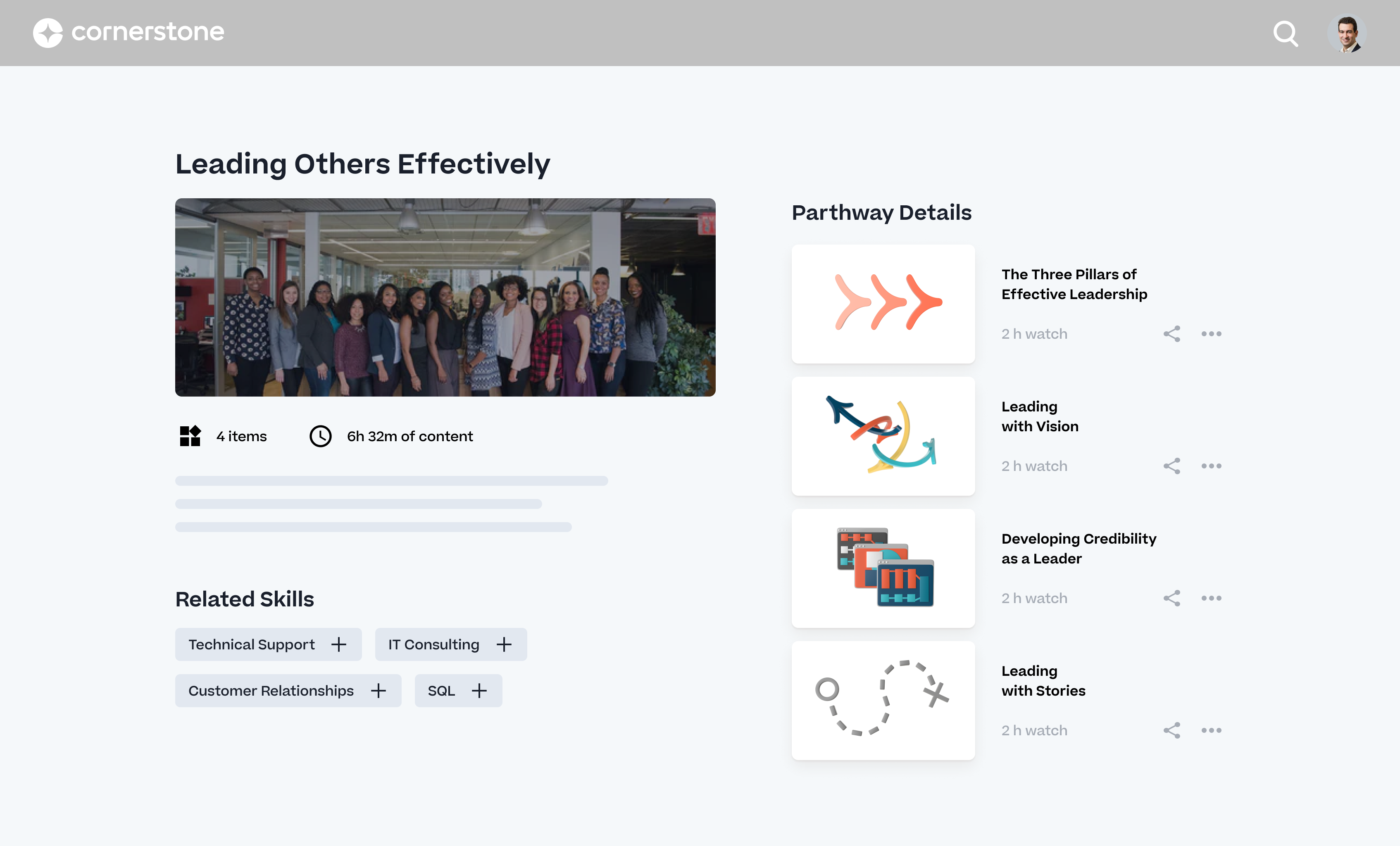
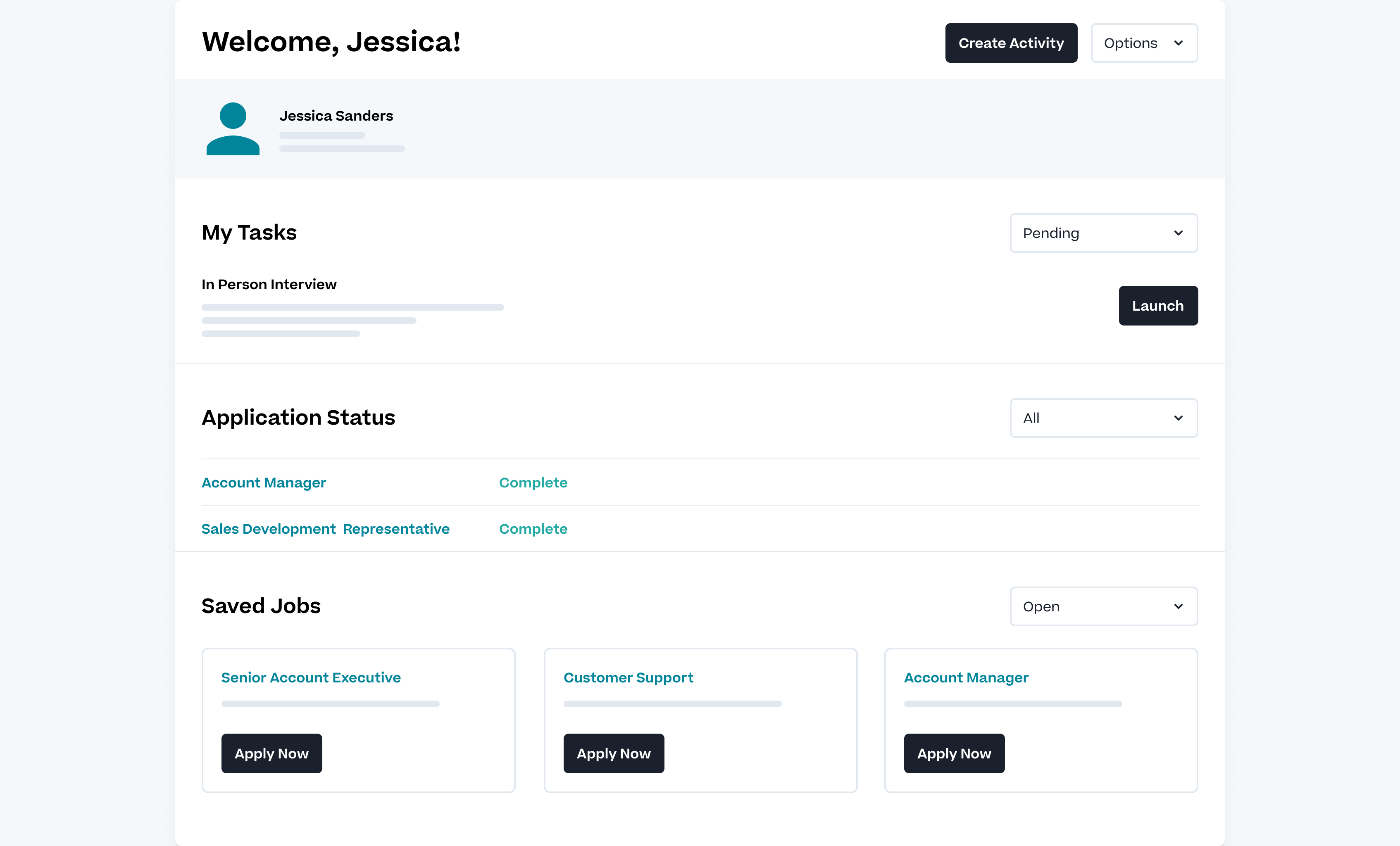
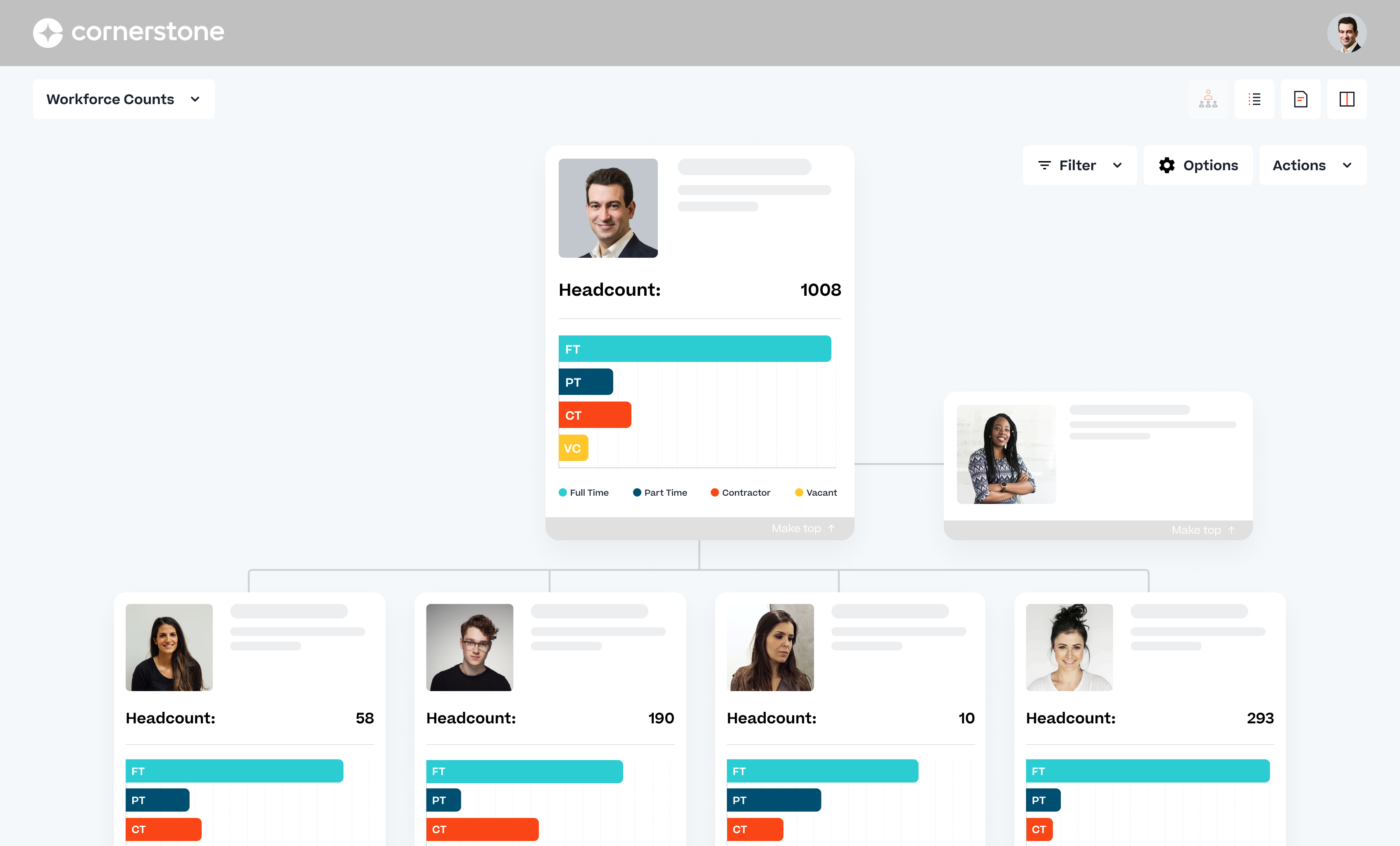
Cornerstone Galaxy is a cloud-based application for talent management. Cornerstone offers suites for recruiting, training, performance monitoring and planning, learning, and HR data management. It is scaled for enterprises.
N/A
Litmos
Score 7.4 out of 10
N/A
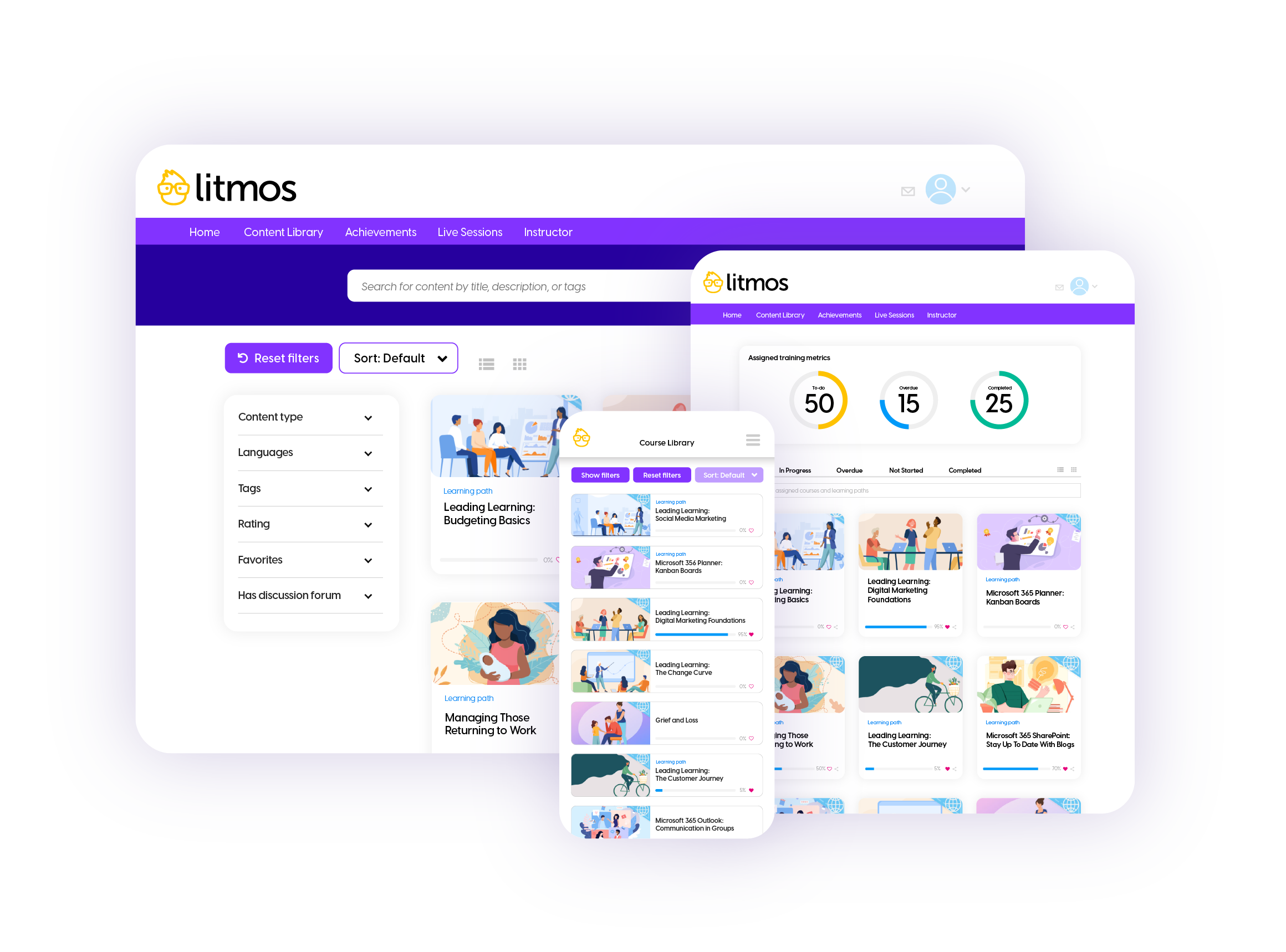
Litmos is a cloud-based Corporate LMS. Core features include a course builder, assessments and quizzes, surveys and feedback, eCommerce, virtual classrooms, certifications, course library, SCORM and TIN CAN support, reporting, and gamification tools.
Since the platform can be accessed not only through the website but also through users' cell phones, Cornerstone's virtual training tool offers great accessibility for employees receiving training.
It works with Android and iOS devices and collaborates with other apps to ensure …
The Sales Pitch for Cornerstone while being great, left us a bit disappointed when the tool got implemented. Although it is a game-changer and radically improved the learning experience the after-sales service has left us a bit disappointed. Since the overall package makes up …
I wasn't involved in the selection at my current company. However, at my previous company, Absorb was a very close contender due to their modern and vibrant portal features, but we decided to stick with Cornerstone because of ease of configuration for our compliance training …
Cornerstone OnDemand consistently ranked in the highest among existing capability, streamlined administrator experience, and also based future product roadmap. Their vision for the future appears to be set much further out and ahead of their competition to remain competitive. …
Enabled us to customise more and came in cheaper, despite having very similar functionality. Having used 2 of the LMS above, Litmos has a richer feature set and also iterates their system more regularly. In a competitive market, Litmos has managed to become one of the leaders …
Adding in D2L and clarifying Articulate's RISE LMS platform
I would say that Docebo had the best platform in terms of it's UI and some of the features it offered. But overall, SAP Litmos won in terms of administrator capabilities and ease of use.
Prior to SAP Litmos implementation, I was using Cornerstone OnDemand, which turned out to be a failure. It lacked enough tutorials and whitepapers, but the worst of all is poor support. I didn't get the required support whenever I contacted the success team and they [used] to …
I've done business requirement gathering of LMS needs, LMS selection, and implementation at 3 companies now. Litmos and Docebo always end up in my top 3. However, Litmos has always won out for existing capabilities that, in the past, Docebo was still developing. At my current …
Litmos has many of the same extensive features that Cornerstone offers but in a much more user-friendly platform. I would choose Litmos over Cornerstone for certain. Mindflash is a simpler system with less features but offers a clean, easy to administer platform for smaller …
I chose Litmos because of its advertised seamless integration with ADP. It turned out to not be so seamless... Hopefully, that will change.
The interface is still great, though.
Cornerstone Galaxy is a good solution for larger companies that focus on training and want to offer a variety of options to their employees and departments. It is highly customizable. It does require a tech savvy team to set-up, and maintain. This is not a set-it-and-forget-it system. From an LMS perspective, it wouldn't be my top choice for employees who only need a mobile-friendly approach.
Limos is great for introducing a topic, and taking refreshrs yearly on info already know. Some courses are better suited to a live course, with discussion and questions. We support people with complex medical needs, and review with a nurse is critical.
Ability to provide multiple customizable access roles from general end user to full system admin and anything in between
Powerful reporting system in the LMS to track a plethora of data points within the platform (user data, training information, transcript information)
Great options to customize the look and feel of your "home page" to best meet your company's needs and goals.
Ability to customize the transcript view for learners (i.e. when Completed training will move to their Archived transcript, what to do with Inactive training on transcripts)
Sometimes finding the right answer to your support question can be a bit more difficult than it should be.
I would like to see more OSHA related courses.
At times, the administrative interface seems to need to be updated, but the tradeoff honestly might be the absolute rock-solid stability of the platform.
Learner Search: This will be highly valuable for our team especially because our staff do not only use Litmos to take courses but equally use it to search for content that they need to do their jobs in the moment. Users should be able to search using keywords to easily locate specific content.
Knowledge Base Feature: In addition to the search function above, some of our content we find can be better organized in knowledge bases for easy access. If Litmos has a knowledge base feature, it would help us have all our learning content in one place.
Module Copying Feature: The current module copying feature allow us to make copies of module copies from another course but which are still linked to and affected by changes in the original course. It will be useful to be able to copy courses/modules and make them entirely independent of the original course.
Creating Instances of Library Courses: We find that for Litmos courses, it is hard to assign different compliance due dates to separate user groups. It might be useful to be able to create copies of the Litmos courses on the platform so that we can apply different compliance dates for separate teams or groups of users.
As long as pricing stays reasonable, we will likely stay with Cornerstone for at least one more contract renewal. It would be a large task to migrate all of our content to a new system. However, the LMS landscape is diversifying with new startups that are showing some real innovation.
For what we need in the very near future, Litmos does not offer us the required capability. Ideally, we are looking for an integrated LMS, coaching, mobile support and content creation platform. Litmos may have the LMS part covered but there are other platforms that do this better along with providing an integrated all-in-one service or at the very least support API integration with other vendors to meet our requirements.
Easy to use, easy to learn, lots of support during the learning process. There are a few parts of the system we don't use and I'm hesitant to begin using because other clients have said they're difficult and cumbersome (certifications) or outdated (libraries)
Litmos is reliable, stable, and easy to use. Support is amazing, with great response times and customer success managers. I've implemented Litmos in 3 organizations and am working with another one currently. The features and functionality Litmos offers rival those of any other LMS out there.
I haven't really had any major availability problems. The service is practically impeccable but it is true that at times, due to server and latency problems, the application has been slower. But these have been specific issues that have resolved themselves.
I haven't seen many issues at all with load times. Sometimes learning assignments will take longer then expected but it is still reasonable. They have taken great effort over the last couple years to speed things up like reports and search results so I expect that effort to continue in the coming year.
Its always important to have support when you are facing problems and when you are the main admin of the organization. Cornerstone Support is very supporting when you have not found the answer in the help guide. its very useful to have a team support to guide you.
If I could give it a negative rating I would. Worst support from any program I have had. Everything is back and forth in the support ticket. The one time I tried to chat they could not support the question. Their support page is so full of sections and products I can never find anything I need, even with a customized home page. I was hopeful that once they left SAP support might improve but it has not. I don't even know who my account executive is. Nobody has ever reached out to me. I need someone to guide me through best practices for our company and there is nobody to do that.
we use also to admin all our training in person events and sessions. Its easy to admin this kind of trainings and automatize some processes we have. Also de user experience and the integration with other systems helps to the employees to use more. All modules integrated oriented to develop people is the principal reason to have CSOD. The training administration is very complete and allows to automate many processes.
It was a good overview of the platform, but of course it was more of a basic overview of how to use the platform. The team provided a good training, but I would of liked a better deep dive into some of the features.
The online modules are pretty good. You can access them at any time, which we have done. You learn a lot in the beginning, but having the ability to retake short lessons when you are working on those items was very helpful.
Some of the best online training I've taken from any LMS platform. It was well put together and kept me engaged the entire time. It has a good amount of HR Compliance mixed with soft skills training that the team liked. Overall, it has a robust online suite of training that any company can use.
The implementation was pretty difficult. We felt they (Cornerstone) didn’t properly allocate the resources to complete our implementation in the timetable we wanted.
For example, we worked on Workday and SSO integrations - work that we had specifically contracted for in advance. When we were ready to work on that project, they didn’t have the people ready to help us, so it took a lot longer than necessary. That was my biggest pain point.
The implementation approach we went with was a self-led implementation. We would speak to the implementation manager once per week, and self-trained. We met with implementation manager to discuss issues, review things that we’d learned for 1 hour. We found that wasn’t enough. Other things would come up outside that one hour window that we couldn’t get answers to. We didn’t have anyone to ask about those things and we had to wait to ask during our weekly meeting.
The advantage of the self-led implementation approach was that it was really inexpensive – significantly less than the implementation cost for the other systems that we looked at. I also liked that we could pace ourselves. There were however big roadblocks. We would have to make sure the right resources were available. We had an implementation/project manager with a lot of experience and felt that the person was knowledgeable but missed on a few things.
In hindsight, I would still go with the self-led implementation, but knowing what I know now, I would ask for the integration person to be available more. I would work that into the contract. With single sign-on, we needed deep linking to build direct links through a Single Sign-On tool, e.g. when someone gets an email, it directs them to training. But it has to go through SSO to get them to the correct link. Deep linking wasn’t turned on in our system and they had to activate it. We encountered little things like that – sequencing pre-requisites which were problematic. We tried to troubleshoot ourselves.
I recommend you consider contracting for some extra implementation hours and determine when they are going to be available. Work it into the contract that you have the ability to call tech support during implementation. In addition to weekly implementation meetings, they have technical webexes – 4 every week, but 2 didn’t apply to us – one as we were using SSO. The challenge is they were not always relevant – we had specific questions that didn’t fall into those categories
The company received a change in learning style from the old to this newer style. From our perspective, it was just a case of swapping out the scores and adjusting the language. The initial show-and-tell about the library we could use and how to use the materials was instrumental. From the learner's perspective, it was all very self-explanatory.
The user experience is a lot better than using SumTotal as an admin CSOD makes working easy. Without having workarounds. Reporting is a lot better than both platforms. Reporting in CSOD is complex however easy to manage and create when you understand the data points collected
I made a choice of this tool because of great review message on internet about the advantage of litmos. Also as cost is concerned I saw it to be favourable to me more than other which are Abit expensive. Litmos also have intuitive user interface which made me to fall for it.
It is important to be familiar with the terms and annual increases in licenses and other aspects of the contract. I recommend analyzing this from the beginning and the permanence is relevant because Cornerstone updates its modules and brings out new features that may allow you to leave a module to acquire another
Overall we find that Litmos' capability to organize folks by "Teams" is adequate for our needs... though there are some limitations, especially when it comes to supervisory staff being able to assign content to their employees. It would be nice for hierarchal assignments to be possible (directors being able to assign content to their direct reports... AND those under them).
As I have said before, I have no doubt that the services of the Cornerstone sales people were very good. In particular, our salesperson spent a lot of time in contact with us to make the process go smoothly. Perhaps being a large company in some cases the times were slowed down but it is something normal to take into account.
For one of our product lines, what used to require 8-10 onboarding calls now only needs two and we are aiming to get that down to just one or potentially none. Customers can learn on demand using the courses we have constructed for them and continue their learning live with trainers.
By hosting all of our training in one place, we have made onboarding much more straightforward for employees — they can learn the product (same training we give customers) and also get their InfoSec and other training in one place.