DocuSign supports transactions with document sharing and electronic signature, as well as automated and guided data collection and entry, record updating across disparate systems and payment collection upon agreement, as well as analytics and reporting.
$15
per month
Seismic Content
Score7.6 out of 10
Enterprise companies (1,001+ employees)
Seismic is a recognized leader in sales and marketing enablement. The vendor's value proposition is that their solution equips global sales teams with the knowledge, messaging, and automatically personalized content proven to be the most effective for any buyer interaction. Additionally, the vendor says powerful content intelligence and analytics enable marketers to prove and improve their impact on the bottom line, revealing what is really driving revenue and what needs to be…
This product is well suited in the use case that I provided before: when it comes to onboarding employees and providing a clear channel for decision making for human resources, this is an excellent tool to accomplish that. I would say the weak points is when you have back and forth communication with users that it might seem a little redundant to have that back and forth communication in that scenario.
A de minimis incentive was given to thank the reviewer for their time. The incentive was not used to bias or drive a particular response, nor was the incentive contingent on a positive endorsement. More Info
It is excellent for a cloud-based workspace between you and your customers. I find the chat feature to be a cool and underutilized tool. I appreciate how you can consolidate all your information on one page, rather than having multiple attachments. Easy to clone DSRs (Digital Sales Rooms), which saves a significant amount of time. Especially when all you have to do is make minor changes between customers.
A de minimis incentive was given to thank the reviewer for their time. The incentive was not used to bias or drive a particular response, nor was the incentive contingent on a positive endorsement. More Info
A de minimis incentive was given to thank the reviewer for their time. The incentive was not used to bias or drive a particular response, nor was the incentive contingent on a positive endorsement. More Info
Seismic allows for one location to store all relevant content so that associates are not having to spend as much time searching for what they need.
Seismic provides the ability to fully customize content such that one template can serve many needs with the simple ability to answer questions that drive the customization in the content. This customization can range from simple to quite complex depending on your level of expertise with the tool.
Seismic provides a lot of flexibility when it comes to organizing your content and how to make the experience of accessing that content unique to the needs of each user in the system.
A de minimis incentive was given to thank the reviewer for their time. The incentive was not used to bias or drive a particular response, nor was the incentive contingent on a positive endorsement. More Info
Tracking, particularly when collecting signatures through connected applications, such as an ATS, is not always clean or easily traceable.
Formatting documents to handle electronic signature types (signatures, initials, etc.) is not always easy, and highly dependent on the partner's technology.
It is not convenient to have to use DocuSign as a stand alone product if the signatures are required for 3rd party applications. It definitely excels on its own, but the scope of that usage, at least for us, is slim.
A de minimis incentive was given to thank the reviewer for their time. The incentive was not used to bias or drive a particular response, nor was the incentive contingent on a positive endorsement. More Info
A de minimis incentive was given to thank the reviewer for their time. The incentive was not used to bias or drive a particular response, nor was the incentive contingent on a positive endorsement. More Info
I can't imagine doing business without DocuSign now. I would never want to go back to the way we used to do things. The "new way" is "the way" is "the right way." We can honestly be proud of a "one right way" process and not have to suffer through "5 ways for 5 days."
A de minimis incentive was given to thank the reviewer for their time. The incentive was not used to bias or drive a particular response, nor was the incentive contingent on a positive endorsement. More Info
Generally user-friendly once you have command of the basics, but also has a lot of nuances that can make it difficult to train others on. DocuSign University is a helpful tool, but understandably a lot of content to get through to become a well-versed user. A lot of different functionalities but only a few I use on a weekly basis.
A de minimis incentive was given to thank the reviewer for their time. The incentive was not used to bias or drive a particular response, nor was the incentive contingent on a positive endorsement. More Info
Seismic is super easy to use and has so many different features and functionality to take advantage of. But being a company who utilizes Google platform a lot we have some issues with the api connections and integrations across the board. But all in all it is not a huge issue, I would just like to see them improve the integration more
A de minimis incentive was given to thank the reviewer for their time. The incentive was not used to bias or drive a particular response, nor was the incentive contingent on a positive endorsement. More Info
A de minimis incentive was given to thank the reviewer for their time. The incentive was not used to bias or drive a particular response, nor was the incentive contingent on a positive endorsement. More Info
A de minimis incentive was given to thank the reviewer for their time. The incentive was not used to bias or drive a particular response, nor was the incentive contingent on a positive endorsement. More Info
I'd give them a 10, but there has been 1 or 2 small cases that seemed to fall to the wayside, but I was able to call them up and get them resolved. We were having a bad implementation night (after midnight) and we needed assistance from Docusign. They were able to get an engineer to help us in the early morning hours
A de minimis incentive was given to thank the reviewer for their time. The incentive was not used to bias or drive a particular response, nor was the incentive contingent on a positive endorsement. More Info
Seismic's support team has been exceptional at providing support when an issue has come up, or when we have had questions regarding the platform. They have responded quickly, and I feel as if they truly try to find a solution to the quickest of their abilities. My team and I truly feel supported when it comes to reaching out to Seismic.
Docusign is super easy to use, and apart from a few administration details, there was really nothing to train on. Post implementation, there were issues with configuration of auto-filled documents with the integrating 3rd party. That training required some time, because the DocuSign expert took the time to walk me through the 3rd party's configuration (how often does that happen?) so I could see how DocuSign should be best used to overcome weaknesses in the 3rd party platform. 10/10 expert care.
A de minimis incentive was given to thank the reviewer for their time. The incentive was not used to bias or drive a particular response, nor was the incentive contingent on a positive endorsement. More Info
Until you get the hang of it, I recommend doing several internal tests before sending a document to a client. As I mentioned earlier, you have to go through a bit of trial and error at first to verify that the workflow works as expected.
There has never been anything that we could really compare to Docusign. We have tried sending documents in a PDF version, but that was not nearly as efficient. DocuSign saves your signature in the system and uses that as it goes through your documents.
A de minimis incentive was given to thank the reviewer for their time. The incentive was not used to bias or drive a particular response, nor was the incentive contingent on a positive endorsement. More Info
Both Highspot and Seismic are great tools. They each provide an extensive library that can be easily customized based on the rep/team/deal cycle stage etc. Seismic has a much cleaner look and feel. As a rep, I felt it was much easier to navigate the tool and organize my content the way I wanted to. Highspot tended to feel cluttered and even overwhelming at times. Along with that, the AI and saved search feature ran smoother in Seismic. I could easily find the document or sales deck I was looking for, whereas in Highspot I felt I had to look around longer than I would have liked.
A de minimis incentive was given to thank the reviewer for their time. The incentive was not used to bias or drive a particular response, nor was the incentive contingent on a positive endorsement. More Info
A de minimis incentive was given to thank the reviewer for their time. The incentive was not used to bias or drive a particular response, nor was the incentive contingent on a positive endorsement. More Info
A de minimis incentive was given to thank the reviewer for their time. The incentive was not used to bias or drive a particular response, nor was the incentive contingent on a positive endorsement. More Info
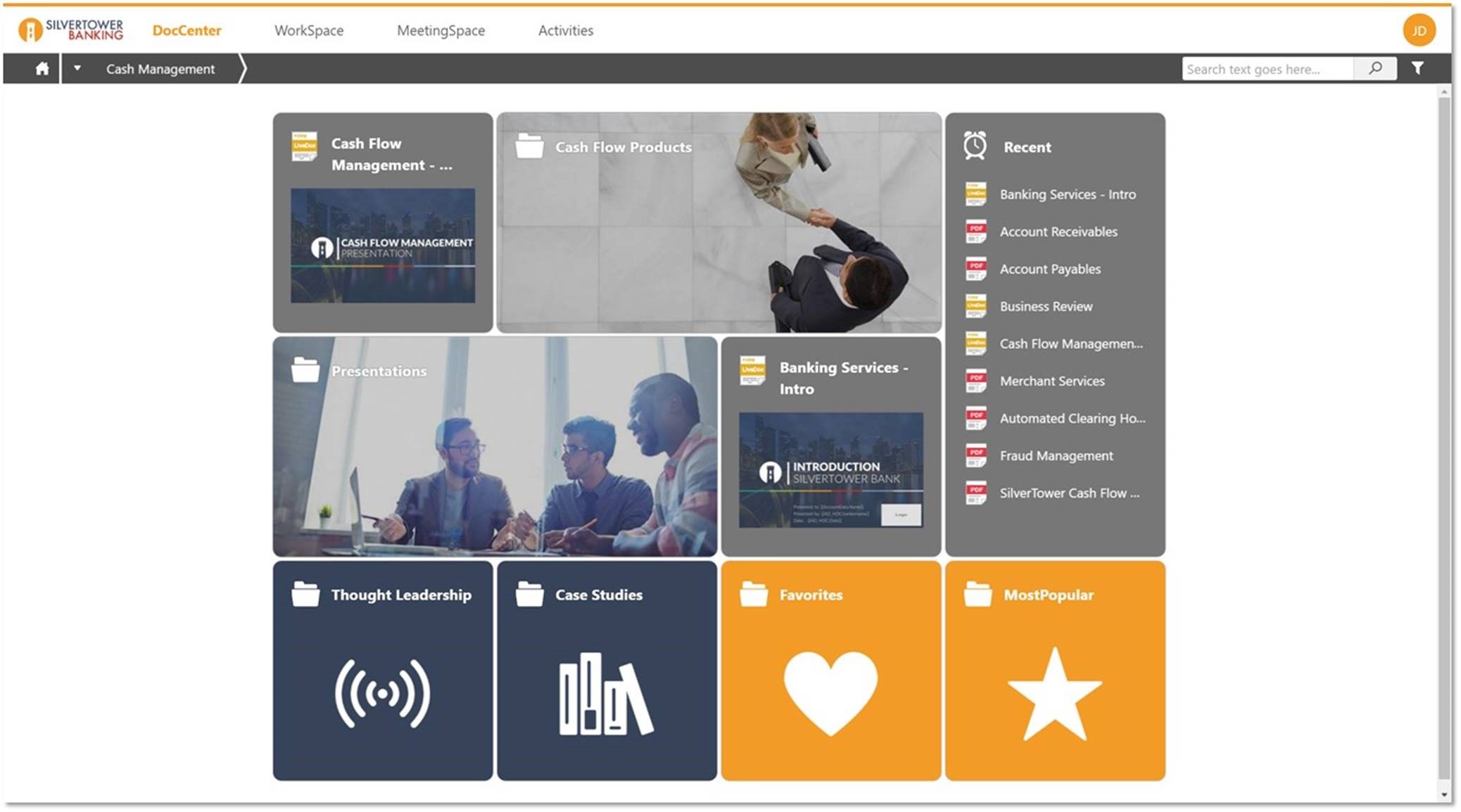
We can quickly generate product-specific proposals.
We've experienced repeated frustrations while trying to edit/update the LiveDoc.
Errors in LiveDoc coding have occasionally produced errors in the generated proposals where certain fields (Customer Name, for example) should have been automatically completed but were not.
A de minimis incentive was given to thank the reviewer for their time. The incentive was not used to bias or drive a particular response, nor was the incentive contingent on a positive endorsement. More Info