Elasticsearch is an enterprise search tool from Elastic in Mountain View, California.
$16
per month
IBM Watson Discovery
Score 9.1 out of 10
N/A
IBM offers Watson Discovery, a natural language processing (NLP) application with options to measure sentiment, detect entities, semantic roles, and other concepts.
N/A
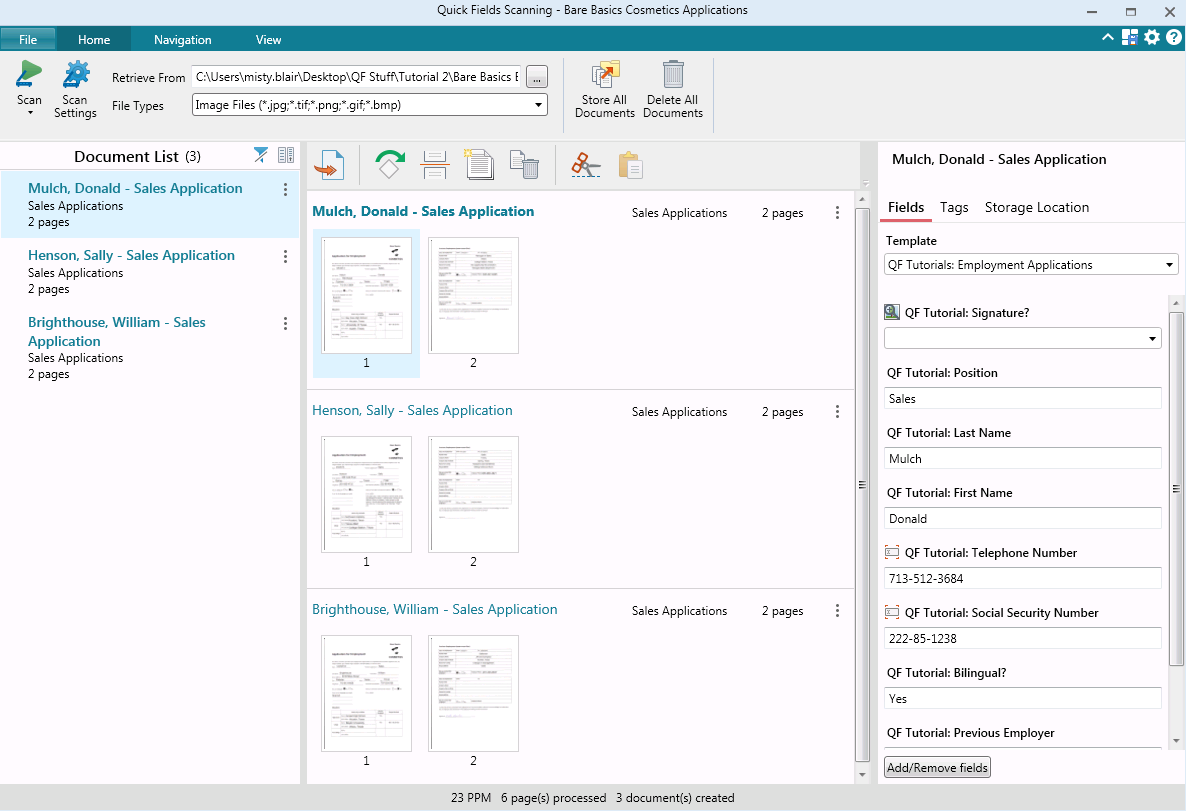
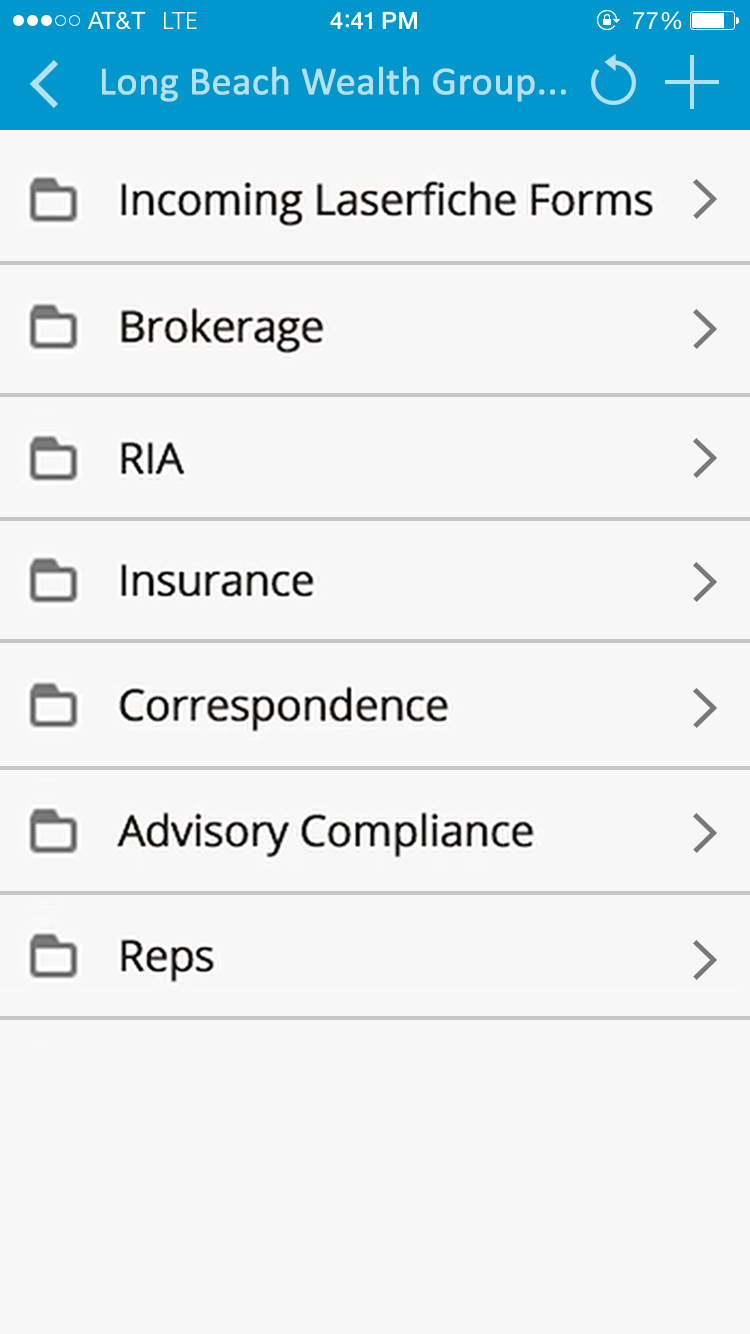
Laserfiche
Score 8.9 out of 10
N/A
Laserfiche has two main editions: Rio and Avante: Laserfiche Rio is designed to meet the needs of large organizations that have more than 100 users. It combines content management functionality with business process management (BPM), security and auditing, unlimited servers and a thin-client interface. Add-ons include records management functionality, public Web portals and production-level document capture and processing.
Laserfiche Avante is an ECM suite for small to medium organizations with…
To be entirely honest, in my review, I have used Elasticsearch in the past, but not in a way similar to that I am using Discovery, and I cannot honestly say that I can compare the two because I used Elasticsearch in infrastructure management and monitoring setup while using the …
IBM Watson Discovery resulted more robust and performant, also the insights were much more interesting than just an AI search from Microsoft or a prompt for ChatGPT.
Elasticsearch is a really scalable solution that can fit a lot of needs, but the bigger and/or those needs become, the more understanding & infrastructure you will need for your instance to be running correctly. Elasticsearch is not problem-free - you can get yourself in a lot of trouble if you are not following good practices and/or if are not managing the cluster correctly. Licensing is a big decision point here as Elasticsearch is a middleware component - be sure to read the licensing agreement of the version you want to try before you commit to it. Same goes for long-term support - be sure to keep yourself in the know for this aspect you may end up stuck with an unpatched version for years.
Overall, IBM Watson Discovery is an amazing technology that we use with our clients to address various business problems, but the biggest challenge has always been about ingesting, analyzing, enriching, and searching huge collections of documents and allowing our end users and SMEs to be able to search for what they need to reduce the time and efforts spent daily on a manual search through various collections of documents. We have successfully managed to reduce manual work by over 80%, and now our SMEs are being used for the skills they have to gather insights rather than do manual work.
Laserfiche is well suited to the submission of simple routine reports to create a record repository. We use it for routine transport reports, audit reports, and anonymous citizen complaints. It creates a simple chronological record of routine events that can be reviewed and easily stored and recalled. Because the reports are in PDF format, it is not well suited to anything that needs to be imported into a common database or amended after submission.
As I mentioned before, Elasticsearch's flexible data model is unparalleled. You can nest fields as deeply as you want, have as many fields as you want, but whatever you want in those fields (as long as it stays the same type), and all of it will be searchable and you don't need to even declare a schema beforehand!
Elastic, the company behind Elasticsearch, is super strong financially and they have a great team of devs and product managers working on Elasticsearch. When I first started using ES 3 years ago, I was 90% impressed and knew it would be a good fit. 3 years later, I am 200% impressed and blown away by how far it has come and gotten even better. If there are features that are missing or you don't think it's fast enough right now, I bet it'll be suitable next year because the team behind it is so dang fast!
Elasticsearch is really, really stable. It takes a lot to bring down a cluster. It's self-balancing algorithms, leader-election system, self-healing properties are state of the art. We've never seen network failures or hard-drive corruption or CPU bugs bring down an ES cluster.
I believe AI should be more flexible about providing data. However, it's understandable that you need to provide the details you need in a more specific and detailed way.
The interface could use more tweaking. Being new to the program, it was kind of hard to navigate.
Luckily, there was a customized feature of the dashboard that I could set up, and having something that you know where you are placed always feels familiar and comfortable.
While Laserfiche has some powerful development tools, it is difficult to manage configurations while promoting code across environments. For example, SQL connections and other environment specific resources have to be manually configured in each environment.
Laserfiche forms are a newer addition to the product family and could use some product maturity. While easy to use for simple forms, once your forms become more complex, you need to accomplish tasks by heavy JavaScript coding.
We plan on renewing Laserfiche for the coming year but also have been considering a scanning and document management solution that can be purchased from our new accounting system company, we are implementing the accounting system this year. It will be a couple years before we make a decision to stay with Laserfiche or change.
To get started with Elasticsearch, you don't have to get very involved in configuring what really is an incredibly complex system under the hood. You simply install the package, run the service, and you're immediately able to begin using it. You don't need to learn any sort of query language to add data to Elasticsearch or perform some basic searching. If you're used to any sort of RESTful API, getting started with Elasticsearch is a breeze. If you've never interacted with a RESTful API directly, the journey may be a little more bumpy. Overall, though, it's incredibly simple to use for what it's doing under the covers.
IBM Watson Discovery has the best user capabilities and easily transform business decision-making portfolio. The automation system saves time used in data analysis as opposed to manual research that consumes a lot of time. The visualization across the dashboard enables my team to interpret complex data and use it to make reliable marketing decisions.
It has an intuitive design that feels very natural to any user that has ever used Outlook or Windows Explorer. There are multiple ways to perform every action in order to help users with various software experiences find the shortcuts and actions they seek quickly and effectively.
I am very satisfied with Laserfiche. I have found that certain larger jobs may are slow. This may also be related to our infrastructure environment. We have been able to tune Laserfiche to increase performance on larger jobs.
Performance, of course, is largely dependent on the underlying environment. Laserfiche does its part with multi-threading, taking advantage of multi-core servers on scanning, workflows, and bots. A SQL-Server back-end is suitable for small to medium-sized company, but may not scale to large, where Oracle would be the better choice. Workflows can be poorly written and perform recursive work slowing down the system. It's better to run batch type workflows at night when possible.
We've only used it as an opensource tooling. We did not purchase any additional support to roll out the elasticsearch software. When rolling out the application on our platform we've used the documentation which was available online. During our test phases we did not experience any bugs or issues so we did not rely on support at all.
Similar to all IBM Watson and Salesforce product solutions, the overall support would be a 10/10. Their provided FAQ's help with frequently experienced issues and if still unable to figure something out, their customer service representatives are always super responsive. With instant chat functions available, it is easy to ask a quick question rather than sitting on hold.
I have never had to wait for help from Laserfiche. If I cannot find the answer online, I can easily send an email to a customer support representative. I have always been helped the same day and my questions have always been resolved. The Empower conference is always a great learning opportunity and the online resources and webinars are top-notch.
Easily accessible 24/7 so am able to complete courseware whenever time allows: Commute to work; waiting for friends or family; at night while relaxing [with a delicious glass of wine!]; whenever and wherever time and circumstances permit. Courseware is well written and presented in an easy to follow and understand format.
As far as we are concerned, Elasticsearch is the gold standard and we have barely evaluated any alternatives. You could consider it an alternative to a relational or NoSQL database, so in cases where those suffice, you don't need Elasticsearch. But if you want powerful text-based search capabilities across large data sets, Elasticsearch is the way to go.
Discovery differs from its competitors due to the better ease of implementation and the high level of natural language recognition, it is equal in integration resources such as API and workflow or process pipeline, but it loses in the price for a high volume of documents and/or research. If you own or plan to use other services from the IBM Watson family, there is no doubt that Watson discovery is your best option. Another important point is if you plan to use a cloud or on-premise service (local server or private cloud).
The core infrastructure of Laserfiche, and the end user experience, is vastly superior. OnBase has a TERRIBLE UI and administration console by comparison. The core architecture of OnBase is also more scattered, while all Laserfiche processes go through a single service. Overall, the Laserfiche product is easier and more intuitive to install, maintain, and use.
We have had great luck with implementing Elasticsearch for our search and analytics use cases.
While the operational burden is not minimal, operating a cluster of servers, using a custom query language, writing Elasticsearch-specific bulk insert code, the performance and the relative operational ease of Elasticsearch are unparalleled.
We've easily saved hundreds of thousands of dollars implementing Elasticsearch vs. RDBMS vs. other no-SQL solutions for our specific set of problems.
Laserfiche has increased the efficiency of our sales reps by giving making all of the historical sales deal information very simple and fast to retrieve.
Laserfiche has increased our efficiency with our AP department and gave department heads the ability to approve invoices where ever they are.
I would say the biggest ROI came with the transparency of the order process for new deals. Before there would be numerous phone calls made daily to find out where an order was within the process, and now you can simply look at all deals at any time.