Overview
ProductRatingMost Used ByProduct SummaryStarting Price
FigJam
Score 7.9 out of 10
N/A
FigJam is an online interactive whiteboard from Figma headquartered in San Francisco, presently in beta (2021) but available to the public in a free trial. The vendor states that in 2022, FigJam will have plans for $0, $8, and $15 per editor, per month.
$5
per month per editor
Lua
Score 1.0 out of 10
N/A
Lua is a mobile-first enterprise communication solution. It powers messaging that is built for business: instant, secure, and keeps everyone accountable. Some key features include: Real-time Secure Messaging, Two-touch Conference Calling, and an Analytics Dashboard.
$0
Per User per Month
Miro
Score 9.1 out of 10
N/A
Miro is the AI Innovation Workspace that brings teams and AI together to plan, co-create, and build the next big thing, faster. With the canvas as the prompt, Miro's collaborative AI workflows keep teams in the flow of work, scale shifts in ways of working, and drive organization-wide transformation.
$10
per month per user
Pricing
FigJamLuaMiro
Editions & Modules
FigJam Professional
$36
per year per editor
FigJam Organization
$60
per year per editor
Lua
Per User per Month
1. Free - To discover what Miro can do. Always free
$0
2. Starter - Unlimited and private boards with essential features
$8
per month (billed annually) per user
3. Business - Scales collaboration with advanced features and security
$16
per month (billed annually) per user
4. Enterprise - For work across the entire organization, with support, security and control, to scale
contact sales
annual billing per user
Offerings
Pricing Offerings
FigJamLuaMiro
Free Trial
YesYesYes
Free/Freemium Version
YesNoYes
Premium Consulting/Integration Services
NoYesNo
Entry-level Setup FeeNo setup fee$2,500 Optional
Additional DetailsMonthly billing also available at $10 per month for the Starter plan, or $20 for the Business plan.
More Pricing Information
Community Pulse
FigJamLuaMiro
Considered Multiple Products
FigJam
Chose FigJam
Positive: FigJam is cheaper than Miro and allows connecting with FigJam, where we design our user interfaces. FigJam is more complete and visually appealing than draw.io, although draw.io is free. FigJam allows calls, which both competitors do not. Negative: Miro has …
Chose FigJam
It is similar, but it provides more usable solutions for brainstorming sessions and presentation purposes. Now empowered with AI and some new cool stuff, it may be the most dangerous competitor to FigJam. However, it will win the race if FigJam is more responsive and gets more …
Chose FigJam
FigJam works best in pair with Figma, as it allows you to keep track of your project in one place, supporting all phases of the process. The functionality is more intuitive, quick, and efficient. Visually, I also prefer it more —it’s more enjoyable and playful, making the …
Chose FigJam
Microsoft Whiteboards are better, in my opinion, but not friendly with Figma files (can't export layered assets, raster only). Better in the sense that the drawing and and marker tools felt more natural and the AI features are just better, like auto-shapes, vs. FigJam's …
Chose FigJam
I feel like Figjam is great at at what it does. It provides a great overall place to be able to use a virtual whiteboard and help teams collaborate. Especially remote teams. It actually does it better than others. There are some tools such as InVision Freehand that at the …
Lua

No answer on this topic

Miro
Chose Miro
As I've mentioned, I've used FigJam before. FigJam is better for more detailed and design based ideation workshops. But Miro is better for people without much tech ability.
Chose Miro
Miro is great for collaborating. I think it definitely is better than Mural and Jamboard because it has more features and it's easier to use. Compared to FigJam, as a designer I would probably choose FigJam to have everything in the same product. However, in my opinion, Miro …
Chose Miro
Mural is too simple FigJam is too much for designers and devs only, not for broader business
Chose Miro
We adopted Miro before we moved from Sketch to Figma, which is part of why it beat out FigJam for us. It was already somewhat entrenched before FigJam became available to us. Also the licensing model and the fact that Miro is available to and used by most everyone in our corp …
Chose Miro
I would say that Miro is a better choice when you compare their performance and can be used in multiple roles. FigJam is good for collaboration but if you want to get more work done, Miro is the obvious choice.
Chose Miro
I believe Miro is better than FigJam for most teams, the main reason for that is that it supports more complex workflows, other would be Miro is more versatile for planning, which is really crucial for my profile.
Chose Miro
We started our investigation with FigJam and analyzed it for a very long time, but after using it for some time, we found out it is not good for the medical industry, as it is designed mostly for IT. After that we used Miro and realized that it is the best for our industry, so …
Chose Miro
lucidspark is doing great but still delivers a disjointed experience (some features in Lucid Chats, others in Lucid Spark) - They do a better job providing pages inside the document - also more flexibility with customization

FigJam is deeply integrated to Figma, so brings some …
Chose Miro
For the moment, we are more familiar with Miro and its boards, because we have known the templates and tools for some time. In the future, however, I believe that FigJam, being linked to Figma and detailed design, will replace it, because it is convenient to have the …
Chose Miro
I tried other tools like Mural and FigJam before using Miro. FigJam was easy to understand, but it felt too simple for the kind of big projects my team works on. Mural was fine, but it did not have enough features to handle complex work or large teams. Miro worked much better …
Chose Miro
It is quite similar to FigJam, but I have a feeling that it's focusing on the collaboration part, whereas FigJam is an addition to Figma, which is clearly a UI-oriented prototyping tool. It's clearer and more user-friendly than Mural. I use Miro in 90% of cases - FigJam is used …
Chose Miro
Miro offers greater versatility and scalability than Mural and FigJam for cross-functional use. FigJam primarily serves design teams, while Mural focuses on structured workshops, and Miro supports a much broader array of use cases, including strategy, marketing, client …
Chose Miro
We find Miro very user friendly and from dev point of view documentation is much easier than others.
Chose Miro
Miro is more powerful than these tools, has some cool features but it's not as good the way it's designed. In my opinion, the general usability is where it suffers the most.
Chose Miro
Figma: best for design/prototyping. Miro wins when the goal is to align, map processes, and make group decisions (without relying on a design workflow).

Notion: best for final documentation and knowledge base. Miro is better for thinking through and building the visual …
Chose Miro
I just think Miro's interface design and usage is better than figJams, it just feels and work better
Chose Miro
I find Miro much easier to use in terms of usability and much more inviting to use. I also observe the people that use it for the first time with the people that participated in our workshops that they don't find it intimidating, which is an importanting to make the people …
Chose Miro
We prefer Miro over any other utility because of the following reasons:

Chose Miro
My experience is that I've used Trello similar to Jira and Confluence. It's more for task organizations and resourcing. For draw.io, I've used it for visual representations of flowcharts and diagrams. Finally, for Miro, I use it for both purposes and for other design tasks that …
Features
FigJamLuaMiro
Communication
Comparison of Communication features of Product A and Product B
FigJam
-
Ratings
Lua
7.0
1 Ratings
13% below category average
Miro
-
Ratings
Chat00 Ratings7.01 Ratings00 Ratings
Notifications00 Ratings7.01 Ratings00 Ratings
Best Alternatives
FigJamLuaMiro
Small Businesses
Canva
Canva
Score 9.1 out of 10
Stackby
Stackby
Score 8.9 out of 10
Lucid Visual Collaboration Suite
Score 8.8 out of 10
Medium-sized Companies
Canva
Canva
Score 9.1 out of 10
Troop Messenger
Troop Messenger
Score 9.8 out of 10
Lucid Visual Collaboration Suite
Score 8.8 out of 10
Enterprises
Whimsical
Whimsical
Score 9.3 out of 10
HCL Connections
HCL Connections
Score 9.0 out of 10
Lucid Visual Collaboration Suite
Score 8.8 out of 10
All AlternativesView all alternativesView all alternativesView all alternatives
User Ratings
FigJamLuaMiro
Likelihood to Recommend
8.0
(6 ratings)
1.0
(1 ratings)
9.1
(6069 ratings)
Likelihood to Renew
-
(0 ratings)
-
(0 ratings)
9.4
(185 ratings)
Usability
8.6
(3 ratings)
-
(0 ratings)
8.6
(451 ratings)
Availability
-
(0 ratings)
-
(0 ratings)
9.5
(20 ratings)
Performance
-
(0 ratings)
-
(0 ratings)
9.0
(19 ratings)
Support Rating
-
(0 ratings)
5.0
(1 ratings)
7.7
(63 ratings)
In-Person Training
-
(0 ratings)
-
(0 ratings)
1.0
(1 ratings)
Online Training
-
(0 ratings)
-
(0 ratings)
9.0
(7 ratings)
Implementation Rating
-
(0 ratings)
-
(0 ratings)
9.0
(3659 ratings)
Configurability
-
(0 ratings)
-
(0 ratings)
8.6
(14 ratings)
Ease of integration
-
(0 ratings)
-
(0 ratings)
8.1
(4001 ratings)
Product Scalability
-
(0 ratings)
-
(0 ratings)
8.6
(19 ratings)
Vendor post-sale
-
(0 ratings)
-
(0 ratings)
6.5
(7 ratings)
Vendor pre-sale
-
(0 ratings)
-
(0 ratings)
5.9
(8 ratings)
User Testimonials
FigJamLuaMiro
Likelihood to Recommend
Figma
If you're working in small product teams, like triads, and already using Figma, this is a no brainer for white boarding, quick/fast sketches, wireframing, collaborative doodling ... it gets less appropriate with large teams, infrequent. IMO, due to the way in which they price, it's better to keep the inner circle small-ish.
Read full review
Lua
I wouldn't recommend Lua because they were recently acquired by another company and will be shutting down. It was unfortunate that we were only given 2 months notice right after signing up for another 1-year term.
Read full review
Miro
Miro is the best tool for remote collaboration; it offers features that make teamwork feel natural and engaging regardless of our location. All-in-one and most reliable for visualizing ideas and workflows. It allows everyone to put ideas on one whiteboard that is easy for the entire team to have access, comments, and give updates, which eliminates the back-and-forth emails.
Read full review
Pros
Figma
  • One file, auto updated, no need to get latest
  • Easy to preview
  • Lack of client is benefit to some (not me)
Read full review
Lua
  • It is easy to communicate in real-time.
  • Easy to set up different groups.
Read full review
Miro
  • Makes internal coordination between admin team and tutors extremely painless. It's like a single place where everyone can drop ideas, get updates and notes without loss of context which usually happens in long email threads.
  • Versioning and board history are handled very well, which drastically reduces the workload. They help me track how a policy or math guideline has evolved, and also make it easy to revert changes if something doesn't work.
  • Comments stick exactly where they are meant to, making internal reviews much clearer. Admins don't have to guess which note refers to which rule or section.
  • Exports are clean, so even non-Miro teammates get it instantly.
Read full review
Cons
Figma
  • It misses easy-to-use pre sets of diagrams. The ones presented seem to be not native and hard to use. Miro is a good benchmark.
  • Navegating throught projects in the main page is confusing, specially when people are not admin users.
  • It should suggest ways of organizing the pages designers do, specially when the project is big and have many pages and sections.
  • It could have, for example, a draft version for every page, so that one can hide it when they finish the work, but can open it whenever something needs to be modified, versioning the job.
Read full review
Lua
  • The application for iPad is not optimized.
Read full review
Miro
  • As a designer, I miss some more creative features. I can't even get really into designing small things (like paths). Many of my colleagues have already switched to the Figma board because it is possible there.
  • Things often get lost in the workflow, especially in teams. Working on the same file often leads to misunderstandings and can be frustrating. For example, if text is accidentally deleted and cannot be recovered, or if images become distorted.
  • The scale on the board is missing, which often leads to size differences.
Read full review
Likelihood to Renew
Figma
No answers on this topic
Lua
No answers on this topic
Miro
I have advocate for the renew of Miro quite few times, however, it is not under my control as the decision is made in another team with their own budget. I would buy for my own entrepreneur projects (1-2 members) as I do know the value and work there 100%. So, I would pay out of my own pocket to get the value. However, If I wouldn't know the value it provides, it would be hard to decide with the current freemium features
Read full review
Usability
Figma
I don't use it often, because the organization I work in uses a different environment on a commo basis. This is rather used between the designers, who prototype the solutions in Figma - they just have it as a workbook/notebook for their ideas. However, if those need to be shared with stakeholders or other organization members, the designers are expected to use a different environment.
Read full review
Lua
No answers on this topic
Miro
I love it. It should perhaps even be a 10, but there are only minor things that get me when it comes to trying to move around the images on the page and selecting images on the page. Nevertheless, I've used this tool randomly over various years numerous times.
Read full review
Reliability and Availability
Figma
No answers on this topic
Lua
No answers on this topic
Miro
I only give a 9/10 because of the speed at which it loads. I have never experienced issues with Miro logging me out early, or some other technical issue causing the program to crash, or even it just loading in perpetuity without ever actually coming up (unlike other programs such as SFDC). It take a minute for all of my boards to come up after I click on it in my favorites, but besides that, it's all good.
Read full review
Performance
Figma
No answers on this topic
Lua
No answers on this topic
Miro
Sometimes it gets quite slow and there is a correlation between this and the size of the board. Hence we are trying to segment the boards based on product stages or projects so that the size doesn't go big. When you go from discovery to delivery on a simple board, it will get large and difficult to load, even crash or go white screen
Read full review
Support Rating
Figma
No answers on this topic
Lua
They are closing operations, so there's no support to rate
Read full review
Miro
We have never reached out to or contacted support because Miro's platform has been incredibly intuitive and user-friendly. The comprehensive resources available, such as tutorials, documentation, and community forums, have provided all the guidance we needed. The seamless integration with our existing tools and the reliability of the platform have ensured that we rarely encounter issues that require external assistance. This self-sufficiency has allowed us to focus more on our projects and collaboration without interruptions. Overall, our experience with Miro has been smooth and efficient, eliminating the need for additional support
Read full review
Online Training
Figma
No answers on this topic
Lua
No answers on this topic
Miro
There was a series of webinars which Miro hosted with our organization that went over the basics, then progressively became more advanced with additional sections. The instructors were knowledgeable, and provided examples throughout the sessions, as well as answered peoples' questions. There was ample time and experience on the calls to cover a range of topics. The instructors were also very friendly and sociable, as well as honest. Of course Miro isn't a "God-tool" that does absolutely everything, but the instructors were aware and emphasized the strengths where Miro had them and sincerely accepted feedback.
Read full review
Implementation Rating
Figma
No answers on this topic
Lua
No answers on this topic
Miro
Easy to learn, Miro has a series of videos on YouTube that effectively taught this program to my team members and me. The program is drag-and-drop and works excellently. People pick up on how to use it efficiently, and it's great for organizing ideas more freely. This product is more challenging for some older audiences who are not accustomed to using a touchpad, but for most, it was very easy to use.
Read full review
Alternatives Considered
Figma
FigJam works best in pair with Figma, as it allows you to keep track of your project in one place, supporting all phases of the process. The functionality is more intuitive, quick, and efficient. Visually, I also prefer it more —it’s more enjoyable and playful, making the experience much more engaging.
Read full review
Lua
We chose Lua because of their price point and feature set compared to other tools.
Read full review
Miro
I use both for different things really. Figma is better for design and prototype applications with coding being enabled in Figma (which isn't part of Miro's tools). As I said earlier, I use other programmes when there is a lack in Miro, in this case the coding element. Also Miro is better suited for BAU, so I can utilise this by bringing part of the business into using it. Figma isn't collaborative enough for this purpose. Miro overall has a better user experience
Read full review
Scalability
Figma
No answers on this topic
Lua
No answers on this topic
Miro
Maybe is possible now so... Could be useful to manage in some way source code for the projects? not to edit so when we make solutions with different components in MIro, maybe each component could redirect to the source code of this component
Read full review
Return on Investment
Figma
  • FigJam saves a lot of time ... it's nice to have all my visual notes/sketches within Figma itself where a lot of design work lives
  • The project organization and other features contribute to the ease of answering that age old question ... "where can I find that mockup?"
  • Dev Mode is pretty cool. Not many use it, so some designers may spend unnecessary time spec'ing out things that no one will appreciate, let alone look at.
Read full review
Lua
  • It has been great for communication and broadcasts, its a shame that they are closing down.
Read full review
Miro
  • Offer infinite canvas that allow me to brainstorm, organize ideas and think visually.
  • Effective for creating prototypes and wireframes, which saves time, reduces back-and-forth, and prevents costly mistakes.
  • Features like mind mapping, kanban boards, and flowcharts help me to visualize complex projects easily.
Read full review
ScreenShots

Lua Screenshots

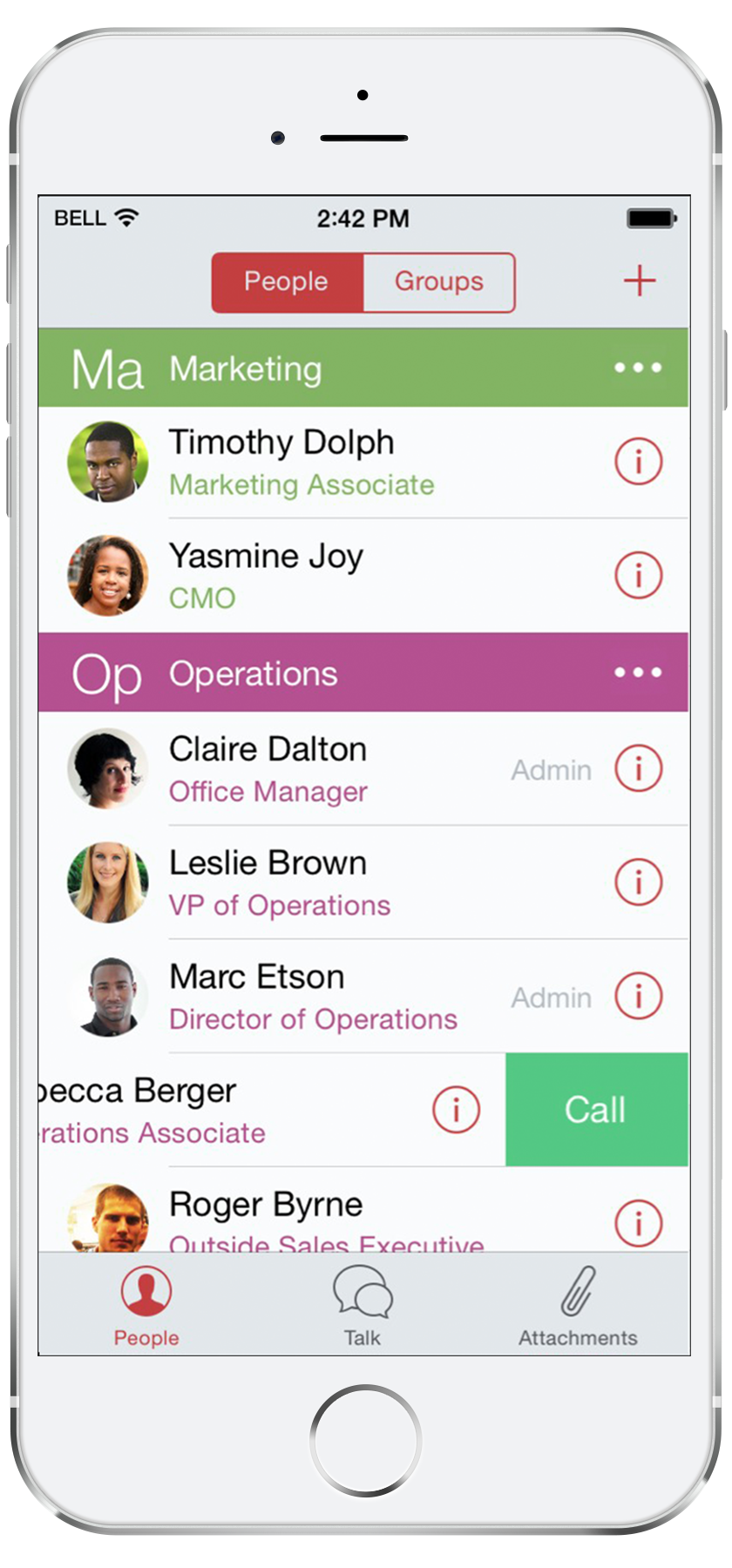
Screenshot of A Group Conversation With Files and Photos (iPhone)Screenshot of A Dedicated Tab for All Your Ongoing Conversations Broadcasts (Android)Screenshot of An Interactive Directory Organized by Departments, Roles, and Custom Groups (iPhone)Screenshot of Two-touch Conference Calling, No Dial-ins, No Passcodes (iPhone)Screenshot of A Dedicated Repository for All Attachments (Android)Screenshot of Communication Analytics Dashboard (Web)

Miro Screenshots

Screenshot of Miro's design sprint templates, used to solve big challenges, create new products or improve existing ones.Screenshot of the Sprint Planning features in Miro, that assists Development Teams in creating a transparent understanding of what can be built and how. Users can run sprints and turn a team into creative and active participants. Today, many organizations use Agile tools to manage software development and other non-IT projects.Screenshot of the PI Planning Template that brings teams toward one vision of what stories to develop. Used to manage a backlog, increase productivity, and build the foundation for a successful PI Planning event. Miro’s PI Planning Template helps to get an overview of any PI Planning event, with step-by-step frames to guide the process.Screenshot of diagrams, concept maps, and system mapping templates used to communicate complex flows and create a shared understanding. Users can check off all the essential steps of the diagramming process and gain a complete overview of operations with Miro's diagramming templates collection.