Google Analytics is perhaps the best-known web analytics product and, as a free product, it has massive adoption. Although it lacks some enterprise-level features compared to its competitors in the space, the launch of the paid Google Analytics Premium edition seems likely to close the gap.
$0
per month
Verint Workforce Management
Score8.3 out of 10
N/A
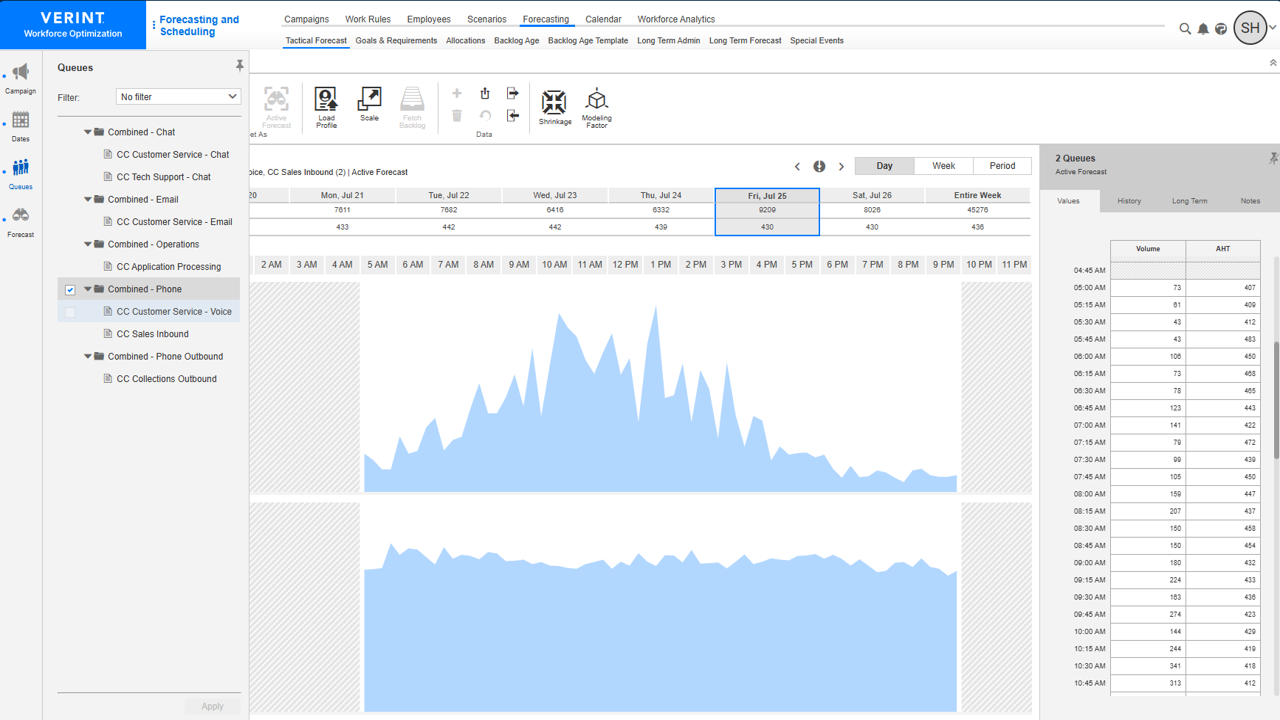
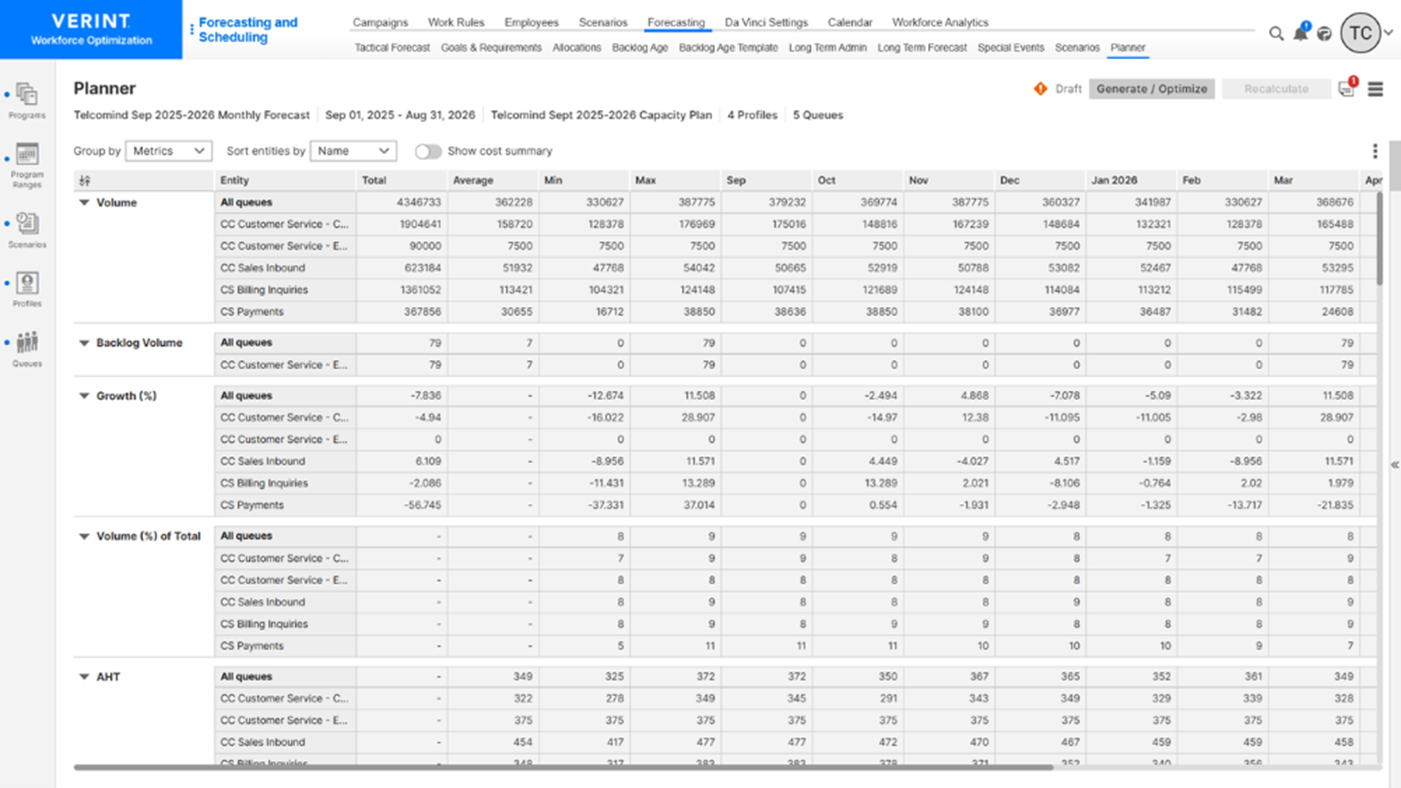
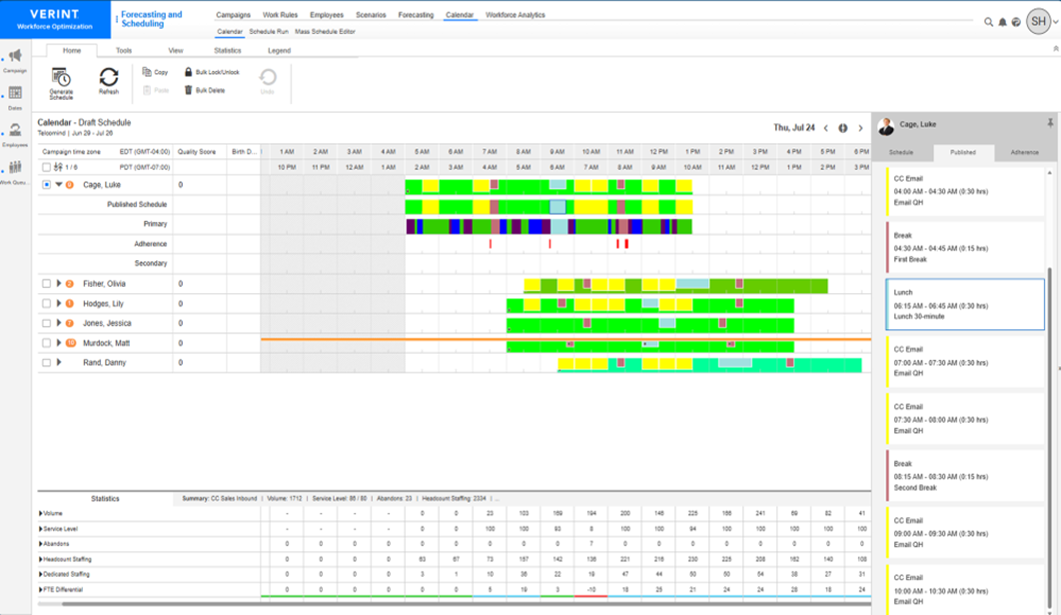
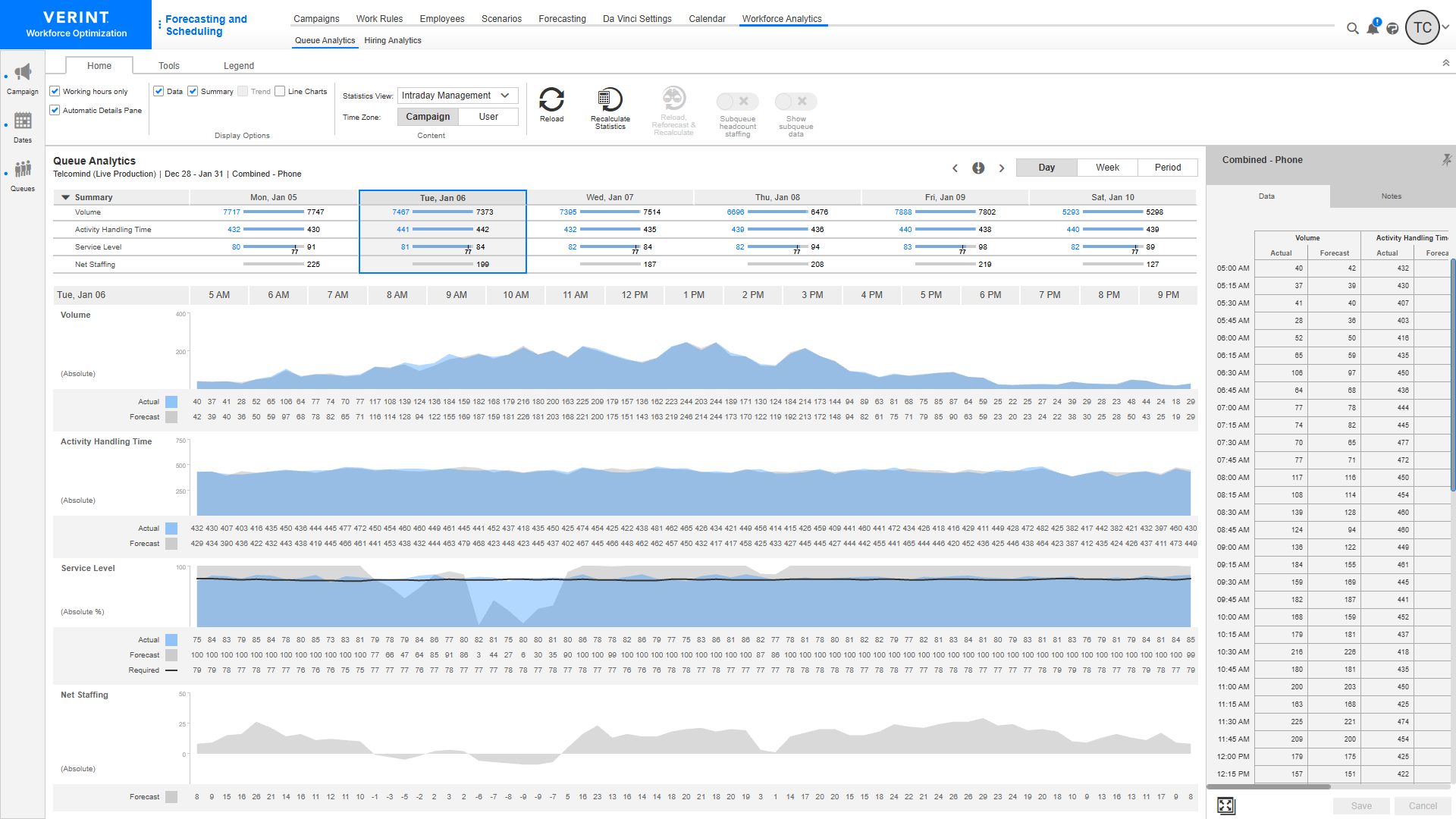
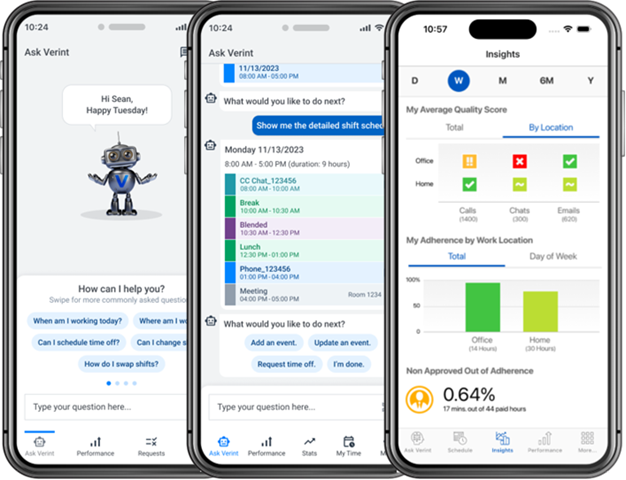
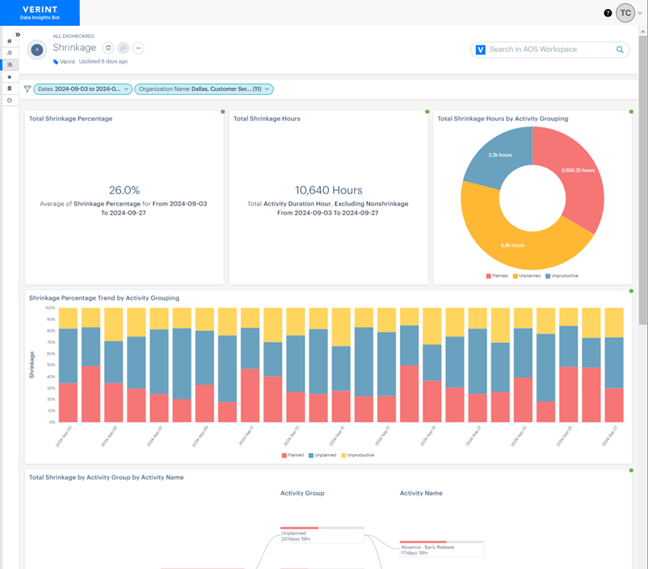
Verint Workforce Management is a solution that
forecasts customer demand, analyzes and predicts the number of employees
needed, and optimizes employee schedules to align with demand across contact
center and back-office operations, to help organizations to meet CX and efficiency
goals.
Verint WFM is part of Verint Open Platform,
which helps organizations' customer service operations to lower costs and elevate EX and CX
with AI-powered bots that automate CX workflows. The…
N/A
Pricing
Google Analytics
Verint Workforce Management
Editions & Modules
Google Analytics 360
150,000
per year
Google Analytics
Free
WFM Enterprise
-
per month per user
WFM Enterprise SaaS
-
per month per user
Offerings
Pricing Offerings
Google Analytics
Verint Workforce Management
Free Trial
No
No
Free/Freemium Version
Yes
No
Premium Consulting/Integration Services
No
Yes
Entry-level Setup Fee
No setup fee
No setup fee
Additional Details
—
Verint offers a named user pricing model with SaaS and on-premise delivery methods.
Google Analytics is particularly well suited for tracking and analyzing customer behavior on a grocery e-commerce platform. It provides a wealth of information about customer behavior, including what products are most popular, what pages are visited the most, and where customers are coming from. This information can help the platform optimize its website for better customer engagement and conversion rates. However, Google Analytics may not be the best tool for more advanced, granular analysis of customer behavior, such as tracking individual customer journeys or understanding customer motivations. In these cases, it may be more appropriate to use additional tools or solutions that provide deeper insights into customer behavior.
I think Verint Workforce Managementi s well suited for all scenarios. No system is perfect, but understanding the gaps allow you to be effective considering those gaps. The one scenario I can think of is if you don't need to forecast. We have some departments where volume is controlled (example Outbound). Because of the business model we have staffing on a given day or hour isn't important. Only agents are working 40 hours a week.
A de minimis incentive was given to thank the reviewer for their time. The incentive was not used to bias or drive a particular response, nor was the incentive contingent on a positive endorsement. More Info
A de minimis incentive was given to thank the reviewer for their time. The incentive was not used to bias or drive a particular response, nor was the incentive contingent on a positive endorsement. More Info
A de minimis incentive was given to thank the reviewer for their time. The incentive was not used to bias or drive a particular response, nor was the incentive contingent on a positive endorsement. More Info
A de minimis incentive was given to thank the reviewer for their time. The incentive was not used to bias or drive a particular response, nor was the incentive contingent on a positive endorsement. More Info
Usability from the end user. Our leaders in particular struggle with navigation and getting the information they need
Forecasting solutions outside of the basic call center. We do forecasting for back office groups and need to use different models than what is offered today, This requires us to do forecasting outside of Verint Workforce Management.
Improved Schedule Change request. Our business has a more flexible model for SCR. While we use the shift bid for other purposes, we need more flexible way to allow reps to submit for SCR
A de minimis incentive was given to thank the reviewer for their time. The incentive was not used to bias or drive a particular response, nor was the incentive contingent on a positive endorsement. More Info
We will continue to use Google Analytics for several reasons. It is free, which is a huge selling point. It houses all of our ecommerce stores' data, and though it can't account for refunds or fraud orders, gives us and our clients directional, real time information on individual and group store performance.
A de minimis incentive was given to thank the reviewer for their time. The incentive was not used to bias or drive a particular response, nor was the incentive contingent on a positive endorsement. More Info
Whilst Verint Workforce Management is doing much of the work we were hoping it would do, there are some limitations that cause hesitancy when deciding if it is the tool for the future. No further exploration has taken place to seek alternatives to date. It is good for the Contact element of our business but not for the rest of the business, meaning we have to use two planning tools currently.
Google Analytics provides a wealth of data, down to minute levels. That is it's greatest detriment: find the right information when you need it can be a cumbersome task. You are able to create shortcuts, however, so it can mitigate some of this problem. Google is continually refining Analytics, so I do not doubt there will be improvements
As someone who was new to the WFM world just over 2 years ago but very tech savvy I found it very not user friendly. The interface is not intuitive from a rep perspective or an administrator perspective. While Verint Workforce Management could benefit many organizations at our company the user interface is holding back other organizations from wanting to implement it.
A de minimis incentive was given to thank the reviewer for their time. The incentive was not used to bias or drive a particular response, nor was the incentive contingent on a positive endorsement. More Info
We all know Google is at top when it comes to availability. We have never faced any such instances where I can suggest otherwise. All you need is a Google account, a device and internet connection to use this super powerful tool for reporting and visualising your site data, traffic, events, etc. that too in real time.
This has been a catalyst for improving our site's traffic handling capabilities. We were able to identify exit% from our sites through it and we used recommendations to handle and implement the same in our sites. We have been increasing the usage of Google Analytics in our sites and never had any performance related issues if we used Analytics
The Google reps respond very quickly. However, sometimes they can overly call you to set up an apportionment. I'm very proficient and sometimes when I talk to reps, they give beginner tutorials and insights that are a waste of time. I wish Google would understand my level of expertise and assign me to a rep (long-term) that doesn't have to walk me through the basics.
A de minimis incentive was given to thank the reviewer for their time. The incentive was not used to bias or drive a particular response, nor was the incentive contingent on a positive endorsement. More Info
The team always work diligently to provide answers to my questions and fixes to my issues. The support team has remained consistent and is familiar with our business needs and that is something that is very beneficial as we grow and change
A de minimis incentive was given to thank the reviewer for their time. The incentive was not used to bias or drive a particular response, nor was the incentive contingent on a positive endorsement. More Info
Training was covered in full day sessions that went very fast with no way of recording the information for later review. This made it hard to capture & retain all the details of information.
A de minimis incentive was given to thank the reviewer for their time. The incentive was not used to bias or drive a particular response, nor was the incentive contingent on a positive endorsement. More Info
love the product and training they provide for businesses of all sizes. The following list of links will help you get started with Google Analytics from setup to understanding what data is being presented by Google Analytics.
Training is more broad on specific use cases. It would be good to have training based on our current situations as we deal with so many unique setups & client needs.
A de minimis incentive was given to thank the reviewer for their time. The incentive was not used to bias or drive a particular response, nor was the incentive contingent on a positive endorsement. More Info
I think my biggest take away from the Google Analytics implementation was that there needs to be a clear understanding of what you want to achieve and how you want to achieve it before you start. Originally the analytics were added to track visitors, but as we became more savvy with the product, we began adding more and more functionality, and defining guidelines as we went along. While not detrimental to our success, this lack of an overarching goal resulted in some minor setbacks in implementation and the collection of some messy data that is unusable.
The team helping us did a great job training our WFM leaders on how to use the tool from forecasting, to schedule updates to maintenance. They allowed us to be involved in implementation but also did a lot of the initial heavy lifting allowing us to stay focussed on the tasks at hand. It was a great experience and one I would hope occurs again should we ever need to implement a new tool again.
A de minimis incentive was given to thank the reviewer for their time. The incentive was not used to bias or drive a particular response, nor was the incentive contingent on a positive endorsement. More Info
I have not used Adobe Analytics as much, but I know they offer something called customer journey analytics, which we are evaluating now. I have used Semrush, and I find them much better than Google Analytics. I feel a fairly nontechnical person could learn Semrush in about a month. They also offer features like competitive analysis (on content, keywords, traffic, etc.), which is very useful. If you have to choose one among Semrush and Google Analytics, I would say go for Semrush.
A de minimis incentive was given to thank the reviewer for their time. The incentive was not used to bias or drive a particular response, nor was the incentive contingent on a positive endorsement. More Info
I find that Verint wants to give you a lot of customisation options, but this can potentially lead to a lot of work, but is also offers us something that we didn't have before, the opportunity to give benefits back to our employees with tools like request leave, shift swap, shift bidding, timeflex, etc. This is why we chose Verint Workforce Management.
A de minimis incentive was given to thank the reviewer for their time. The incentive was not used to bias or drive a particular response, nor was the incentive contingent on a positive endorsement. More Info
Google Analytics is currently handling the reporting and tracking of near about 80 sites in our project. And I am not talking about the sites from different projects. They may have way more accounts than that. Never ever felt a performance issue from Google's end while generating or customising reports or tracking custom events or creating custom dimensions
A de minimis incentive was given to thank the reviewer for their time. The incentive was not used to bias or drive a particular response, nor was the incentive contingent on a positive endorsement. More Info
Staffing optimization - With the Verint tool, we have been able to optimize our workforce, reduce our staff and centralize our processes.
Employee Engagement - Our employees always know where their performance stands so they can take ownership in their performance.
We have implemented WFM in several areas of the company and have been able to improve those departments which have never had a tool to help in back office operations.
A de minimis incentive was given to thank the reviewer for their time. The incentive was not used to bias or drive a particular response, nor was the incentive contingent on a positive endorsement. TR verified that a representative sample of customers was invited. More Info