Kaseya Virtual System Administrator (VSA) is a cloud-based Remote Monitoring and Management software. VSA unifies the monitoring of system infrastructure and endpoints and is designed for use by IT teams and MSP’s. It offers a robust crowd-source automation scripts library, as well as antivirus and malware capabilities with real-time threat alerts.
N/A
Panda Systems Management
Score 7.6 out of 10
N/A
Panda Security now offers system monitoring, client-less device management, patch management, and other capabilities via Panda Systems Management.
N/A
Syncro
Score 7.4 out of 10
N/A
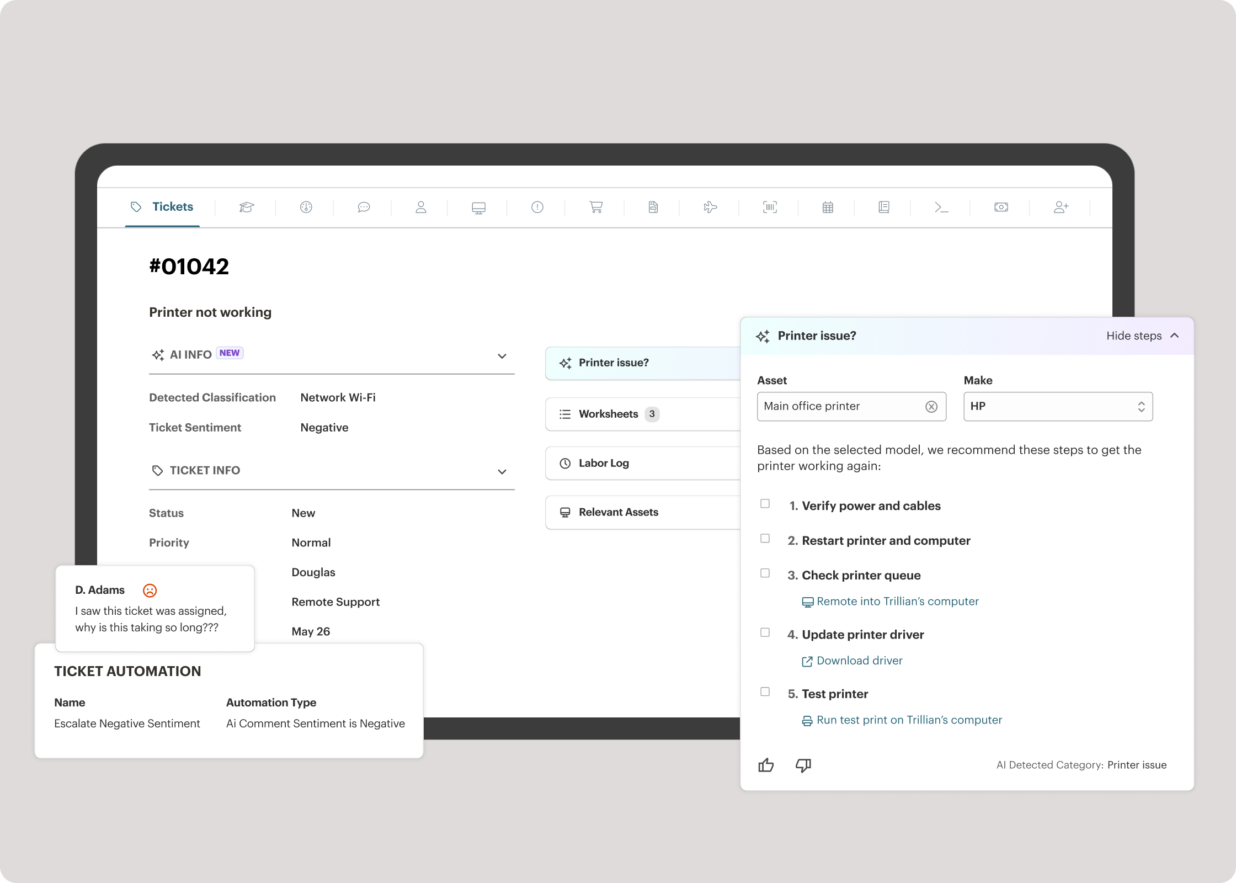
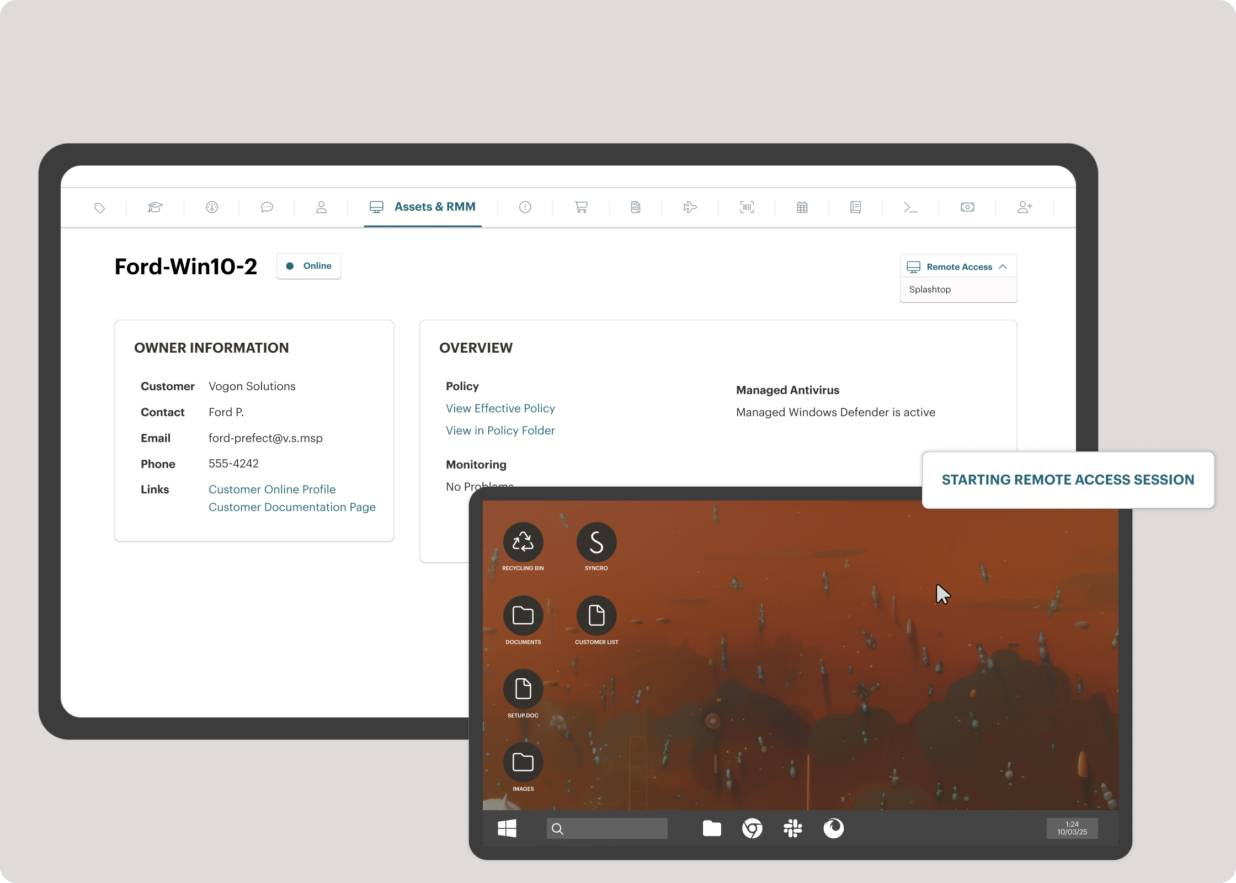
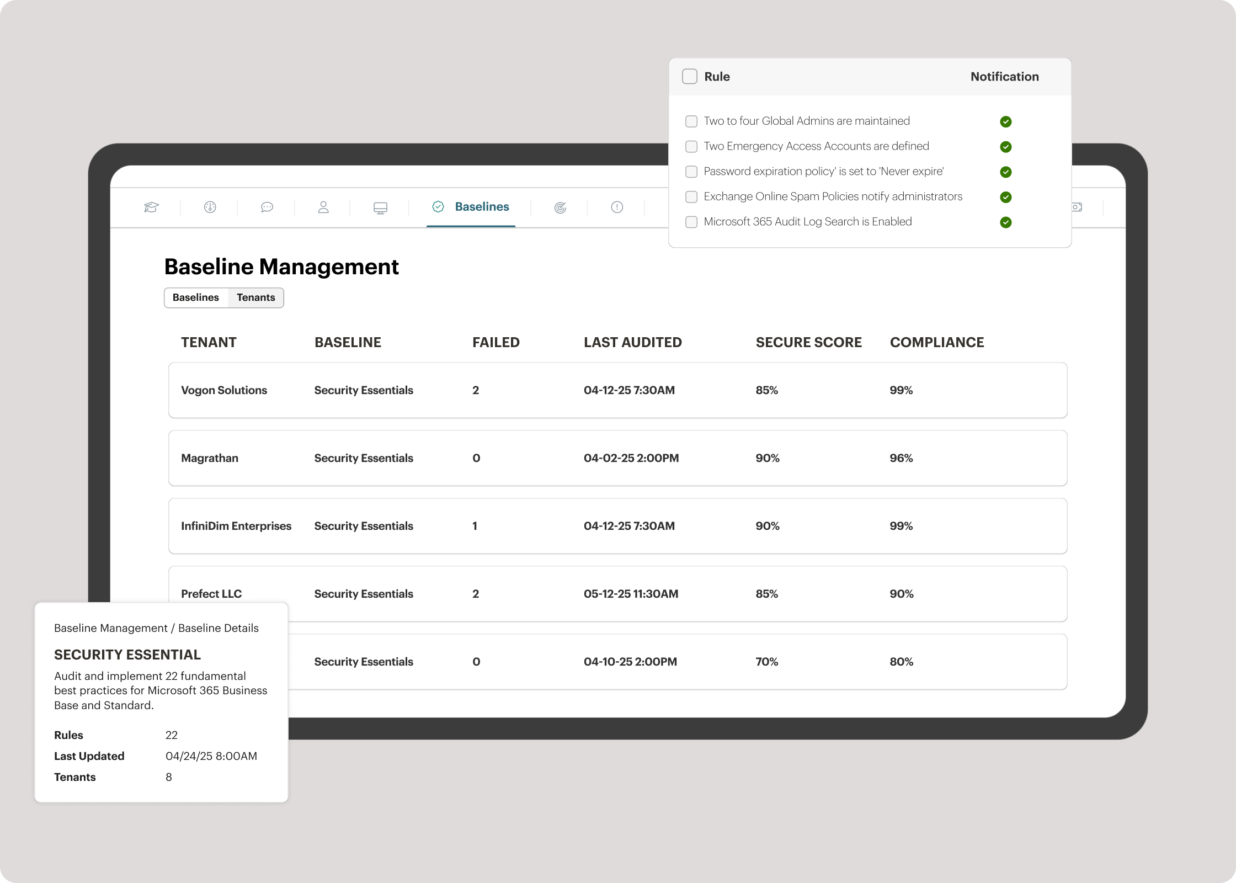
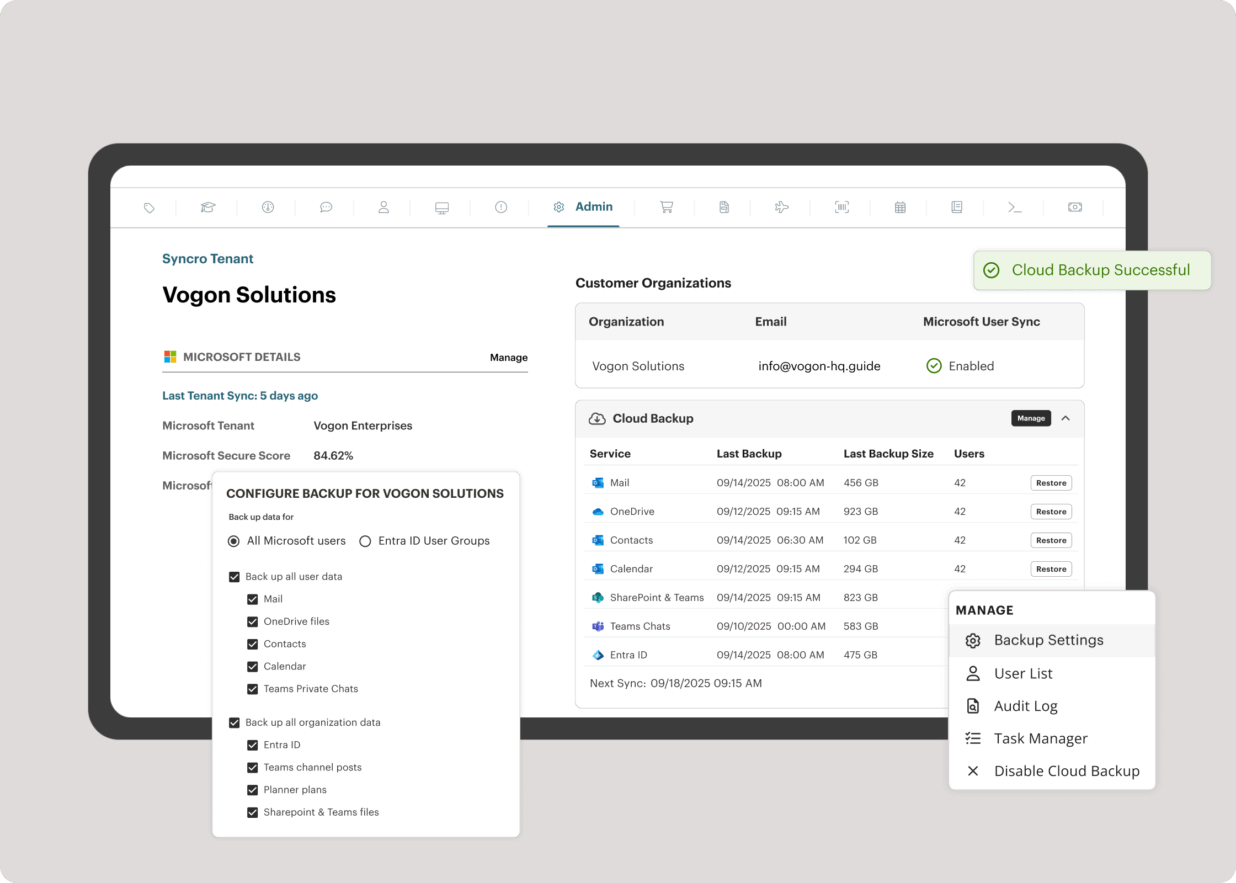
Syncro offers an Extended Monitoring and Management (XMM) platform for midsized MSPs and internal IT teams. The platform integrates RMM (endpoint management), professional services automation (PSA), and Microsoft 365 multi-tenant management to help organizations simplify operations, strengthen security, and scale.
$159
per month per user
Pricing
Kaseya VSA
Panda Systems Management
Syncro
Editions & Modules
No answers on this topic
No answers on this topic
Core
$159
per month per user
Team
$209
per month per user
Offerings
Pricing Offerings
Kaseya VSA
Panda Systems Management
Syncro
Free Trial
No
No
Yes
Free/Freemium Version
No
No
No
Premium Consulting/Integration Services
No
No
No
Entry-level Setup Fee
No setup fee
No setup fee
No setup fee
Additional Details
—
—
Discount available for annual payment.
More Pricing Information
Community Pulse
Kaseya VSA
Panda Systems Management
Syncro
Considered Multiple Products
Kaseya VSA
No answer on this topic
Panda Systems Management
No answer on this topic
Syncro
Verified User
Manager
Chose Syncro
Syncro does not have every bell or whistle (especially when compared with Kaseya VSA). However from a cost versus feature perspective, Syncro wins hands down.
Syncro versus Atera - they are very similar products and also use the per agent pricing. This was a big driver for us …
If the software functioned as it was intended, it would be probably a 7 out of 10. It lacks the majority of customization that SolarWinds N-central supplies, but also supports some customization that other solutions we have tried do not. Again, if the software didn't consistently break, the ability to implement automated scripting via PowerShell and the capacity to manage 10+ endpoints at once in different windows is great.
Panda Systems Management is well suited for small to medium sized organizations looking for a tool to centralize asset management not only physical but also assist with rapid deployment of patches, applications, etc. It proves also to be very beneficial as permits (to and extent) to do troubleshooting without interfering or interrupting end users.
SyncroMSP is great for MSPs starting out or wanting to keep their costs low. Some RMM software will charge per install - and price breaks only available as your base grows to a significant number. As Syncro is a "per agent" cost, the costs for an MSP are (a) known and (b) easily to manage as the team grows. The third-party integration element is very useful for MSPs looking to be able to not only onsell additional services, but the management of these services is simple for anybody to use
Being able to see systems that are not within the local network allows us to be able to troubleshoot and work with the end users no matter where they are or where we are as it is cloud based.
Several functions can be "automated" so staff do not have to keep going back and scanning for updates, push Windows updates and or push sensor updates.
VSA offers a variety of system information about all of the assets that have the endpoints installed on them so we can easily see the system specs without having to actually connect to them and pull up the SysInfo on each unit.
Support - Like all other competitors support is OK but the product is robust enough to reduce support requirements.
Customer Service - another team that is a bit poor especially when the issue involves multiple departments. Otherwise, the direct rep is very friendly and professional.
I think this is a solid tool for enterprise IT, however it would be higher if Kaseya VSA addresses the areas raised around recent stability, their support team, multiple session & screen support etc. It does do it's main job and allows an easy way for IT to operate and is mostly fine.
It was lots of back and forth email communication whenever I tried to solve my connection issues. I would send them detailed logs of the date, time, computer, and more of when I was experiencing connection issues. All I would get is an email back a few days later saying that they didn't find an issue in the service
We rate and recommend Panda Systems Management not only because it is a very effective and very cost effective solution that pays itself for us (ROI) extremely fast, but also due to all reason described previously and possibly a few more I'm sure we missed here. I do have to says tech support for this solution sometimes leave a bit to be desired.
There are other products that do some of what Kaseya does, but I've not personally worked with another product that does everything Kaseya does. Sure there are plenty of remote control products, but products that do as much as Kaseya are few and far between. Hard to go wrong with the sheer scope of functionality!
Panda is a bit of a greatest hits between some of these other things. I feel like GoToAssist has a stronger remote support option, but Panda is more convenient. Kaseya has a ton of features, but from an ease of use standpoint, Panda seems stronger. Spiceworks has a fine inventory system but it lacks features. I added Azure as well since we are a 365 shop and Azure supplies a lot of the same visibility that Panda does. However it is a completely different animal, and it's way easier to hop into Panda and get what you need than get waaay more data than necessary from Azure/Azure AD/ATP.
The integrated AV solution with Bitdefender is very cheap - yet very a very high quality NGAV solution. It allows us to ensure our clients have access to an NGAV solution at an affordable price
Syncro has allowed us to expend our business into new areas which were not able to be accessed previously. This means that we can now service our clients in different ways than previously.
The fixed cost pricing allows our teams to understand what their costs are - but also allow us to grow the business and customer base with no increase in costs until we increase our technical team.