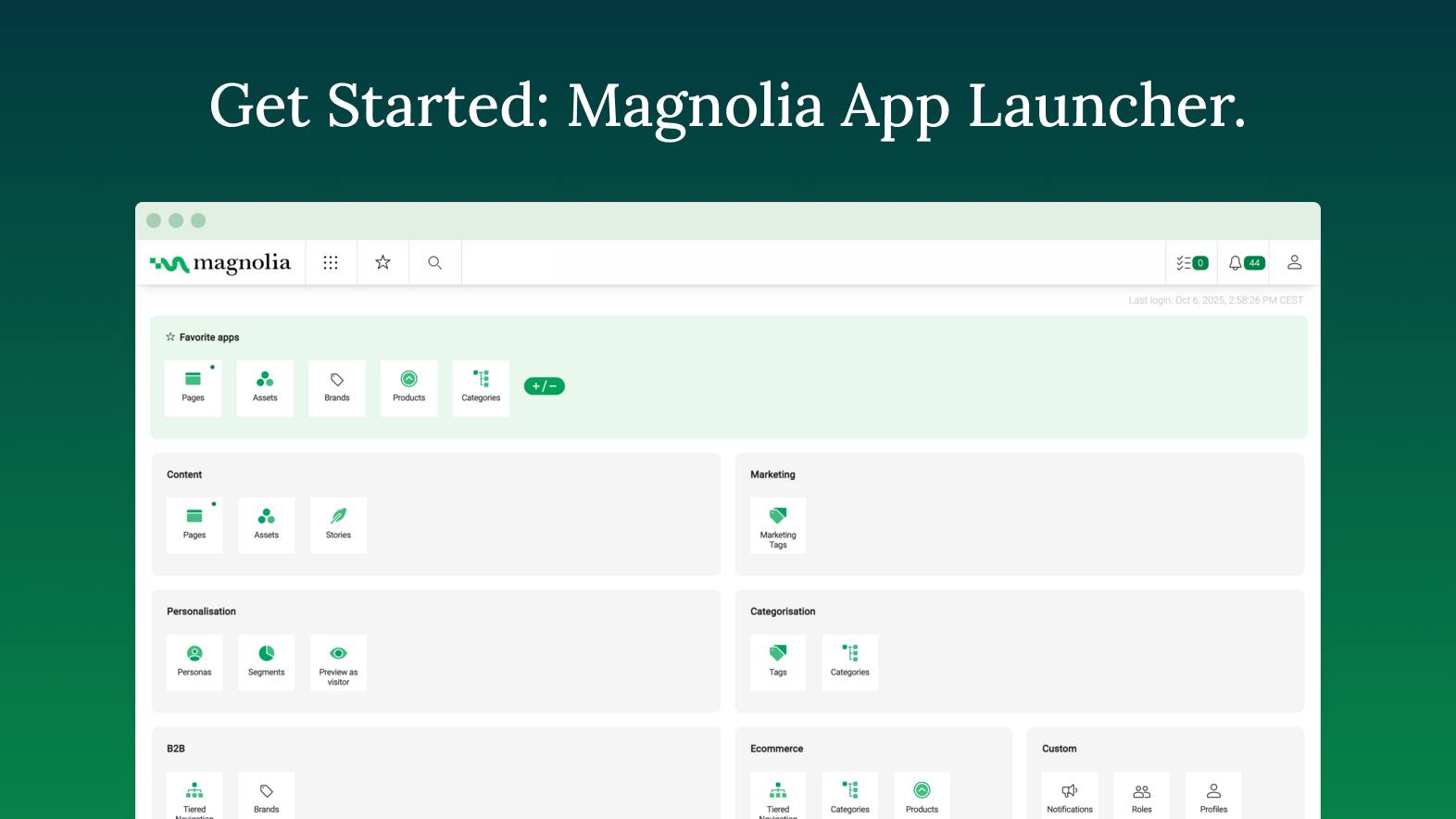
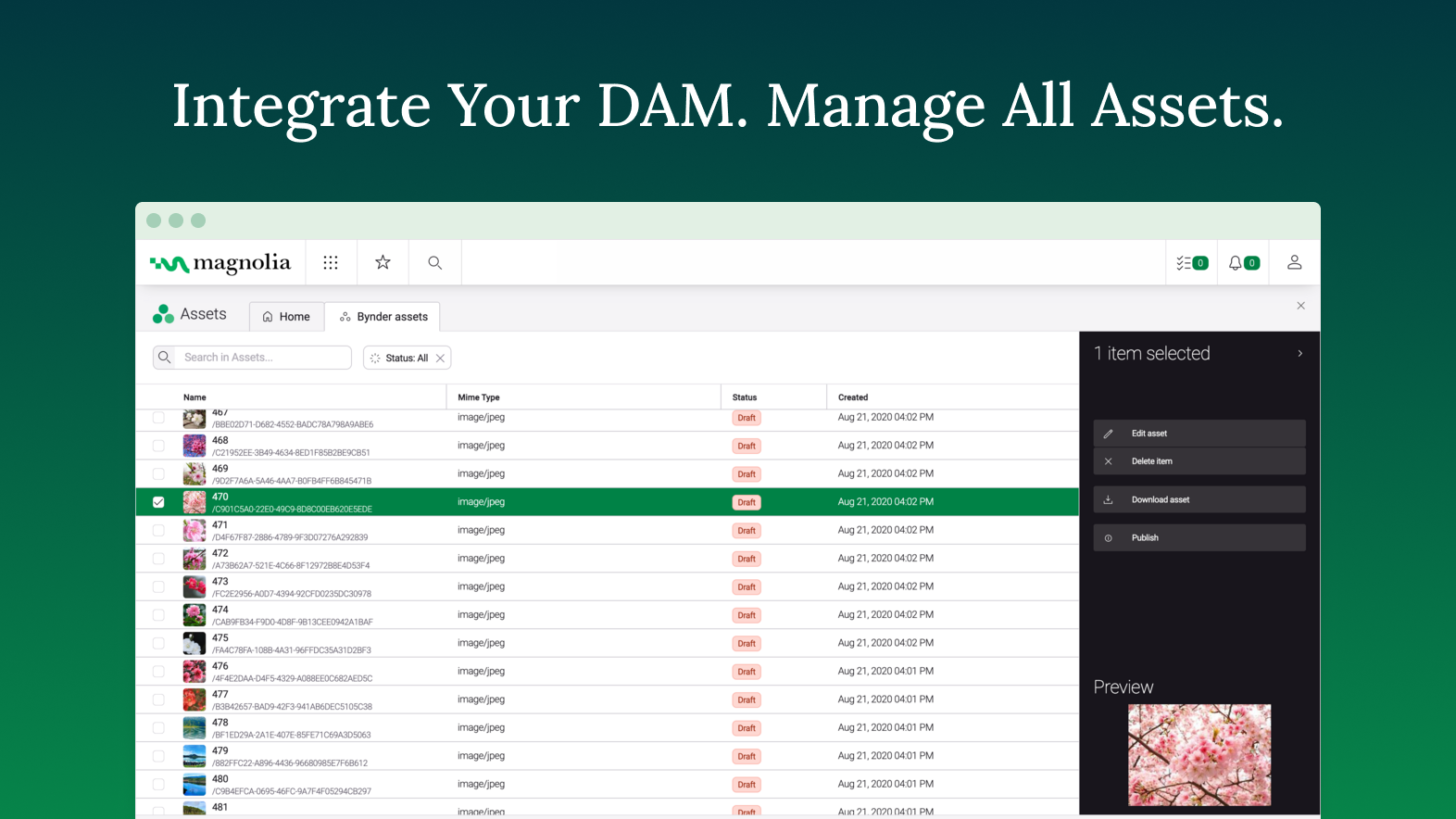
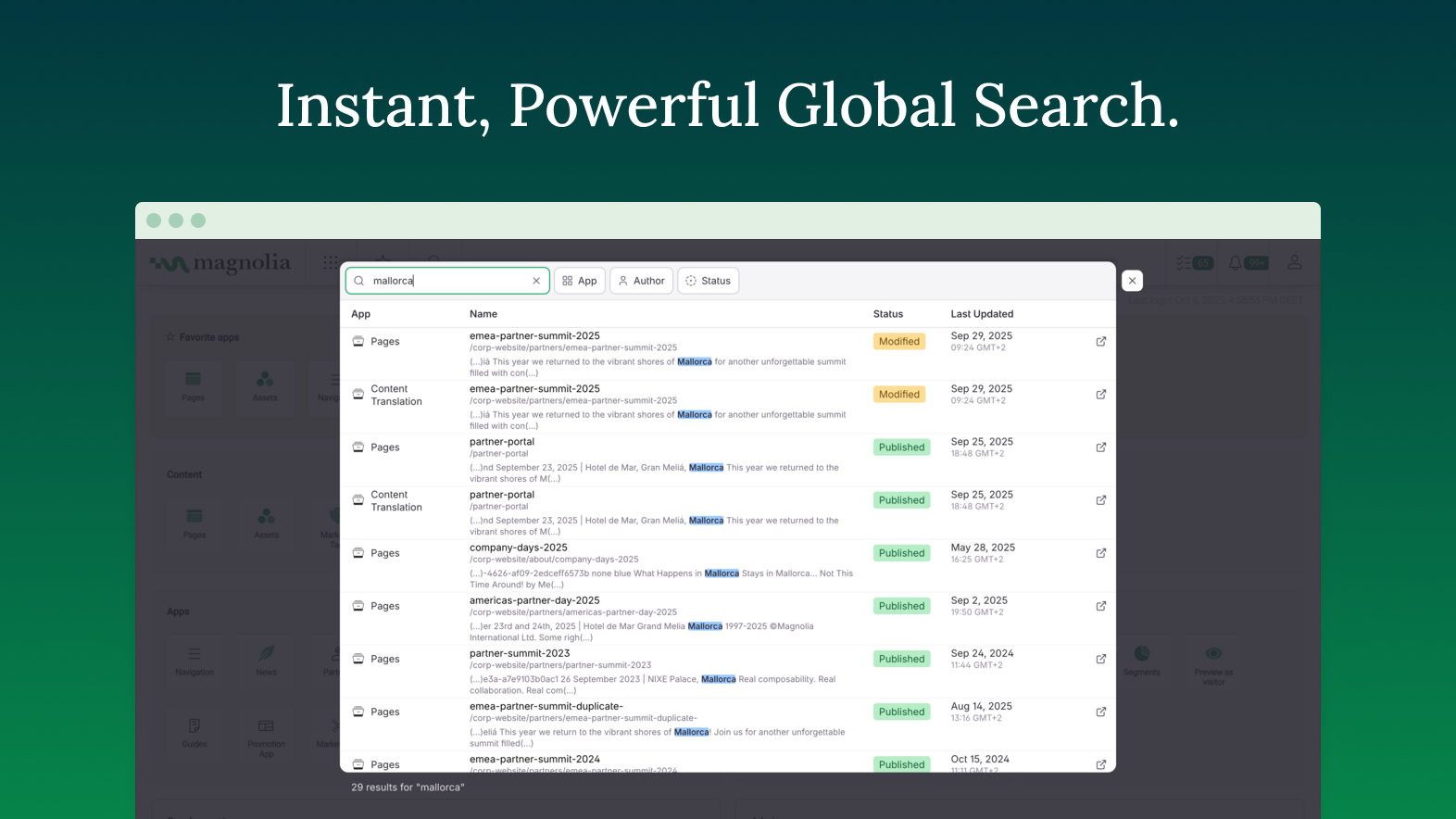
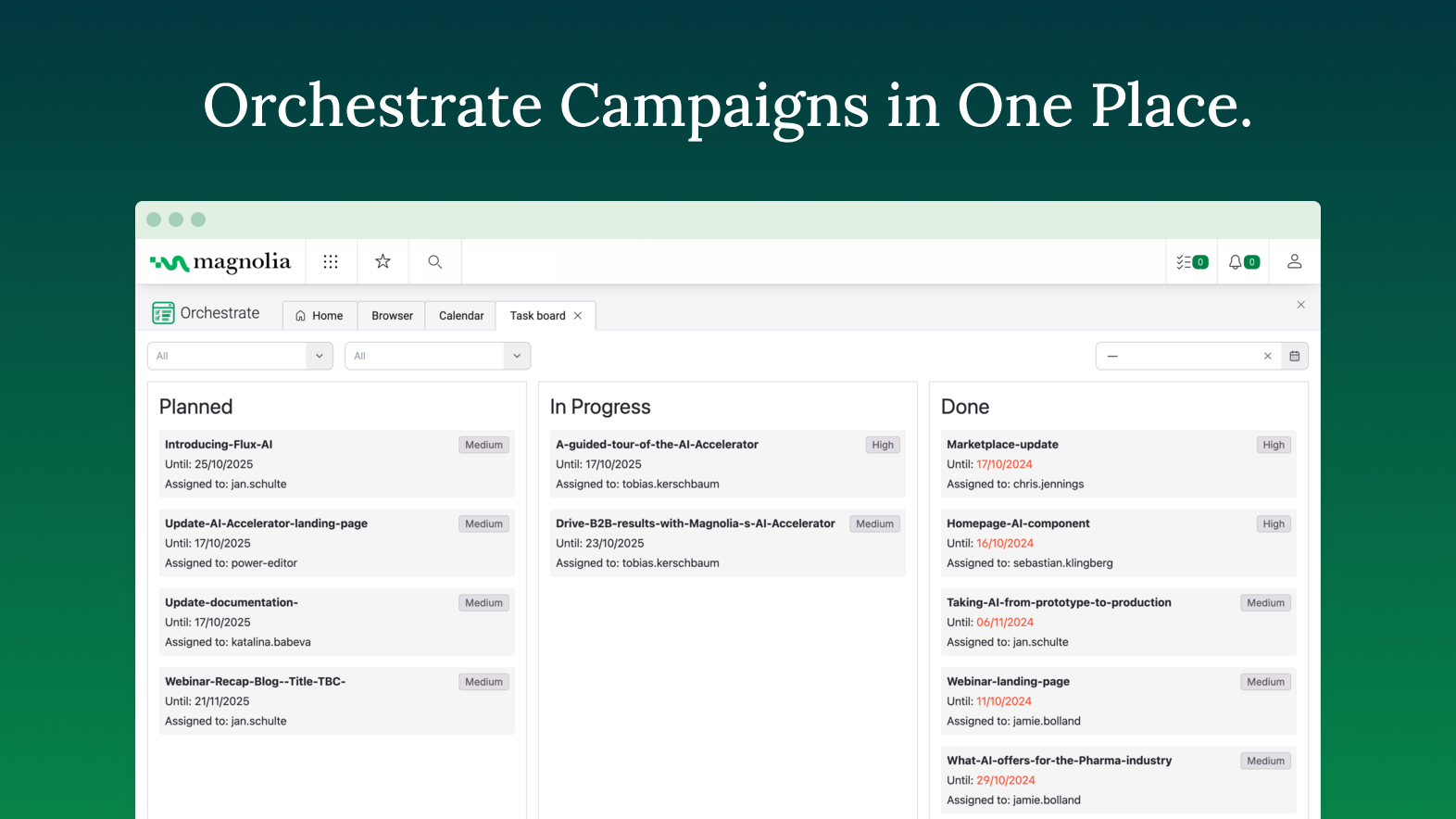
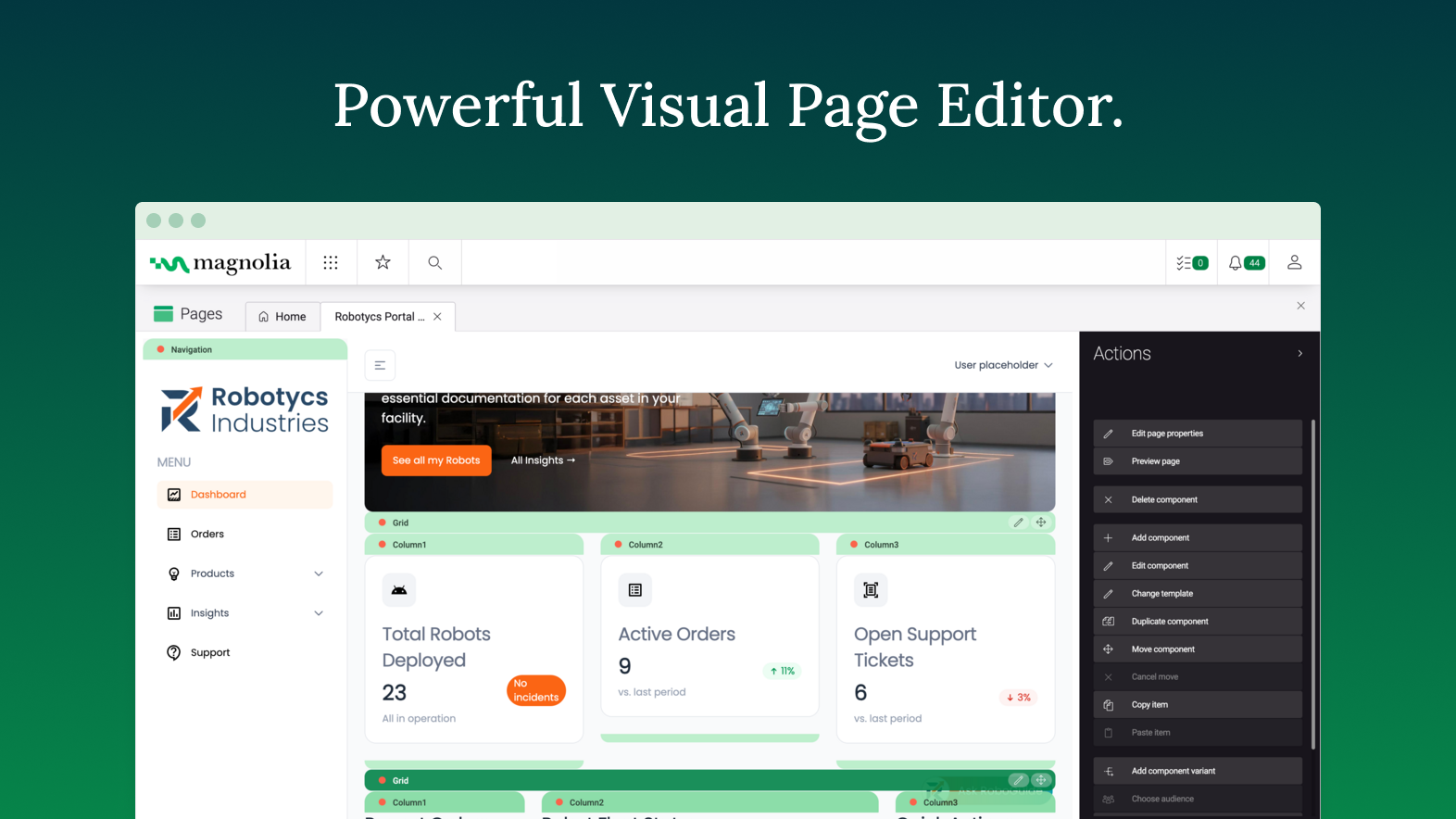
Founded in Switzerland in 1997, Magnolia is a CMS used to build composable digital experiences. Magnolia helps create fully integrated customer experiences and speeds up digital delivery of content. Magnolia boasts 480 enterprise customers, thousands of Community Edition deployments, and more than 200 certified Magnolia Partners around the world. They further state that their enterprise customers include Sanofi, Generali, the Atlassian, The New York Times, Harley Davidson, and Union…
$3,500
per month
Sitecore Digital Experience Platform
Score8.9 out of 10
N/A
The Sitecore Experience Platform (Sitecore XP) is a digital experience platform used to build websites and create customer experiences online. The solution boasts fast content authoring, built-in personalization features, testing and other optimizations, as well as analytics and marketing features.
The Broadleaf CMS was quite basic and was not a full fledged CMS and hence we had to chose Magnolia to address the business requirement for our B2B platform
A de minimis incentive was given to thank the reviewer for their time. The incentive was not used to bias or drive a particular response, nor was the incentive contingent on a positive endorsement. More Info
Verified User
Chose Magnolia
I need to specific and say I've had experiences of these platform from previous roles, they were not considered by Good Things Foundation.
My experience is that Magnolia delivers the power of these high end platforms but is generally more accessible to get going and develop …
A de minimis incentive was given to thank the reviewer for their time. The incentive was not used to bias or drive a particular response, nor was the incentive contingent on a positive endorsement. More Info
Magnolia is a very capable DXP, that provides client with lots of flexibility in composing its own stack. While the core of the platform is a content management system, the open architecture of Magnolia DXP allows it to connect to any platform, allowing client to extend the capabilities. One scenario would be a centralized content hub - where through a single platform, content authors can choose which channel to distribute what content. For example, long form content for consumers viewing on a laptop, short form content for those using a mobile browser. This allow the client to personalized the experience based on channels. Another scenarios would be leveraging on GenAI - using Magnolia's built-in connector to ChatGPT. If that is not the service that one desire, you can always connect to another AI service such as Google Gemini. With GenAI, connected, content author can use AI as co-pilot to help them scale up their content production.
Sitecore offers Content Hub with Product Content Management and Content Management Platform. The Digital Experience Platform and Content Hub can both host structured content and publish the finalized version to Experience Edge. Both platforms offer different ways to manage content. During a technical and business evaluation, the evaluation panel must understand the difference between a Content Modelling focused approach, or a layout management focused approach. Sitecore Digital Experience Platform is also best not to be used to host many files and images in the Media Library. That responsibility should be offloaded to a digital asset management company like Sitecore Content Hub DAM. The technology evaluation panel must also understand how to work with a Headless CMS, where the HEAD needs to be hosted, and the costs associated with the HEAD. Composable DXP is fantastic, but everyone must understand the various cost components. Marketers and the data team will need to go into the CDP and Personalize the platform with an excellent understanding of how a composable "installation" works. All the Martech vendors have similar challenges that data and development teams need to work through with a full experience. Any CDP/analytics platform will, at some stage, require further data enrichment from other sources. Understanding the Sitecore Search features and limitations is also essential.
A de minimis incentive was given to thank the reviewer for their time. The incentive was not used to bias or drive a particular response, nor was the incentive contingent on a positive endorsement. More Info
Speed of development - time to delivery from zero to MVP was excellent
Ease of use - the authoring experience is very easy to build and train
PAAS/SAAS - the managed service platform removed the traditional overhead of running in-house technologies, meaning we could focus on value add, with less time spent keeping the lights on.
Comprehensive Solution: Sitecore offers a fully integrated suite of products that cover the full spectrum of DXP capabilities, including search, personalization experimentation and more, delivering a complete composable DXP solution for customers.
Beyond Headless: XM Cloud provides more than just headless capabilities, featuring in-built tools like authoring host, page editor, etc., enabling faster and more powerful implementations.
Focus on AI: Sitecore has now got an excellent AI offering called Stream; it looks promising; however, it would be too early to give feedback on the same.
Customization: Sitecore's backend is highly customizable, allowing for deep modifications through pipelines and patch configurations.
A de minimis incentive was given to thank the reviewer for their time. The incentive was not used to bias or drive a particular response, nor was the incentive contingent on a positive endorsement. More Info
The documentation provides samples that are often out of context, and difficult to know where the provided example code should be implemented. More tutorials providing the full project or step-by-step instructions on how to implement subject material would help greatly. Baeldung is a resource I would consider the gold standard in how this is done in other spaces.
The use of JCR and Nodes makes object serialization/deserialization painful. Jackson compatibility or similar would be a welcome enhancement to the developer experience. Maybe leveraging code-gen from light modules to build model classes when possible could help accomplish this.
Modifying the home layout from light modules is frustrating. It seems that any configuration overrides made merge with the default rather than overwriting, which makes for a difficult combination of guess-and-check while referencing the documentation to see what should be in each row/column when making changes.
Including "mark all as read" or "delete all" in the notifications app would be a great quality of life improvement. It seems that by default, users have to individually select messages and operate them.
A de minimis incentive was given to thank the reviewer for their time. The incentive was not used to bias or drive a particular response, nor was the incentive contingent on a positive endorsement. More Info
Experience Editor is a little old fashioned and sometimes slow to use.
Bulk operations in the Content Editor
Sitecore serialization is should be part of the Content Editor to provide visual reference for items which are serialized and will be overwritten by future deployments similar to what Unicorn does so well
A de minimis incentive was given to thank the reviewer for their time. The incentive was not used to bias or drive a particular response, nor was the incentive contingent on a positive endorsement. More Info
A de minimis incentive was given to thank the reviewer for their time. The incentive was not used to bias or drive a particular response, nor was the incentive contingent on a positive endorsement. More Info
Sitecore has proven that it can deliver on its promise of a robust, reliable enterprise CMS solution with plenty of features. Also, they keep updating it with more and better features. Now that we are highly trained on it we have started on getting the most out of it and we plan to keep doing more of that in the future.
We've shown it to a number of users both clients and our own team and despite initial apprehensions, they "get it" very quickly. It's intuitive and friendly and quick to perform daily tasks. We once had a client tell us "Using Magnolia makes me smile" which says it all for us.
A de minimis incentive was given to thank the reviewer for their time. The incentive was not used to bias or drive a particular response, nor was the incentive contingent on a positive endorsement. TR verified that a representative sample of customers was invited. More Info
We use Sitecore extensively because it provides a single platform for managing content, personalization, and digital experiences across multiple web properties and customer journeys. At our scale, the biggest value is consistency, governance, and the ability for marketing teams to manage experiences without needing engineering support for every change. It also integrates well with the broader CRM/marketing stack, so it becomes quite embedded once deployed.
A de minimis incentive was given to thank the reviewer for their time. The incentive was not used to bias or drive a particular response, nor was the incentive contingent on a positive endorsement. TR verified that a representative sample of customers was invited. More Info
I gave [it] 7/10 only because of the loading time of pages. Otherwise, I think it deserves an 8. Normally this is not an issue per [se] but considering the rating matrix and as I have been asked to honestly write about it. Yes, the page loading times could be improved.
You always get an answer based on your SLA. But you always get a solution. That's the successfactor in this case. To often i was frustrated about people in a company without even a clue what there product is about or how to solve a problem. Magnolia's Support Team does a very good job and try to help you in most of the cases
1. Customized software development & maintenance. 2. Technology Consulting - Consulting-based services for technology solutions data engineering or cloud solutions. 3. Used for tapping into multiple data sources such as CRM and marketing automation systems and, creating automated data extracts with a high-end visual representation of data. 4. Implemented for scheduling an existing report to automatically refresh and be delivered to specific users at a specific regular interval.
A de minimis incentive was given to thank the reviewer for their time. The incentive was not used to bias or drive a particular response, nor was the incentive contingent on a positive endorsement. More Info
Sitecore captures and remembers every single interaction your customers and prospects have in any part of the system, allowing you to build comprehensive, ever-learning profiles of each individual. From email marketing, to social media, to online shopping, Sitecore remembers where each interaction left off so you can automatically continue the conversation. Sitecore helps you manage your content for each and every experience your customers enjoy. Customize what content you want and the system will take care of how it's displayed.
Make sure you work with a partner that can help you take advantage of the entire platform. Specifically we see a lot of customers not taking advantage of Sitecore DMS and thus missing a huge opportunity. Sitecore is a platform that is meant to be constantly optimized and improved upon.
I've used several CMSs like AEM and EpiServer, and comparatively, they all excel at different things. Magnolia is the best to develop for/against. Episerver has the best/most fluid UI in terms of content editing, and the overall admin experience AEM is just all around sucks.
A de minimis incentive was given to thank the reviewer for their time. The incentive was not used to bias or drive a particular response, nor was the incentive contingent on a positive endorsement. More Info
Really the only comparable product to Sitecore DXP is Adobe Experience Manager. Both are very well established and robust content management platforms. Products like Contentful and Contentstack are very lightweight and do not have as many built-in features like DXP, so it is not a fair comparison. For highly complex enterprise type engagements, Sitecore DXP and AEM are always brought to the table together for consideration.
A de minimis incentive was given to thank the reviewer for their time. The incentive was not used to bias or drive a particular response, nor was the incentive contingent on a positive endorsement. More Info
Magnolia has brought about positive impacts. For instance, we need not outsource web design and marketing services because thanks to this software, we can handle most work inhouse
The software is affordable with no compromises on capabilities and therefore it is gives us value for money.
A de minimis incentive was given to thank the reviewer for their time. The incentive was not used to bias or drive a particular response, nor was the incentive contingent on a positive endorsement. More Info
Since moving the site to Sitecore we have had an increase in conversion - that's the ultimate goal of all these things. It's likely to be partly tied in to the re-design that happened at the same time, but the way in which you can personalise and change things really helps give the best customer journey.
The negative impact we've seen is mainly due to expectations around how easily things can be shared between separate instances of Sitecore - if you haven't built stuff sharable it won't be sharable, but the business have been sold Sitecore (partly) on the basis that things would be easily sharable.
My developers don't all like working in Sitecore - it takes time to learn, takes a long time to build and run as well as requiring a few processes around it, like Unicorn Sync, etc. One of my devs has actually asked to not work on it again! So, a potential recruitment issue.
A de minimis incentive was given to thank the reviewer for their time. The incentive was not used to bias or drive a particular response, nor was the incentive contingent on a positive endorsement. More Info