Oracle Analytics is a solution used to visually explore data to create and share compelling stories. Oracle Analytics Cloud is a cloud native service, and Oracle Analytics Server is the on-premise option.
N/A
QlikView
Score 8.2 out of 10
N/A
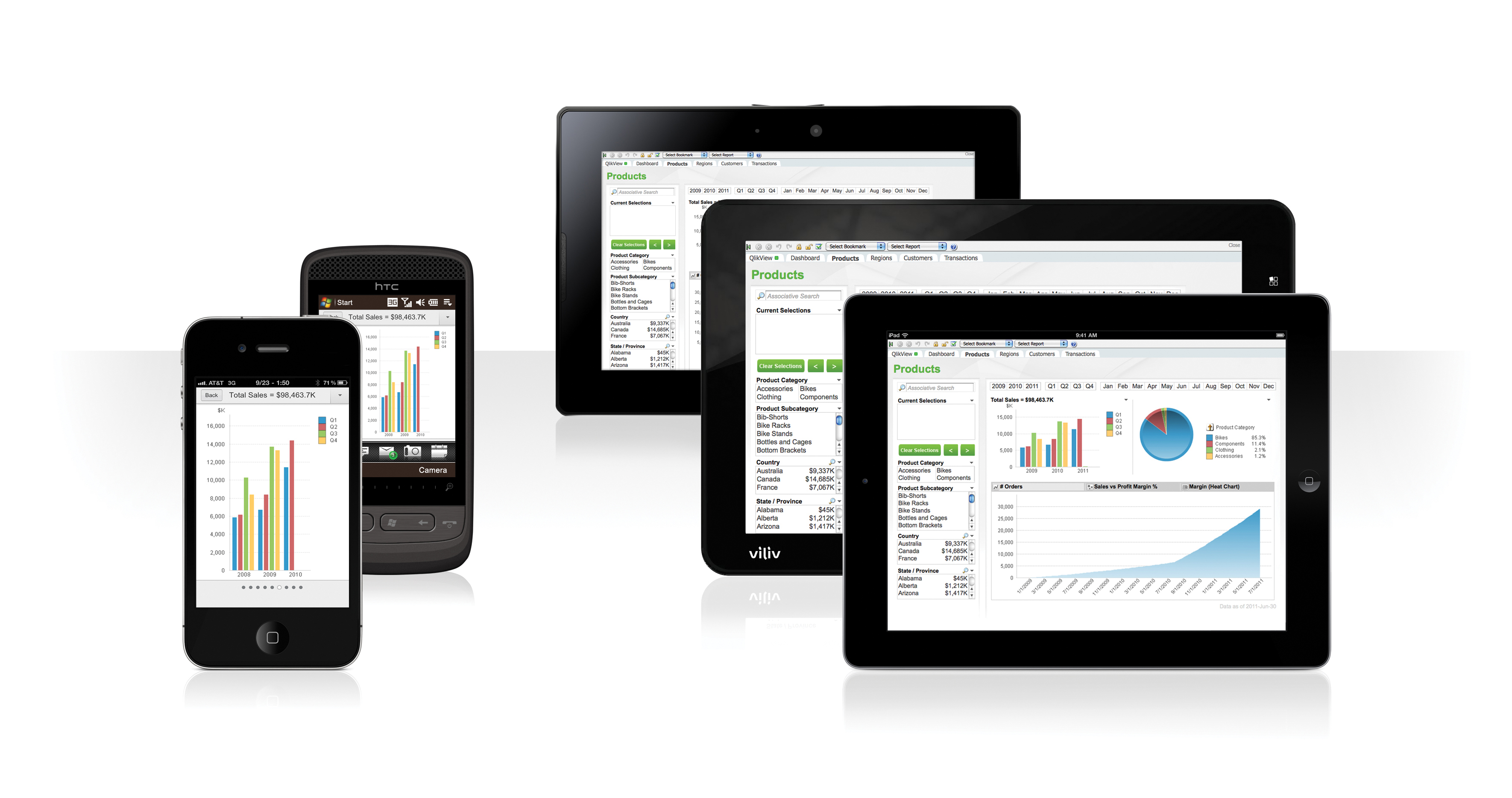
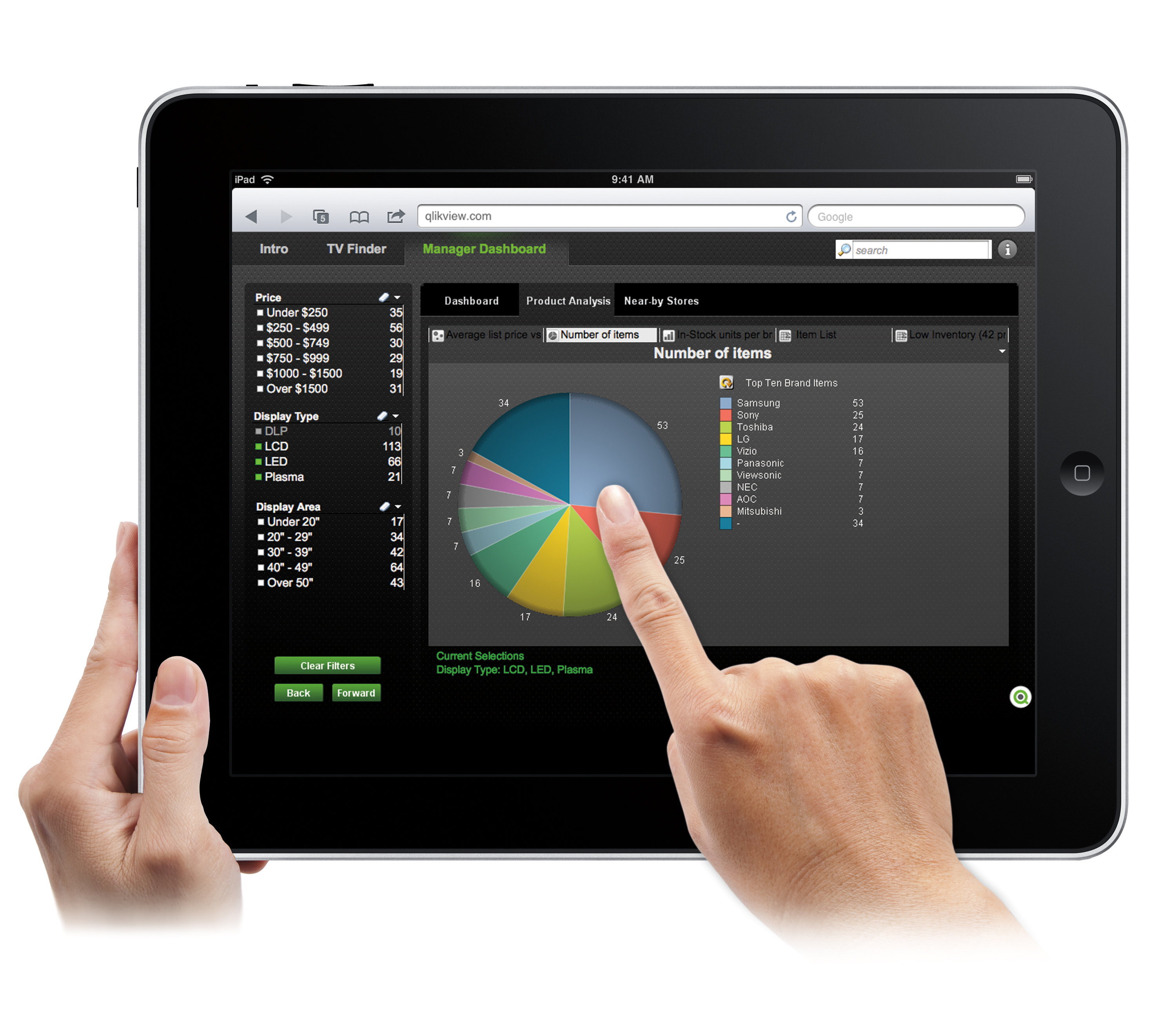
QlikView® is Qlik®’s original BI offering designed primarily for shared business intelligence reports and data visualizations. It offers guided exploration and discovery, collaborative analytics for sharing insight, and agile development and deployment.
N/A
SAP HANA Cloud
Score 8.9 out of 10
N/A
SAP HANA is an application that uses in-memory database technology to process very large amounts of real-time data from relational databases, both SAP and non-SAP, in a very short time. The in-memory computing engine allows HANA to process data stored in RAM as opposed to reading it from a disk which means that the data can be accessed in real time by the applications using HANA. The product is sold both as an appliance and as a cloud-based software solution.
$0.95
per month Capacity Units
Pricing
Oracle Analytics
QlikView
SAP HANA Cloud
Editions & Modules
No answers on this topic
QlikView
Custom
per user
No answers on this topic
Offerings
Pricing Offerings
Oracle Analytics
QlikView
SAP HANA Cloud
Free Trial
No
Yes
Yes
Free/Freemium Version
No
No
No
Premium Consulting/Integration Services
No
Yes
No
Entry-level Setup Fee
No setup fee
Optional
Optional
Additional Details
Must contact sales team for pricing.
On an perpetual license basis, based on server plus number of users.
Contact vendor for pricing.
SAP Business Object license is not cheap and was a bigger pain for the client to implement and adapt a new tool. QlikView is mainly used for dashboards and is not the best fit for reporting and ad-hoc reports. Since the client was using an Oracle tool set for their application …
At the time we made the decision, we also evaluated other tools such as QlikView and SAP Power BI. But since our main solutions are Oracle (ERP, planning, consolidation), it was natural to adopt OBI. And it was also less expensive than the others.
With respect to the above mentioned tools the Oracle BI provides excellent semantic layer(BMM) layer which is very effective in creating complex measures for various financial reporting solutions and also other use cases. The delivery options are great too. Only drawback is …
Oracle BI is similar to MicroStrategy in their difficulty of implementation and need for technical resources for ongoing management and administration. Both are well-suited for very large corporations with extensive data processing requirements. More modern BI tools such as Tabl…
SAP HANA Cloud is an in-memory database ideal for real-time transactions and analytics, excelling in high-performance, integrated SAP environments, while Oracle Analytics leverages its own powerful, flexible database technology, often integrating acquired systems like Hyperion …
Oracle Database performance was not that up to that mark to analyze data and do analysis. Also Oracle we had to indexing, fragmentation to keep its health good.
Unlike other products, SAP HANA allows greater flexibility and customization, which are parameters now considered more important than anything else by our customers.
Oracle Data Visualization is very effective if used in an enterprise context with huge volumes of data coming from different systems. It supports dashboard and reporting capabilities and is easy to scale. It also allows you to leverage machine learning capabilities to extract hidden data trends. Visualization capabilities are powerful but not so various if compared to other solutions on the market. If you want to present a dashboard to an executive audience and you want to make your dashboards beautiful you must adapt them through PowerPoint.
Sales data validations have helped manage our justifications in the past, especially with regard to new product development and new business introduction. It has also been helpful in identifying trends with business impact and direction specific to quarter and monthly sales from ERP data as well as decisions to purchase equipment of staffing based on run rates and product demand.
One thing that can get out of hand is data output - if you aren't careful in your query, you may be overloaded with data dumps and drown in the amount of info you have to filter through. This is a user caution, not a comment on the software itself.
I think if you have a large organization, it's probably the product and the marketplace to go to. We're a large management consulting firm operating in four to seven countries. And generally speaking, I think that's the size and the scope where it scales best. I can't speak to smaller companies, but I can't see smaller companies leveraging the benefits as much as a larger organization can.
Available without of the box connectors for Salesforce and oracle Saas Cloud. This is a huge plus for our business since we don't need another middleware solution just for this sake.
We are able to connect to our on-prem SQL Server database where we have our RMA database and other applications seamlessly without writing custom APIs.
OAC writes directly into ADW which is another advantage for loading Excel files into ADW after dataflow transformations.
OAC allows replication of the database from fusion ERP and lets us create subject areas using the data modeler.
Real-time reporting and analytics on data: because of its in-memory architecture, it is perfect for businesses that need to make quick decisions based on current information.
Managing workload with complex data: it can handle a vast range of data types, including relational, documental, geospatial, graph, vector, and time series data.
Developing and deploying intelligent data applications: it provides various tools for such applications and can be used for machine learning and artificial intelligence to automate tasks, gain insights from data, and make predictions.
We found that QlikView can be a bit slow in supporting some forms of encryption. It is web-based and we needed to upgrade all of our server to not support the older SSL and TLS 1 protocols, only support TLS 1.2 and TLS 1.3. However, QlikView could not run with TLS 1.2 and TLS 1.3. We had to wait over six months to get a version that would handle the newer TLS versions.
There are so many options with QlikView that you can get lost when developing a visualization. There are still items I have not yet figured out, such as labeling a graph with the name of a selected detail item.
QlikView works by pulling the data it is going to use for visualization into its database. I am a security reviewer and I need to make certain that PII and PHI is not pulled by QlikView for a visualization, otherwise this could become a reportable indecent.
Requires higher processing power, otherwise it won't fly. How ever computing costs are lower. Incase you are migrating to cloud please do not select the highest config available in that series . Upgrading it later against a reserved instance can cost you dearly with a series change
Lack of clarity on licensing is one major challenge
Unless S/4 with additional features are enabled mere migration HANA DB is not a rewarding journey. Power is in S/4
Scalability and rich integration capabilities. In the future, if we go with Hyperion for the Financial Consolidation and planning purposes -BI integration with Hyperion is going to be much simpler as it has native interface connectivity and even integration capabilities with well known CRM products (Siebel) and ERP Products (Oracle EBS, Peoplesoft, SAP) is going to be easy and straight forward.
Ease of use, ability to load from pretty much any data source. today I created an application that loaded time sheets from excel that are not in a table format. With Qlik's "enable transformation steps" I was able to automate loads of multiple spreadsheets and multiple tabs easily. Could not do that with any other tool.
We would rate our likelihood of renewing at 9/10. SAP HANA Cloud has proven to be a highly reliable and scalable data platform that consistently delivers strong performance. Its seamless integration with our overall SAP landscape, combined with improved analytics and real-time data capabilities, makes it a core part of our long-term technology strategy.
Great, if you are limited to using it along with other Oracle products; sadly, not if you are integrating with other products, which can be a challenge. It is a great product with tons of functionality and great integration with other in-house platforms. Great visuals and customization for data and analytics to provide decision-making data and analysis.
QlikView is very easy to implement. The installation is very straight forward. QlikView has several different data connectors that can connect to different data sources very smoothly. The user interface to build the reports is very easy to understand. This helps to have a smaller learning curve. Something very helpful is that QlikView is a browser application for the end users. So, you don't need to install any applications on the user's computer.
It is very useful solution which provides you speedier data processing, real-time analytics. It helps you manage diverse data types. It also offers you excellent disaster management. It has user friendly interface which helps you navigate system and transactions easily and perform task smoothly.
Oracle Analytics Support team is very proactive and I have never had a situation where I had to wait for more than a day or two to get my issues resolved. This is a very big help for us and we appreciate Oracle and its team for guaranteeing that experience.
My experience with the Qlik support team has been somewhat limited, but every interaction I have had with them has been very professional and I received a response quickly. Typically if there is a technical issue, our IT team will follow up. My inquiries are specific to product functionality, and Qlik has been very helpful in clarifying any questions I might have.
However, I am not the right person to answer this as we have another department to handle support and contact the service provider for any support required. Although i will say that they are the quick respondent and knows how to handle querry of the customers and provide quick and better support.
My team attended, but I cannot myself rate, but I think it was good as they've successfully launched a training program at our company themselves for users. It was 3-4 day training.
Training was as expected. The demo environments tend to be more fully featured that our own environment, but the training was clear and well delivered.
A properly implemented Endeca solution performs extremely well on the largest of datasets and it positions your organization to immediately achieve your ROI.
"Implementation" can mean a few things... so I'm not sure that this is the answer you want.... but here it goes: To me, implementation means: "Is the user interface intuitive and can I produce meaningful reports with ease?" On that score, I'd say YES. The amount of training required was minimal and the results were powerful. The desktop implementation is a simple, "blank" interface just waiting for your creativity. The pre-populated templates give you a reasonable start to any project -- and a good set of objects to "play around with" if you're just getting started. Finally, note that the "implementation" I used was baked into QuickBooks 2016 Enterprise -- called "Advanced Reporting"..... That integration makes it ultra useful and simple.
Professional GIS people are some of the most risk-averse there are, and it's difficult to get them to move to HANA in one step. Start with small projects building to 80% use of HANA spatial over time.
Oracle Analytics Cloud, is one of the most agile and secure data analysis platforms that according to the budget and the amount of use, you can use the resources you need under the cloud. The Oracle brand is also very well known in this field and can meet all the needs of an organization or industry in any sector.
The only other vendor product that I have worked with that provides a similar experience to Qlikview is Tableau. I would recommend Tableau if your use case is to build a fixed dashboard. You can share reports for free without needing to buy additional licenses. I would recommend Qlikview if your users are looking for a more interactive experience. They can create new objects to represent the data which can't be accomplished as easily in Tableau
I have deep knowledge of other disk based DBMSs. They are venerable technology, but the attempts to extend them to current architectures belie the fact they are built on 40 year old technology. There are some good columnar in-memory databases but they lack the completeness of capability present in the HANA platform.
We have seen the results of this in our initial research and are not surprised that Oracle does this like it does soo many other things in this area, so well.
We've used OBIEE (or it's previous named product) for over 13 years and it's still the most used tool for BI by the business.
We moved our largest business system off of Business Object into OBI so we could gain improved performance, reliability, and easier management of metadata.
You can use the free desktop version to do a lot of reporting and analysis work more quickly so the ROI is huge
QlikView is great at finding outliers such as data entry errors
QlikView is great at helping you quickly discover new insights about your business that can prompt you to take action that can immediately affect your cash flow.