
Chose Pantheon
Pantheon vs. Progress Chef vs. WP Engine
Pantheon vs. Progress Chef vs. WP Engine
| Product | Rating | Most Used By | Product Summary | Starting Price |
|---|---|---|---|---|
 Pantheon | N/A | Pantheon is a WebOps platform where marketers and developers collaborate to drive results. The vendor states that with Pantheon, site owners maximize their capacity to update website design and functionality, responding to market trends, catering to consumer behavior, and adding real value to the business's bottom line. Today, companies compete on the basis of digital experiences, and the best results emerge from an agile build-test-learn process. Whether it's publishing content,… | $29 per month | |
 Progress Chef | N/A | Chef IT infrastructure automation suites were developed by Chef Software in Seattle and acquired by Progress Software in September 2020. The Chef Enterprise Automation Stack is an integrated suite of automation technologies presented as a solution for delivering change quickly, repeatedly, and securely over every application's lifecycle. The Chef Effortless Infrastructure Suit is an integrated suite of automation technologies to codify infrastructure, security, and compliance, as well as… | N/A | |
 WP Engine | N/A | WP Engine is a website hosting service built to host WordPress for companies of any size, with features such as daily backups, firewall,SSL, and proprietary caching technology. | $35 per month |
| Pantheon | Progress Chef | WP Engine | ||||||||||||||||||||||
|---|---|---|---|---|---|---|---|---|---|---|---|---|---|---|---|---|---|---|---|---|---|---|---|---|
| Editions & Modules |
| No answers on this topic |
| |||||||||||||||||||||
| Offerings |
| |||||||||||||||||||||||
| Entry-level Setup Fee | Optional | No setup fee | No setup fee | |||||||||||||||||||||
| Additional Details | — | — | Discount available for annual billing on the Startup plan. | |||||||||||||||||||||
| More Pricing Information | ||||||||||||||||||||||||
| Pantheon | Progress Chef | WP Engine | |
|---|---|---|---|
| Considered Multiple Products |  Pantheon  Tyler Shingleton Senior Web Developer Chose Pantheon The differentiating advantage that Pantheon has is the incredibly intuitive workflow UI, with seamless GIT integrations between each environment: Dev, Test, and Live.  Quratulain Habib, PMP Partner / Director / Head of Projects Chose Pantheon A lot of the other providers on this list are different from each other with very different target audiences. The only thing Pantheon can compare with is managed WordPress hosting, WordPress-related support, and hosting on Google Compute Engine. Pantheon wins hands down in …  Niloofar Keshvari Nia IT Operations and Support Specialist Chose Pantheon Pantheon also supports Drupal, which is very useful in the future. |  Progress Chef No answer on this topic |  WP Engine  Eric Mann Tekton Chose WP Engine WP Engine was cheaper than the alternatives, and our site was already present on their servers. It wasn't so much a choice of WP Engine over another hosting company as it was a choice to stay with WP Engine rather than invest the time required to switch to another provider. All …  Jesse Haraldson Principal Software Architect Chose WP Engine For Acquia and AEM the major differentiator was the cost for WPEngine was significantly lower and we could use the more common WordPress CMS. AEM is better for large marketing sites that integrate with the Abobe Marketing Cloud and we didn't feel we could support Drupal on …  Gordon Seirup Owner Chose WP Engine I selected Kinsta to replace WP Engine because their performance statistics, security configuration, and technical support prowess reminded me of WP Engine circa 2012 - top-notch. |
| Pantheon | Progress Chef | WP Engine | |
|---|---|---|---|
| Small Businesses |  ManageWP Score 10.0 out of 10 |  HashiCorp Vagrant Score 10.0 out of 10 |  Flywheel Score 10.0 out of 10 |
| Medium-sized Companies |  Bloomreach - The Agentic Platform for Personalization Score 8.9 out of 10 |  Ansible Score 9.2 out of 10 | Pantheon Score 8.6 out of 10 |
| Enterprises | Bloomreach - The Agentic Platform for Personalization Score 8.9 out of 10 | Ansible Score 9.2 out of 10 | Pantheon Score 8.6 out of 10 |
| All Alternatives | View all alternatives | View all alternatives | View all alternatives |
| Pantheon | Progress Chef | WP Engine | |
|---|---|---|---|
| Likelihood to Recommend | 8.0 (68 ratings) | 8.9 (18 ratings) | 8.5 (31 ratings) |
| Likelihood to Renew | 10.0 (1 ratings) | - (0 ratings) | 3.0 (1 ratings) |
| Usability | 9.8 (29 ratings) | 7.3 (1 ratings) | 9.0 (3 ratings) |
| Performance | - (0 ratings) | 9.4 (5 ratings) | - (0 ratings) |
| Support Rating | 10.0 (2 ratings) | 7.7 (3 ratings) | 7.7 (6 ratings) |
| Implementation Rating | 10.0 (1 ratings) | - (0 ratings) | - (0 ratings) |
| Contract Terms and Pricing Model | - (0 ratings) | 6.4 (1 ratings) | - (0 ratings) |
| Ease of integration | - (0 ratings) | 9.6 (5 ratings) | - (0 ratings) |
| Professional Services | - (0 ratings) | 9.1 (1 ratings) | - (0 ratings) |
| Pantheon | Progress Chef | WP Engine | |
|---|---|---|---|
| Likelihood to Recommend | Pantheon
 Tyler Brown Cifu Shuster Chief Engineer | Progress Software Corporation
| WP Engine
Jesse Haraldson Principal Software Architect |
| Pros | Pantheon
 Ali shabaz Assistant Project Manager | Progress Software Corporation
| WP Engine
 Alec Dibble Founder |
| Cons | Pantheon
 Todd Underwood Interactive Director | Progress Software Corporation
| WP Engine
 Peter Filias CEO (Chief Executive Officer) |
| Likelihood to Renew | Pantheon
| Progress Software Corporation No answers on this topic | WP Engine
 Joe Preston E-Commerce manager |
| Usability | Pantheon
 Arianna Thomas Project Engineer | Progress Software Corporation
| WP Engine
|
| Performance | Pantheon No answers on this topic | Progress Software Corporation
 Christopher Maggiulli Enterprise Software Architect | WP Engine No answers on this topic |
| Support Rating | Pantheon
| Progress Software Corporation
| WP Engine
 Josh Peichoto Digital Strategy Manager |
| Implementation Rating | Pantheon
| Progress Software Corporation No answers on this topic | WP Engine No answers on this topic |
| Alternatives Considered | Pantheon
 Lankit Patel AWS Developer | Laravel Developer | Progress Software Corporation
 Rob Ericsson Senior Vice President Of Product Development | WP Engine
|
| Contract Terms and Pricing Model | Pantheon No answers on this topic | Progress Software Corporation
| WP Engine No answers on this topic |
| Professional Services | Pantheon No answers on this topic | Progress Software Corporation
| WP Engine No answers on this topic |
| Return on Investment | Pantheon
Quratulain Habib, PMP Partner / Director / Head of Projects | Progress Software Corporation
| WP Engine
 Robert Allen WordPress Developer |
| ScreenShots | Pantheon Screenshots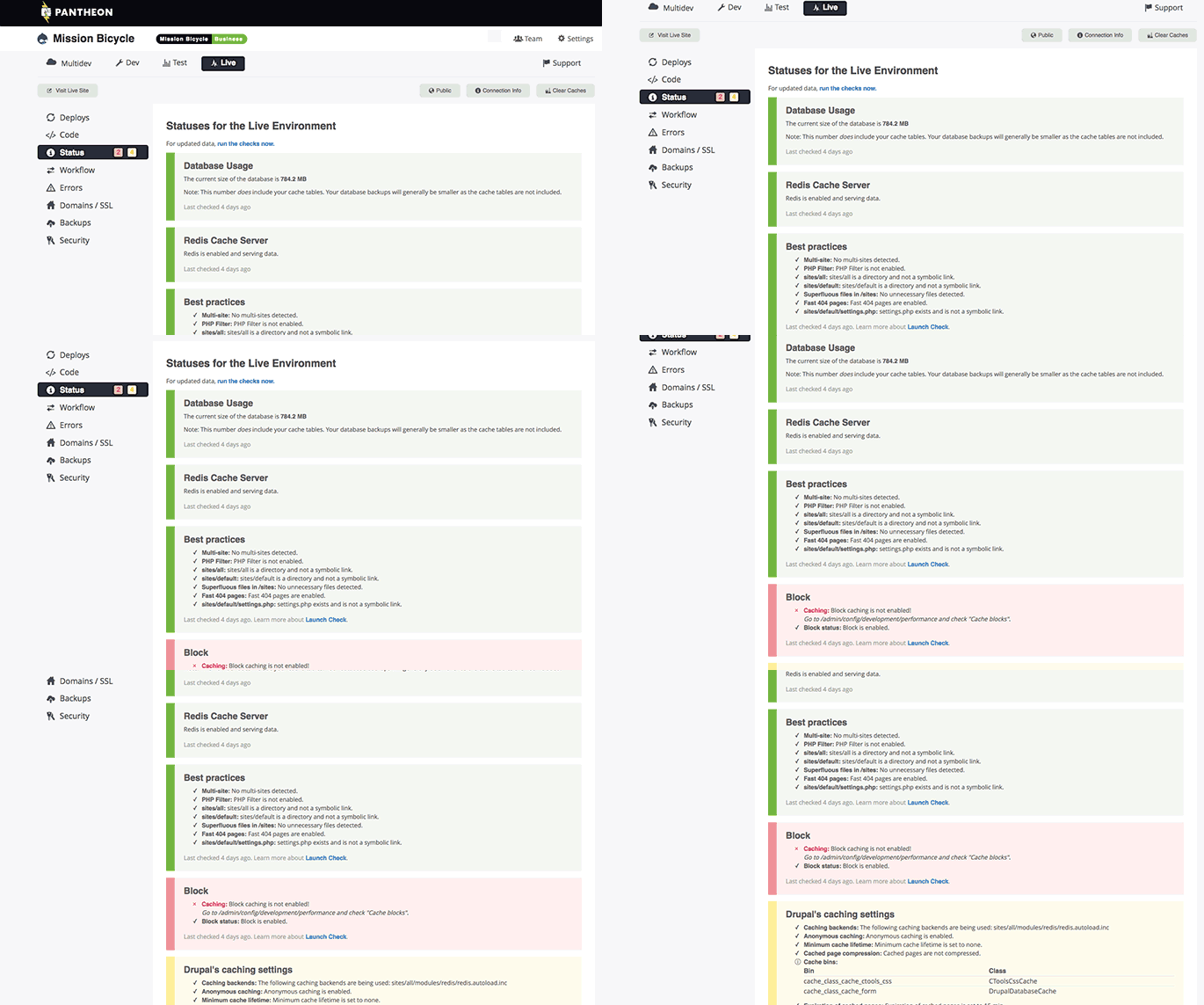 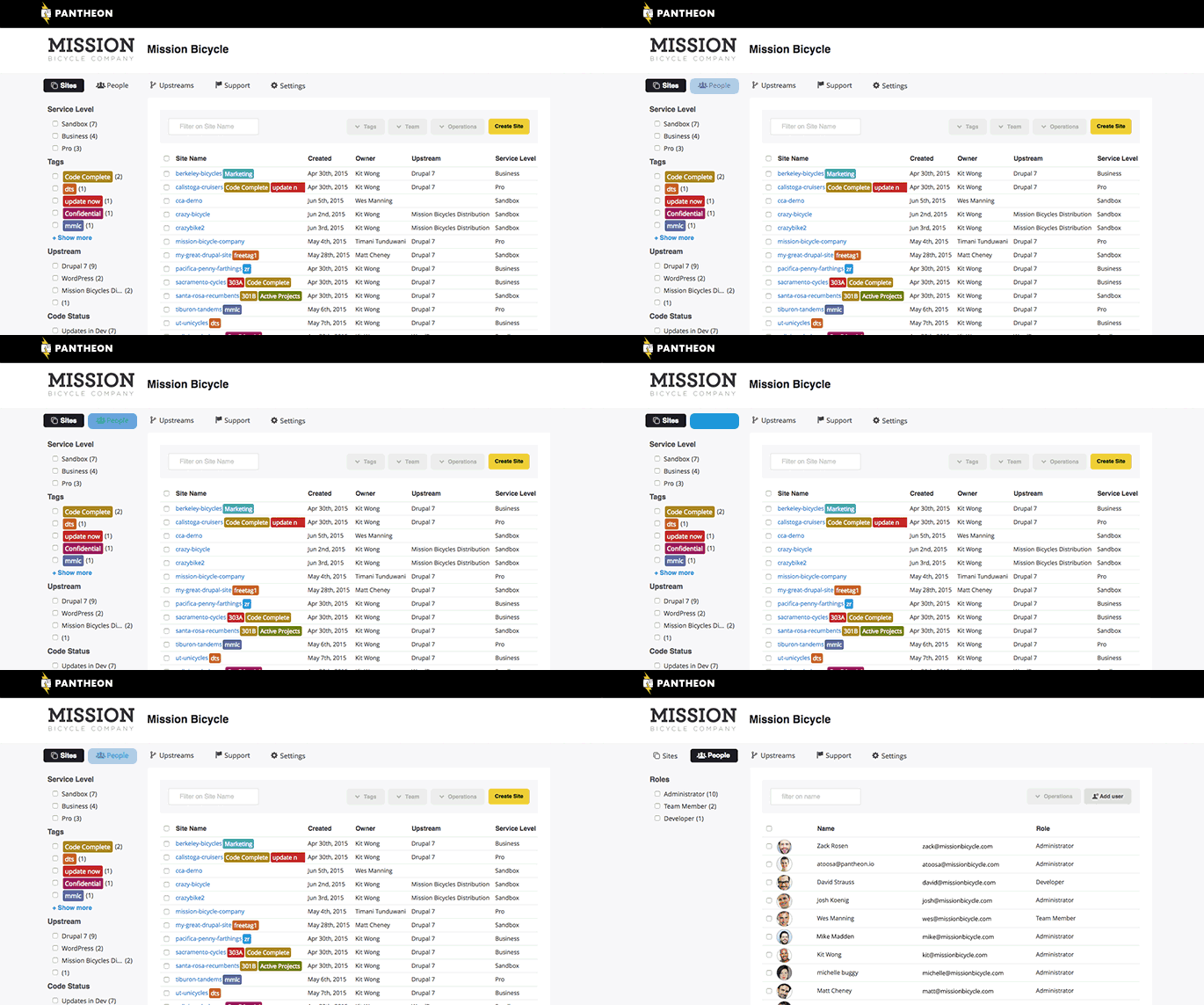 |