Parse.ly is a content optimization platform for online publishers. It provides in-depth analytics and helps maximize the performance of the digital content. It features a dashboard geared for editorial and business staff and an API that can be used by a product team to create personalized or contextual experiences on a website.
$499
per month
VisitorTrack
Score 10.0 out of 10
N/A
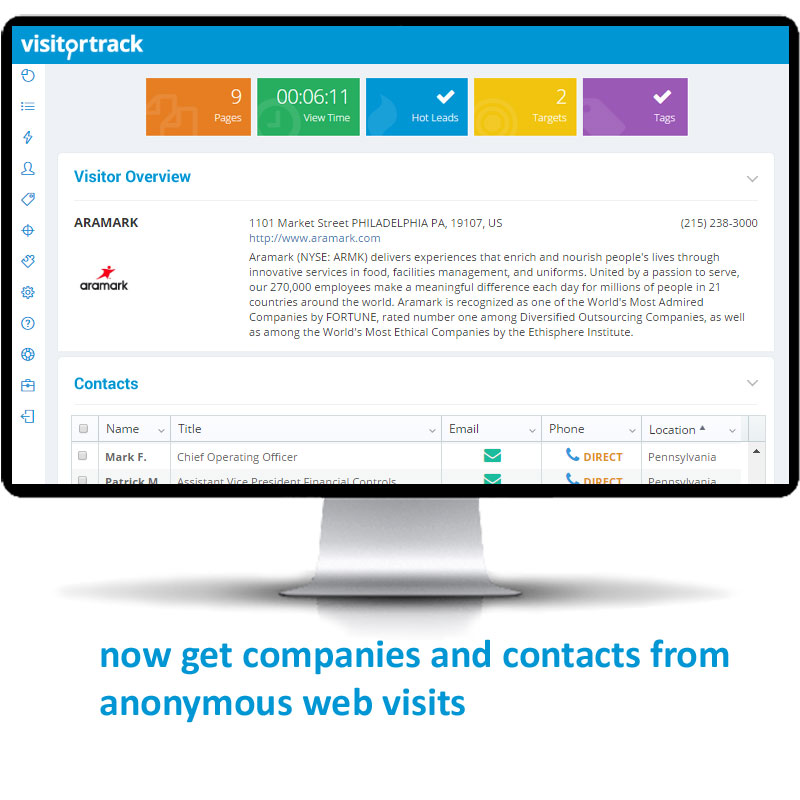
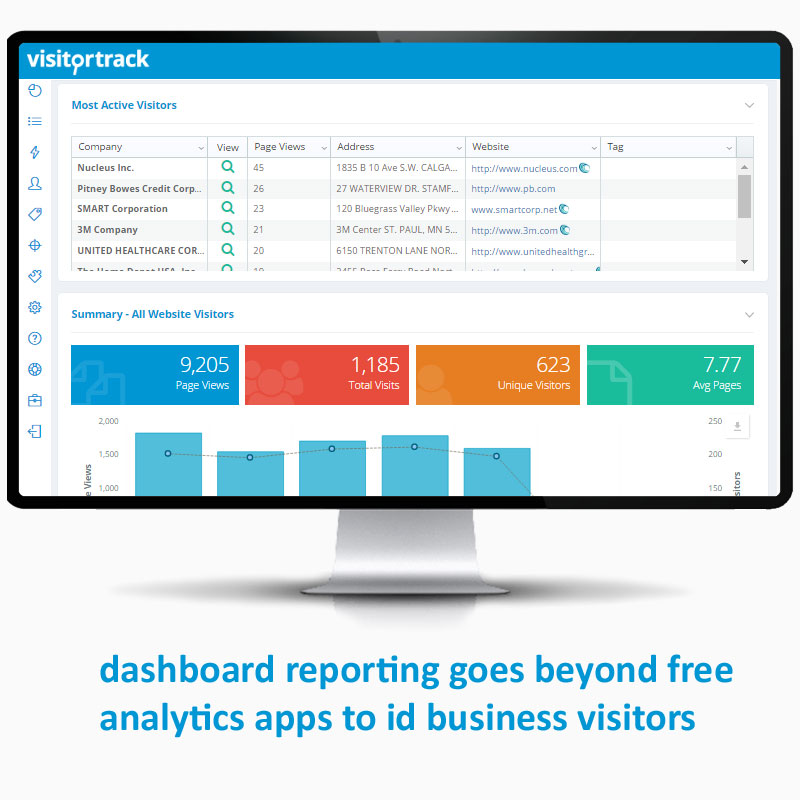
VisitorTrack is a web analytics product from netFactor. It works beyond traditional web analytics to convert anonymous website "clicks" into intelligence on business visitors – without any registration action. Positioned as “Caller ID for Your Website”, the reporting and content are designed for B2B lead generation. Users receive detail on the companies visiting a site, executive profiles, address, phone, website, visit details and analytics, along with features like email alerts, Salesforce…
$199
per month
Pricing
Parse.ly
VisitorTrack
Editions & Modules
No answers on this topic
VisitorTrack
$199.00
per month
Offerings
Pricing Offerings
Parse.ly
VisitorTrack
Free Trial
Yes
Yes
Free/Freemium Version
No
No
Premium Consulting/Integration Services
Yes
No
Entry-level Setup Fee
Required
No setup fee
Additional Details
—
VisitorTrack plans start at $199
More Pricing Information
Community Pulse
Parse.ly
VisitorTrack
Features
Parse.ly
VisitorTrack
Web Analytics
Comparison of Web Analytics features of Product A and Product B
Parse.ly is a great tool for publishers who want to track engagement and audience behaviour across websites. With Parse.ly, we can easily track metrics like pageviews, time spent on page, and scroll depth to see which content is resonating with our audience and optimize our content strategy accordingly. Our marketers found Parse.ly to be an excellent tool for tracking the effectiveness of our campaigns. We can use Parse.ly to track metrics like referral sources, conversion rates, and engagement by audience segment to see which channels and tactics are driving the most engagement and conversions.
VisitorTrack is best used with websites that have good page/file naming conventions. You can create alerts and reports based on triggers that match certain URLs, or parts of page names. For instance, you would want to consistently name pages related to your products to contain a certain string in the file name, like domainname.com/product_XXXXXXX.html, where "product" is consistent across all your products. There are other techniques, but consistency with naming conventions will be helpful to you. No worries, their support team will help you see what you want to see.
As an employee, this is difficult for me to comment as I am not directly funding or making these business decisions. However, it is a tool many get on with for surface level data that is useful to editorial teams.
The Parse.ly platform is very user-friendly and easy to use. User management is simple, and reporting setup only takes a few minutes. They provide very helpful documentation for implementing the scripts on your site and have great customer support to help with custom development such as implementing their content recommendation engine.
I rate this question this way solely because I haven't requested any support. I feel where I will eventually get support would be when we take Parse.ly up on some training that is being offered. We are looking to do that at some point after the first of the year and when our schedules support it.
VisitorTrack support is outstanding and personalized. I have always gotten prompt answers, directly from their staff without any language barriers, which I typically have to deal with from other vendors who outsource overseas.
Parse.ly does pretty well compared to Chartbeat, particularly when it comes to historical information and analysis options that are easy for employees to use after some short training. The onboarding for Parse.ly is intuitive, and the scheduled reports take away basically all of the inconvenience associated with regular metrics reviewing. But Chartbeat wins in its social audience tracking because it can source traffic to a specific social post, which can show you exactly how your audience is coming to your content and where you need to put your content to be sure you get that audience.
Sometimes in meetings our editorial director will point out stories that didn't perform well. To us, that means readers don't really care about the topic, so we'll pivot away from writing about that in the future. That might not be "business objectives" though.