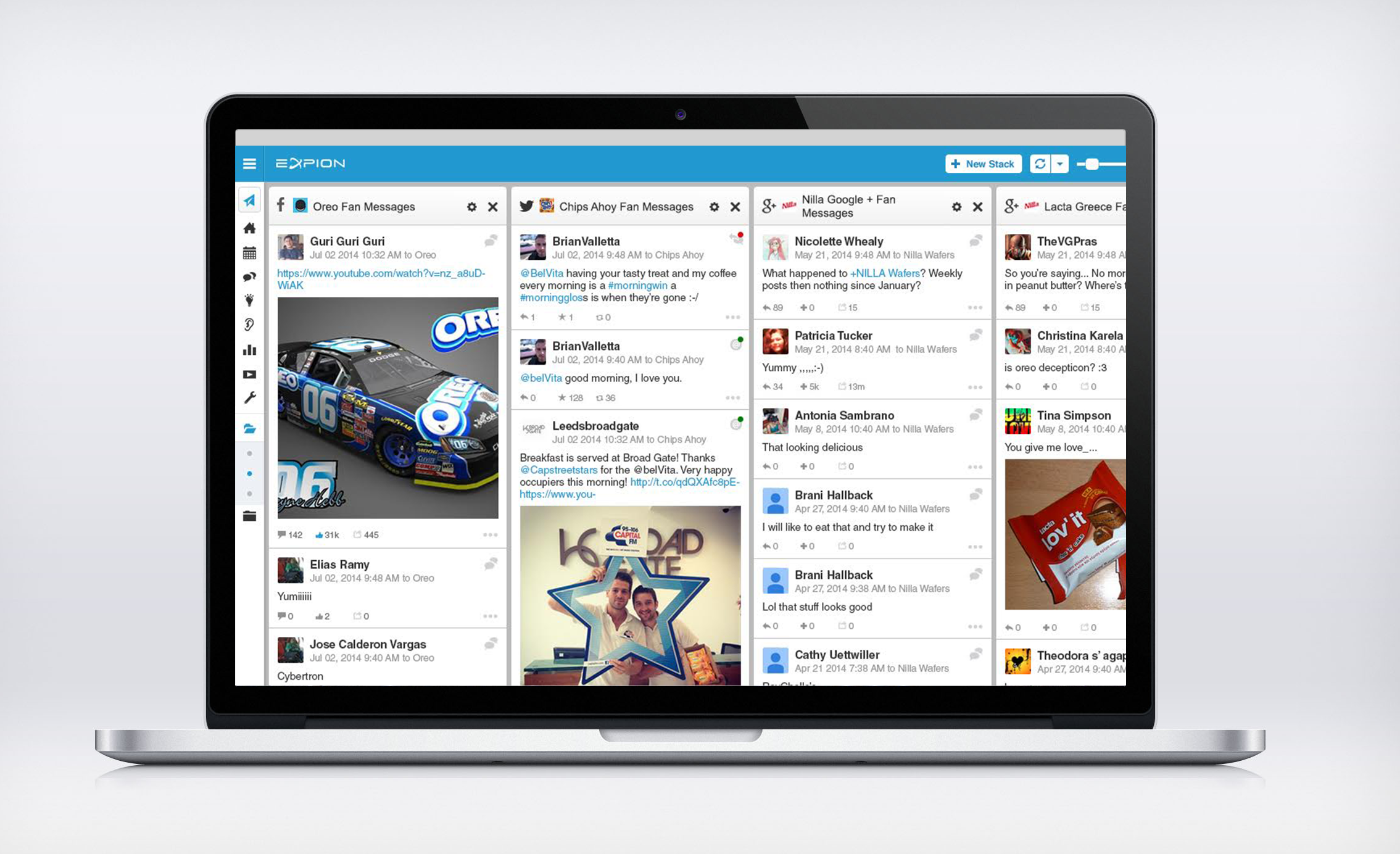
Sysomos was a social media listening and marketing solution for content discovery, planning, publishing, moderation, and analytics. Sysomos was acquired by Meltwater, and is no longer available, but the features of the former Sysomos are now part of the Meltwater platform.
$1,000
per month
Tableau Desktop
Score8.6 out of 10
N/A
Tableau Desktop is a data visualization product from Tableau. It connects to a variety of data sources for combining disparate data sources without coding. It provides tools for discovering patterns and insights, data calculations, forecasts, and statistical summaries and visual storytelling.
$1,380
per year (purchased via a Creator license)
Pricing
Sysomos, now part of Meltwater
Tableau Desktop
Editions & Modules
Sysomos
$1,000.00
per month
Tableau Creator License
$115
per month (billed annually) per user
Offerings
Pricing Offerings
Sysomos, now part of Meltwater
Tableau Desktop
Free Trial
No
No
Free/Freemium Version
No
Yes
Premium Consulting/Integration Services
No
Yes
Entry-level Setup Fee
No setup fee
No setup fee
Additional Details
—
All pricing plans are billed annually. A Creator license includes Tableau Desktop, Tableau Prep Builder, and Tableau Pulse. Discounts sometimes available for volume.
More Pricing Information
Community Pulse
Sysomos, now part of Meltwater
Tableau Desktop
Considered Both Products
Discontinued Products
Verified User
Chose Sysomos, now part of Meltwater
We're evaluating Expion against Falcon, and at this point, it's a very close call. It's a bit too soon to tell, but we like Expion's easy UI and content organization features.
A de minimis incentive was given to thank the reviewer for their time. The incentive was not used to bias or drive a particular response, nor was the incentive contingent on a positive endorsement. More Info
A de minimis incentive was given to thank the reviewer for their time. The incentive was not used to bias or drive a particular response, nor was the incentive contingent on a positive endorsement. More Info
Sysomos Expion is best suited, in my opinion, to offices where either you have only one moderator/manager OR where multiple users plan to manage a specific channel. Without live updates, it gets far too complicated for multiple users to manage the exact same workload
A de minimis incentive was given to thank the reviewer for their time. The incentive was not used to bias or drive a particular response, nor was the incentive contingent on a positive endorsement. More Info
The best scenario is definitely to collect data from several sources and create dedicated dashboards for specific recipients. However, I miss the possibility of explaining these reports in more detail. Sometimes, we order a report, and after half a year, we don't remember the meaning of some data (I know it's our fault as an organization, but the tool could force better practices).
A de minimis incentive was given to thank the reviewer for their time. The incentive was not used to bias or drive a particular response, nor was the incentive contingent on a positive endorsement. More Info
Ad-hoc research. During planning phase of a campaign it is a helpful tool to understand the marketplace, key influencers and topics that engage a target demographic.
Post-event hashtag analysis. Rapid generation of reporting on efficacy of a campaign, key voices, topics that resonated, viral reach and more.
User interface. Friendly and accessible enough to minimize training needs and enable decentralized access, though we have found some hand-holding is still required to get the most out of the platform.
A de minimis incentive was given to thank the reviewer for their time. The incentive was not used to bias or drive a particular response, nor was the incentive contingent on a positive endorsement. More Info
An excellent tool for data visualization, it presents information in an appealing visual format—an exceptional platform for storing and analyzing data in any size organization.
Through interactive parameters, it enables real-time interaction with the user and is easy to learn and get support from the community.
A de minimis incentive was given to thank the reviewer for their time. The incentive was not used to bias or drive a particular response, nor was the incentive contingent on a positive endorsement. More Info
A de minimis incentive was given to thank the reviewer for their time. The incentive was not used to bias or drive a particular response, nor was the incentive contingent on a positive endorsement. More Info
There are two differentiating features that Sysomos MAP has that the competitor tools I have experienced (Radian6, Meltwater Buzz) did not: user-friendly Boolean queries for searches and near-real-time results. The former is important because, of course, your results are only as good as your search/campaign. With Sysomos, once you master Boolean queries (which isn't terribly difficult) you're set for creating any kind of listening report. I strongly prefer this to the "campaign creator" forms that other services provide. Second, Sysomos MAP returns results almost immediately - like a Google search. So if you get your results and see that you need to tweak your query - no big deal. Or if you have a last-minute request for a client - not an issue. Meltwater can take up to 48 hours for a search to fully populate. This is a major issue if you get your full set of results back and see that you need to adjust the query; you're looking at another two days of wait time. A long wait on results can also prove problematic in agency settings where clients or prospective clients often need results with a quick turnaround.
Our use of Tableau Desktop is still fairly low, and will continue over time. The only real concern is around cost of the licenses, and I have mentioned this to Tableau and fully expect the development of more sensible models for our industry. This will remove any impediment to expansion of our use.
A de minimis incentive was given to thank the reviewer for their time. The incentive was not used to bias or drive a particular response, nor was the incentive contingent on a positive endorsement. More Info
The product is very easy to use. The platform is visual and data is easy to read. Boolean construction can sometimes be difficult, but the boolean constructor tool is helpful for boolean beginners. For more experienced boolean constructors, the boolean display at the top is very helpful in identifying where there may be holes in the construction
Tableau Desktop has proven to be a lifesaver in many situations. Once we've completed the initial setup, it's simple to use. It has all of the features we need to quickly and efficiently synthesize our data. Tableau Desktop has advanced capabilities to improve our company's data structure and enable self-service for our employees.
When used as a stand-alone tool, Tableau Desktop has unlimited uptime, which is always nice. When used in conjunction with Tableau Server, this tool has as much uptime as your server admins are willing to give it. All in all, I've never had an issue with Tableau's availability.
Tableau Desktop's performance is solid. You can really dig into a large dataset in the form of a spreadsheet, and it exhibits similarly good performance when accessing a moderately sized Oracle database. I noticed that with Tableau Desktop 9.3, the performance using a spreadsheet started to slow around 75K rows by about 60 columns. This was easily remedied by creating an extract and pushing it to Tableau Server, where performance went to lightning fast
A de minimis incentive was given to thank the reviewer for their time. The incentive was not used to bias or drive a particular response, nor was the incentive contingent on a positive endorsement. More Info
Unfortunately, we have not had a great experience with customer support from Klear. In the sales process, they were very responsive and helpful, but when onboarded, it definitely changed. We are based in the US and our customer service rep is based in Israel, meaning our work hours barely overlap. Oftentimes we're waiting 24+ hours for a response, and when it's a time-sensitive issue (like the platform not pulling in Instagram Story data) we want it to be resolved as quickly as possible. Klear also has a chat feature for more immediate help, but we've experienced a similar situation there where it takes 12+ hours to get a response and it's usually from our customer service rep. Our rep is very nice, but also doesn't seem very knowledgeable about the platform, and usually can't provide an immediate answer to a question we ask and has to "check with her team."
A de minimis incentive was given to thank the reviewer for their time. The incentive was not used to bias or drive a particular response, nor was the incentive contingent on a positive endorsement. More Info
Tableau support has been extremely responsive and willing to help with all of our requests. They have assisted with creating advanced analysis and many different types of custom icons, data formatting, formulas, and actions embedded into graphs. Tableau offers a weekly presentation of features and assists with internal company projects.
A de minimis incentive was given to thank the reviewer for their time. The incentive was not used to bias or drive a particular response, nor was the incentive contingent on a positive endorsement. More Info
It is admittedly hard to train a group of people with disparate levels of ability coming in, but the software is so easy to use that this is not a huge problem; anyone who can follow simple instructions can catch up pretty quickly.
I think the training was good overall, but it was maybe stating the obvious things that a tech savvy young engineer would be able to pick up themselves too. However, the example work books were good and Tableau web community has helped me with many problems
A de minimis incentive was given to thank the reviewer for their time. The incentive was not used to bias or drive a particular response, nor was the incentive contingent on a positive endorsement. More Info
A de minimis incentive was given to thank the reviewer for their time. The incentive was not used to bias or drive a particular response, nor was the incentive contingent on a positive endorsement. More Info
Again, training is the key and the company provides a lot of example videos that will help users discover use cases that will greatly assist their creation of original visualizations. As with any new software tool, productivity will decline for a period. In the case of Tableau, the decline period is short and the later gains are well worth it.
A de minimis incentive was given to thank the reviewer for their time. The incentive was not used to bias or drive a particular response, nor was the incentive contingent on a positive endorsement. More Info
We've used Sprout Social & Hootsuite in the past -- and they all stack up pretty evenly. Sysomos has the same features as Sprout or Hootsuite, except their reports and analytics are a little more detailed. Hootsuite has a better social media management software and dashboard though
A de minimis incentive was given to thank the reviewer for their time. The incentive was not used to bias or drive a particular response, nor was the incentive contingent on a positive endorsement. More Info
I have used Power BI as well, the pricing is better, and also training costs or certifications are not that high. Since there is python integration in Power BI where I can use data cleaning and visualizing libraries and also some machine learning models. I can import my python scripts and create a visualization on processed data.
A de minimis incentive was given to thank the reviewer for their time. The incentive was not used to bias or drive a particular response, nor was the incentive contingent on a positive endorsement. More Info
Tableau Desktop's scaleability is really limited to the scale of your back-end data systems. If you want to pull down an extract and work quickly in-memory, in my application it scaled to a few tens of millions of rows using the in-memory engine. But it's really only limited by your back-end data store if you have or are willing to invest in an optimized SQL store or purpose-built query engine like Veritca or Netezza or something similar.
A de minimis incentive was given to thank the reviewer for their time. The incentive was not used to bias or drive a particular response, nor was the incentive contingent on a positive endorsement. More Info
Tableau was acquired years ago, and has provided good value with the content created.
Ongoing maintenance costs for the platform, both to maintain desktop and server licensing has made the continuing value questionable when compared to other offerings in the marketplace.
Users have largely been satisfied with the content, but not with the overall performance. This is due to a combination of factors including the performance of the Tableau engines as well as development deficiencies.
A de minimis incentive was given to thank the reviewer for their time. The incentive was not used to bias or drive a particular response, nor was the incentive contingent on a positive endorsement. More Info