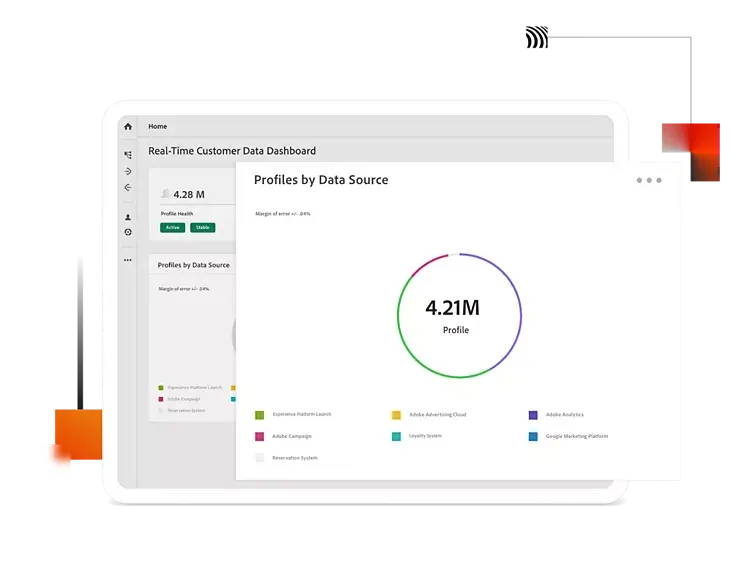
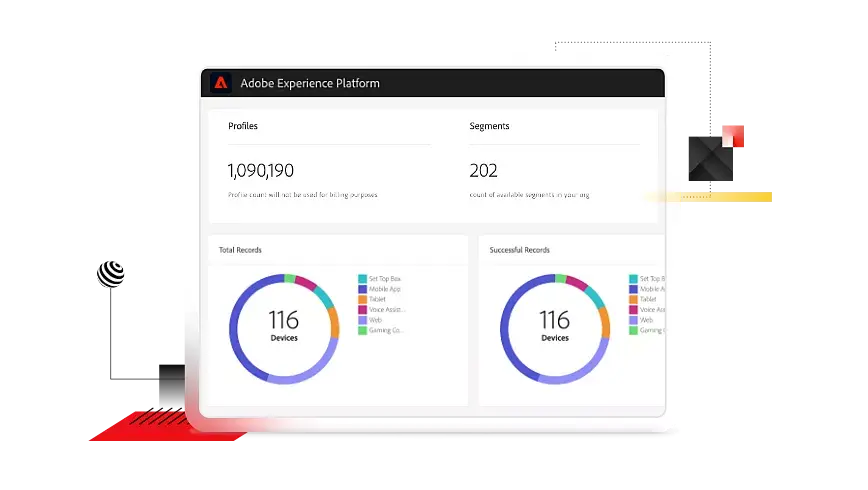
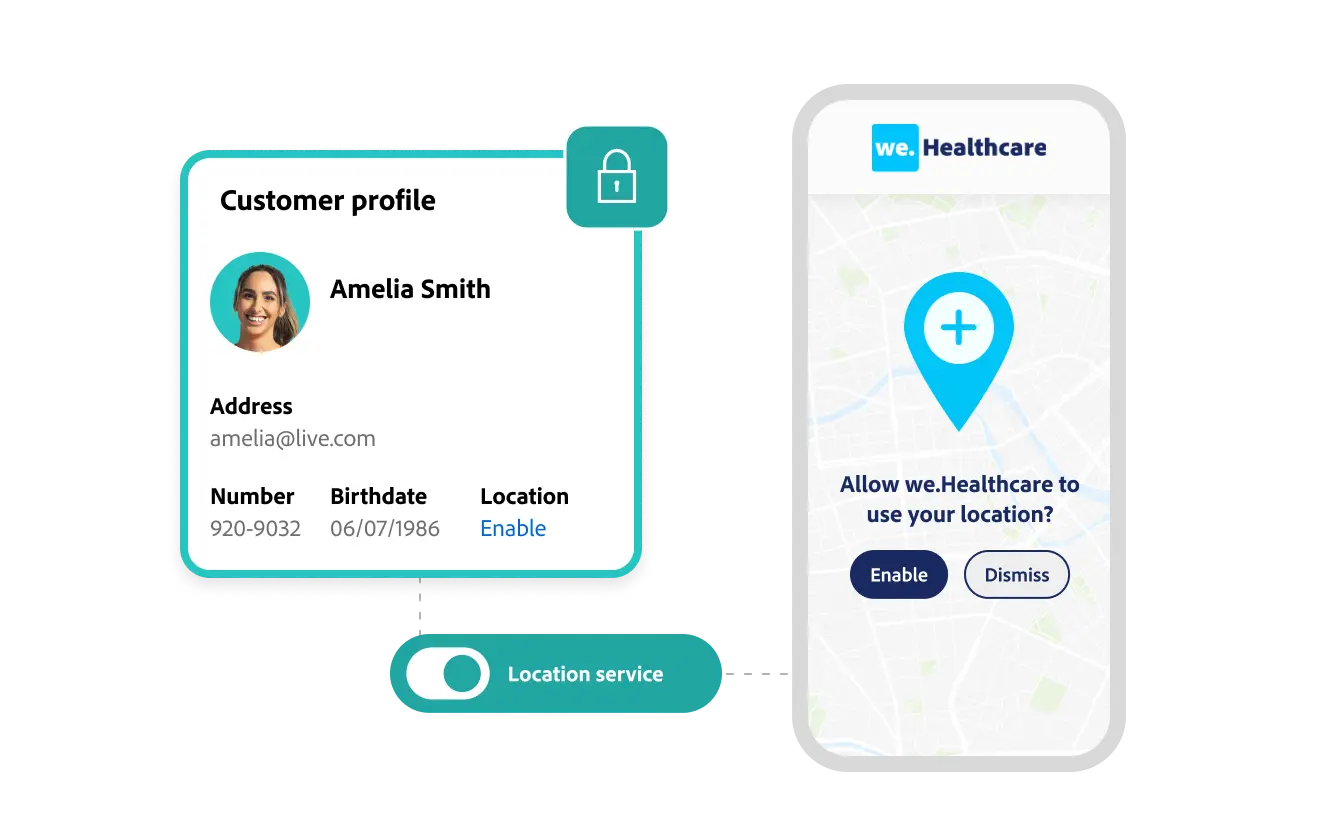
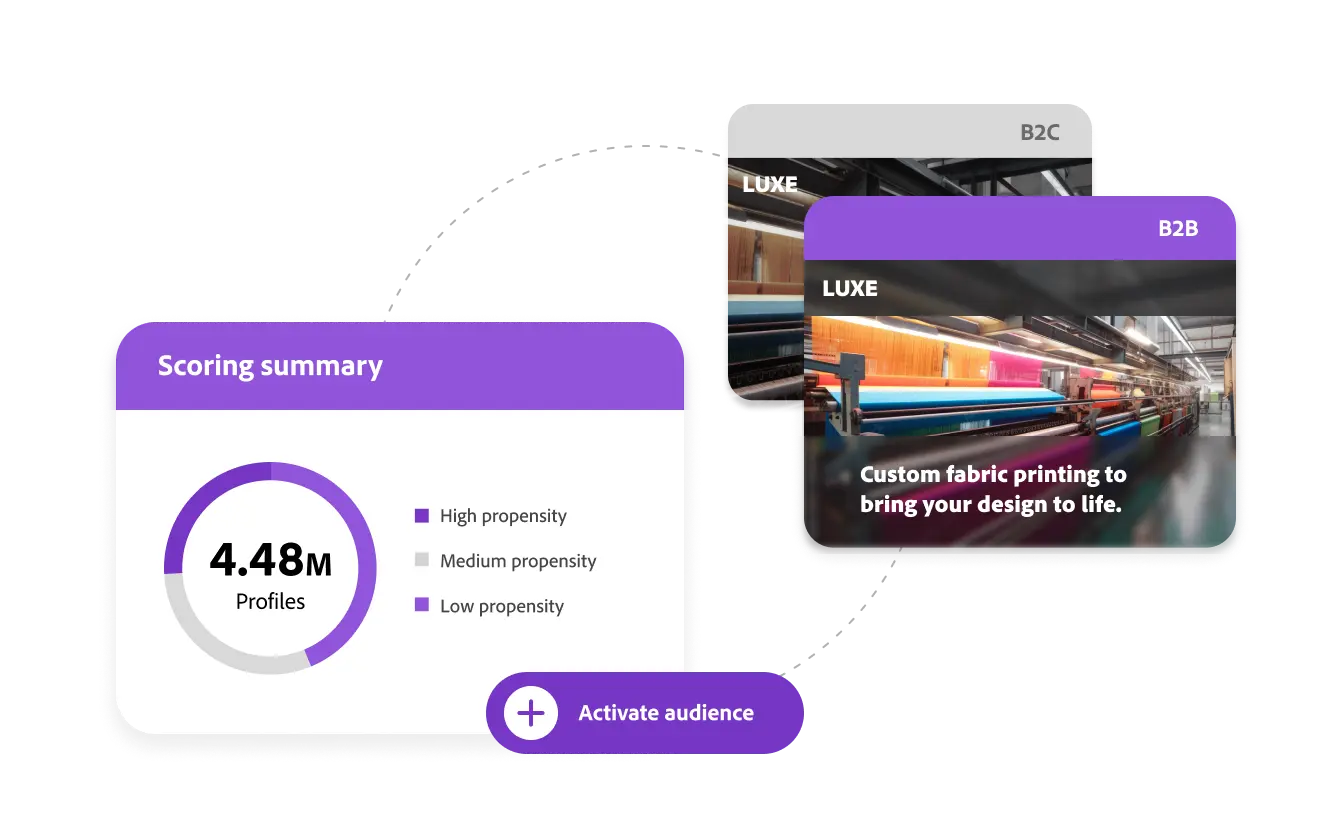
Adobe's Real-Time Customer Data Platform allows marketers to collect, normalize, and unify known and pseudonymous consumer and professional data into real-time profiles. These person or account-based profiles then power B2B, B2C, and hybrid customer experiences at scale.
N/A
Tealium Customer Data Hub
Score 8.5 out of 10
Enterprise companies (1,001+ employees)
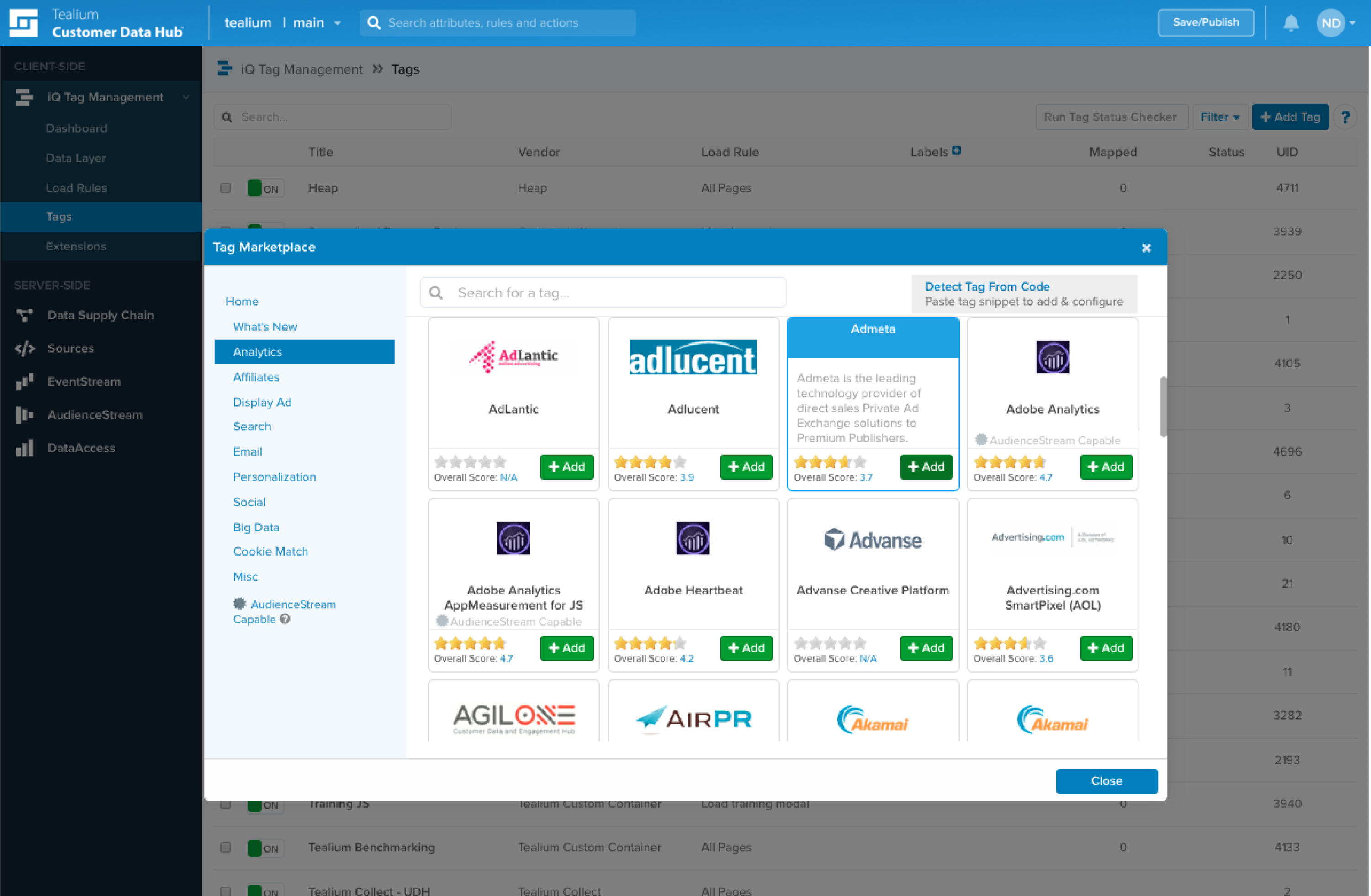
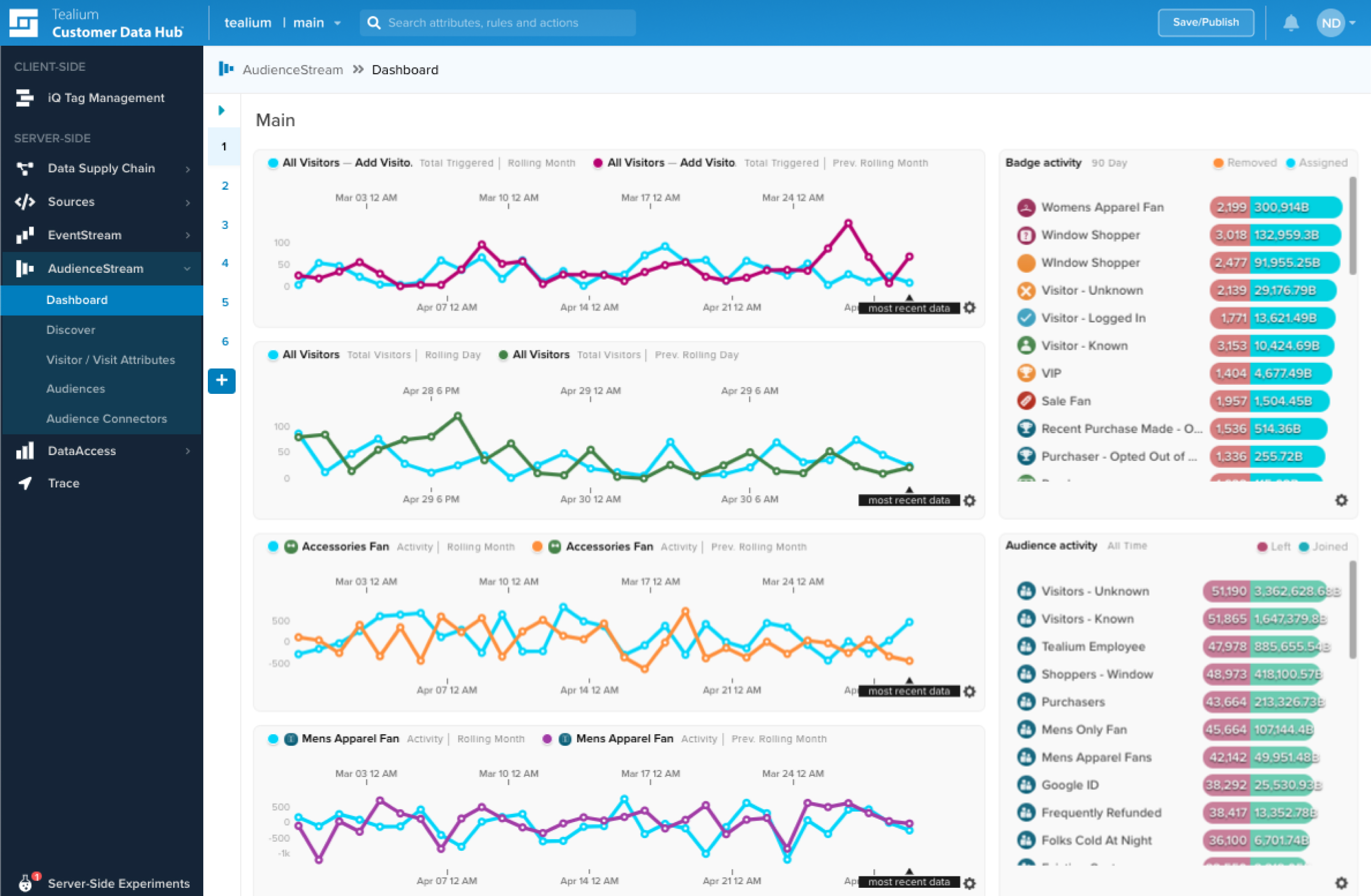
The Tealium Customer Data Hub powers capabilities across the data supply chain. Tealium universally collects customer data from any source including; websites, mobile applications, devices, kiosks, servers, and files. Data collected is then standardized in the data layer, which drives usage of data for customer engagement and analysis.
N/A
Pricing
Adobe Real-Time Customer Data Platform
Tealium Customer Data Hub
Editions & Modules
No answers on this topic
No answers on this topic
Offerings
Pricing Offerings
Adobe Real-Time CDP
Tealium Customer Data Hub
Free Trial
No
No
Free/Freemium Version
No
No
Premium Consulting/Integration Services
Yes
No
Entry-level Setup Fee
Optional
No setup fee
Additional Details
Adobe offers three tiers of Real-Time CDP tailored for any type of business wanting to power their customer experience management strategy with unified customer data. The Business-to-Consumer Edition is for B2C brands wanting to personalize experiences for consumers. The Business-to-Business Edition is for B2B brands wanting to personalize experiences for leads and accounts. The Business-to-Person Edition is for combined B2C and B2B brands wanting to personalize experiences for the same person across all lines of business.
Tealium CDP is too much simple and works mostly with those type of Business who are not majorly in Adobe's ecosystem. However in data governence Adobe Real-Time CDP is definitely a better product and help business to get robust growth
Adobe takes a very different approach to how profiles are stitched together than these other platforms. There are pros and cons, but there are more pros to the way Adobe has approached it. Also, the Adobe approach is designed from the ground up in the context of the other AEP …
We were using Tealium since the beginning and the integrations between TiQ and TCDH was seamless. We were able to get up and running quickly and start activating audiences to improve our marketing and personalization.
In any scenario where we have a unique offline and online 'Person ID,' we are able to see great results with profile stitching within CDP. In cases where we do not have a unique Person ID between datasets, we find ourselves at a point where we would need to change our architecture to have the same Person ID to see results.
Well suited: Any company that has a variety of data interspersed across multiple systems and is trying to get a more unified understanding of their customer profile—that enriched customer view of having all these disparate data sources and wanting to bring them together in a relatively seamless manner, and then having that more nuanced understanding of the entirety of the customer and being able to action off of it. Which again, I feel like is a core marketing use case.
Activation in real time - it's really good and you can literally see the information being activated in all other technologies that my clients use, like TikTok, Facebook, Google, et cetera. At the time that a client arrives on your website, you have instant data to enrich the profiles and activate on this channel. So this is really good and it's something that Tealium give us the control in order to do that.
The other thing is that you have the power to choose what data you want to collect and what data you do not want to collect. Tealium is particularly very good on doing that.
Audiences—don't they technically exist in Tealium? They are just streamed—no count, no backfill, etc.
Working backward to identify issues involves lots of clicking in the UI, going from audience to audience attribute, badge to event attribute, and so on.
You have to wait for a Real-Time event to see the payload. There is no sample or other option.
It helps faster deal cycles, higher win rated and a lot better prioritisation of leads. The churn rate is low this leads to a higher lifetime value. All decisions are now impacted with the real time data provided by Adobe Real-Time Customer Data Platform. It is very useful in increasing average revenue per customer hence this rating is well justified for the product
I already know that my company has no plans to discontinue use of Tealium. We are heavily reliant on it due to a huge number of product teams and developers we would have to work with to place tags across many pages. Tealium is already there on the pages, and our application/product teams are familiar with how to integrate it. It is just the simplest way to ensure that new data requirements are implemented in a timely manner.
Activation - great Segmentation - in UI, there should be the possibility of writing advanced code Tags. Both Mobile and Desktop Data Ingestion - might be pain in the ass. Changing one customer attribute is time-consuming. It should be some super admin or some feature. One user can change some customers' attributes easily. Data Transformation - Maybe there are some modules for that in AJO?
Once you understand how it works and how to implement things, it is a dream and very user friendly. There is the initial learning curve but there are oceans of helpers available to you to help you bridge that initial gap and get going. Take the time to learn it up front and you will never have any problems. And support is great and available to answer questions
The support team often is so quick to respond and so helpful when it comes to working with the needs of my clients and being able to resolve potential shortcomings or technical issues or surrounding the tool. There have been times more recently that I’ve gotten more generic service rather than the tailored experience that I have come to expect.
Implementation had some bumps in the road and it was new for all of us, but for the most part, it was easier than many other implementations we've done with other technologies.
Real time access of data Very popular so no need of marketing Customer profiles are updated immediately and easy to access multiple customer data Apt for both business to customers and business to business accounts Maintains strong focus on customer growth and standard profiles Privacy and confidentiality is better when compared to other customer data profile softwares
Tealium Customer Data Hub can do it all in one. Whereas, I think by using multiple Tealium Customer Data Hubs, we can utilize what each tool is really good at. In an ideal world, we'd like to use Tealium Customer Data Hub for everything, but one thing that we struggle with is Audience Segmentation, and we are looking for a one touch solution, without a lot of the work since the data is already there.
There has been a near immeasurable return on customer data and improvement of our quality for our physical products due to be in tune with the customer. This has changed our way of doing things for the better to gain a better flow and overall workplace experience.
A negative is that Tealium AudienceStream becomes harder to manuever and use data analytics for when a database has been existing for a fairly large amount of time. It goes from an agile ship to a huge vessel that takes many components to be able to move.