Adobe Test and Target is an A/B, multi-variate testing platform which Adobe acquired as part of the Omniture platform in 2009. It is now part of the Adobe Marketing Cloud. It offers tight integration with Adobe analytics and content management products.
N/A
GitLab
Score 8.7 out of 10
N/A
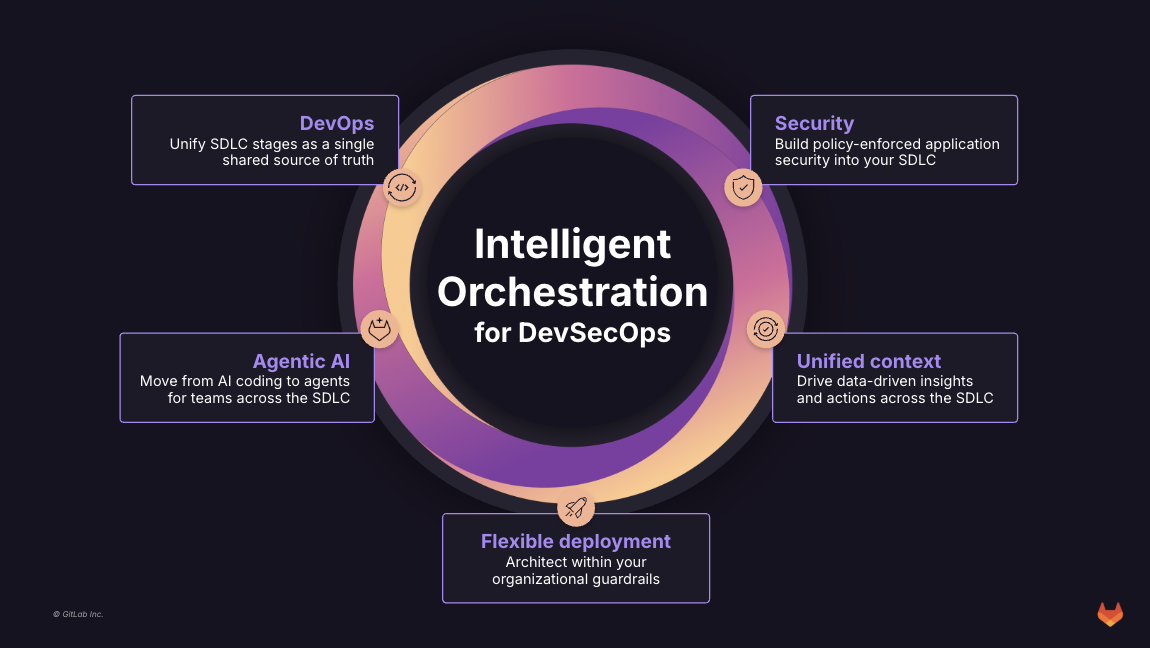
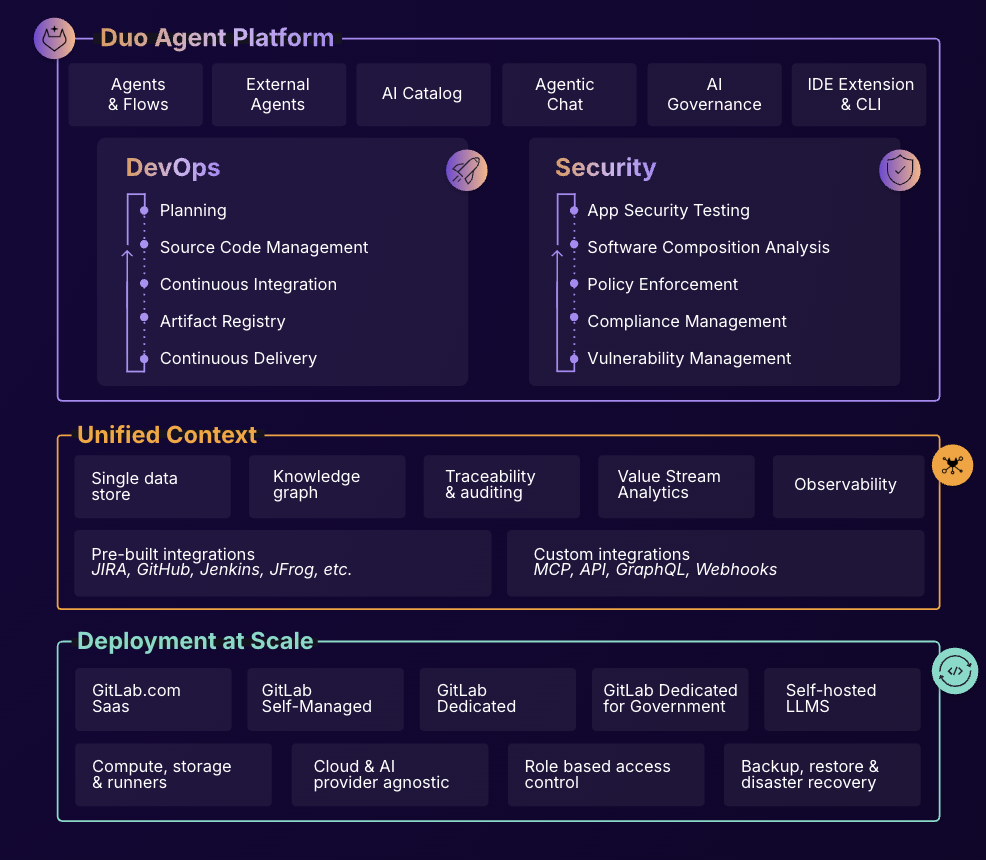
GitLab is an intelligent orchestration platform for DevSecOps, where software teams enable AI at every stage of the software lifecycle to ship faster. The platform enables teams to automate repetitive tasks across planning, building, securing, testing, deploying, and maintaining software.
$0
per month per user
GoCD
Score 8.0 out of 10
N/A
GoCD, from ThoughtWorks in Chicago, is an application lifecycle management and development tool.
N/A
Pricing
Adobe Target
GitLab
GoCD
Editions & Modules
No answers on this topic
GitLab Free (self-managed)
$0
GitLab Free
$0
GitLab Premium
$29
per month per user
GitLab Premium (self-managed)
$29
per month per user
GitLab Ultimate
Contact Sales
GitLab Ultimate (self-managed)
Contact Sales
No answers on this topic
Offerings
Pricing Offerings
Adobe Target
GitLab
GoCD
Free Trial
No
Yes
No
Free/Freemium Version
No
Yes
No
Premium Consulting/Integration Services
No
Yes
No
Entry-level Setup Fee
No setup fee
Optional
No setup fee
Additional Details
—
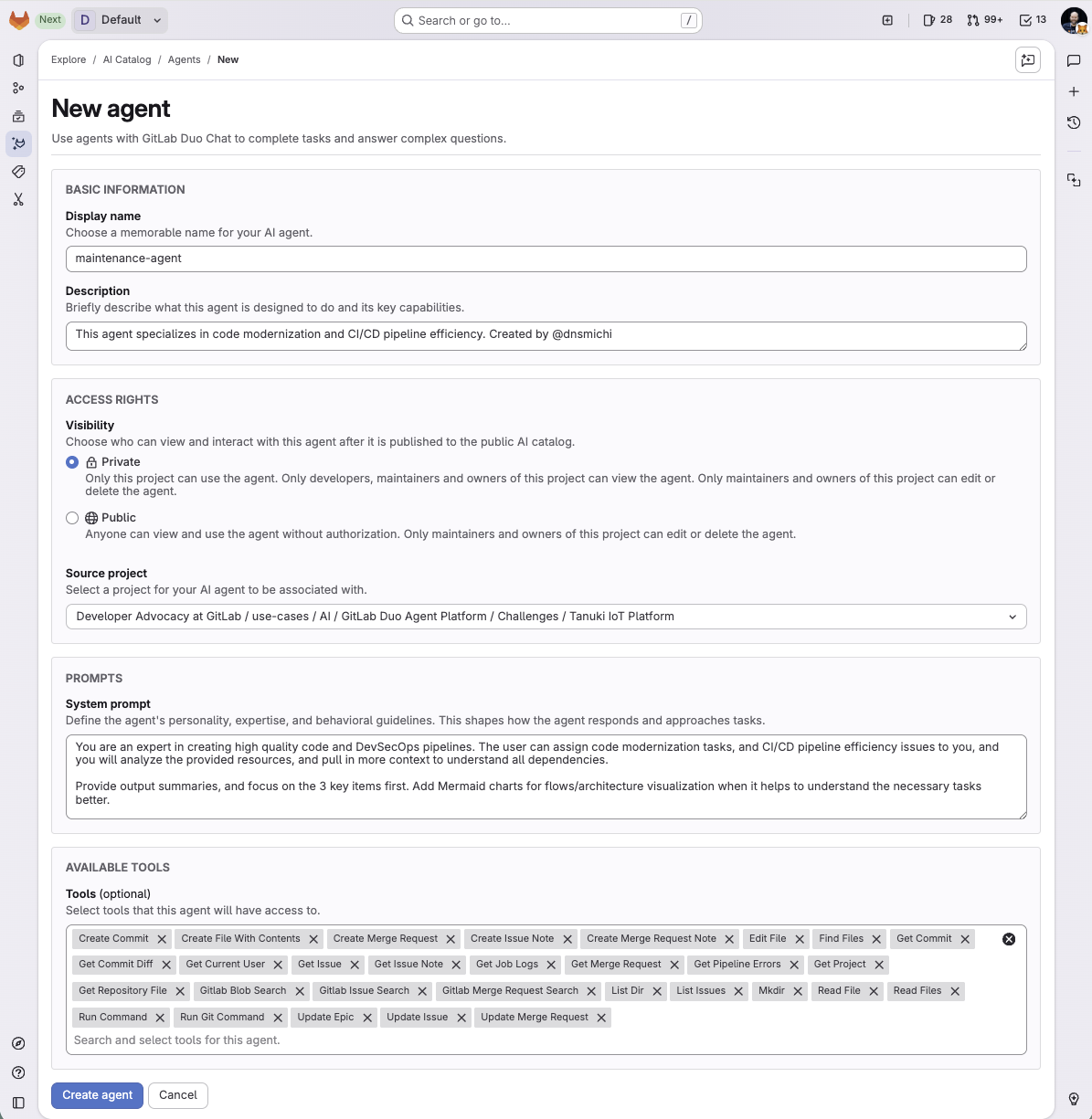
GitLab Credits enable flexible, consumption-based access to agentic AI capabilities in the GitLab platform, allowing you to scale AI adoption at your own pace while maintaining cost predictability. Powered by Duo Agent Platform, GitLab’s agentic AI capabilities help software teams to collaborate at AI speed, without compromising quality and enterprise security.
If usage exceeds monthly allocations and overage terms are accepted, automated on-demand billing activates without service interruption, so your developers never lose access to AI capabilities they need.
Real-time dashboards provide transparency into AI consumption patterns. Software teams can see usage across users, projects, and groups with granular attribution for cost allocation. Automated threshold alerts facilitate proactive planning. Advanced analytics deliver trending, forecasting, and FinOps integration.
If you're using the Adobe stack and tools to power your website, Target is a great solution to implement. I've utilized Target within two organizations, one running on Adobe Experience Manager (AEM), and the other on Adobe Magento. I don't see how companies could harness the full capacity of Target without also having Adobe Analytics integrated. This is their 'secret sauce' and might not be a good solution for companies who are invested in Google Analytics 360. Integration was straightforward but did require support from the Adobe team to implement successfully. While Target is a great tool for digital teams to support, you'll need your tech team aligned and available to support implementation.
GitLab is good if you work a lot with code and do complex repository actions. It gives you a very good overview of what were the states of your branches and the files in them at different stages in time. It's also way easier and more efficient to write pipelines for CI\CD. It's easier to read and it's easier to write them. It takes fewer clicks to achieve the same things with GitLab than it does for competitor products.
Previously, our team used Jenkins. However, since it's a shared deployment resource we don't have admin access. We tried GoCD as it's open source and we really like. We set up our deployment pipeline to run whenever codes are merged to master, run the unit test and revert back if it doesn't pass. Once it's deployed to the staging environment, we can simply do 1-click to deploy the appropriate version to production. We use this to deploy to an on-prem server and also AWS. Some deployment pipelines use custom Powershell script for.Net application, some others use Bash script to execute the docker push and cloud formation template to build elastic beanstalk.
This application gives us an incredible integration with Adobe Analytics that allows its operation to be the best and determine the performance of our website.
It offers us an analysis based on user behavior and a web page customization option to adapt and meet the needs of those users.
Pipeline-as-Code works really well. All our pipelines are defined in yml files, which are checked into SCM.
The ability to link multiple pipelines together is really cool. Later pipelines can declare a dependency to pick up the build artifacts of earlier ones.
Agents definition is really great. We can define multiple different kinds of environments to best suit our diverse build systems.
This is something a lot of testing tools struggle with, but I think the WYSIWYG ("What you see is what you get") editor - or Visual Experience Composer (VEC) in Adobe terminology - could definitely use some work. It's a struggle to execute many tests beyond simple copy, color, placement changes, and even the features that do exist are often clunky if not altogether broken.
The interface itself can be a bit counterintuitive in certain parts. If you are familiar with other tools, it's likely middle of the road in this respect; think much easier to understand than Monetate for instance, but a far cry from the simplicity of an Optimizely.
It can be a bit buggy from time to time. The worst example is the frequency at which the tool will fail to save due to an error, but not inform you of this until you try to save, at which point your only option is to log out, log back in, and make all of your updates once again. It can become an extreme pain point at times, and I personally have just gotten into the habit of saving every couple of minutes to avoid a massive loss of productivity.
We have a team of people trained on how to use the application and it integrates well with the other Adobe products we use. Our future roadmap of testing will require some complex scenarios which we hope Target will be able to accomplish
I really feel the platform has matured quite faster than others, and it is always at the top of its game compared to the different vendors like GitHub, Azure pipelines, CircleCI, Travis, Jenkins. Since it provides, agents, CI/CD, repository hosting, Secrets management, user management, and Single Sign on; among other features
The recent UI update is a complete mess. It is difficult to navigate and find features that previously existed. The reactiveness of the page depending on window size is also ridiculous and it is absurd that depending on how large your window is, entire columns of functions will disappear with no indication that they are missing. The usability of the tool has fallen off a cliff.
I find it easy to use, I haven't had to do the integration work, so that's why it is a 9/10, cause I can't speak to how easy that part was or the initial set up, but day to day use is great!
I've never had experienced outages from GItlab itself, but regarding the code I have deployed to Gitlab, the history helps a lot to trace the cause of the issue or performing a rollback to go back to a working version
GItlab reponsiveness is amazing, has never left me IDLE. I've never had issues even with complex projects. I have not experienced any issues when integrating it with agents for example or SSO
On several occasions, we have had the need to ask for help from the Adobe Target support team, and I must say that they have provided us with an excellent experience, as they take care of solving the problems quickly and with high precision
At this point, I do not have much experience with Gitlab support as I have never had to engage them. They have documentation that is helpful, not quite as extensive as other documentation, but helpful nonetheless. They also seem to be relatively responsive on social media platforms (twitter) and really thrived when GitHub was acquired by Microsoft
The instructor that came to train us was awesome and this training was very useful. I would recommend it for anyone who is going to be using this software. I only mark it lower because it is an added expense to an already expensive product, and a lot of the training covered the "Target" portion of the software (which again, we didn't use)
The training was very easy to understand, however it would have been more useful to my development team than me. It was also primarily over-the-phone, which is never as easy to follow as in-person. We ended up scheduling and paying for an in-person training session to supplement the online/phone training because it wasn't helpful enough.
Implement using a global mBox on the page so you can change any and everything over the traditional method. Traditional method is good if you do not have technical web dev resources, do not know Javascript/jQuery, or you have money to blow on mBox calls. Global deployment reduces mBox calls and allows you to touch many parts of the page easily. A lot more customizable
We seriously considered another software but because we use so many other Adobe products this made the most sense for us. If you are not dependent on other Adobe software and are a smaller company, in my opinion, Target may not be the best fit.
Gitlab seems more cutting-edge than GitHub; however, its AI tools are not yet as mature as those of CoPilot. It feels like the next-generation product, so as we selected a tool for our startup, we decided to invest in the disruptor in the space. While there are fewer out-of-the-box templates for Gitlab, we have never discovered a lack of feature parity.
GoCD is easier to setup, but harder to customize at runtime. There's no way to trigger a pipeline with custom parameters.
Jenkins is more flexible at runtime. You can define multiple user-provided parameters so when user needs to trigger a build, there's a form for him/her to input the parameters.
We have been able to run specific A/B tests that have shown an increase in conversion, which in turn has led to very large banked sales numbers for the year.
We have been able to prove that using and automated Merchandising process did not decrease conversion. This allowed us to greatly increase efficiency by opening up resource time.
Settings.xml need to be backed up periodically. It contains all the settings for your pipelines! We accidentally deleted before and we have to restore and re-create several missing pipelines
More straight forward use of API and allows filtering e.g., pull all pipelines triggered after this date