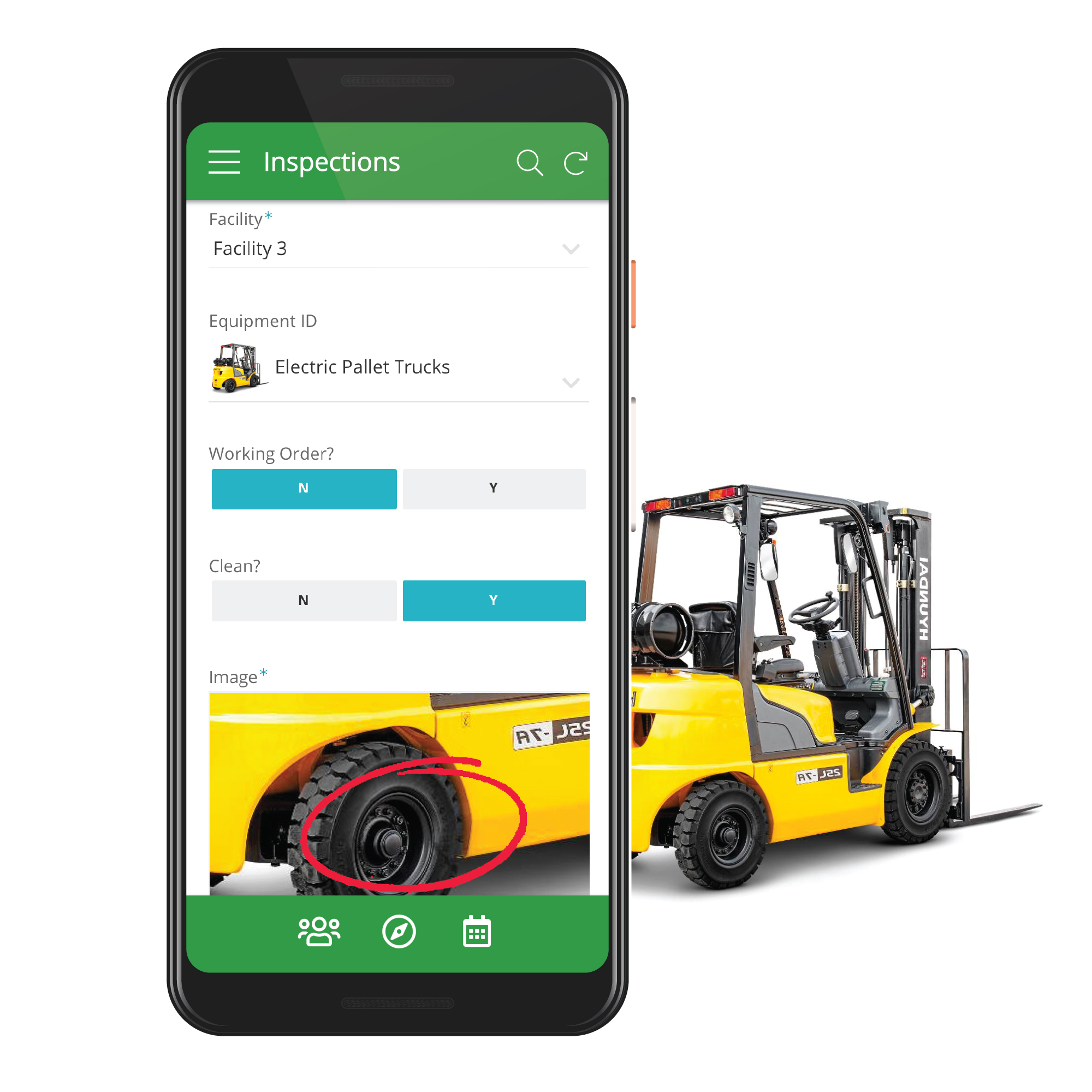
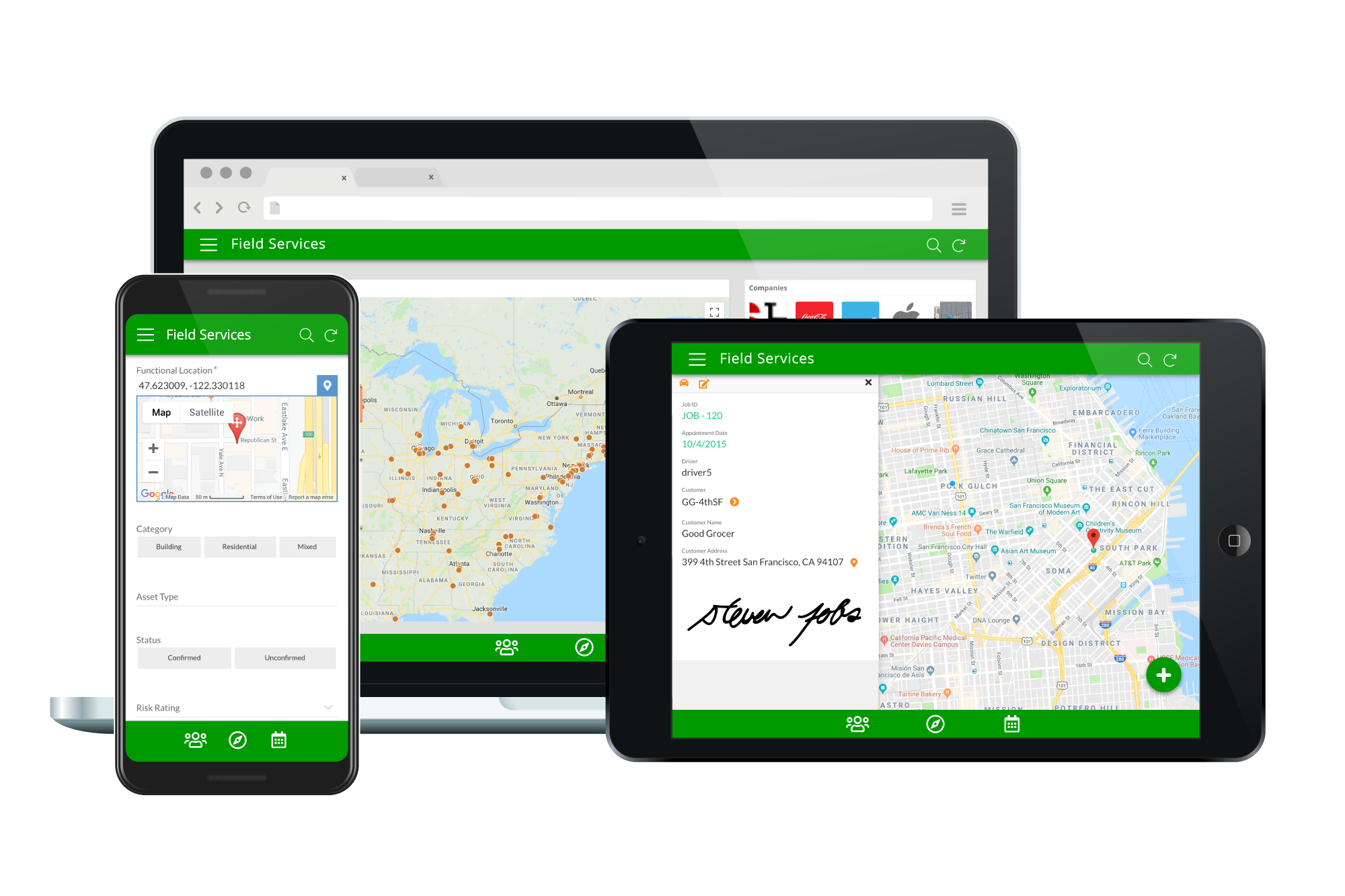
Acquired by Google in Spring 2020, AppSheet is an intelligent, no-code app platform for everyone. Users can create apps to transform the workplace. Common use cases include field service, transportation, customer surveys, incident reports, field data capture, compliance reports, delivery tracking, and property surveys. Used by the Fortune 500 & Industry Leaders Customers include Clearlink, Enterprise Holdings, ESPN, Pepsi, the University of Michigan, and the State of…
$5
per user/per month
OutSystems
Score 6.4 out of 10
N/A
The OutSystems Platform is a Platform-as-a-Service solution for rapid delivery of responsive web and mobile applications. It includes functionalities required to develop, deploy, manage and change web and mobile applications. It is targeted at the delivery of enterprise applications that require integration with backend systems, complex business rules and logic, usable interfaces and flexibility to change. It can be deployed in the cloud, on-premises or in hybrid environments.
$4,000
per month
ServiceNow IT Service Management
Score 8.2 out of 10
N/A
Built on the ServiceNow Now Platform, the IT Service Management bundle provides an agent workspace with knowledge management, and modules supporting issue tracking and problem resolution, change, release and configuration management.
N/A
Pricing
AppSheet
OutSystems
ServiceNow IT Service Management
Editions & Modules
Premium
$5.00
per user/per month
Pro
$10.00
per user/per month
Business
Contact sales team
Enterprise
Contact sales team
Basic
$4,000.00
per month
Pro
$10,000.00
per month
ITSM Standard
Custom Quote
ITSM Pro
Custom Quote
ITSM Enterprise
Custom Quote
Offerings
Pricing Offerings
AppSheet
OutSystems
ServiceNow IT Service Management
Free Trial
Yes
Yes
No
Free/Freemium Version
Yes
Yes
No
Premium Consulting/Integration Services
Yes
Yes
No
Entry-level Setup Fee
No setup fee
No setup fee
No setup fee
Additional Details
Personal apps and prototype are always free to build. Don't pay until you're ready to deploy.
What can I do for free?
Use the complete set of AppSheet features for free while building one or many app prototypes (for as long as you like). Invite up to 10 users for free to use your apps & share feedback.
How do Business Subscription pricing work?
Business Subscriptions enable a suite of performance & management features for organizations with cross-departmental app creators, and pricing is based on each unique requirements. Connect with the AppSheet team at solutions.appsheet.com/contact to learn more.
—
ITSM Pro and ITSM Enterprise also are available with optional "Plus" add-ons. These include AI Agents, an AI Agent Studio, and other features that augment the capabilities of the platform using AI Virtual Agents to automate tasks.
Appsheets are used for small applications that should be built quickly and deployed, OutSystems is used for more sophisticated applications that require more functionalities and better-personalized UI.
AppSheet has a great price $0 for learning and developing. AppSheet seems to be well rated by industry review organizations. AppSheet was fairly easy to get started.
If you need to manage special assets with unique characteristics and keep data in spreadsheets, Appsheet is ideal for replacing these sheets with a system. Once you start using it, you find yourself trying to move everything into Appsheet. It is perfect for generating internal software that would otherwise never be developed due to programming costs.
Well suited for internal exposure of business processes (invoicing, API layer to other systems, customer maintenance etc), whether a UI is required or not. Not so well suited for full fledged web design. An OutSystems application must serve one particular business need, if gets too much functionalities and responsibilities it tends to get chaotic and complex.
It is well suited for medium to large companies that require a tool to allow users to create IT requests, have a self-service portal, track the completion of such requests and have access to KPIs to understand the satisaction level of the requestors. It is not the best tool if you want to have a heavy personalized IT Service Management tool to cater to all your needs or when you want to have an easy way to search for past tickets using specific keywords.
Calculations - I have several apps that do some pretty complicated calculations, and decision making to build things like Shopping Lists for a Kanban assembly team, where the app will help a stocker determine whats low in a kanban assembly line stock box.
Document generation and record keeping - I have an app that users digitally sign and receive PDF contracts, and the system automatically records all records from the transaction. Everything is held in files on YOUR OWN DRIVE (Google Drive) so when you're done with the project or AppSheet you DONT loose your data.
Client/Customer Management - I follow the old school "Swimming with Sharks" model for client retention and customer engagement, and have built several small customer tracking tools for local businesses. This tool is limited ONLY by your imagine and desire to learn.
Once the tables / UX Views get way too many in number, it can become a little daunting to manage. This part of the UX may need something really smarter.
Ability to Undo.
Could provide more UI Look and Feel options. BTW, the new Graphs look great, but have some bugs, while the new INPUT() feature is a great addition too.
Price – The licensing model of OutSystems is very expensive and not suitable for small scale developments. This is offset by the time to develop and stability for larger scale developments
Flexibility on PaaS version – The PaaS hosted version of OutSystems limits your flexibility to access the front end and backend database systems which can significantly restrict your options on high data volume developments or where anything requiring slightly out of the ordinary access is required
Same price for PaaS and self-hosted system. Licensing model dictates that you pay the same price even when you host the system on your own hardware which effectively means you pay more to manage the infrastructure yourself
Finding requests that I opened and have since been completed by the assigned group/individual is very difficult to accomplish unless I've written down the request numbers somewhere.
Requests that I opened and are subsequently closed, often continue to appear in the list of "My Open Requests" giving the appearance that they were not completed when in fact they were.
It may exist, but if it does I haven't found it yet, which makes it less than intuitive, but I would like to see the ability to recall a request in ServiceNow.
I believe our firewall rule change request for is a custom form, but it has a serious drawback. If I submit such a request and need to make a correction to it before it is approved, there isn't anyway for me to do so. The request has to first be rejected with the creation of a sub-task in order to edit it before it is resubmitted for approval.
We are very happy with OutSystems and our developers deliver good work. OutSystems lets us build new software on a regulare (2 weekly) basis, which is highly flexible and adjustable. Even without very much experience, our developers manage to build usefull software, which is working a lot better than our previous (legacy) software.
To be completely honest setting up a new ticketing system can be a pain in the ass. Once you have it setup and customized the way you want it, you don't want to switch unless you're unhappy with the product. Unless future releases and updates really muck the system up, I wouldn't change.
It's just great. The usability is the best thing about Appsheet. You must choose which things will really be used later. You have to be careful of not generating something too big and then it feels like something that need to be learned. This is something that resolve problems, but you had to be able to think before doing. It will not solve problems itself. You need to find the problem, think a solution, and then use appsheet to make this solution a reality
OutSystems has a feature in which we can develop a functionality in a application and can use that functionality in another application without developing it again. That is main plus point for the development team so they can work with different functionalities rather focusing on the same thing again and again. if we want to make any change on the user side then we can make it live with just the deployment using the service center.
It has helped us a lot, and after some training and getting to know the product, we are quite comfortable with it and feel much more capable of understanding what's going on in our IT environment. The only reason it doesn't get a perfect score from me is that there is a learning curve for both end users and IT admins using ServiceNow. Once you customize the UI and remove unnecessary fields. You are left with a very clean product that does what it needs to and does it well.
AppSsheet has a support group and they show videos to help app builders. Though I have truck drivers' hours and can't join the webinars. Support groups with better assists me on a Saturday evening or a Sunday that I have time off. It's hard to watch videos driving down the highway.
The tech support is very reachable. Usually by [email] from but also by phone if needed. We had some difficulties at the start with understanding "what our machine was doing" under high performance load. After some good sessions understanding our needs they delivered good solutions for our problems we had in the beginning.
I would give it this rating because we have had no major issues with the support for ServiceNow after we implemented it at our organization. They seem to respond promptly and efficiently if we ever do need to open a support case with them about an issue we are having.
The online training material is well designed and explanations are step by step, helping trainees to understand and follow each exercise and new concept.
To type in what should be a text box, you have to click an empty cell, a tiny text box pop up opens with a check box and an X. You the. Type in the text box and have to click the check mark. If you have a bunch of fields to fill out, doing this is very annoying. Absolutely know thought went in to this. I'm sure somebody in marketing thought it was a good idea. It wasn't.
In a large company, patiently and consistently work the behind the scenes politics with business and IT partners across the firm. This is transformational - you will need a solid set of key business partners to lock arms together to move forward.
Without exception, every client I have worked with has been very happy with their resulting product. While this is partly due to my work, I must point out that the platform is the winning decision, not the implementer.
The ease that AppSheet provides to the developer is limitless. Before starting with AppSheet I used other software, but they didn't give me the tools at my fingertips. When I learned about AppSheet and everything it could do, I understood that it was what I was looking for, the ease with which everything is related within the app with a few clicks is impressive.
I tried to use WordPress with some success. Also looked at Joomla. But when I saw OutSystems I knew I had been wasting my time there. It takes you longer to get going with OutSystems - but even I as a novice realized immediately that Outsystems is simply in another league. Outsystems is powerful. (Can you compare WordPress and Joomla to Outsystems - I don't think so).
We used to use Jira to handle service tickets but it's way too robust for something this straightforward. Due to the nature of Jira, you needed to already have a lot of documentation and knowledge about who should be assigned the ticket, so the lift of creating a ticket was time consuming.
A good impact in general at the beginning since the free version allows great development so the investment in the implementation is of knowledge and time.
As a consultant I have expanded my services through this platform including new low code application building services.
The ease of use of the OutSystems development process has been the biggest ROI for us. We have developed our Framework product and maintained/enhanced it with only 4 workers.
OutSystems has enhanced their product very significantly over the last 4 years. They have gone from a simple to use tool to a very simple to use sophisticated tool that covers the standard mainframe-based computing apps and the apps used on handheld mobile devices all using the same basic set of development tools.
We don't currently have a CMDB, so we are leveraging ServiceNow to build one using their ITSM and ITOM tools. This is a huge gap for us as a company and it will be a big win once this is in place.
The core help desk functions are comparable to most other tools on the market, but SN does a great job of integrating that data with other modules like Problem, Change and Event Management to provide a truly integrated solution.
The tool is expensive, so you will need to try to do as much as you can with the platform. We currently use other systems for HAM and SAM but will be including these in our ServiceNow instance in the future to help maximize our ROI.