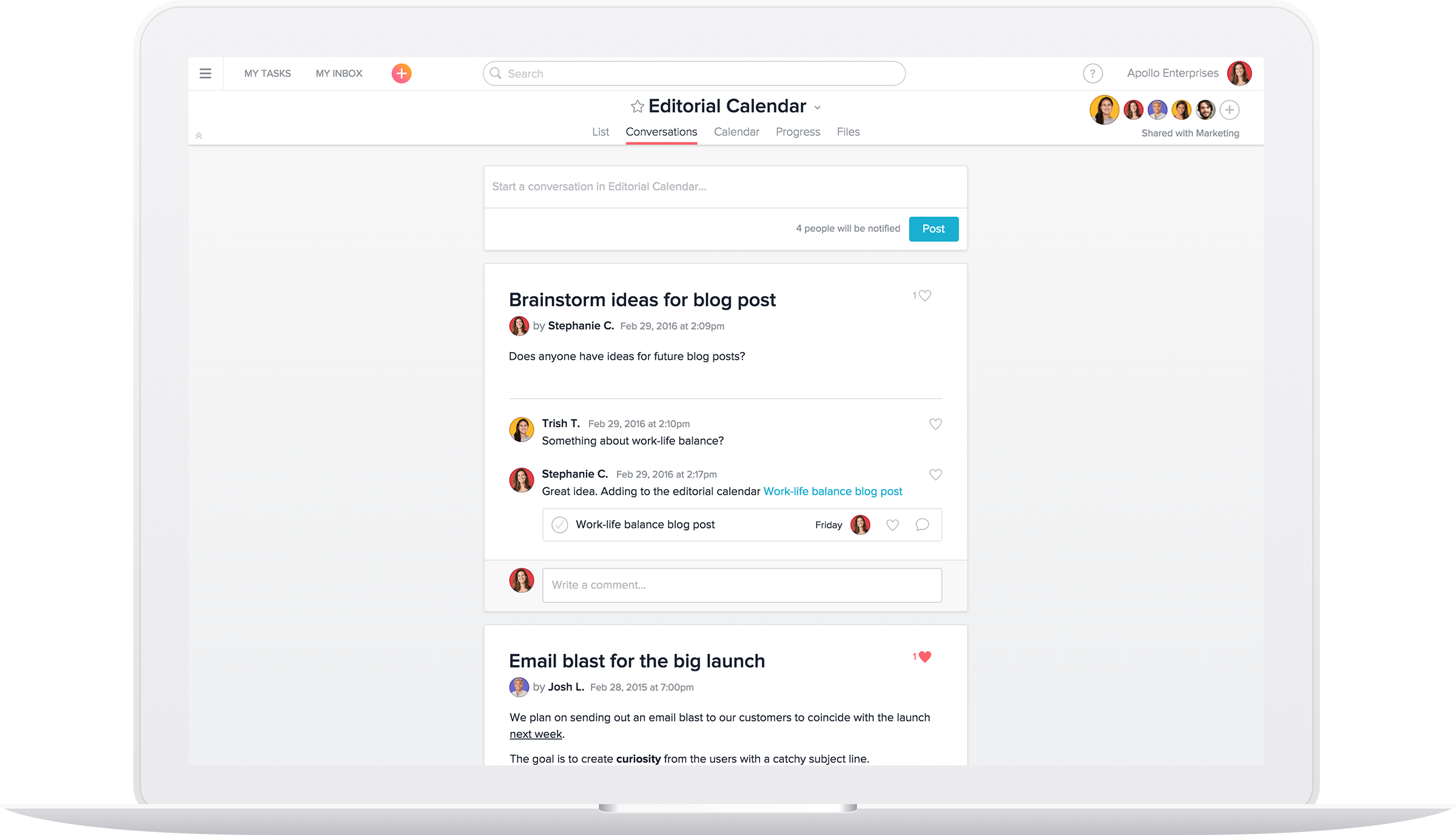
Asana is a web and mobile project management app. With tasks, projects, conversations, and dashboards, Asana lets an entire team know who's doing what by when, enabling workload balancing. Users can also add integrations for GANTT charts, time tracking and more.
$13.49
per month per user
Atlassian Jira
Score8.4 out of 10
N/A
Atlassian Jira is a project management tool, featuring an interactive timeline for mapping work items, dependencies, and releases, Scrum boards for agile teams, and out-of-the-box reports and dashboards.
$9
per month per user
Pricing
Asana
Atlassian Jira
Editions & Modules
Starter
$13.49
per month per user
Advanced
$30.49
per month per user
Enterprise
Contact Sales
Personal
Free
Standard
$9
per month per user
Premium
$17
per month per user
Enterprise
Contact Sales
per year
Offerings
Pricing Offerings
Asana
Atlassian Jira
Free Trial
Yes
Yes
Free/Freemium Version
Yes
Yes
Premium Consulting/Integration Services
Yes
No
Entry-level Setup Fee
Optional
No setup fee
Additional Details
A discount is offered for annual billing.
Higher volume teams may qualify buyers for a discount.
Senior Solutions Specialist in Professional Services at Premium Plus (Information Technology & Services, 11-50 employees)
Chose Asana
Against Jira it offers a more modern experience with less complex user interfaces. The admin and setup experience is also way faster with less (or no) legacy complexity.
Against other modern players like Linear and Basecamp it offers way more integrations so we can pull in data …
A de minimis incentive was given to thank the reviewer for their time. The incentive was not used to bias or drive a particular response, nor was the incentive contingent on a positive endorsement. TR verified that a representative sample of customers was invited. More Info
Verified User
Chose Asana
Asana provides a mix of features between notion and Jira. Unlike Notion, it helps ease up the collaboration on vast projects and between multiple teams. Jira proved to be a little expensive with similar set of features if not more and which is why we thought of going with Asana.
A de minimis incentive was given to thank the reviewer for their time. The incentive was not used to bias or drive a particular response, nor was the incentive contingent on a positive endorsement. More Info
Verified User
Chose Asana
Asana is one of the good going project management tools in the market. It has a great user interface with high performance. Its project dashboard management is handy when compared to other products.
A de minimis incentive was given to thank the reviewer for their time. The incentive was not used to bias or drive a particular response, nor was the incentive contingent on a positive endorsement. More Info
Verified User
Chose Asana
I used Wrike a few years ago. It was just okey, less configurable, harder to navigate than Asana. Maybe they improved their user experience over the years. I have also used Jira Software (not being on a development team) to structure projects and work sprints. This tool was …
A de minimis incentive was given to thank the reviewer for their time. The incentive was not used to bias or drive a particular response, nor was the incentive contingent on a positive endorsement. More Info
Verified User
Chose Asana
Wrike is similar but JUST a bit more cumbersome in every way. So if something takes 1-2 clicks in Asana it will take 3-4 in Wrike. Just enough of a lift that it makes it hard for people to just get started working. Instead, you must change your employees to think the way …
A de minimis incentive was given to thank the reviewer for their time. The incentive was not used to bias or drive a particular response, nor was the incentive contingent on a positive endorsement. More Info
Verified User
Chose Asana
Asana is cross-platformed and is easy and quickly reachable via a web browser.
It has permissions, filters, reports, tags, comments, etc. All these features allow tracking day-by-day activities of the team as well as weekly/ monthly milestones and reporting.
A de minimis incentive was given to thank the reviewer for their time. The incentive was not used to bias or drive a particular response, nor was the incentive contingent on a positive endorsement. More Info
Verified User
Chose Asana
Asana has a better user experience and user interface than other project management software I have used. It is much easier to learn than the other products, and I have been able to customize its use in better ways than I have accomplished with others. Much more than a to-do …
A de minimis incentive was given to thank the reviewer for their time. The incentive was not used to bias or drive a particular response, nor was the incentive contingent on a positive endorsement. More Info
CRM Project Manager in Marketing at 1-800 CONTACTS (Consumer Goods, 1001-5000 employees)
Chose Asana
Cost and the lowest ramp-up time is always factored in while still meeting the needs of a very fast-paced environment. Asana has more capability than Trello or ClickUp and is a more visual tool than JIRA.
A de minimis incentive was given to thank the reviewer for their time. The incentive was not used to bias or drive a particular response, nor was the incentive contingent on a positive endorsement. More Info
Verified User
Chose Asana
Asana is lightweight and relatively inexpensive. For our marketing and advertising team, it works great. For teams with stricter needs (development teams, product teams, and other scrum teams), looking at other options might be worthwhile.
A de minimis incentive was given to thank the reviewer for their time. The incentive was not used to bias or drive a particular response, nor was the incentive contingent on a positive endorsement. More Info
Verified User
Chose Asana
Personally, I didn't have a say in this as I had not started at the company when the team decided on Asana. That said, I have used monday.com, and we also have JIRA, which is used by our dev team, and us occasionally if we need to. JIRA has too many bells and whistles and is …
A de minimis incentive was given to thank the reviewer for their time. The incentive was not used to bias or drive a particular response, nor was the incentive contingent on a positive endorsement. More Info
SEO Manager in Marketing at BambooHR (Marketing and Advertising, 201-500 employees)
Chose Asana
In my personal opinion, I think that Asana is the easiest one to use out of Basecamp and JIRA. I know that our devs like JIRA but for our marketing team, we prefer Asana hands-down. Basecamp is clunky and awkward when trying to use. I always felt like things were falling …
A de minimis incentive was given to thank the reviewer for their time. The incentive was not used to bias or drive a particular response, nor was the incentive contingent on a positive endorsement. More Info
Verified User
Chose Asana
1. JIRA is more focused on technical developers. Hard for those non-technical users.
2. Wrike was good for project management assignment but lousy for communication after task assignment.
3. Trello was good for brain-storming a project but lousy for tasks assignment and …
A de minimis incentive was given to thank the reviewer for their time. The incentive was not used to bias or drive a particular response, nor was the incentive contingent on a positive endorsement. More Info
Verified User
Chose Asana
Asana is much better than the competition. It's free to use, and relatively affordable with premium plans. It's more flexible than the other tools on the market, lending it to be useful for companies in many different scenarios, industries, and sizes.
A de minimis incentive was given to thank the reviewer for their time. The incentive was not used to bias or drive a particular response, nor was the incentive contingent on a positive endorsement. More Info
Senior Director of Product Experience in Research & Development at WuXi NextCODE (Biotechnology, 501-1000 employees)
Chose Asana
There were a combination of factors that led us to decide on Asana, including ease of use and external system integrations, but primarily we could use it across geographically distributed offices successfully and incorporate a variety of end user work flows based on global …
A de minimis incentive was given to thank the reviewer for their time. The incentive was not used to bias or drive a particular response, nor was the incentive contingent on a positive endorsement. More Info
A de minimis incentive was given to thank the reviewer for their time. The incentive was not used to bias or drive a particular response, nor was the incentive contingent on a positive endorsement. More Info
Senior Business Analyst in Marketing at Lucid Agency (Marketing and Advertising, 11-50 employees)
Chose Asana
Asana is a great balance of simplicity and robustness. JIRA is simply too robust for my team's needs - it is more appropriate for a software team. We did not need the capabilities to customize automated workflows. Our development process is waterfall, so a PM software centered …
A de minimis incentive was given to thank the reviewer for their time. The incentive was not used to bias or drive a particular response, nor was the incentive contingent on a positive endorsement. More Info
A de minimis incentive was given to thank the reviewer for their time. The incentive was not used to bias or drive a particular response, nor was the incentive contingent on a positive endorsement. More Info
Senior Software Engineer in Information Technology at Homes & Land (Computer Software, 11-50 employees)
Chose Asana
Asana is very simple and straight forward, other more expensive products offer more features but require you to do project management their way. Asana provides a nice interface for task management.
A de minimis incentive was given to thank the reviewer for their time. The incentive was not used to bias or drive a particular response, nor was the incentive contingent on a positive endorsement. More Info
Verified User
Chose Asana
BetterWorks is similar to Asana but I have been using Asana longer and find it simpler to use.
A de minimis incentive was given to thank the reviewer for their time. The incentive was not used to bias or drive a particular response, nor was the incentive contingent on a positive endorsement. More Info
Senior Software Engineer in Information Technology at Homes & Land (Publishing, 51-200 employees)
Chose Asana
We actually moved to JIRA after using Asana for about 5 years because it offered project management features that better-suited our needs as a software development team.
A de minimis incentive was given to thank the reviewer for their time. The incentive was not used to bias or drive a particular response, nor was the incentive contingent on a positive endorsement. More Info
Verified User
Chose Asana
As stated before, for my own line of work, I prefer JIRA because it is more powerful; it brings more structure and organization (which might seem as a downside for some people) but provides additional value from it. It provides a better user interface and experience; it has a …
A de minimis incentive was given to thank the reviewer for their time. The incentive was not used to bias or drive a particular response, nor was the incentive contingent on a positive endorsement. More Info
Verified User
Chose Asana
Asana is very quick in terms of creating and assigning tasks. None of the above software does it with that efficiency. Redmine and JIRA both have a boring interface while Asana is modern and hip. The only major difference between them is the integration for Agile development …
A de minimis incentive was given to thank the reviewer for their time. The incentive was not used to bias or drive a particular response, nor was the incentive contingent on a positive endorsement. More Info
Verified User
Chose Asana
After trying several other options, including Zoho and Basecamp we settled on Asana. The time to value was the shortest when we factored in the learning curve, relevant functionality, mobile friendliness and most importantly the team calendar. Another great aspect is that it …
Software Developer in Engineering at kore.ai (Computer Software, 1001-5000 employees)
Chose Atlassian Jira
Trello is amazing for simple project management and great for non-technical teams, but it lacks the depth and complexity of JIRA for detailed issue tracking and complex workflows. Asana, similar to Trello, is great for simple and lightweight project management but isn't …
A de minimis incentive was given to thank the reviewer for their time. The incentive was not used to bias or drive a particular response, nor was the incentive contingent on a positive endorsement. More Info
Verified User
Chose Atlassian Jira
I have majorly used Atlassian Jira and not Asana as i have only worked it for like a month or two. The vast support with Confluence and Bitbucket makes Atlassian Jira my first choice among all other major player who are competing against each other. I absolutely love using Atla…
A de minimis incentive was given to thank the reviewer for their time. The incentive was not used to bias or drive a particular response, nor was the incentive contingent on a positive endorsement. More Info
A de minimis incentive was given to thank the reviewer for their time. The incentive was not used to bias or drive a particular response, nor was the incentive contingent on a positive endorsement. More Info
Verified User
Chose Atlassian Jira
Asana was less robust. It is lightweight and has a lot of the same features, has better visuals but it always feel like it isn't robust enough. It is straightforward but it doesn't have the bells and whistle a more robust system like Jira does. And it doesn't have as much of a …
A de minimis incentive was given to thank the reviewer for their time. The incentive was not used to bias or drive a particular response, nor was the incentive contingent on a positive endorsement. More Info
Verified User
Chose Atlassian Jira
1. Jira is more cost effective as compared to Asana. 2. We found Jira's user interface more appealing as compared to Asana. 3. Jira is mainly focused and used by product team.
A de minimis incentive was given to thank the reviewer for their time. The incentive was not used to bias or drive a particular response, nor was the incentive contingent on a positive endorsement. More Info
Verified User
Chose Atlassian Jira
Asana is great for people who need simpler project management systems. It does not have a wide range of features but its integrations are a lot more streamlined and easy to set up. Trello is great for those who just want to manage scrum boards and swim lanes.
A de minimis incentive was given to thank the reviewer for their time. The incentive was not used to bias or drive a particular response, nor was the incentive contingent on a positive endorsement. More Info
Vice President of Research in Research & Development at SPARK Neuro (Research, 11-50 employees)
Chose Atlassian Jira
Jira Software integrates with other software platforms nearly as well as its competitors, such as Asana or ClickUp. However, it provides more advanced tools than ClickUp and Asana, allowing project managers to see the workload of their team members, manage burndown, and react …
A de minimis incentive was given to thank the reviewer for their time. The incentive was not used to bias or drive a particular response, nor was the incentive contingent on a positive endorsement. More Info
Verified User
Chose Atlassian Jira
Our teams previously used GitHub, Asana, and Jira Software before we consolidated everything into Jira Software. While some teams still use GitHub for particular development projects, we have found Jira Software to be more well-rounded than the competitors we replaced, and this …
A de minimis incentive was given to thank the reviewer for their time. The incentive was not used to bias or drive a particular response, nor was the incentive contingent on a positive endorsement. More Info
Product Content Strategist in Product Management at Adjust (Computer Software, 201-500 employees)
Chose Atlassian Jira
Trello is friendlier and simpler to use than JIRA, but the tradeoff is that JIRA offers way more granular functionality. For our highly technical team, JIRA ended up being a better fit. I've also used Asana at a previous company and really liked it. I found it more …
A de minimis incentive was given to thank the reviewer for their time. The incentive was not used to bias or drive a particular response, nor was the incentive contingent on a positive endorsement. More Info
Verified User
Chose Atlassian Jira
Jira is more powerful, flexible and fundamental, whereas Asana is easy to use.
A de minimis incentive was given to thank the reviewer for their time. The incentive was not used to bias or drive a particular response, nor was the incentive contingent on a positive endorsement. More Info
A de minimis incentive was given to thank the reviewer for their time. The incentive was not used to bias or drive a particular response, nor was the incentive contingent on a positive endorsement. More Info
Verified User
Chose Atlassian Jira
We didn’t test all the other solutions because Jira is the standard that our teams use. If we were to test others, we could see the difference.
A de minimis incentive was given to thank the reviewer for their time. The incentive was not used to bias or drive a particular response, nor was the incentive contingent on a positive endorsement. TR verified that a representative sample of customers was invited. More Info
Verified User
Chose Atlassian Jira
It was an organizational decision to go for JIRA and hence we moved to JIRA.
A de minimis incentive was given to thank the reviewer for their time. The incentive was not used to bias or drive a particular response, nor was the incentive contingent on a positive endorsement. More Info
Verified User
Chose Atlassian Jira
Atlassian Jira is like an old person trying to look young. In the last couple of years it started succeeding somewhat but I'd still pick something from the alternatives if starting a new project.
A de minimis incentive was given to thank the reviewer for their time. The incentive was not used to bias or drive a particular response, nor was the incentive contingent on a positive endorsement. More Info
Verified User
Chose Atlassian Jira
Jira was selected because it is used by all of our clients and has become the accepted standard in the type of work that we do. The other tools are great in their own right and would better suit a more insular way of working, where a business conducts all work internally, but …
A de minimis incentive was given to thank the reviewer for their time. The incentive was not used to bias or drive a particular response, nor was the incentive contingent on a positive endorsement. More Info
Verified User
Chose Atlassian Jira
Jira is more end-to-end solution than others. We have integrated two other Jira products - Bitbucket & Confluence to get more value for our product development journey.
Jira Software is more customizable and can be adapted to the project management needs of both small and large …
A de minimis incentive was given to thank the reviewer for their time. The incentive was not used to bias or drive a particular response, nor was the incentive contingent on a positive endorsement. More Info
Verified User
Chose Atlassian Jira
Trello has a similar feature but Jira provides a lot more than Trello and the good thing about Jira is, it is very stable.
A de minimis incentive was given to thank the reviewer for their time. The incentive was not used to bias or drive a particular response, nor was the incentive contingent on a positive endorsement. More Info
Junior Software Engineer in Information Technology at ATI Limited (Computer Software, 1001-5000 employees)
Chose Atlassian Jira
Our groups use JIRA in numerous ways and we've viewed it as capable in practically all cases. I would effectively prescribe JIRA to an organization of the right size and intricacy. It just might be over the top excess for groups that need just light undertaking following and …
A de minimis incentive was given to thank the reviewer for their time. The incentive was not used to bias or drive a particular response, nor was the incentive contingent on a positive endorsement. More Info
Verified User
Chose Atlassian Jira
Jira Software has more integrations and has more features than many of its competitors. While some of its competitors do have better UI/UX than Jira Software, they have improved this greatly over time. Atlassian also acquired Trello years ago, so that adds better user …
A de minimis incentive was given to thank the reviewer for their time. The incentive was not used to bias or drive a particular response, nor was the incentive contingent on a positive endorsement. TR verified that a representative sample of customers was invited. More Info
Verified User
Chose Atlassian Jira
Jira Software is a much more robust solution that offers more features than the alternatives. Since our engineering department is also using BitBucket, it makes the choice easy to go with the whole Atlassian suite.
A de minimis incentive was given to thank the reviewer for their time. The incentive was not used to bias or drive a particular response, nor was the incentive contingent on a positive endorsement. More Info
Verified User
Chose Atlassian Jira
Jira [Sofware] being the market leader, it is a lot easier to sell internally when it comes to the core product (backlog management). The additional scenarios that are supported, such as service ticketing and knowledge base management, can also be added whenever you feel ready …
A de minimis incentive was given to thank the reviewer for their time. The incentive was not used to bias or drive a particular response, nor was the incentive contingent on a positive endorsement. More Info
Verified User
Chose Atlassian Jira
Jira Software is considered perfect when it comes to handling a software team which might need an advanced agile functionality as well as structured workflow wherein Trello could be quick in terms of capturing or sharing the ideas or lists or to-do's. Jira has a better UI and …
A de minimis incentive was given to thank the reviewer for their time. The incentive was not used to bias or drive a particular response, nor was the incentive contingent on a positive endorsement. More Info
Senior Front-End Developer in Research & Development at Vertic (Marketing and Advertising, 51-200 employees)
Chose Atlassian Jira
Jira had the full package and had a lot of options as a task management tool, good for tickets and a complex user management interface to split up permissions within our company and for our clients. We can integrate with Bitbucket and work through tickets development, design …
A de minimis incentive was given to thank the reviewer for their time. The incentive was not used to bias or drive a particular response, nor was the incentive contingent on a positive endorsement. More Info
Technical Support Manager in Customer Service at Videojet Technologies (Printing, 1001-5000 employees)
Chose Atlassian Jira
VersionOne's UI and UX is so severely dated. Actions that would take just 2 or less clicks would take multiple clicks, a pop up window, and old style dialogs in VersionOne. Hated it.
A de minimis incentive was given to thank the reviewer for their time. The incentive was not used to bias or drive a particular response, nor was the incentive contingent on a positive endorsement. More Info
Verified User
Chose Atlassian Jira
JIRA is simply the most robust and customizable product I've worked with. If you're a casual user, the interface is pretty simple and straight forward. If you're an administrator, there is definitely a learning curve, but there's also ample documentation available. In addition, …
A de minimis incentive was given to thank the reviewer for their time. The incentive was not used to bias or drive a particular response, nor was the incentive contingent on a positive endorsement. More Info
The usability of Asana is broad since it's available in a variety of platforms that are widely used nowadays. I think that it would be great for people who are constantly on the move and switching devices, since it has allowed me to work from my phone, too. I also think that Asana has proven itself to handle a large quantity of work
Jira facilitates software development, bug tracking, and sprints. It's ideal for structured workflows, issue management, and customer communication. However, more straightforward tools might be more efficient for highly creative, unstructured tasks or tiny, agile teams with quick visual overviews. Jira's complexity can be overkill for basic task lists.
A de minimis incentive was given to thank the reviewer for their time. The incentive was not used to bias or drive a particular response, nor was the incentive contingent on a positive endorsement. More Info
Through it, we were able to communicate and cooperate with the rest of the team to complete the work in the required manner and at the appropriate time.
Integration of tools like Bitbucket, Github, etc., has made it easier to track the code changes, pull requests, and branches linked to the respective ticket.
The detailed tracking system in JIRA has helped the teams prioritize and understand the project tasks and issues.
JIRA's project tracking board helps you keep track of the project, its flow, and expectations in a structured format.
A de minimis incentive was given to thank the reviewer for their time. The incentive was not used to bias or drive a particular response, nor was the incentive contingent on a positive endorsement. More Info
A de minimis incentive was given to thank the reviewer for their time. The incentive was not used to bias or drive a particular response, nor was the incentive contingent on a positive endorsement. More Info
A de minimis incentive was given to thank the reviewer for their time. The incentive was not used to bias or drive a particular response, nor was the incentive contingent on a positive endorsement. More Info
A de minimis incentive was given to thank the reviewer for their time. The incentive was not used to bias or drive a particular response, nor was the incentive contingent on a positive endorsement. More Info
This is because Jira Software generates a huge profit for an affordable price. Having a tool that makes team management transparent and effective is very valuable.
In addition, the renewal of Jira Software and all Atlassian tools is predictable and clear, as the prices are published on the Atlassian website and there is no pyramid of intermediaries.
A de minimis incentive was given to thank the reviewer for their time. The incentive was not used to bias or drive a particular response, nor was the incentive contingent on a positive endorsement. More Info
It is very user-friendly. Takes a new employee an hour to start figuring out how the system works. That's an important factor. You don't want to encounter the issue where employees need a week to understand how the system works. For example, JIRA, I tried using it for a week and I still don't understand the complicated layout. Asana has a simple interface. Once you see it, you get it type of program.
A de minimis incentive was given to thank the reviewer for their time. The incentive was not used to bias or drive a particular response, nor was the incentive contingent on a positive endorsement. More Info
The interface is simple and easy to use if you have some experience with it. Configuration is also logical most of the time. However, less experienced users tend to find themselves lost in some tasks - usually complex project configuration- but sometimes simple things, such as seeing why a user can't move issues in a workflow. Jira configuration requires a good amount of experience - and even experienced users often resort to documentation. It's a tool that's easy to use if you know what you're doing and where to find the proper documentation, but novice users tend to find it challenging.
A de minimis incentive was given to thank the reviewer for their time. The incentive was not used to bias or drive a particular response, nor was the incentive contingent on a positive endorsement. More Info
Did not face any issues and whenever they plan maintanance they update all of us very well in advance also so in that view we are good with the product stability.
A de minimis incentive was given to thank the reviewer for their time. The incentive was not used to bias or drive a particular response, nor was the incentive contingent on a positive endorsement. More Info
Performance is really good though it holds lot of data it loads quickly especially search operation also get the results very quickly as needed hence its good
A de minimis incentive was given to thank the reviewer for their time. The incentive was not used to bias or drive a particular response, nor was the incentive contingent on a positive endorsement. More Info
I haven't had to use their support so I can't rate it. The fact that I haven't needed them reflects the ease of use of the product. I would recommend that any new users schedule a complete demo of the product to ensure that they are using it to it's fullest (there's a lot of useful features).
A de minimis incentive was given to thank the reviewer for their time. The incentive was not used to bias or drive a particular response, nor was the incentive contingent on a positive endorsement. More Info
I have not had a chance to contact JIRA's customer support. It does offer extensive documentation, although it often feels too technical for me. There is also a JIRA training app that lets you take little lessons and quizzes on different areas (e.g., JIRA basics, agile). I did find it a helpful way to teach myself.
A de minimis incentive was given to thank the reviewer for their time. The incentive was not used to bias or drive a particular response, nor was the incentive contingent on a positive endorsement. More Info
Had received training from our own internal user so it was good and also very easy to understand topics and many tasks in the UI are self explanatory and we can do by our own
A de minimis incentive was given to thank the reviewer for their time. The incentive was not used to bias or drive a particular response, nor was the incentive contingent on a positive endorsement. More Info
One of their strong points i stheir documentation. Almost all of the basic set up needed within JIRA is available online through atlassian and its easy to find and very precise. The more critical issues need to be addressed as well and hence the rating of 8 instead of a 9.
A de minimis incentive was given to thank the reviewer for their time. The incentive was not used to bias or drive a particular response, nor was the incentive contingent on a positive endorsement. More Info
Take your time implementing Jira. Make sure you understand how you want to handle your projects and workflows. Investing more time in the implementation can pay off in a long run. It basically took us 5 days to define and implement correctly, but that meant smooth sailing later on.
A de minimis incentive was given to thank the reviewer for their time. The incentive was not used to bias or drive a particular response, nor was the incentive contingent on a positive endorsement. More Info
Asana is a top-tier project management software that helps us organize and track projects from start to finish. It allows us to apply tasks/to-dos to multiple projects without duplication, divide complex projects into smaller tasks, and track project progress. It also helps us organize work on Kanban boards or linear lists. It stands out from the crowd in a big way compared to the competition.
monday.com cannot be integrated with CI/CD tools, whereas Atlassian Jira integrates with CI/CD tools seamlessly. Atlassian Jira has strong Agile and Scrum support. Coming to monday.com, it has basic agile functionality. But Atlassian Jira has a complex UI, and monday.com has an intuitive, drag-and-drop interface. Overall, Atlassian Jira provides features like Agile project management, DevOps integration, and customizable workflows.
A de minimis incentive was given to thank the reviewer for their time. The incentive was not used to bias or drive a particular response, nor was the incentive contingent on a positive endorsement. More Info
A de minimis incentive was given to thank the reviewer for their time. The incentive was not used to bias or drive a particular response, nor was the incentive contingent on a positive endorsement. More Info
A de minimis incentive was given to thank the reviewer for their time. The incentive was not used to bias or drive a particular response, nor was the incentive contingent on a positive endorsement. More Info
A de minimis incentive was given to thank the reviewer for their time. The incentive was not used to bias or drive a particular response, nor was the incentive contingent on a positive endorsement. More Info
For our marketing team, Jira Work Management caused us to lose valuable work time due to manual updates that could have been automated.
Due to lack of creative review tools within Jira Work Management, our team had to pursue other tools that do not integrate with Jira Work Management, thus creating additional OpEx.
A de minimis incentive was given to thank the reviewer for their time. The incentive was not used to bias or drive a particular response, nor was the incentive contingent on a positive endorsement. More Info