Atlassian Jira is a project management tool, featuring an interactive timeline for mapping work items, dependencies, and releases, Scrum boards for agile teams, and out-of-the-box reports and dashboards.
$9
per month per user
Git
Score 10.0 out of 10
N/A
N/A
N/A
Plastic SCM
Score 8.2 out of 10
Enterprise companies (1,001+ employees)
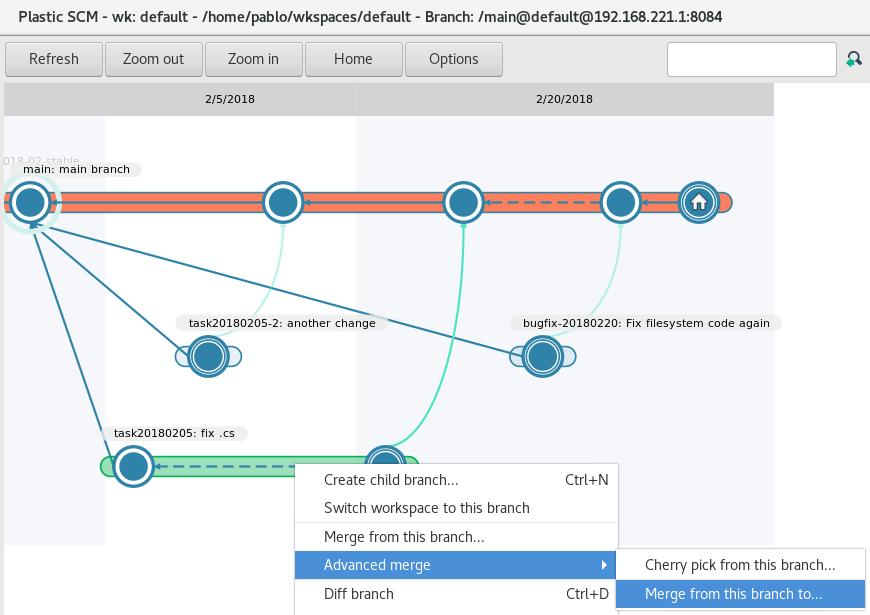
Plastic SCM is a full stack version control system that aims to make software configuration easy. It focuses on enabling dev teams get work done by facilitating branching, diffing and merging. The vendor says that for those purposes it provides cross-platform apps and GUIs with: Branch explorer Diffing and merging tools (both syntactic and semantic) On-premises and cloud repo management Code review mergebots (last mile…
$6.95
per user
Pricing
Atlassian Jira
Git
Plastic SCM
Editions & Modules
Standard
$9
per month per user
Premium
$17
per month per user
Enterprise
Contact Sales
per year
No answers on this topic
Cloud Edition
$6.95
per user
Team Edition (on prem)
$9.95
per user
Enterprise Edition
$23.25
per user
Enterprise Edition (perpetual)
$595.00
per user
Offerings
Pricing Offerings
Atlassian Jira
Git
Plastic SCM
Free Trial
Yes
No
Yes
Free/Freemium Version
Yes
No
Yes
Premium Consulting/Integration Services
No
No
No
Entry-level Setup Fee
No setup fee
No setup fee
Optional
Additional Details
Higher volume teams may qualify buyers for a discount.
—
* Educational institutions receive a substantial discount on Plastic SCM licensing fees
* Corporate/volume pricing is available
* For more information, please contact sales at sales@codicesoftware.com
Teamwork might be the closest competitor as it also allows git integration through a plugin. JIRA allows for a streamlined interface, focusing just on projects, whereas Teamwork has other features regarding a more user-friendly interface.
Though with JIRA you need to buy a lot of plugins but it is still cheaper than HP ALM or HPE Octane which is very costly. HP QC is a fully functional software lifecycle tool and probably strongest in its test management capabilities. But in Agile we don't need that extensive …
These are not very efficient like JIRA is. It's easy to understand and browse this product. Not much of training is needed here. We like the ease and smoothness of using this product. The look and feel of this product is awesome. It's more cost effective than other tools.
Atlassian JIRA is much better than the tools i had used previously
Verified User
Analyst
Chose Atlassian Jira
Personally we used an in house solution previously and with that system there was a better integration to our source code system and issues could be directly entered by customers whereas our enterprise policy does not allow that with JIRA, instead we integrate to Salesforce as …
Git is more advanced and easier to use. It has a very simple UI and a very efficient command-line tool. Git gives you flexibility and performance for the price, and has greatly increased the complexity of workflow. The overall performance is good. It caches information locally …
GIT being a widely used tool have better reliability than its peers and have stands out when we compare it on operational performance criteria. GIT with speedy and extensive branching capabilities have helped developers to use check in their code quickly and space efficient way. G…
Git is by far the best version control system out there. It's open source, free, and fast. No other version control system I've ever used has had all three features.
For us, we use both Git and GitHub so they were a package. I suppose you could use Git with another VCS/hosting service to track changes if it fit well enough, but for us we just went with design out of the box. We pay for the GitHub private repository for the extra security.
Jira facilitates software development, bug tracking, and sprints. It's ideal for structured workflows, issue management, and customer communication. However, more straightforward tools might be more efficient for highly creative, unstructured tasks or tiny, agile teams with quick visual overviews. Jira's complexity can be overkill for basic task lists.
GIT is good to be used for faster and high availability operations during code release cycle. Git provides a complete replica of the repository on the developer's local system which is why every developer will have complete repository available for quick access on his system and they can merge the specific branches that they have worked on back to the centralized repository. The limitations with GIT are seen when checking in large files.
Plastic SCM is well suited for the distributed development environment, where branching and merging can easily be handled. Its a good tool for version controlling, especially for a big team which is contributing to a big project simultaneously. Situation where Plastic SCM is not at all well suited are : If the project is smaller one and need to be handled by couple of people. So in that case setting up Plastic SCM and educating people to work on it is not at all efficient
Integration of tools like Bitbucket, Github, etc., has made it easier to track the code changes, pull requests, and branches linked to the respective ticket.
The detailed tracking system in JIRA has helped the teams prioritize and understand the project tasks and issues.
JIRA's project tracking board helps you keep track of the project, its flow, and expectations in a structured format.
This is because Jira Software generates a huge profit for an affordable price. Having a tool that makes team management transparent and effective is very valuable.
In addition, the renewal of Jira Software and all Atlassian tools is predictable and clear, as the prices are published on the Atlassian website and there is no pyramid of intermediaries.
Git has met all standards for a source control tool and even exceeded those standards. Git is so integrated with our work that I can't imagine a day without it.
The interface is simple and easy to use if you have some experience with it. Configuration is also logical most of the time. However, less experienced users tend to find themselves lost in some tasks - usually complex project configuration- but sometimes simple things, such as seeing why a user can't move issues in a workflow. Jira configuration requires a good amount of experience - and even experienced users often resort to documentation. It's a tool that's easy to use if you know what you're doing and where to find the proper documentation, but novice users tend to find it challenging.
Did not face any issues and whenever they plan maintanance they update all of us very well in advance also so in that view we are good with the product stability.
Performance is really good though it holds lot of data it loads quickly especially search operation also get the results very quickly as needed hence its good
I have not had a chance to contact JIRA's customer support. It does offer extensive documentation, although it often feels too technical for me. There is also a JIRA training app that lets you take little lessons and quizzes on different areas (e.g., JIRA basics, agile). I did find it a helpful way to teach myself.
I am not sure what the official Git support channels are like as I have never needed to use any official support. Because Git is so popular among all developers now, it is pretty easy to find the answer to almost any Git question with a quick Google search. I've never had trouble finding what I'm looking for.
Had received training from our own internal user so it was good and also very easy to understand topics and many tasks in the UI are self explanatory and we can do by our own
One of their strong points i stheir documentation. Almost all of the basic set up needed within JIRA is available online through atlassian and its easy to find and very precise. The more critical issues need to be addressed as well and hence the rating of 8 instead of a 9.
Take your time implementing Jira. Make sure you understand how you want to handle your projects and workflows. Investing more time in the implementation can pay off in a long run. It basically took us 5 days to define and implement correctly, but that meant smooth sailing later on.
monday.com cannot be integrated with CI/CD tools, whereas Atlassian Jira integrates with CI/CD tools seamlessly. Atlassian Jira has strong Agile and Scrum support. Coming to monday.com, it has basic agile functionality. But Atlassian Jira has a complex UI, and monday.com has an intuitive, drag-and-drop interface. Overall, Atlassian Jira provides features like Agile project management, DevOps integration, and customizable workflows.
I've used both Apache Subversion & Git over the years and have maintained my allegiance to Git. Git is not objectively better than Subversion. It's different. The key difference is that it is decentralized. With Subversion, you have a problem here: The SVN Repository may be in a location you can't reach (behind a VPN, intranet - etc), you cannot commit. If you want to make a copy of your code, you have to literally copy/paste it. With Git, you do not have this problem. Your local copy is a repository, and you can commit to it and get all benefits of source control. When you regain connectivity to the main repository, you can commit against it. Another thing for consideration is that Git tracks content rather than files. Branches are lightweight and merging is easy, and I mean really easy. It's distributed, basically every repository is a branch. It's much easier to develop concurrently and collaboratively than with Subversion, in my opinion. It also makes offline development possible. It doesn't impose any workflow, as seen on the above linked website, there are many workflows possible with Git. A Subversion-style workflow is easily mimicked.
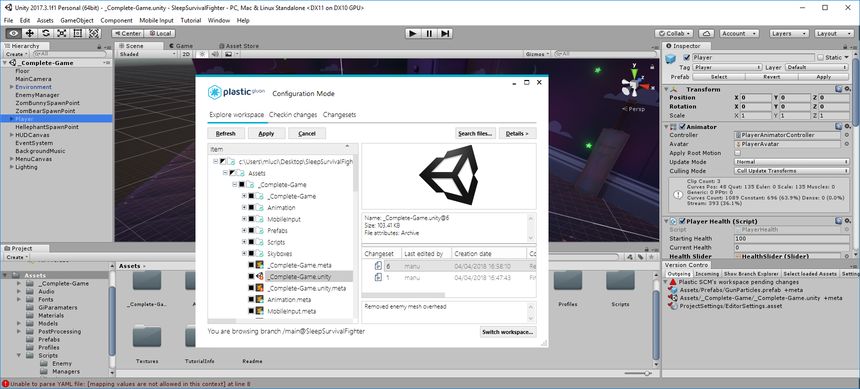
Plastic has best integration with unity - zero issues, native, straightforward. GitHub feels more stable but for smaller and or indie teams plastic s version control feels much more under control - you click, you feel safe. moreover, there is no need for extra tools such as gitkraken, gitlab, Sourcetree, fork, etc. it is really easy to develop games this way.
Atlassian Jira's robust workflow automation has boosted team efficiency, shortening delivery cycles and driving a positive ROI through improved project management.
Its advanced reporting and integration capabilities have enabled data-driven decisions, aligning operations with key business objectives.
However, the steep learning curve can delay adoption, potentially hindering short-term ROI.
Git has saved our organization countless hours having to manually trace code to a breaking change or manage conflicting changes. It has no equal when it comes to scalability or manageability.
Git has allowed our engineering team to build code reviews into its workflow by preventing a developer from approving or merging in their own code; instead, all proposed changes are reviewed by another engineer to assess the impact of the code and whether or not it should be merged in first. This greatly reduces the likelihood of breaking changes getting into production.
Git has at times created some confusion among developers about what to do if they accidentally commit a change they decide later they want to roll back. There are multiple ways to address this problem and the best available option may not be obvious in all cases.