Atlassian Jira is a project management tool, featuring an interactive timeline for mapping work items, dependencies, and releases, Scrum boards for agile teams, and out-of-the-box reports and dashboards.
$9
per month per user
Fin
Score 8.8 out of 10
N/A
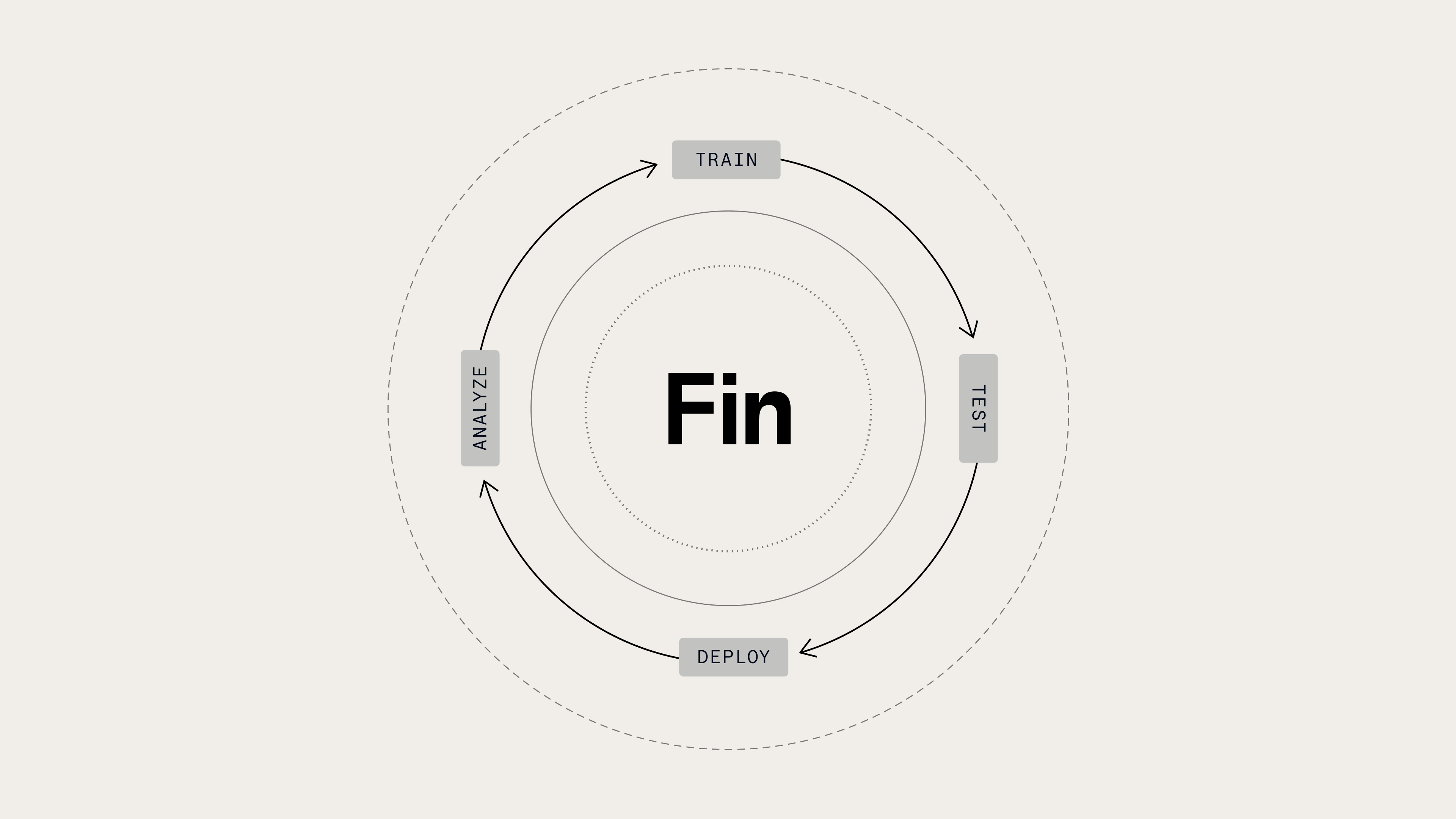
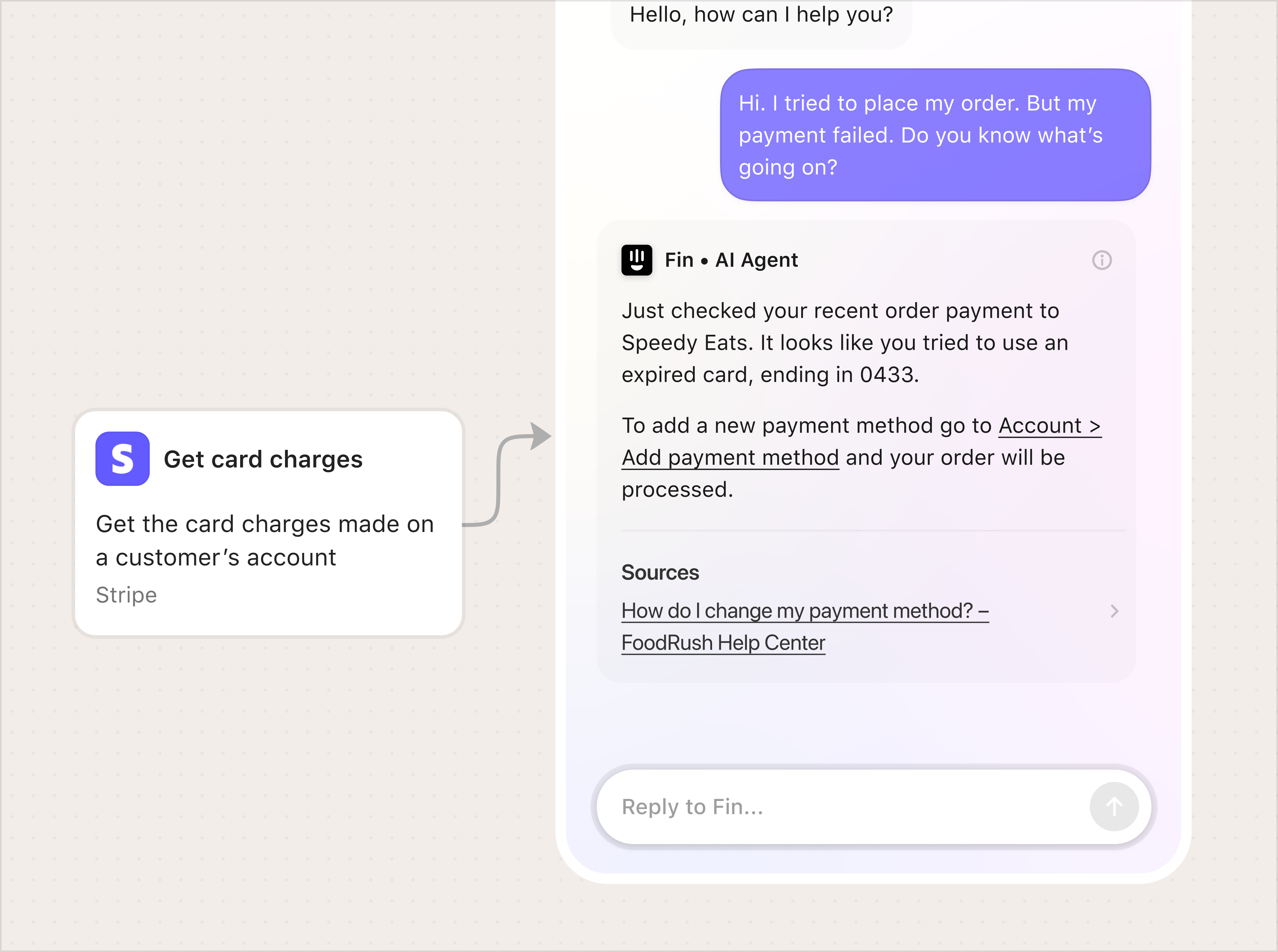
Fin is an AI Agent for customer service. It automates complex queries, improves resolution times, and delivers consistently high-quality support at scale.
$0.99
one-time fee per outcome
Pricing
Atlassian Jira
Fin
Editions & Modules
Standard
$9
per month per user
Premium
$17
per month per user
Enterprise
Contact Sales
per year
Fin with your current helpdesk
$0.99
one-time fee per outcome
Copilot add-on
$35
per month per user
Pro add-on
$99
per month For analysis of 1,000 conversations
Fin with Intercom’s Helpdesk
from $39 + $0.99 per Fin outcome
per month per seat
Offerings
Pricing Offerings
Atlassian Jira
Fin
Free Trial
Yes
Yes
Free/Freemium Version
Yes
No
Premium Consulting/Integration Services
No
No
Entry-level Setup Fee
No setup fee
No setup fee
Additional Details
Higher volume teams may qualify buyers for a discount.
Fin comes with a 90-day money-back guarantee. Here's how it works:
Intercom states that users who sign up for the Fin Guarantee Success Program and do not achieve at least a resolution rate of 65% will be paid $1M. This program is designed for high volume customers.
Eligibility criteria:
High volume customers (over 250k monthly conversions) in North America and Europe. Intercom states that phase one of this program will admit customers on Intercom Helpdesk or Zendesk.
Intercom is just so much better; Our company was using both Zendesk and Intercom for two different products we offer. We brought them all over to Intercom, and they are really happy about the shift. They didn't use any AI in Zendesk, though, so Fin is their first experience …
Intercom provides a broader range of available integrations, so it becomes a productivity booster because agents don't have to juggle between separate apps and can keep as much as possible to resolve the case within the same app.
Fin definitely stacks up pretty much at the same level when it comes to leveraging the input data KB to address customer queries. However reporting flexibility is something missing compared to the two mentioned platforms. The categorization of issues is much easier and accurate …
Fin by Intercom combines ChatGPT knowledge but also Gemini (google) intelligence It makes the answer written in such a way that you don't have the impression that it was written by a bot
Intercom as a tool is well suited to manage our key metrics with the help of its reports. We have evaluated a lot of tools but Intercom remains the best in terms of report. It helps us maintain OKR's for the support team and track whenever needed. FinAI also has the reporting …
I don't see it in the list but we were using Gleap prior to gaining Intercom. It's functionality was suuuuuper limited in comparison. It was like the kindergarten version of Intercom if that makes sense.
Keep in mind that my day-to-day focuses mainly on Help Center/article content. That's all I'm comparing/evaluating in this specific response. Intercom has come a long way in the two years or so that I've been using it. They've made major strides toward feature parity for …
I implemented Zendesk at a previous organization where we actually moved away from Intercom. I greatly preferred Intercom for functionality, ease of use, and even reliability for our websites and in-platform live chat widget. We moved to ZenDesk to have a streamlined …
We stayed with Intercom as it's relatively easy to integrate with our internal systems and the user interface is way better compared to HubSpot. It's also easier to set up campaigns in Intercom compared to HubSpot.
Intercom offers really good and consistent application for our clients to talk to us. Chat support is the fastest way to contact us and intercom has made it happen.
We chose the Intercom because of its human touch during the conversations. Other reasons were features and usability of the Messenger tool which our users' use in 90% of cases. The Zendesks chat is not good. Very hard to use. Doesn't have the necessary features ...
We evaluated a number of products before choosing to move forward with Intercom. No contest, Intercom provided us with the level of tools and support we needed to serve our own customers well. We've been with the company for 3 years now and are sticking around for the …
We understood that HubSpot is better for lead generation in the company's website, while intercom is for acquired leads/users who now need to be engaged and managed in the platform. Intercom is easier to use and has better chat features than HubSpot. Our current problem is …
Jira facilitates software development, bug tracking, and sprints. It's ideal for structured workflows, issue management, and customer communication. However, more straightforward tools might be more efficient for highly creative, unstructured tasks or tiny, agile teams with quick visual overviews. Jira's complexity can be overkill for basic task lists.
Fin is fantastic at answering simpler inquiries, where the range and types of questions are easier to categorize. Thereby reducing the subset of possible answers. Where it has shown great improvement - but still needs more improvement - is by becoming a true Agentic AI support engineer that is capable of answering more technically nuanced questions. Our product has a lot of variables used for troubleshooting that cannot be adequately captured in documentation. Even though we provide thousands of pages of spec docs, each issue is unique. Training and empowering Fin to be as good as a Level 1 support engineer is still very challenging.
Integration of tools like Bitbucket, Github, etc., has made it easier to track the code changes, pull requests, and branches linked to the respective ticket.
The detailed tracking system in JIRA has helped the teams prioritize and understand the project tasks and issues.
JIRA's project tracking board helps you keep track of the project, its flow, and expectations in a structured format.
It seems some users really struggle to figure out how to escalate to a human (especially through email).
Not excited about how "soft" resolutions still count as resolutions and are paid for. Though some abandoned cases appear to be able to be concluded as "the user got the answer they needed", there are others where they clearly didn't, because they just open up another chat (or even more), trying to get more info. This pads the resolution stats and makes it seem more effective than it actually is.
Cost -- Fin is quite expensive. It helps us with scaling coverage, but we're not really saving money.
This is because Jira Software generates a huge profit for an affordable price. Having a tool that makes team management transparent and effective is very valuable.
In addition, the renewal of Jira Software and all Atlassian tools is predictable and clear, as the prices are published on the Atlassian website and there is no pyramid of intermediaries.
We have been and will be continuing our journey with Intercom and nothing too concerning has happened that I have experienced or heard of that has us on the edge yet. If it ever happens it will be something along the lines of "Outgrowing" the use of need of the platform.
The interface is simple and easy to use if you have some experience with it. Configuration is also logical most of the time. However, less experienced users tend to find themselves lost in some tasks - usually complex project configuration- but sometimes simple things, such as seeing why a user can't move issues in a workflow. Jira configuration requires a good amount of experience - and even experienced users often resort to documentation. It's a tool that's easy to use if you know what you're doing and where to find the proper documentation, but novice users tend to find it challenging.
The platform is overall clear and intuitive. As with any new platform, there's a learning curve, but that wasn't an issue for our team (and it shouldn't be an issue for others). Fin options are scattered across several submenus, and I'd like them grouped together, but I also like having all those training-related tabs open at all times, so it's not much of a real issue for me.
Did not face any issues and whenever they plan maintanance they update all of us very well in advance also so in that view we are good with the product stability.
Performance is really good though it holds lot of data it loads quickly especially search operation also get the results very quickly as needed hence its good
I have not had a chance to contact JIRA's customer support. It does offer extensive documentation, although it often feels too technical for me. There is also a JIRA training app that lets you take little lessons and quizzes on different areas (e.g., JIRA basics, agile). I did find it a helpful way to teach myself.
I can get help by asking Fin questions about itself. It answers accurately, citing its own Help Center resources with visuals. It can reason and dialogue well. But when it comes to getting human support for Fin, it is not as quick. It can sometimes take a few days. They are polite and well-meaning. Some things aren't their fault (product limitations), but there was one occasion where something took a long time to resolve with lots of back and forth but it was I who found out the error in the end that they missed, so they didn't really help resolve it.
Had received training from our own internal user so it was good and also very easy to understand topics and many tasks in the UI are self explanatory and we can do by our own
One of their strong points i stheir documentation. Almost all of the basic set up needed within JIRA is available online through atlassian and its easy to find and very precise. The more critical issues need to be addressed as well and hence the rating of 8 instead of a 9.
Take your time implementing Jira. Make sure you understand how you want to handle your projects and workflows. Investing more time in the implementation can pay off in a long run. It basically took us 5 days to define and implement correctly, but that meant smooth sailing later on.
monday.com cannot be integrated with CI/CD tools, whereas Atlassian Jira integrates with CI/CD tools seamlessly. Atlassian Jira has strong Agile and Scrum support. Coming to monday.com, it has basic agile functionality. But Atlassian Jira has a complex UI, and monday.com has an intuitive, drag-and-drop interface. Overall, Atlassian Jira provides features like Agile project management, DevOps integration, and customizable workflows.
There are so many AI platforms available, and you could theoretically build a system using the available AI API's from any of the big platforms. However, I dont think it's as easy as this. Intercom is deliberately built for customer service, the features they are releasing a based on providing the best customer experience. If we were to build this ourselves or to use another platform we would be taking on the upkeep, using Fin is just much simpler as it's also our chosen ticketing platform so anything that Fin is not able to answer yet and escalated directly to our team with no extra effort required from our side.
Atlassian Jira's robust workflow automation has boosted team efficiency, shortening delivery cycles and driving a positive ROI through improved project management.
Its advanced reporting and integration capabilities have enabled data-driven decisions, aligning operations with key business objectives.
However, the steep learning curve can delay adoption, potentially hindering short-term ROI.
New role opportunities — Using the “Fin-first” approach has reduced the workload for our Tier 1 team, giving them more time to focus on their own career growth. It’s also opened the door to a dedicated, AI-focused role, where a team member regularly reviews Fin’s answers and makes updates to help it perform even better.
Enabling Fin has also reduced our response time and allowed us to meet SLA's.