Chose Atlassian Jira
It's ability to handle issue management and ticket.

| Product | Rating | Most Used By | Product Summary | Starting Price |
|---|---|---|---|---|
 Atlassian Jira | N/A | Atlassian Jira is a project management tool, featuring an interactive timeline for mapping work items, dependencies, and releases, Scrum boards for agile teams, and out-of-the-box reports and dashboards. | $9 per month per user | |
 Tricentis qTest | N/A | Tricentis qTest (formerly QASymphony) provides enterprise-level agile testing tools giving businesses visibility and control needed to ensure application quality in fast-paced development environments. Tricentis and QASymphony merged in summer 2018. | $1,200 per year per user |
| Atlassian Jira | Tricentis qTest | |||||||||||||||
|---|---|---|---|---|---|---|---|---|---|---|---|---|---|---|---|---|
| Editions & Modules |
| No answers on this topic | ||||||||||||||
| Offerings |
| |||||||||||||||
| Entry-level Setup Fee | No setup fee | Optional | ||||||||||||||
| Additional Details | Higher volume teams may qualify buyers for a discount. | — | ||||||||||||||
| More Pricing Information | ||||||||||||||||
| Atlassian Jira | Tricentis qTest | |
|---|---|---|
| Considered Both Products |  Atlassian Jira | Tricentis qTest  Ketal Parikh Principal Consultant Chose Tricentis qTest As I am not the actual decision maker of which tool to purchase. I have always liked the Tricentis qTest tool. Decision has been made by the top management, The tool has proven is value and for the Same reason it is still being used.  Nikhil Puniyani Senior Software Engineer In Test Chose Tricentis qTest - It was not our decision to use qTest as a tool, as this was a management decision. - Since I have used many Test Management Tools I can compare for e.g The Reporting and Statistics in qTest is very impressive.  KUMAR PRANAY PATRA QA ENGINEER Chose Tricentis qTest I have worked on Jira, but i found it more difficult interface to handle. It was not user friendly. The defect management was also not impressive. qTest experience actually helped me to take decision while evaluating.  Nick Larsen Quality Assurance Manager - Application Development & Support Chose Tricentis qTest None of our previous tools we listed in the available drop-down options. We had previously used Spira Test and Xray as our test repositories. We are currently evaluating Test Rail, Zephyr, PractiTest, and others. From an organizational perspective, qTest is better than Xray as … |
| Atlassian Jira | Tricentis qTest | |||||||||||||||||||||||||||||||||||||||||||||
|---|---|---|---|---|---|---|---|---|---|---|---|---|---|---|---|---|---|---|---|---|---|---|---|---|---|---|---|---|---|---|---|---|---|---|---|---|---|---|---|---|---|---|---|---|---|---|
| Project Management |
| |||||||||||||||||||||||||||||||||||||||||||||
| Professional Services Automation |
| |||||||||||||||||||||||||||||||||||||||||||||
| Test Management |
|
| Atlassian Jira | Tricentis qTest | |
|---|---|---|
| Small Businesses |  Stackby Score 9.0 out of 10 |  BrowserStack Score 8.5 out of 10 |
| Medium-sized Companies |  InEight Score 8.5 out of 10 |  OpenText ALM/Quality Center Score 9.0 out of 10 |
| Enterprises | InEight Score 8.5 out of 10 | OpenText ALM/Quality Center Score 9.0 out of 10 |
| All Alternatives | View all alternatives | View all alternatives |
| Atlassian Jira | Tricentis qTest | |
|---|---|---|
| Likelihood to Recommend | 8.3 (221 ratings) | 8.6 (39 ratings) |
| Likelihood to Renew | 8.5 (37 ratings) | 6.0 (2 ratings) |
| Usability | 7.8 (62 ratings) | 8.0 (1 ratings) |
| Availability | 8.0 (4 ratings) | - (0 ratings) |
| Performance | 8.0 (2 ratings) | - (0 ratings) |
| Support Rating | 8.0 (24 ratings) | 1.0 (1 ratings) |
| In-Person Training | 8.0 (1 ratings) | - (0 ratings) |
| Online Training | 8.0 (2 ratings) | - (0 ratings) |
| Implementation Rating | 9.0 (1 ratings) | 5.0 (1 ratings) |
| Configurability | 8.0 (1 ratings) | - (0 ratings) |
| Contract Terms and Pricing Model | 8.0 (1 ratings) | - (0 ratings) |
| Ease of integration | 8.0 (9 ratings) | - (0 ratings) |
| Product Scalability | 8.0 (1 ratings) | - (0 ratings) |
| Atlassian Jira | Tricentis qTest | |
|---|---|---|
| Likelihood to Recommend | Atlassian
| Tricentis
|
| Pros | Atlassian
| Tricentis
|
| Cons | Atlassian
| Tricentis
KUMAR PRANAY PATRA QA ENGINEER |
| Likelihood to Renew | Atlassian
 Dustin Ghia Lead Consultant - Solutions Architect - Software Engineer | Tricentis
|
| Usability | Atlassian
| Tricentis
Nick Larsen Quality Assurance Manager - Application Development & Support |
| Reliability and Availability | Atlassian
| Tricentis No answers on this topic |
| Performance | Atlassian
| Tricentis No answers on this topic |
| Support Rating | Atlassian
| Tricentis
Nick Larsen Quality Assurance Manager - Application Development & Support |
| In-Person Training | Atlassian
| Tricentis No answers on this topic |
| Online Training | Atlassian
| Tricentis No answers on this topic |
| Implementation Rating | Atlassian
 Bo Acimovic Director E-Commerce | Tricentis
Nick Larsen Quality Assurance Manager - Application Development & Support |
| Alternatives Considered | Atlassian
| Tricentis
|
| Contract Terms and Pricing Model | Atlassian
| Tricentis No answers on this topic |
| Scalability | Atlassian
| Tricentis No answers on this topic |
| Return on Investment | Atlassian
 kunal mathur Senior Product Designer | Tricentis
|
| ScreenShots | Tricentis qTest Screenshots   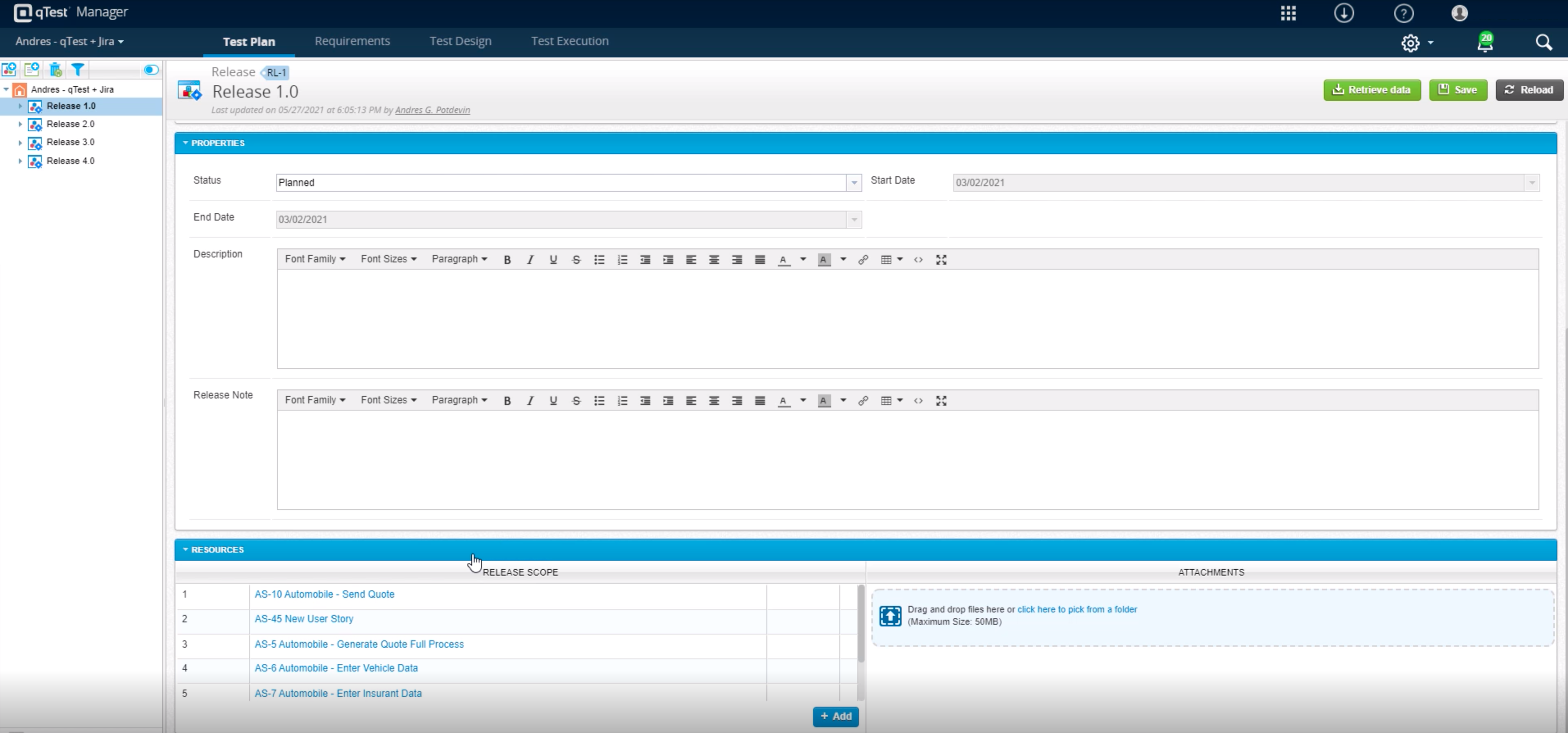   |