Chose Bonita Platform
We liked Bonita's architecture, the open-source framework, and the licensing and support model. Maybe fewer features than other BPM platforms but easier to implement and maintain.

| Product | Rating | Most Used By | Product Summary | Starting Price |
|---|---|---|---|---|
 Aurea Process | N/A | Aurea Process (formerly CX Process) from Aurea Software in Austin is a business process management offering, based on Savvion BPM. | $200,000 per year | |
 Bonita Platform | N/A | Bonita is an open-source business process and workflow management platform created by the French National Institute for Research in Computer Science. It is available as a free community edition or as a commercial subscription product. | N/A | |
 Okta Workflows | N/A | Azuqua was a tool that helped users integrate their SaaS applications and build custom automations. It was acquired by Okta in late 2019, and is now part of Okta Workflows. Okta Workflows leverages Azuqua’s workflow orchestration engine and application integrations to automate complex identity-centric processes such as user onboarding and offboarding. The product is available as part of the Okta Lifecycle Management… | N/A |
| Aurea Process | Bonita Platform | Okta Workflows | ||||||||||||||||||||||
|---|---|---|---|---|---|---|---|---|---|---|---|---|---|---|---|---|---|---|---|---|---|---|---|---|
| Editions & Modules |
| No answers on this topic | No answers on this topic | |||||||||||||||||||||
| Offerings |
| |||||||||||||||||||||||
| Entry-level Setup Fee | No setup fee | No setup fee | Optional | |||||||||||||||||||||
| Additional Details | — | — | — | |||||||||||||||||||||
| More Pricing Information | ||||||||||||||||||||||||
| Aurea Process | Bonita Platform | Okta Workflows | |
|---|---|---|---|
| Considered Multiple Products |  Aurea Process No answer on this topic |  Bonita Platform  Edison Jovanny Lider BPM Chose Bonita Platform for its flexibility, which is greater, and support for open source  Antoine Chami Responsable du Developpement Chose Bonita Platform Far better design and more intuitive than other solutions. BDM is a great tool for non IT users and help[s] them understand how structured data will improve the work. Community Edition allows us to already manipulate the software and appreciate the power of the tool. I enjoyed …  Armando Miguel Brito Criado Lider BPM Chose Bonita Platform Bizagi and Bonitasoft have many similarities, an excellent process engine and integrated Data Model, unlike Kofax TotalAgility. But Bizagi beats it in the form designer.  Pranshu Sharma BSS Application Sr Specialist Chose Bonita Platform Bonita is lightweight. It is easy to configure as against SOA which requires heavy lifting and complex code/configuration management.  Maciej Michalak Software developer Chose Bonita Platform I found Bonita BPM a more friendly environment, especially when it comes to front-end development. It is also better suited for a gradual introduction to an organization - PoC with Community edition, later upgrade to one of the subscription editions as needed. Tibco's product …  John Wadie Solutions Architect Chose Bonita Platform Implementing Bonita was more cost effective than the other options.  richard gay IT applications manager Chose Bonita Platform
 Clive Rethman Authorised Partner Chose Bonita Platform Bonitasoft is easier to implement and support.  David Edson Principal Consultant - Solution Architect Chose Bonita Platform The extensibility or ability to add functions or modify existing capabilities is much easier and better supported in Bonita. The ability to integrate the Bonita system into customer solutions is much easier and allows for tightener coupling to the existing customer portals. The … | Okta Workflows  Brooke Addams Process and Resource Manager Chose Okta Workflows I evaluated Zapier and Microsoft Flow before coming across Azuqua. Zapier was too simplistic and didn't allow for transfer of enough variables. The price point also didn't work for the value it could provide. Microsoft Flow couldn't make the connection with Smartsheet, and I …  Mark Schlanser Lead Architect Chose Okta Workflows Azuqua handles multi-stream processes very well, however provides some nuances with connecting data.  Justin Farr, CPA Senior Accountant Chose Okta Workflows I did not look into any other products.  Scott Neylon Chief Operating Officer Chose Okta Workflows I have used Mulesoft, Workato, my own code and in past years heavyweight data (e.g. ETL) platforms along with a number of bus technologies. In this case, I was looking for the cloud-based approach that matches our strategy of being totally cloud-focused along with simpler …  Travis Abdelhamed Process Analyst Chose Okta Workflows Azuqua was much more intuitive than Zapier and was easier to understand and comprehend.  Suparman Widjaja Technology Manager Chose Okta Workflows Low entry cost and maintenance cost.  J. D. Ridenour Tier 2 Technical Support Chose Okta Workflows Azuqua was the first application we assessed for our purposes, and served our needs so well that we felt no need to search further. It gave us the solutions we needed in a way that was easy to set up and maintain, and the support we received was above and beyond expectations, …  Scott Davis Digital Asset Management Specialist Chose Okta Workflows I had to use the Automate tool for funneling image assets in bulk (tens of thousands) from FTPs into various destinations on an eCommerce platform. The user interface was quite harsh in comparison to Azuqua. Far more text/code line driven.  Guillermo Garate Operations Manager Chose Okta Workflows I have not used or evaluated other platforms.  Loïc Engulu Senior Sales Operations Analyst Chose Okta Workflows Azuqua offered the most customization of the other platforms we tried. While it was comparably intuitive to use, in terms of entry level, Azuqua maintained this intuitiveness at higher levels of sophistication/integration whereas the other platforms either lacked the same logic …  Derek Visch Lead Infrastructure Engineer Chose Okta Workflows IFTTT / Zapier - There really isn't a comparison as Azuqua allows for full customization of your flows and IFTTT and Zapier do not. Talend Open Studio is built more for doing database / file integrations and it can do API calls. Talend is much bigger but cannot accomplish what …  Julie Leonard Marketing Operations Manager Chose Okta Workflows Smartsheet notifications is the main competitor for what we use Azuqua for. When we got Azuqua, there was no competitor and Smartsheet actually recommended it as the solution. Now, we split up the work between the 2 tools and use Smartsheet for the easier notifications and …  Hoon Kim Creative Production Manager Chose Okta Workflows Easy to build out complex if/then scenarios and fire of multiple other workflows within one workflow. Like the UI of seeing how data is being utilizes, ported, and manipulated across the workflows. Also like the workflow history for optimization as well as troubleshooting. Raw …  Treacy Seeley Director of Ad Operations Chose Okta Workflows I evaluated another platform, but I can't recall their name. ServiceRocket didn't work. I tried to integrate with them, but it was a mess and a waste of time. The other platform was 10x as expensive at Azuqua. |
| Aurea Process | Bonita Platform | Okta Workflows | |||||||||||||||||||||||||||||||||||
|---|---|---|---|---|---|---|---|---|---|---|---|---|---|---|---|---|---|---|---|---|---|---|---|---|---|---|---|---|---|---|---|---|---|---|---|---|---|
| Reporting & Analytics |
| ||||||||||||||||||||||||||||||||||||
| Process Engine |
| ||||||||||||||||||||||||||||||||||||
| Collaboration |
| ||||||||||||||||||||||||||||||||||||
| Content Management Capabilties |
|
| Aurea Process | Bonita Platform | Okta Workflows | |
|---|---|---|---|
| Small Businesses |  Square 9 Softworks Score 9.3 out of 10 | Square 9 Softworks Score 9.3 out of 10 |  CMW Platform Score 9.5 out of 10 |
| Medium-sized Companies | Square 9 Softworks Score 9.3 out of 10 | Square 9 Softworks Score 9.3 out of 10 |  Quixy Score 9.9 out of 10 |
| Enterprises | CMW Platform Score 9.5 out of 10 | CMW Platform Score 9.5 out of 10 | CMW Platform Score 9.5 out of 10 |
| All Alternatives | View all alternatives | View all alternatives | View all alternatives |
| Aurea Process | Bonita Platform | Okta Workflows | |
|---|---|---|---|
| Likelihood to Recommend | 5.0 (0 ratings) | 8.2 (0 ratings) | 9.0 (0 ratings) |
| Likelihood to Renew | - (0 ratings) | 6.4 (0 ratings) | - (0 ratings) |
| Usability | - (0 ratings) | 7.7 (0 ratings) | 9.0 (0 ratings) |
| Performance | - (0 ratings) | 8.0 (0 ratings) | - (0 ratings) |
| Support Rating | - (0 ratings) | 4.6 (0 ratings) | - (0 ratings) |
| Implementation Rating | - (0 ratings) | 4.5 (0 ratings) | - (0 ratings) |
| Ease of integration | - (0 ratings) | 7.3 (0 ratings) | - (0 ratings) |
| Product Scalability | - (0 ratings) | 7.5 (0 ratings) | - (0 ratings) |
| Aurea Process | Bonita Platform | Okta Workflows | |
|---|---|---|---|
| Likelihood to Recommend |
|
|
Scott Neylon Chief Operating Officer |
| Pros |
|
 William Wolf Architect |
Travis Abdelhamed Process Analyst |
| Cons |
|
Maciej Michalak Software developer |
Guillermo Garate Operations Manager |
| Likelihood to Renew | No answers on this topic |
| No answers on this topic |
| Usability | No answers on this topic |
|
|
| Performance | No answers on this topic |
Maciej Michalak Software developer | No answers on this topic |
| Support Rating | No answers on this topic |
| No answers on this topic |
| Implementation Rating | No answers on this topic |
| No answers on this topic |
| Alternatives Considered | No answers on this topic |
|
Brooke Addams Process and Resource Manager |
| Scalability | No answers on this topic |
richard gay IT applications manager | No answers on this topic |
| Return on Investment |
|
|
Scott Davis Digital Asset Management Specialist |
| ScreenShots | Aurea Process Screenshots | Bonita Platform Screenshots   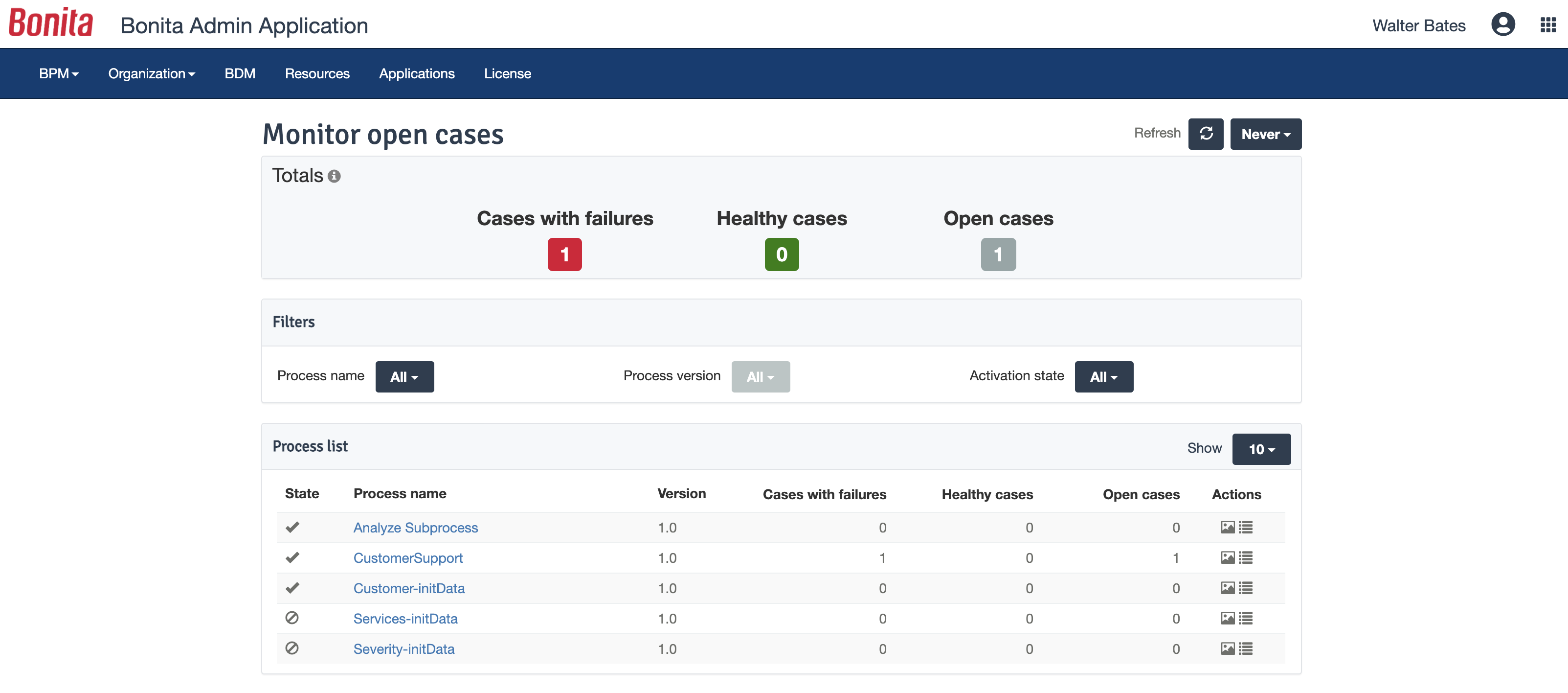  |