Birdeye is a reputation management and digital customer experience platform for local brands and multi-location businesses. Birdeye’s AI-powered platform is used by brands to engage with customers, drive loyalty, and excel in local markets.
$299
per month
Chameleon
Score 10.0 out of 10
N/A
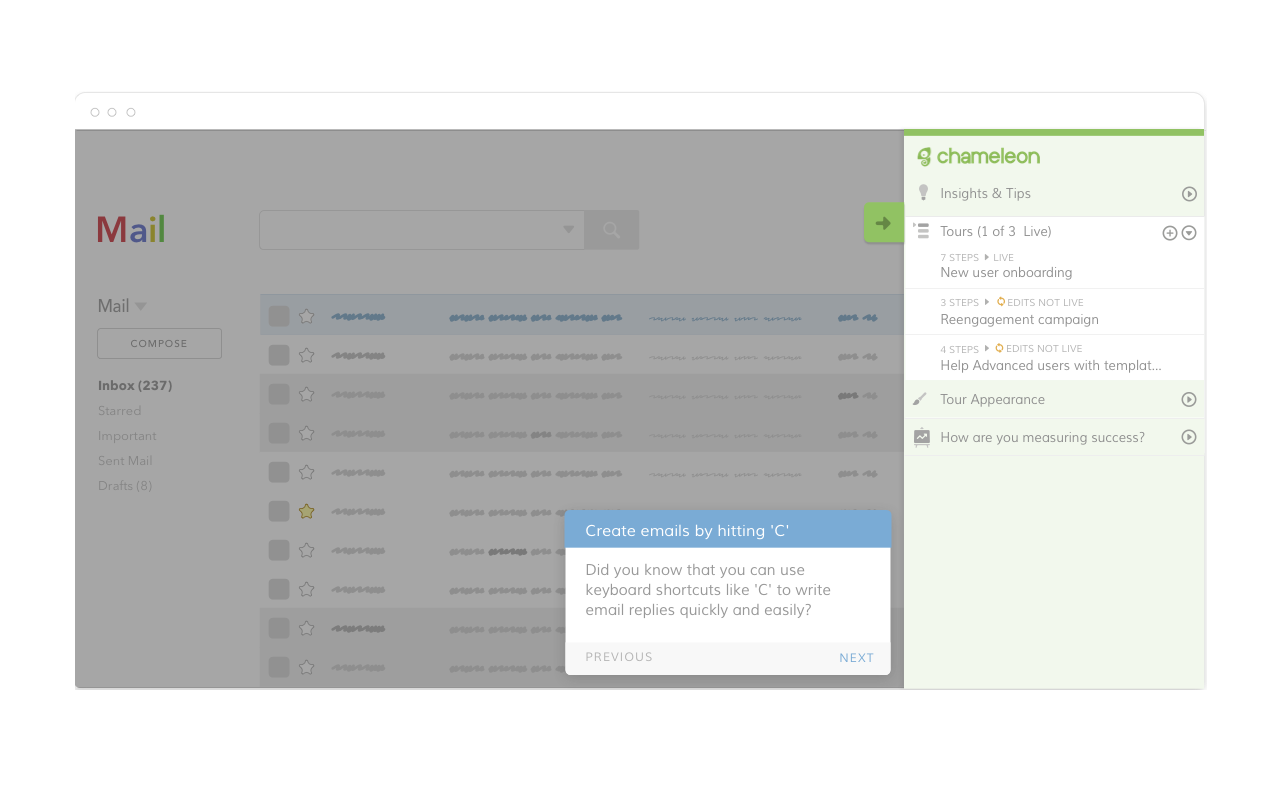
Chameleon offers a platform to build user guidance for web products, without writing code. The product enables users to create product tours to help teach, guide and convert users. Tours are built with a simple WYSIWYG editor with reusable components, customized styling, automated analytics tracking and powerful features such as user segmentation and A/B testing. Chameleon connects with hundreds of tools via Segment.com. The tool can be…
N/A
Reputation.com
Score 7.0 out of 10
N/A
Reputation.com aims to help large B2C multi-location rooftops as well as B2B web-based companies monitor and improve their reputation, and optimize customer experience — online and onsite. By leveraging prescriptive analytics, the vendor's goal is to not only show customers where they stand against their competitors, but also pinpoint where the problem areas are so they can better operationalize their business.
N/A
Pricing
Birdeye
Chameleon
Reputation.com
Editions & Modules
Standard
$299.00
per month
Professional
$399.00
per month
Premium
Custom Pricing
No answers on this topic
No answers on this topic
Offerings
Pricing Offerings
Birdeye
Chameleon
Reputation.com
Free Trial
Yes
Yes
No
Free/Freemium Version
No
No
No
Premium Consulting/Integration Services
No
No
No
Entry-level Setup Fee
No setup fee
No setup fee
No setup fee
Additional Details
—
—
—
More Pricing Information
Community Pulse
Birdeye
Chameleon
Reputation.com
Considered Multiple Products
Birdeye
Verified User
Professional
Chose Birdeye
We tested a number of reputation management softwares during out search. Birdeye was the most intuitive platform and they also had the most reasonable prices. The other programs like Reputation and Podium, did most of the same things that we were looking for but we ultimately …
We have considered other vendors at contract renewal but decided to stay with Reputation.com because it meets our current and projected needs and is priced competitively.
For businesses that have customers or clients or patients with several different locations, Birdeye is essential to help with the reviews and messages received through Google and other platforms. For businesses with only 1 single location, Birdeye could still be useful but wouldn't be as essential as it would be for other businesses.
Seems like a great solution for web-based apps and sites when you want to communicate with your users in a fairly lightweight way. Users can "escape" from your guided tours relatively easily. Not sure how it would work for a combined web and mobile experience. Also, if you have a responsive layout, the layout of the guide sometimes breaks - you have to be careful
I think Reputation.com is best suited for enterprise applications where you want big-picture results plus the ability to drill-down to specific locations. It is a good solution where you want to consolidate vendors as they have multiple components. Of course, certain components are more of a core competency for them than others. But in general, it's a strong solution.
The sentiment feature is just okay. It requires custom adjustments and time to understand where it is working well and where it is not in order to get the most out of it, while other features require very little user input.
Social listening needs work. I often receive notifications for unrelated terms because of their similarity in spelling to my organization's name, so I don't use this feature.
Birdeye could have more built-in features to create digital content from the reviews.
Birdeye could also have additional reputation tools to strengthen GMB listings and to combat negative press. Review listings and rich snippets in search are great, but having a tool that measures and helps to improve overall brand health/search results would be amazing. My CEO isn’t looking at what is going right. He looks at what is going wrong. We may have thousands of positive reviews on Google, but the bad article with false information is still showing up on page one of search results. That makes for an unhappy CEO.
I think it is a good tool overall, there are some hiccups but what program doesn't have them. I think we should be notified of more things, specifically broken integrations. There have been instances where I don't notice for MONTHS a client it's having requests sent out because they are organically still getting reviews.
I think it is very easy to figure out very quickly by just playing around in the dashboard. If you have a question you can reach out to our contacts and they do a very good job of figuring out if or what is the problem and getting back to us fast.
Support is really responsive for the most part. I don't feel like they explain it the best for people who aren't as tech-savvy. I have recently had trouble with a more difficult integration and it is hard to pinpoint who I need to reach out to.
Our choice of reputation management platform came down to two contenders, Birdeye and Listen360. Ultimately we chose Birdeye because of their ethical review gathering process. Listen360 had review-gating built in as part of their process, which is against Google's terms of service. We wanted to be very careful to gather reviews in an ethical way, and Birdeye was better for our needs.
We had some colleagues try to implement WalkMe with their Single page app and it was a disaster getting it to work (it eventually did, mostly). Because we already use Segment, we thought we'd give Chameleon a try and it was very easy. I built my first tour in an hour or two.
Reputation.com has a better price point. Reputation has other tools that made us choose them over Binary Fountain. There is another company, although the name escapes me, that has similar services to Reputation, but they put a large focus on Yelp and Apple Maps, as opposed to Reputation who puts an emphasis on Google and Google maps.
Saved us time/money building extensive documentation.
Quicker to implement a few other solutions. We have access to an enterprise product for FREE, but we chose not to use it because implementation was too cumbersome.