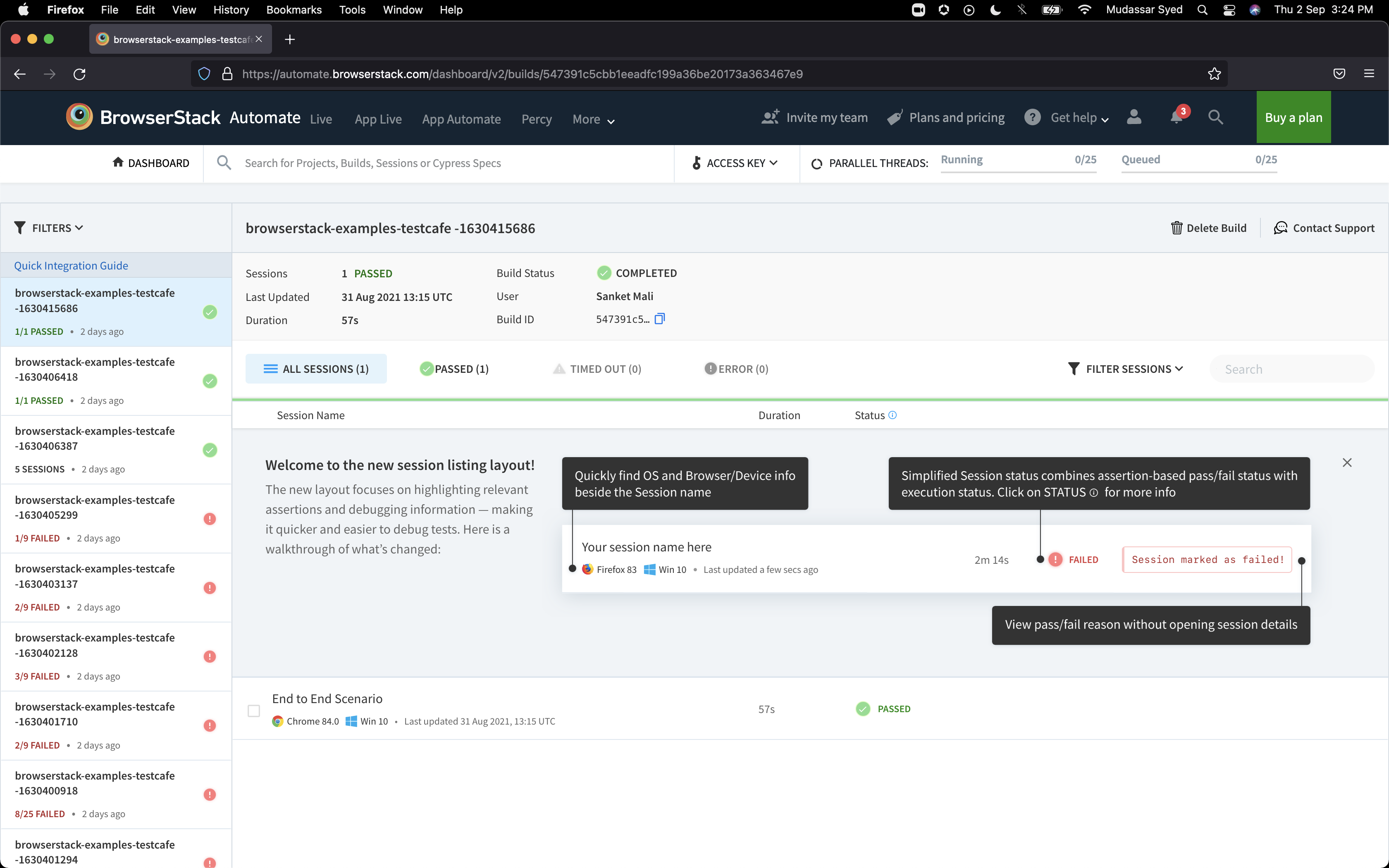
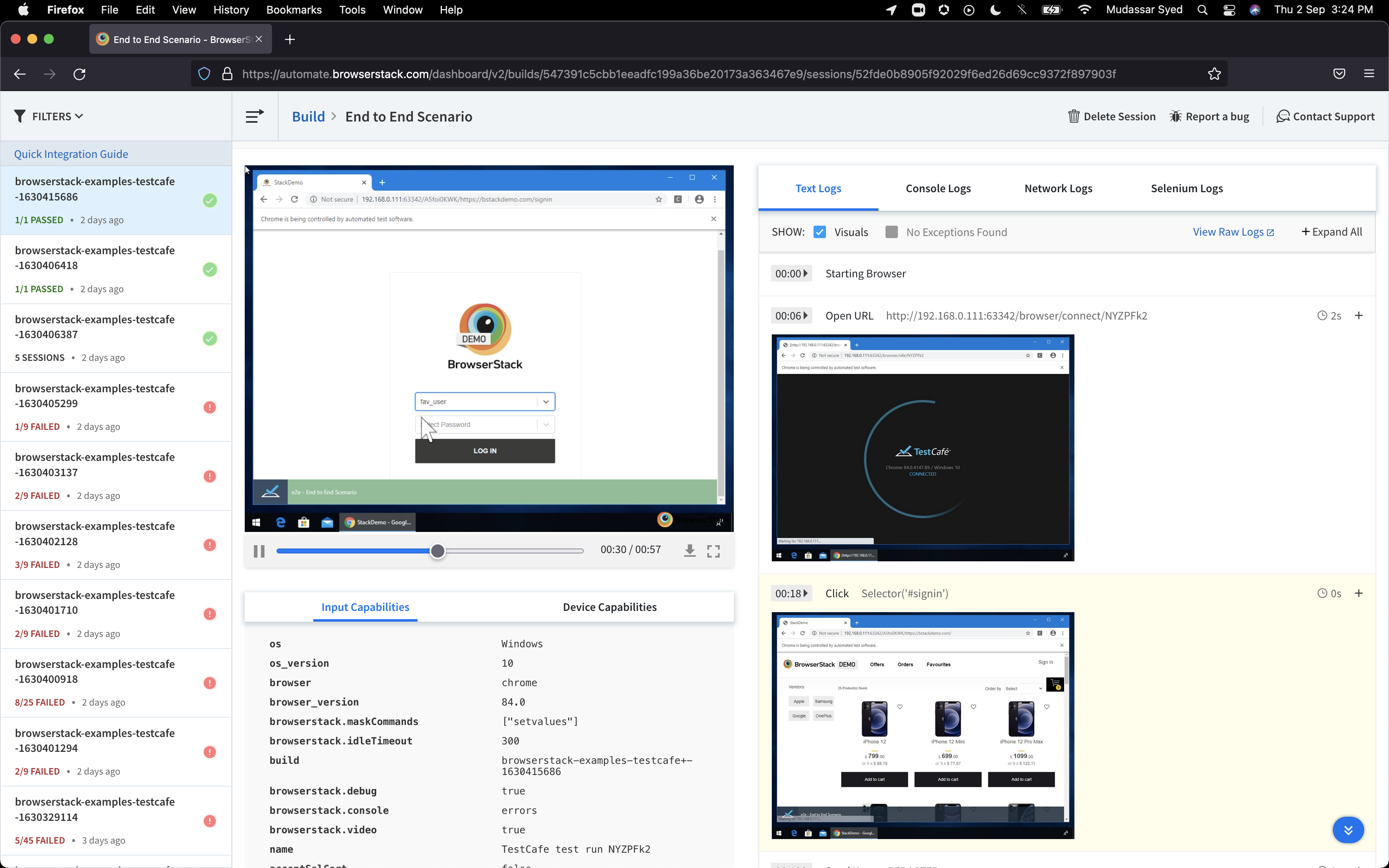
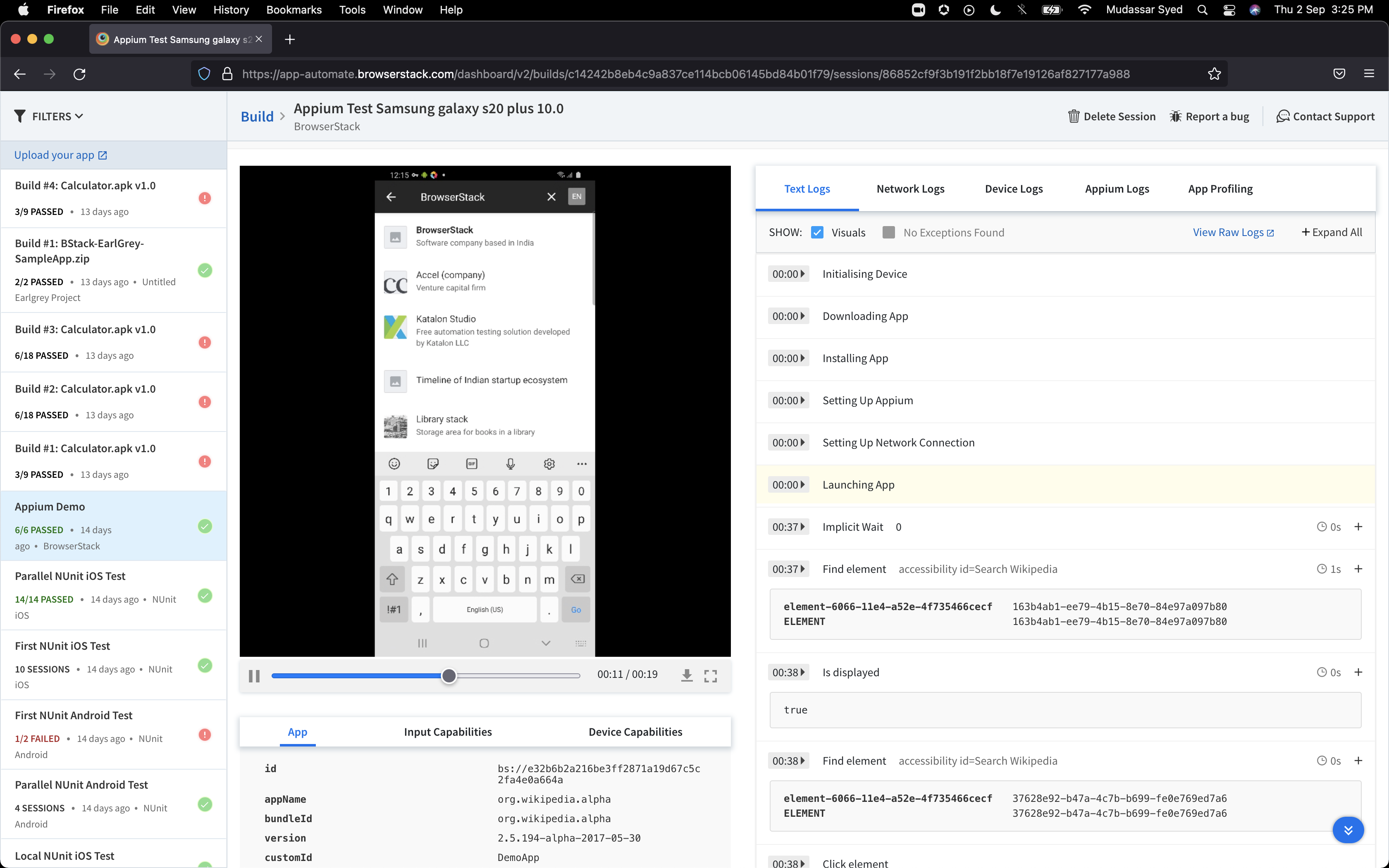
BrowserStack is a test platform built for developers and QAs to expand test coverage, scale and optimize testing with cross-browser, real device cloud, accessibility, visual testing, test management, and test observability. BrowserStack states it currently powers over a billion tests a year for customers who include Amazon, Paypal, Well Fargo Bank, Nvidia, MongoDB, Pfizer, GE, Discovery, React JS, Apache, JQuery and several others rely on BrowserStack to test their web and mobile apps.
$0
per month Unlimited users and 5000 free screenshots
CircleCI
Score 9.5 out of 10
N/A
CircleCI is a software delivery engine from the company of the same name in San Francisco, that helps teams ship software faster, offering their platform for Continuous Integration and Continuous Delivery (CI/CD). Ultimately, the solution helps to map every source of change for software teams, so they can accelerate innovation and growth.
$0
for up to 6,000 build minutes and up to 5 active users per month
Pricing
BrowserStack
CircleCI
Editions & Modules
Percy - Free
$0
per month Unlimited users and 5000 free screenshots
App Percy - Free
$0
per month 5000 free screenshots and 100 minutes of infrastructure
BrowserStack has better Customer Support, better Community backup, more range of devices, and better Return on Investment than both of the above mentioned companies.
If you need immediate testing (for example, from Azure pipelines agents), use BrowserStack instead of LambdaTest (which makes you wait in a "pool" until the device/platform combo you are querying is accessible). If you don't need your tests to be immediate and prefer a wider range of devices, then use Lambdatest.
Based on our experience, CircleCI is well-suited for automating mobile app release cycles. For example, to release an iOS app, you would need to build, sign, and upload it to TestFlight, which requires a dedicated Mac in the office. But with CircleCI, you can have macOS executors, so you don't have to manage a physical build machine. Another benefit is that CircleCI's certified AWS Orbs abstract away complex authentication and deployment logic, allowing us to build, push, and deploy Docker containers to Amazon ECS with minimal configuration and high reliability. CircleCI is less suited for smaller projects where the development and deployment are not that extensive, for example, a static site. Once you have built a static site, you probably won't make any further changes, so there's no point in paying for it.
Automated builds! This is really why you get CircleCI, to automate the build process. This makes building your application far more reliable and repeatable. It can also run tests and verify your application is working as expected.
Simple. Unlike Jenkins, Teamcity, or other platforms, CircleCI doesn't need a lot of setup. It's completely hosted, so there's no infrastructure to set up. The config file does take a bit to understand, but if you follow their example and start with something small and add to it, you can get it up and going quicker than it first looks.
Scales easily. Again, since it's all cloud-based, you don't have to manage or scale infrastructure. Simply subscribe to the number of containers you want, and scaling up just means buying more containers.
It's almost the 3rd year for us and it's renewal time for us. So yes, we are already discussing how many licenses we need to increase as users are increasing internally. So it's 100% sure that we are already planning renewal this year as well BrowserStack with live and app automate.
So many options that it can be a little overwhelming, but the core functions are easy to find and use and it's usually not too hard to figure things out for the more complex tasks. Very easy to boot up a device and a specific browser from the dashboard to begin a manual website test.
The reliability & speed, it just works. The ability to spin up macOS runners and Docker containers on demand without managing hardware is a huge win. The Orbs system makes integrating with AWS and Slack incredibly easy, saving us weeks of custom scripting and providing real-time updates in our Slack channel. This makes it easy for us to track and ensures that everyone involved knows the status. Of course, it has drawbacks related to configuration complexity and, in some cases, cost transparency, but overall, it is an industry-standard, robust tool that solves our core infrastructure problems well.
I rated BrowserStack's availability a 10 because it is consistently reliable, with minimal to no downtime or unplanned outages. The platform is accessible whenever needed, ensuring uninterrupted testing. Its robust infrastructure and proactive monitoring ensure a seamless experience, allowing us to meet deadlines without delays caused by availability issues and all
The tests are fast considering the fact that they're Appium tests. I've seen tests reliably pass or fail when they're supposed to, with next to zero issues on the BrowserStack side of things. Tests launch only seconds after I kick off them off from my CLI.
It's pretty snappy, even with using workflows with multiple steps and different docker images. I've seen builds take a long time if it's really involved, but from what I can tell, it's still at least on par if not faster than other build tools.
I've not had much direct interaction with the BrowserStack support team. The help and community are great and we've not run into any issue that has really required us to reach out. I guess having a stable and easy to use system means you may never need to contact support.
Unless you have a reasonably large account, you're going to be mainly stuck reading their documentation. Which has improved somewhat over the years but is still extremely limited compared to a platform like Digital Ocean who invested in the documentation and a community to ensure it's kept up to date. If you can't find your answer there, you can be stuck.
Yes, it was online training on meet, and trainer looks like skilled and technical strong, he has covered end to end all the features and he has answers all the queries. because of this trainings we are able to implement it by our own in the organization, thank you for support and training.
It was a quick training from the support of browserstack, it was nice and easy to understand, thanks again for the support given by the team. and regularly I used to receive mails for training from support for any new feature they launch, I was able to spread same training to all my team and dev.
I rated the implementation satisfaction an 8 because while it went smoothly overall, there were some challenges during the initial learning phase and integration with existing tools. Key insights include the importance of providing sufficient training upfront and ensuring seamless integration with other systems to minimize disruptions and improve adoption speed.
BrowserStack products has been found better for low code automations and visual regression techniques. We have been struggling to maintain the API endpoint sanity tests and writing a lot of code for them while releasing the builds, while we chose BrowserStack accessibility solutions, we found it a way easier than we thought and worked it up.
Jenkins is usually self-hosted, Travis CI's infrastructure is largely unreliable (lots of tests time out for no discernable reason), and Semaphore encourages you to configure your CI/CD from a web UI. We like CircleCI because its hosted, our tests run largely as expected on their infrastructure, and we can configure it from a config file that we track in GitHub.
I may not be the best person to answer this as I am only using it for 1 department and at 1 site but will still try my best As far as Scalability for Devices for Mobile Automation is concerned, it gets a Solid 10, as the users can run cases on upto 10 device parallel and also have the best choices of devices to choose
We pay over $5K/ month and we have high expectations for service. Sometimes I feel that we don't get the value, but only sometimes.
We have had to build our own application to keep state and broker releases and deployments. We call our app deployer. I feel that CircleCI could do more to understand our needs and possibly build additional features that would enable us to invest less in build and deployment infrastructure and justify paying more for Circle.