CircleCI is a software delivery engine from the company of the same name in San Francisco, that helps teams ship software faster, offering their platform for Continuous Integration and Continuous Delivery (CI/CD). Ultimately, the solution helps to map every source of change for software teams, so they can accelerate innovation and growth.
$0
for up to 6,000 build minutes and up to 5 active users per month
GitHub
Score 9.1 out of 10
N/A
GitHub is a platform that hosts public and private code and provides software development and collaboration tools. Features include version control, issue tracking, code review, team management, syntax highlighting, etc. Personal plans ($0-50), Organizational plans ($0-200), and Enterprise plans are available.
$4
per month per user
IntelliJ IDEA
Score 9.3 out of 10
N/A
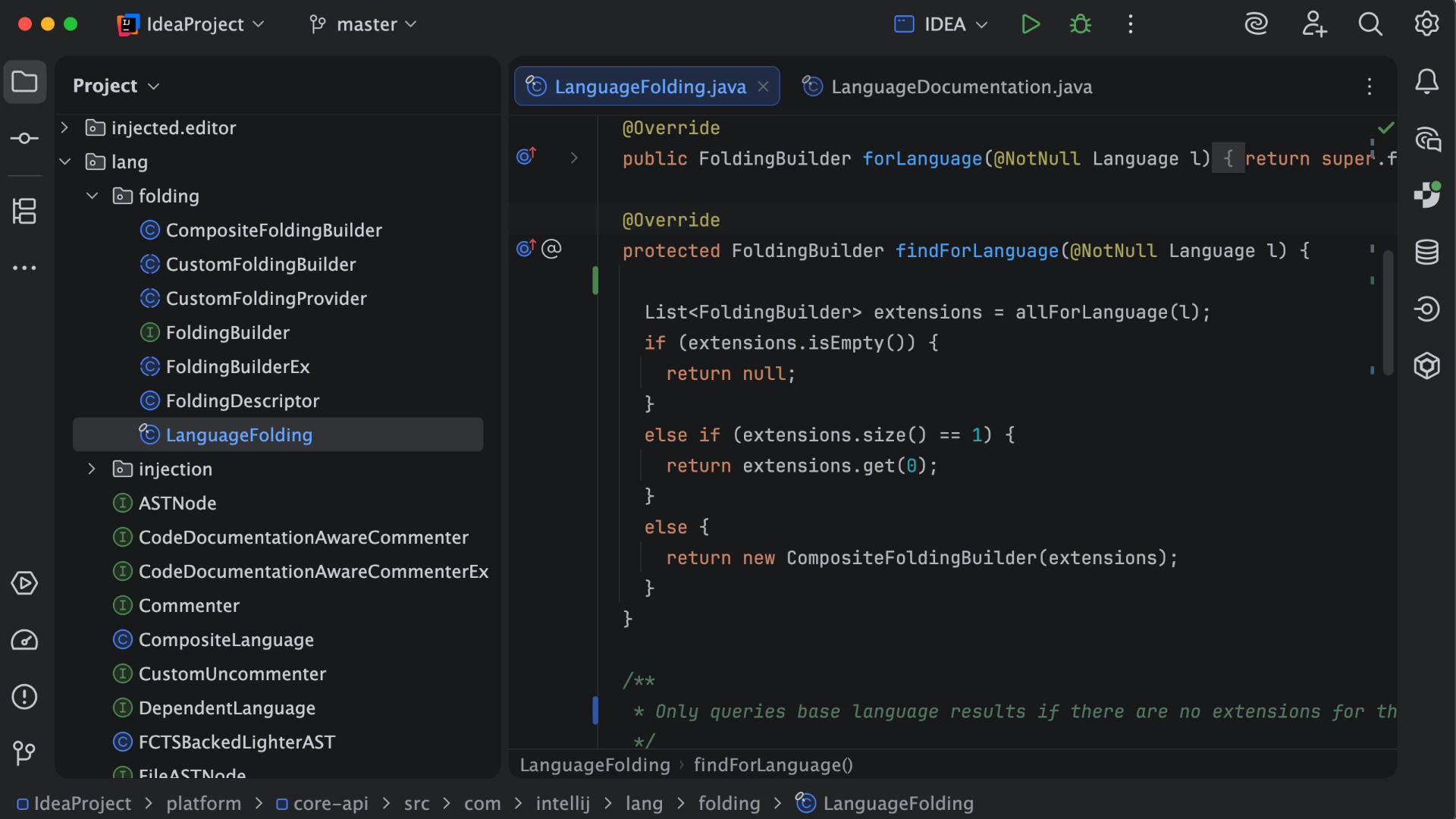
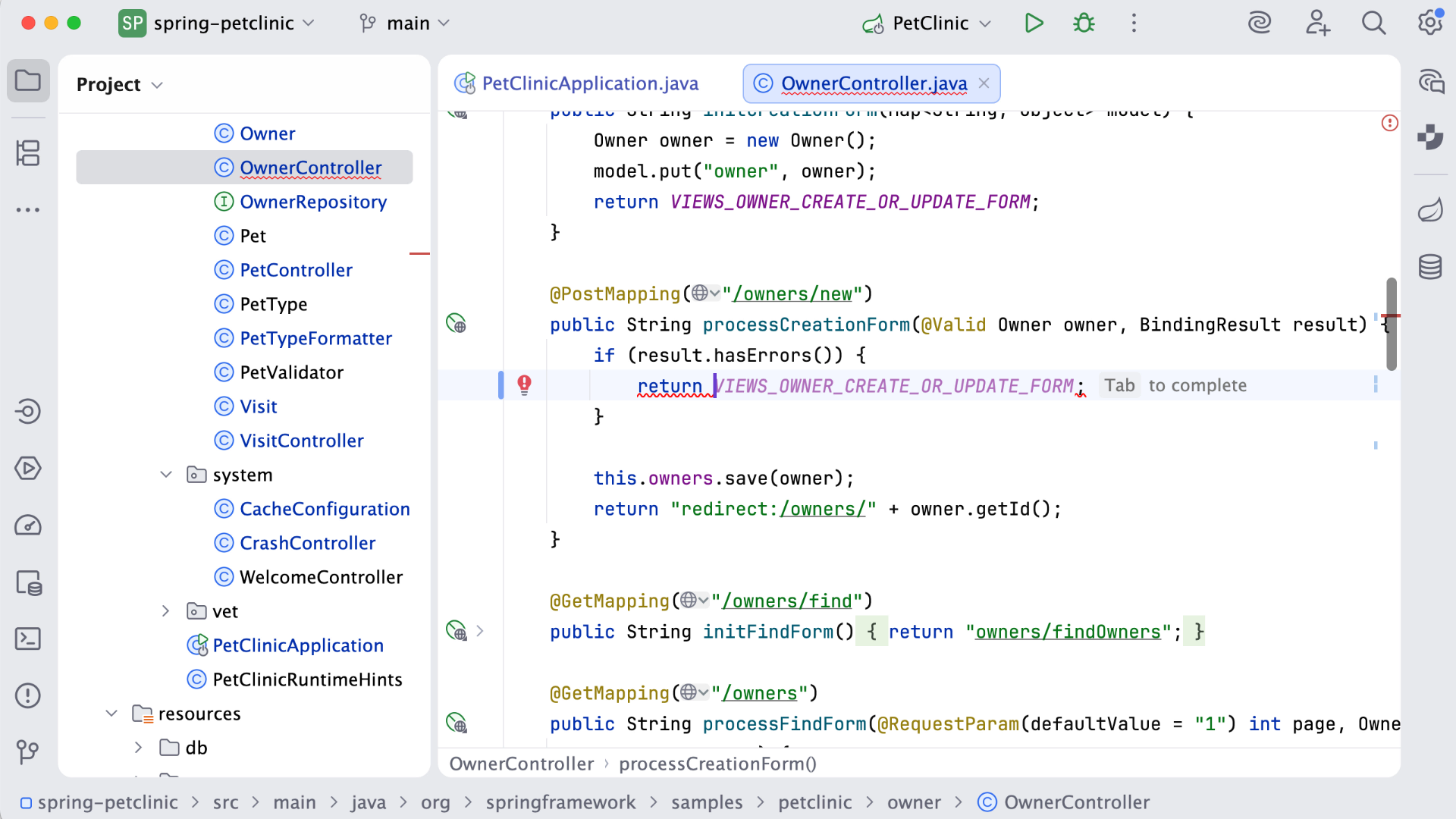
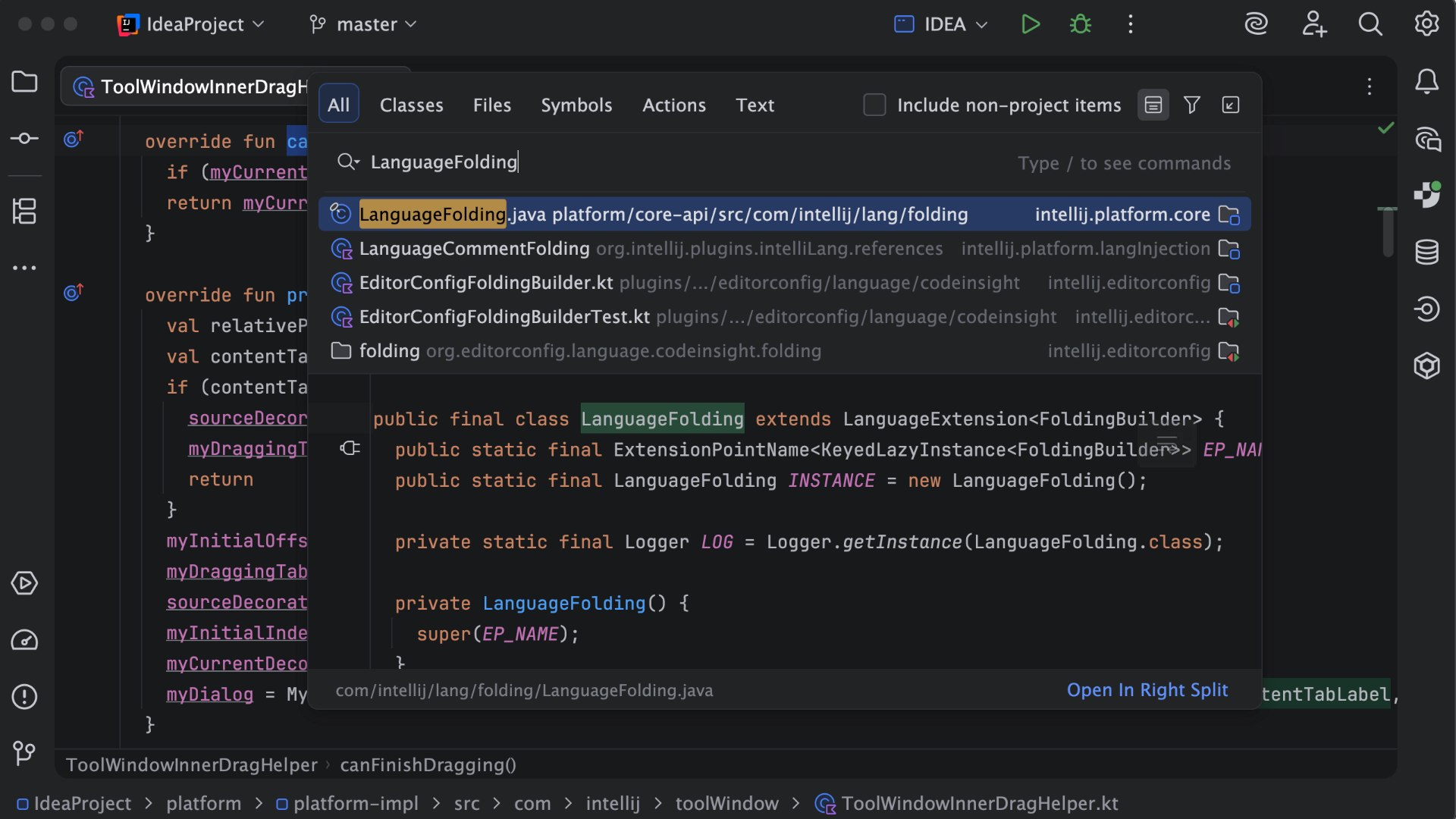
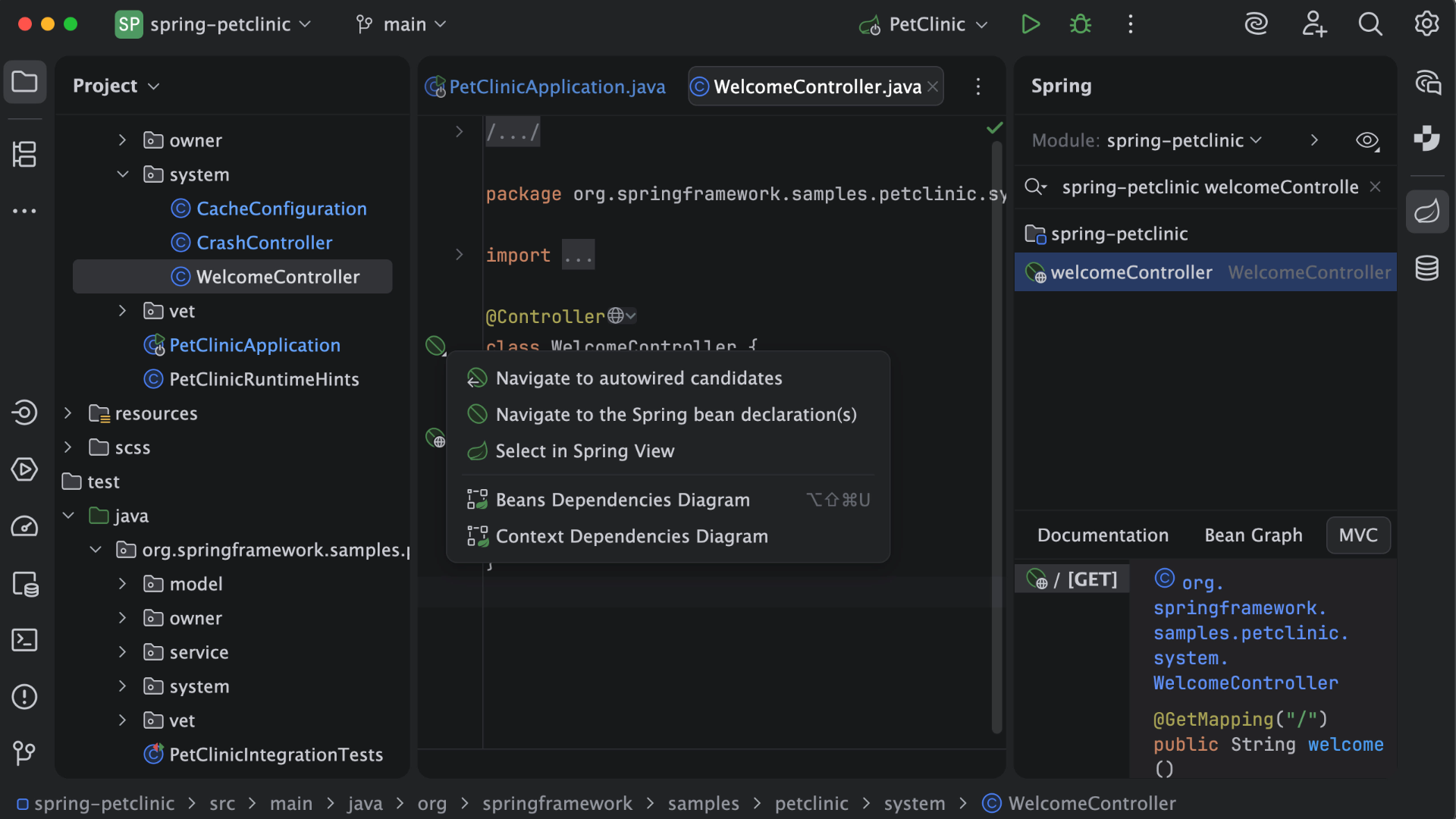
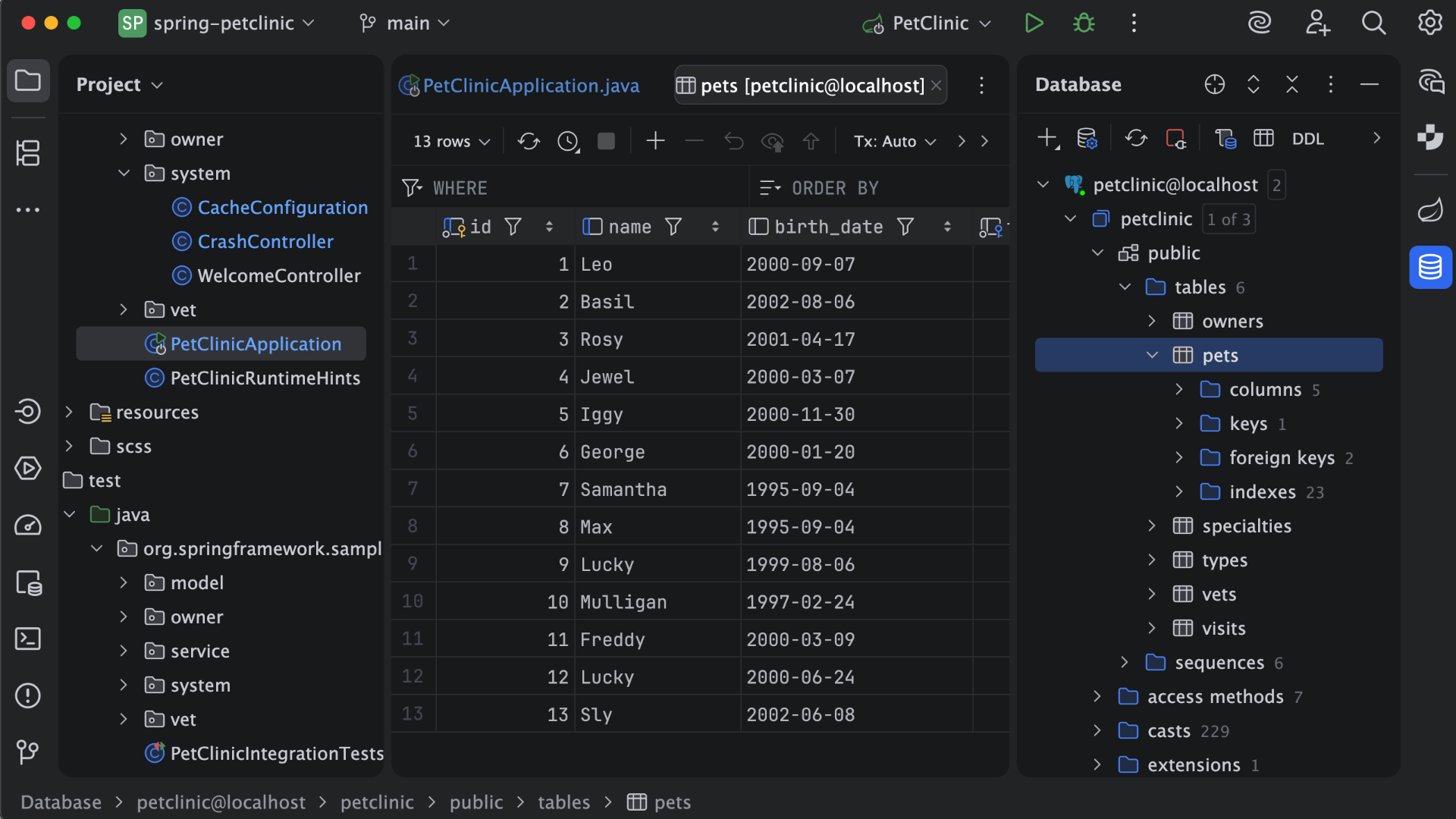
IntelliJ IDEA is an IDE that aims to give Java and Kotlin developers everything they need out of the box, including a smart code editor, built-in developer tools, framework support, database support, web development support, and much more.
$19.90
per month
Pricing
CircleCI
GitHub
IntelliJ IDEA
Editions & Modules
Server
Contact Sales
Performance
starting at $15
per month
Scale
starting at $2000
per month
Team
$40
per year per user
Enterprise
$210
per year per user
For Individual Use (Monthly billing)
$19.90
per month
For Organizations (Monthly billing)
$71.90
per month
For Individual Use (Yearly billing)
$199
per year
For Organizations (Yearly billing)
$719
per year
Offerings
Pricing Offerings
CircleCI
GitHub
IntelliJ IDEA
Free Trial
No
Yes
Yes
Free/Freemium Version
Yes
Yes
Yes
Premium Consulting/Integration Services
No
No
No
Entry-level Setup Fee
No setup fee
No setup fee
No setup fee
Additional Details
—
—
All Products Pack (For Individual Use) – $299 /1st year, $ 239 /2nd year and $ 179 /3d year onwards
All Products Pack (For Organizations) – $979 / year
Circle was the first CI with simple setup, great documentation, and tight integration with GitHub. Using Jenkins was too much maintenance and overhead, TeamCity was limited in how we could customize it and run concurrent builds, TravisCI was not available for private repos when …
We use CircleCI when we need a good, independent CI/CD provider in an existing workflow. That said, we've begun investing more heavily in GitHub actions as it's closer to where our code is stored. CircleCI is a feature of a workflow, and can be filled by many different service …
Based on the cost for feature set that we needed we went with CircleCI. There were also more people on our team that knew how to use CircleCI already compared to other products which made it a preferred choice for ramp up. Other products were not as robust and quick to …
While the UI on CircleCI is not my favorite, it's leagues better than Travis CI. I really like Heroku CI much better, but the functionality is much more limited there. If Heroku CI had the same functionality as CircleCI, I probably wouldn't use CircleCI.
Jenkins is usually self-hosted, Travis CI's infrastructure is largely unreliable (lots of tests time out for no discernable reason), and Semaphore encourages you to configure your CI/CD from a web UI. We like CircleCI because its hosted, our tests run largely as expected on …
It was our CTO who did the evaluation, not me, but as I recall other services weren't as parallelizable. We knew we wanted to run on many containers simultaneously for fast test results.
For us it really came down to CricleCI being the fastest and simples tool to get started with. The GitHub integration is slick and seamless and the scripting config file allowed us to configure our entire build system, including tests, in less than a day. It's very light weight …
Travis has full YML configuration in areas where CircleCI is slightly lacking still, which is great, but CircleCI offers more features, settings, and potential performance.
Codeship is simpler to use, you can use it entirely from their UI without modifying your Git repository at …
The biggest downside to CircleCI is that it doesn't support parameterized builds, that is testing your code against language version X and Y, or framework version A and B. Beyond that, it is really a great product.
I had used Travis CI in some of my open source projects. However, it was too expensive for us so I looked for an alternative that was in our budget. Scrutinizer is also very useful, but also out of our budget. When we get larger I could see myself using Scrutinizer for quality …
I think these three tools are just as good as the other except that Travis CI supports mobile a lot better but price wise, CircleCI is the best that I have found and is supports the need for a startup. For a long while, CircleCI had Docker support before Codeship but now, Codesh…
Github and git, in general, is much better than SVN or Subversion for version tracking and code collaboration. It takes the best parts of SVN and fixes a lot of what was broken with it. Github's own UI has evolved really well over time and they have taken developer productivity …
We picked GitHub because it's what I was most familiar with when we started. We're testing out self-hosted Gitlab because it not only handles all the features we're using on GitHub, but it also has a continuous integration service which is currently implemented by a third party …
Along with Github, I've used Bitbucket and Gitlab. Bitbucket integrates with FishEye, which allows you to institute Code Reviews and create a viable merge process. Gitlab offers similar built in tools. With Github, I'm not aware of any similar features, but this is likely due …
Github is the clear industry leader in collaborative software development -- we use it because it has superior tooling, integrations with third parties, and hosts a lot of the open source code that we use every day. Bitbucket is a better fit for organizations that are deeply …
Gitlab is the main competitor and they also have CI / CD capabilities, and also issue tracking, wiki. Gitlab supports static website hosting but does not offer dynamic Jekyll RoR server-side processing. The main advantage of Gitlab is that it offers private repositories for …
At the time to evaluation - Bitbucket was very tightly integrated into Atlassian’s suite of tools. For an organization that is starting out and looking to spend limited funds effectively - the cost/benefit of using that suite of tools usually doesn’t make sense. Granted things …
I have used TortoiseSVN before. With SVN we don't have local source control if not connected to the repository. Git is decentralized and helps us in working remotely and committing to a repository when not local.This also adds the complexity of which commands work locally and …
In my opinion, GitHub beats all of the competition.
The other services offer some things that could be considered benefits in some scenarios: Bitbucket has good integration with other Atlassian products, Gitlab is self-hosted and completely free, Beanstalk integrates with some …
Local storage of your repository is not exactly the safest thing you should do, since if you lost your project, you lose your project. This is not really a great alternative when you are considering it over using some thing you can access from any computer at any time. GitHub …
Eclipse is just so old, like a dinosaur, compared to IntelliJ. There are still formats that Eclipse supports better, especially old and/or propriety ones. Still, most of the modern software development needs can be done on IntelliJ, & in a much better way, some of them are not …
I have used Eclipse also in the past. But it is slow compared to IntelliJ, it does not offer as many features as IntelliJ offers, and the integrations with third-party tools is not great. But they are open-source and they don't charge anything whereas IntelliJ charges $500 per …
IDEA is much more intuitive, user-friendly and feature-rich than any of the other IDEs that I have encountered so far. It's not just the Ultimate - the Community Edition has the same UX (just missing a few features), and although the community may be smaller, JetBrains has an …
Features
CircleCI
GitHub
IntelliJ IDEA
Version Control Software Features
Comparison of Version Control Software Features features of Product A and Product B
Based on our experience, CircleCI is well-suited for automating mobile app release cycles. For example, to release an iOS app, you would need to build, sign, and upload it to TestFlight, which requires a dedicated Mac in the office. But with CircleCI, you can have macOS executors, so you don't have to manage a physical build machine. Another benefit is that CircleCI's certified AWS Orbs abstract away complex authentication and deployment logic, allowing us to build, push, and deploy Docker containers to Amazon ECS with minimal configuration and high reliability. CircleCI is less suited for smaller projects where the development and deployment are not that extensive, for example, a static site. Once you have built a static site, you probably won't make any further changes, so there's no point in paying for it.
GitHub is an easy to go tool when it comes to Version Controlling, CI/CD workflows, Integration with third party softwares. It's effective for any level of CI/CD implementation you would like to. Also the the cost of product is also very competitive and affordable. As of now GitHub lacks capabilities when it comes to detailed project management in comparison to tools like Jira, but overall its value for money.
This is a superb tool if your project involves a lot of backend development, especially in Java/Spring Boot and Kotlin. The support for the front end is great as well, but some developers may prefer to use the GitHub copilot add-on. I especially love using the GitHub copilot add-on. It may be less appropriate if your project requires heavy use of HotSwaps for backend debugging, as sometimes the support for that can be limited.
Automated builds! This is really why you get CircleCI, to automate the build process. This makes building your application far more reliable and repeatable. It can also run tests and verify your application is working as expected.
Simple. Unlike Jenkins, Teamcity, or other platforms, CircleCI doesn't need a lot of setup. It's completely hosted, so there's no infrastructure to set up. The config file does take a bit to understand, but if you follow their example and start with something small and add to it, you can get it up and going quicker than it first looks.
Scales easily. Again, since it's all cloud-based, you don't have to manage or scale infrastructure. Simply subscribe to the number of containers you want, and scaling up just means buying more containers.
Version control: GitHub provides a powerful and flexible Git-based version control system that allows teams to track changes to their code over time, collaborate on code with others, and maintain a history of their work.
Code review: GitHub's pull request system enables teams to review code changes, discuss suggestions and merge changes in a central location. This makes it easier to catch bugs and ensure that code quality remains high.
Collaboration: GitHub provides a variety of collaboration tools to help teams work together effectively, including issue tracking, project management, and wikis.
Unit testing: Fully integrated into IntelliJ IDEA. Your unit tests will run smoothly and efficiently, with excellent debugging tools for when things get tricky.
Spring integration: Our Spring project using Maven works flawlessly in IntelliJ IDEA. I know firsthand that Apache is also easily and readily supported too. The integration is seamless and very easy to set up using IntelliJ IDEA's set up wizard when importing new projects.
Customization: IntelliJ IDEA comes out of the box with a bunch of handy shortcuts, as well as text prediction, syntax error detection, and other tools to help keep your code clean. But even better is that it allows for total customization of shortcuts you can easily create to suit your needs.
Not an easy tool for beginners. Prior command-line experience is expected to get started with GitHub efficiently.
Unlike other source control platforms GitHub is a little confusing. With no proper GUI tool its hard to understand the source code version/history.
Working with larger files can be tricky. For file sizes above 100MB, GitHub expects the developer to use different commands (lfs).
While using the web version of GitHub, it has some restrictions on the number of files that can be uploaded at once. Recommended action is to use the command-line utility to add and push files into the repository.
GitHub's ease of use and continued investment into the Developer Experience have made it the de facto tool for our engineers to manage software changes. With new features that continue to come out, we have been able to consolidate several other SaaS solutions and reduce the number of tools required for each engineer to perform their job responsibilities.
VS Code is maturing and has a Scala plugin now. The overall experience with VS Code - for web development at least - is very snappy/fast. IntelliJ feels a bit sluggish in comparison. If that Scala plugin for VS Code is deemed mature enough - we may not bother renewing and resort to the Community Edition if we need it.
The reliability & speed, it just works. The ability to spin up macOS runners and Docker containers on demand without managing hardware is a huge win. The Orbs system makes integrating with AWS and Slack incredibly easy, saving us weeks of custom scripting and providing real-time updates in our Slack channel. This makes it easy for us to track and ensures that everyone involved knows the status. Of course, it has drawbacks related to configuration complexity and, in some cases, cost transparency, but overall, it is an industry-standard, robust tool that solves our core infrastructure problems well.
GitHub is a clean and modern interface. The underlying integrations make it smooth to couple tasks, projects, pull requests and other business functions together. The insights and reporting is really strong and is getting better with every release. GitHub's PR tooling is strong for being web based, i do believe a better code editor would rival having to pull merge conflicts into local IDE.
There is always room for improvement, but I haven't met any IDE that I liked more so far. Even if it did not fit a use case right out of the box, there is always a way to configure how it works to do just that.
It's pretty snappy, even with using workflows with multiple steps and different docker images. I've seen builds take a long time if it's really involved, but from what I can tell, it's still at least on par if not faster than other build tools.
Unless you have a reasonably large account, you're going to be mainly stuck reading their documentation. Which has improved somewhat over the years but is still extremely limited compared to a platform like Digital Ocean who invested in the documentation and a community to ensure it's kept up to date. If you can't find your answer there, you can be stuck.
There are a ton of resources and tutorials for GitHub online. The sheer number of people who use GitHub ensures that someone has the exact answer you are looking for. The docs on GitHub itself are very thorough as well. You will often find an official doc along with the hundreds of independent tutorials that answers your question, which is unusual for most online services.
Customer support is really good in the case of IntelliJ. If you are paying for this product then, the company makes sure that you will get all the services adequately. Regular update patches are provided to improve the IDE. An online bug report makes it easier for the developers to find the solution as fast as possible. The large online community also helps to find the various solutions to the issues.
This installs just like any other application - its pretty straight forward. Perhaps licensing could be more challenging - but if you use the cloud licensing they offer its as simple as having engineers login to the application and it just works.
Jenkins is usually self-hosted, Travis CI's infrastructure is largely unreliable (lots of tests time out for no discernable reason), and Semaphore encourages you to configure your CI/CD from a web UI. We like CircleCI because its hosted, our tests run largely as expected on their infrastructure, and we can configure it from a config file that we track in GitHub.
While I don't have very much experience with these 2 solutions, they're two of the most popular alternatives to GitHub. Bitbucket is from Atlassian, which may make sense for a team that is already using other Atlassian tools like Jira, Confluence, and Trello, as their integration will likely be much tighter. Gitlab on the other hand has a reputation as a very capable GitHub replacement with some features that are not available on GitHub like firewall tools.
Eclipse is just so old, like a dinosaur, compared to IntelliJ. There are still formats that Eclipse supports better, especially old and/or propriety ones. Still, most of the modern software development needs can be done on IntelliJ, & in a much better way, some of them are not even supported on Eclipse.
We pay over $5K/ month and we have high expectations for service. Sometimes I feel that we don't get the value, but only sometimes.
We have had to build our own application to keep state and broker releases and deployments. We call our app deployer. I feel that CircleCI could do more to understand our needs and possibly build additional features that would enable us to invest less in build and deployment infrastructure and justify paying more for Circle.
Team collaboration significantly improved as everything is clearly logged and maintained.
Maintaining a good overview of items will be delivered wrt the roadmap for example.
Knowledge management and tracking. Over time a lot of tickets, issues and comments are logged. GitHub is a great asset to go back and review why x was y.