Datadog is a monitoring service for IT, Dev and Ops teams who write and run applications at scale, and want to turn the massive amounts of data produced by their apps, tools and services into actionable insight.
$18
per month per host
Redis Software
Score 9.1 out of 10
N/A
Redis is an open source in-memory data structure server and NoSQL database.
N/A
SAP HANA Cloud
Score 8.9 out of 10
N/A
SAP HANA is an application that uses in-memory database technology to process very large amounts of real-time data from relational databases, both SAP and non-SAP, in a very short time. The in-memory computing engine allows HANA to process data stored in RAM as opposed to reading it from a disk which means that the data can be accessed in real time by the applications using HANA. The product is sold both as an appliance and as a cloud-based software solution.
$0.95
per month Capacity Units
Pricing
Datadog
Redis Software
SAP HANA Cloud
Editions & Modules
Log Management
$1.27
per month (billed annually) per host
Infrastructure
$15.00
per month (billed annually) per host
Standard
$18
per month per host
Enterprise
$27
per month per host
DevSecOps Pro
$27
per month per host
APM
$31.00
per month (billed annually) per host
DevSecOps Enterprise
$41
per month per host
No answers on this topic
No answers on this topic
Offerings
Pricing Offerings
Datadog
Redis Software
SAP HANA Cloud
Free Trial
Yes
Yes
Yes
Free/Freemium Version
Yes
Yes
No
Premium Consulting/Integration Services
No
Yes
No
Entry-level Setup Fee
Optional
Optional
Optional
Additional Details
Discount available for annual pricing. Multi-Year/Volume discounts available (500+ hosts/mo).
Datadog may be better suited for teams that have a more out-of-the-box infrastructure, on the primary platforms Datadog supports. You may also have better results if you have a bigger team dedicated to devops and/or a bigger budget. We found that trying to adapt it to our use case (small team, .NET on AWS Fargate) wasn't feasible. We continually ran into roadblocks that required us to dig through documentation (and at times, having to figure out some documentation was wrong), go back and forth with support, and in my opinion, waste money on excessive and unintended usages due to opaque pricing models and inaccurate usage reports, as well as broken/non-functional rate sampling controls.
Redis has been a great investment for our organization as we needed a solution for high speed data caching. The ramp up and integration was quite easy. Redis handles automatic failover internally, so no crashes provides high availability. On the fly scaling scale to more/less cores and memory as and when needed.
I think if you have a large organization, it's probably the product and the marketplace to go to. We're a large management consulting firm operating in four to seven countries. And generally speaking, I think that's the size and the scope where it scales best. I can't speak to smaller companies, but I can't see smaller companies leveraging the benefits as much as a larger organization can.
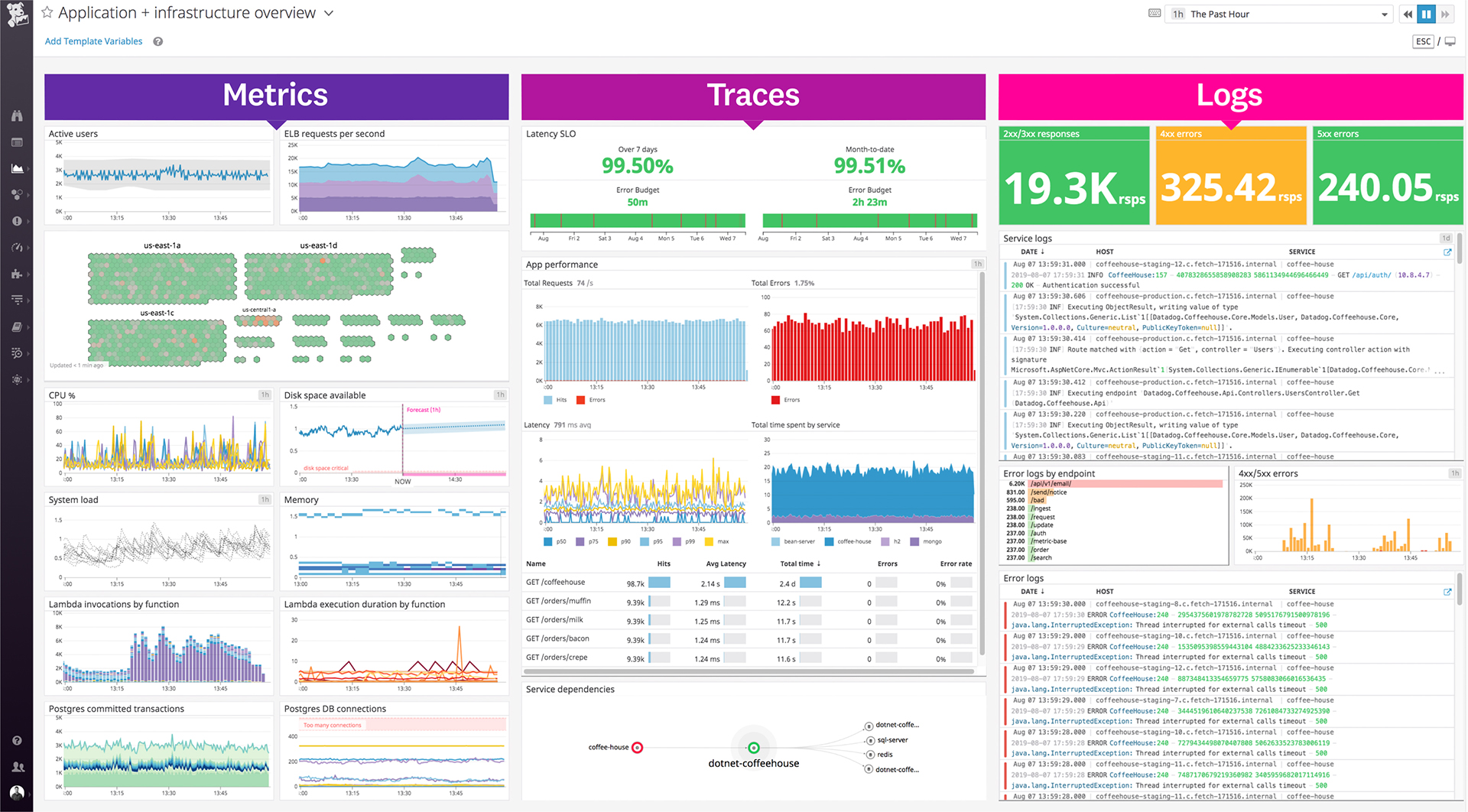
The thing which Datadog does really well, one of them are its broad range of services integrations and features which makes it one step observability solution for all. We can monitor all types of our application, infrastructure, hosts, databases etc with Datadog.
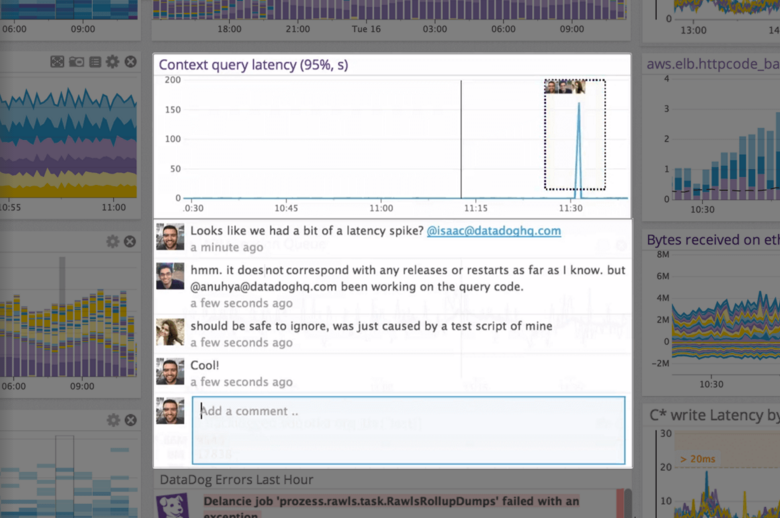
Its custom dashboard feature which helps us to visualize the data in a better way . It supports different types of charts through those charts we can create our dashboard more attractive.
Its AI powered alerting capability though that we can easily identify the root cause and also it has a low noise alerting capability which means it correlated the similar type of issues.
Easy for developers to understand. Unlike Riak, which I've used in the past, it's fast without having to worry about eventual consistency.
Reliable. With a proper multi-node configuration, it can handle failover instantly.
Configurable. We primarily still use Memcache for caching but one of the teams uses Redis for both long-term storage and temporary expiry keys without taking on another external dependency.
Fast. We process tens of thousands of RPS and it doesn't skip a beat.
Real-time reporting and analytics on data: because of its in-memory architecture, it is perfect for businesses that need to make quick decisions based on current information.
Managing workload with complex data: it can handle a vast range of data types, including relational, documental, geospatial, graph, vector, and time series data.
Developing and deploying intelligent data applications: it provides various tools for such applications and can be used for machine learning and artificial intelligence to automate tasks, gain insights from data, and make predictions.
Alert windows cause lag in notifications (e.g. if the alert window is X errors in 1 hour, we won't get alerted until the end of the 1 hour range)
I would appreciate more supportive examples for how to filter and view metrics in the explorer
I would like a more clear interface for metrics that are missing in a time frame, rather than only showing tags/etc. for metrics that were collected within the currently viewed time frame
We had some difficulty scaling Redis without it becoming prohibitively expensive.
Redis has very simple search capabilities, which means its not suitable for all use cases.
Redis doesn't have good native support for storing data in object form and many libraries built over it return data as a string, meaning you need build your own serialization layer over it.
Requires higher processing power, otherwise it won't fly. How ever computing costs are lower. Incase you are migrating to cloud please do not select the highest config available in that series . Upgrading it later against a reserved instance can cost you dearly with a series change
Lack of clarity on licensing is one major challenge
Unless S/4 with additional features are enabled mere migration HANA DB is not a rewarding journey. Power is in S/4
We will definitely continue using Redis because: 1. It is free and open source. 2. We already use it in so many applications, it will be hard for us to let go. 3. There isn't another competitive product that we know of that gives a better performance. 4. We never had any major issues with Redis, so no point turning our backs.
We would rate our likelihood of renewing at 9/10. SAP HANA Cloud has proven to be a highly reliable and scalable data platform that consistently delivers strong performance. Its seamless integration with our overall SAP landscape, combined with improved analytics and real-time data capabilities, makes it a core part of our long-term technology strategy.
There are so many features that it can be hard to figure out where you need to go for your own use case. For example, RUM monitoring us buried in a "Digital Experience" sidebar setting when this is one of our key use cases that I sometimes struggle to find in the application. It appears that ECS + Fargate monitoring was recently released which is great because we had to build a lambda reporting solution for ephemeral task monitoring. But this new feature was never on my radar until I starting clicking around the application.
It is quite simple to set up for the purpose of managing user sessions in the backend. It can be easily integrated with other products or technologies, such as Spring in Java. If you need to actually display the data stored in Redis in your application this is a bit difficult to understand initially but is possible.
It is very useful solution which provides you speedier data processing, real-time analytics. It helps you manage diverse data types. It also offers you excellent disaster management. It has user friendly interface which helps you navigate system and transactions easily and perform task smoothly.
The support team usually gets it right. We did have a rather complicate issue setting up monitoring on a domain controller. However, they are usually responsive and helpful over chat. The downside would be I don’t think they have any phone support. If that is important to you this might not be a good fit.
The support team has always been excellent in handling our mostly questions, rarely problems. They are responsive, find the solution and get us moving forward again. I have never had to escalate a case with them. They have always solved our problems in a very timely manner. I highly commend the support team.
However, I am not the right person to answer this as we have another department to handle support and contact the service provider for any support required. Although i will say that they are the quick respondent and knows how to handle querry of the customers and provide quick and better support.
Professional GIS people are some of the most risk-averse there are, and it's difficult to get them to move to HANA in one step. Start with small projects building to 80% use of HANA spatial over time.
Our logs are very important, and Datadog manages them exceptionally well. We frequently use Datadog services for our investigations. Use case: Monitor your apps, infrastructure, APIs, and user experience.
Key features:
Logs, metrics, and APM (Application Performance Monitoring)
Real-time alerting and dashboards
Supports Kubernetes, AWS, GCP, and other integrations
RUM (Real User Monitoring) and Synthetics
✅ Best for backend, server, and distributed systems monitoring.
We are big users of MySQL and PostgreSQL. We were looking at replacing our aging web page caching technology and found that we could do it in SQL, but there was a NoSQL movement happening at the time. We dabbled a bit in the NoSQL scene just to get an idea of what it was about and whether it was for us. We tried a bunch, but I can only seem to remember Mongo and Couch. Mongo had big issues early on that drove us to Redis and we couldn't quite figure out how to deploy couch.
I have deep knowledge of other disk based DBMSs. They are venerable technology, but the attempts to extend them to current architectures belie the fact they are built on 40 year old technology. There are some good columnar in-memory databases but they lack the completeness of capability present in the HANA platform.
Redis has helped us increase our throughput and server data to a growing amount of traffic while keeping our app fast. We couldn't have grown without the ability to easily cache data that Redis provides.
Redis has helped us decrease the load on our database. By being able to scale up and cache important data, we reduce the load on our database reducing costs and infra issues.
Running a Redis node on something like AWS can be costly, but it is often a requirement for scaling a company. If you need data quickly and your business is already a positive ROI, Redis is worth the investment.