Google Ad Manager is a platform for publishers that combines the former DoubleClick for Publishers and DoubleClick Ad Exchange products.
N/A
Terminus ABM Platform
Score8 out of 10
Mid-Size Companies (51-1,000 employees)
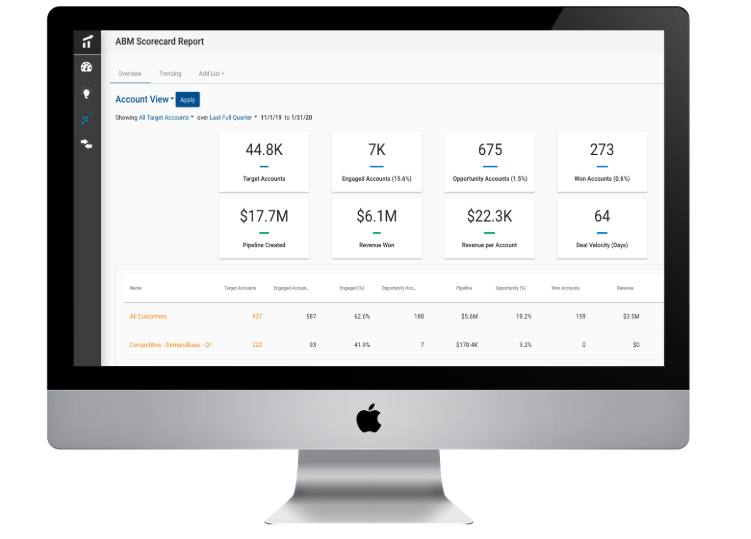
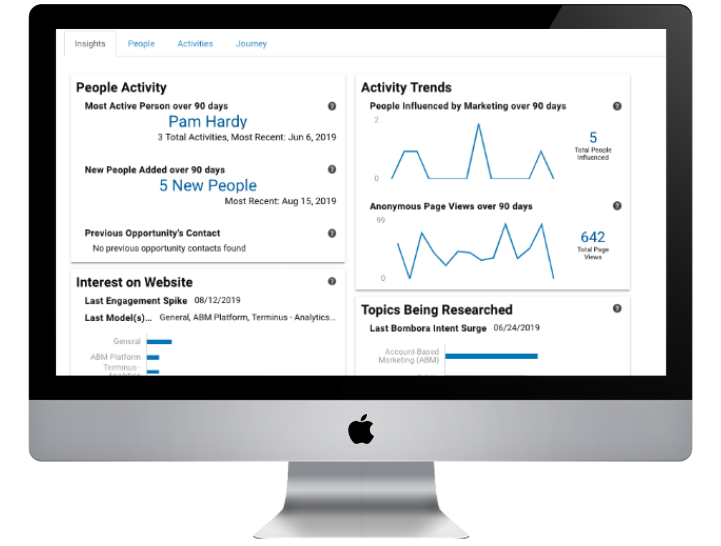
Supporting B2B strategies, the Terminus platform offers tactical playbooks that help teams meet accounts throughout their entire lifecycle. It is a platform rooted in first-party data that surrounds buyers with engaging digital experiences from account acquisition to expansion and renewal. The Terminus engine is built to drive ROI, minimize fraud, prioritize brand safety, and turn intent into relevant, actionable insight for GTM teams. Key benefits of Terminus: - Relevant…
I like that I can see several clients in one place, which can be convenient. However, the UX could be a lot better as outlined previously. In other words, the benefits of combining clients into the Ad Manager don't seem to be much more beneficial than logging into each client's ad account separately
A de minimis incentive was given to thank the reviewer for their time. The incentive was not used to bias or drive a particular response, nor was the incentive contingent on a positive endorsement. More Info
Terminus ABM Platform is well suited for organizations beginning their ABM journey. It is easy to implement and there is a great team to help you do so. Ongoing customer success teams ensure you are taking full advantage of the platform and work to help you develop an ABM strategy that fits your business needs.
A de minimis incentive was given to thank the reviewer for their time. The incentive was not used to bias or drive a particular response, nor was the incentive contingent on a positive endorsement. More Info
The obvious is the data - Google Ads Manager gives me essential and even critical data about which jobs and industries are hot right now and what is driving the most response.
Google Ad Manager gives us more control over the search engine results page as we get more visibility and real estate on our branded search terms and job/industry-specific search terms.
Google Ad Manager gives us the chance to compete with major national players in job recruitment, Monster, Indeed, LinkedIn, etc.
A de minimis incentive was given to thank the reviewer for their time. The incentive was not used to bias or drive a particular response, nor was the incentive contingent on a positive endorsement. More Info
A de minimis incentive was given to thank the reviewer for their time. The incentive was not used to bias or drive a particular response, nor was the incentive contingent on a positive endorsement. More Info
Support. Not that they don't call or offer help, it's that our account people are bullies. I tell them I don't have time, so I am insulted and told that I need to get in front of the laptop otherwise I have "failed the company." I have never had a situation where I wasn't bullied by our Ad reps. They don't respect or value our time, which can make their calls frustrating.
Too quick on support. They don't take the time to understand the product. We are a preschool which shares a name with a popular motorcycle. An Ad rep insisted he knew the company so well that he could help me within five minutes. After being interrupted frequently, I just let him continue to tell me how I "could increase awareness of our aerodynamic seat design by creating ads with those keywords..."
Better management of trademark keywords and program awareness. We switched over to a new site, the domain changed for about ten seconds. All of our ads were unapproved and put on pause. The email stated it would be fixed very quickly, but I had to go in for the last 3 days to reactivate each one individually.
A de minimis incentive was given to thank the reviewer for their time. The incentive was not used to bias or drive a particular response, nor was the incentive contingent on a positive endorsement. More Info
Support times are iffy. We've had slower replies and resolutions to issues since they acquired Sigstr and now support both products.
Display advertising generally has low ROI, in part due to "banner blindness". If you're not continuously developing engaging creatives, you're going to see very little return with this platform.
Their UI needs serious work. Some options are locked after you move to the next screen in their campaign wizard (nothing should ever be locked in draft) and unless they've recently changed it, you can't delete dead draft campaigns - just archive them.
There are a few serious discrepancies in the analytics when it comes to identifying which end companies have people who have viewed your ads (i.e. Microsoft has huge numbers because Azure is their product).
A de minimis incentive was given to thank the reviewer for their time. The incentive was not used to bias or drive a particular response, nor was the incentive contingent on a positive endorsement. More Info
I think it's useful for our team and we rely on it to improve our business. It is within our budget also. Although we still will need an approval from the upper-level management team, I don't see any problem with that
A de minimis incentive was given to thank the reviewer for their time. The incentive was not used to bias or drive a particular response, nor was the incentive contingent on a positive endorsement. More Info
Terminus is a turn-key partner in the B2B Account-Based Marketing space. Their model is flexible and efficient which in turn provides effective results. Their sales staff is great and never tries to up-sell, but rather coach and educate our teams to be better at our jobs. It has been great to collaborate
A de minimis incentive was given to thank the reviewer for their time. The incentive was not used to bias or drive a particular response, nor was the incentive contingent on a positive endorsement. More Info
While most of Google Ad Manager is user-friendly, certain parts of the ad creation process could use some improvements. Specifically, the way you insert keywords can be clunky and time-consuming, and I would like to see better and more keyword suggestions when designing a campaign.
A de minimis incentive was given to thank the reviewer for their time. The incentive was not used to bias or drive a particular response, nor was the incentive contingent on a positive endorsement. More Info
I could say a lot about this topic. As an agency, we get a new [representative] to talk to almost every quarter to go over select accounts and the campaigns within. Most of the time, these [educated representatives], don't provide any new feedback, or I just simply [disagree] with their approach. This is not all the time however. I have learned a lot from a rare few, [individuals] that have given me new strategies and access to betas early on. The other side of support, is the [overseas support platform]. [It] is usually not very helpful, but you can [emphasize] issues and they can research [them]. The Google Tag Implementation team is pristine though. When you need them, you need to set an appointment, which is usually 2 weeks out; they are so over-my-head intelligent, I've never had a bad experience with them and whenever I needed them for a fix, they solved it [within] the first call.
A de minimis incentive was given to thank the reviewer for their time. The incentive was not used to bias or drive a particular response, nor was the incentive contingent on a positive endorsement. More Info
As I've said in prior comments, I like how the Google Ad Manager makes better use of the Google data and results compared to the others. Yes, I've tried them - I used to evaluate software for a former company. They will all do the job I didn't like their usage as much as I preferred the Google information - and I said even that had flaws - so you have to realize that nothing is completely perfect so far.
A de minimis incentive was given to thank the reviewer for their time. The incentive was not used to bias or drive a particular response, nor was the incentive contingent on a positive endorsement. More Info
Drift has banners available in their email tool, furthermore, we are able to mimic a Sigstr banner in HubSpot when we build emails by placing the banner image with a link in the bottom of an email, it's just a more manual process. I can't recommend any other solution over Sigstr, they own what they do and don't try to reach in their product marketing and I respect their product for that.
A de minimis incentive was given to thank the reviewer for their time. The incentive was not used to bias or drive a particular response, nor was the incentive contingent on a positive endorsement. More Info
A de minimis incentive was given to thank the reviewer for their time. The incentive was not used to bias or drive a particular response, nor was the incentive contingent on a positive endorsement. More Info