
Gerhard Kürner
CEO & Founder
Chose Piwik PRO
Data owned and detailed tracking possibility compared to free Google Analytics and cost advantage and CDP possibilities compared to Google Analytics 360

| Product | Rating | Most Used By | Product Summary | Starting Price |
|---|---|---|---|---|
 Google Analytics | N/A | Google Analytics is perhaps the best-known web analytics product and, as a free product, it has massive adoption. Although it lacks some enterprise-level features compared to its competitors in the space, the launch of the paid Google Analytics Premium edition seems likely to close the gap. | $0 per month | |
 OneTrust Privacy Automation | N/A | The OneTrust Privacy Automation solution is used to simplify compliance, improve operational efficiency, and enable risk-informed decisions. | N/A | |
 Piwik PRO | N/A | Piwik PRO Analytics Suite is an advanced platform providing a suite of modules centered around analytics that connects with other parts of the client’s tech stack. Piwik PRO Analytics Suite unifies marketing insights, provides a comprehensive view of performance, and facilitates data-driven actions to achieve better results. It offers multiple flexible hosting options and ensures compliance with strict data protection laws, including the GDPR, CCPA, PIPEDA, and… | $36 per month |
| Google Analytics | OneTrust Privacy Automation | Piwik PRO | ||||||||||||||||||||||
|---|---|---|---|---|---|---|---|---|---|---|---|---|---|---|---|---|---|---|---|---|---|---|---|---|
| Editions & Modules |
| No answers on this topic | No answers on this topic | |||||||||||||||||||||
| Offerings |
| |||||||||||||||||||||||
| Entry-level Setup Fee | No setup fee | No setup fee | Optional | |||||||||||||||||||||
| Additional Details | — | — | — | |||||||||||||||||||||
| More Pricing Information | ||||||||||||||||||||||||
| Google Analytics | OneTrust Privacy Automation | Piwik PRO | |
|---|---|---|---|
| Considered Multiple Products |  Google Analytics No answer on this topic |  OneTrust Privacy Automation No answer on this topic | Piwik PRO Gerhard Kürner CEO & Founder Chose Piwik PRO Data owned and detailed tracking possibility compared to free Google Analytics and cost advantage and CDP possibilities compared to Google Analytics 360  Devin Mulvey Head Of Marketing Communication Chose Piwik PRO One of the tools that we have used that has a great similarity to Piwik is Google Analytics. The great difference that exists is that Piwik provides us with security in our database, our organization changed to it. It was precisely for that reason Google Analytics Security is …  Wilco Wietsma Digital Technology Specialist Chose Piwik PRO I can sum it up quite easy: - GA isn't that privacy friendly, something we do require on our jobboard. - Matomo is a great program with some unique features compared to Piwik, but the lay-out is - in my eyes - more cluttered. Also the different type of database makes it a bit …  Sourov K Chowdhury Database Software Engineer Chose Piwik PRO Piwik Pro's support for multiple sites saved me a lot of time. To view reports from numerous client sites, I'll have to access a single dashboard. Its digest reports save time and are simple enough for non-technical executives to understand. It gives us access to information … |
| Google Analytics | OneTrust Privacy Automation | Piwik PRO | |||||||||||||||||||||||||||||||||||
|---|---|---|---|---|---|---|---|---|---|---|---|---|---|---|---|---|---|---|---|---|---|---|---|---|---|---|---|---|---|---|---|---|---|---|---|---|---|
| Web Analytics |
|
| Google Analytics | OneTrust Privacy Automation | Piwik PRO | |
|---|---|---|---|
| Small Businesses |  StatCounter Score 9.0 out of 10 |  Egnyte Score 9.4 out of 10 | StatCounter Score 9.0 out of 10 |
| Medium-sized Companies |  Siteimprove Score 9.1 out of 10 |  IBM InfoSphere Information Server Score 8.0 out of 10 | Siteimprove Score 9.1 out of 10 |
| Enterprises |  Optimal Score 9.1 out of 10 | IBM InfoSphere Information Server Score 8.0 out of 10 | Optimal Score 9.1 out of 10 |
| All Alternatives | View all alternatives | View all alternatives | View all alternatives |
| Google Analytics | OneTrust Privacy Automation | Piwik PRO | |
|---|---|---|---|
| Likelihood to Recommend | 8.5 (192 ratings) | 9.0 (7 ratings) | 8.2 (7 ratings) |
| Likelihood to Renew | 9.0 (51 ratings) | - (0 ratings) | - (0 ratings) |
| Usability | 7.4 (19 ratings) | - (0 ratings) | - (0 ratings) |
| Availability | 10.0 (4 ratings) | 9.0 (1 ratings) | - (0 ratings) |
| Performance | 10.0 (2 ratings) | 4.0 (1 ratings) | - (0 ratings) |
| Support Rating | 7.0 (42 ratings) | 9.0 (2 ratings) | 10.0 (1 ratings) |
| Online Training | 10.0 (2 ratings) | 7.0 (1 ratings) | - (0 ratings) |
| Implementation Rating | 9.0 (7 ratings) | - (0 ratings) | - (0 ratings) |
| Configurability | 6.0 (2 ratings) | - (0 ratings) | - (0 ratings) |
| Ease of integration | 10.0 (1 ratings) | - (0 ratings) | - (0 ratings) |
| Product Scalability | 10.0 (2 ratings) | 9.0 (1 ratings) | - (0 ratings) |
| Vendor post-sale | 10.0 (1 ratings) | - (0 ratings) | - (0 ratings) |
| Vendor pre-sale | 9.0 (1 ratings) | - (0 ratings) | - (0 ratings) |
| Google Analytics | OneTrust Privacy Automation | Piwik PRO | |
|---|---|---|---|
| Likelihood to Recommend | Google
 sandro merkvilishvili Head of e-commerce deparment | OneTrust
 Wiliam de Faria Head Privacidade de Dados - DPO LGPD/GPDR | Piwik PRO
Wilco Wietsma Digital Technology Specialist |
| Pros | Google
| OneTrust
 Joy Ann Information Scientist | Piwik PRO
Devin Mulvey Head Of Marketing Communication |
| Cons | Google
| OneTrust
| Piwik PRO
Wilco Wietsma Digital Technology Specialist |
| Likelihood to Renew | Google
| OneTrust No answers on this topic | Piwik PRO No answers on this topic |
| Usability | Google
 Victor Campos Web Developer | OneTrust No answers on this topic | Piwik PRO No answers on this topic |
| Reliability and Availability | Google
| OneTrust
| Piwik PRO No answers on this topic |
| Performance | Google
| OneTrust
| Piwik PRO No answers on this topic |
| Support Rating | Google
 Sarah Hoffman Media Director | OneTrust
| Piwik PRO
|
| Online Training | Google
 Roy Morejon President | OneTrust
| Piwik PRO No answers on this topic |
| Implementation Rating | Google
 Joshua Van Horsen Marketing Manager | OneTrust No answers on this topic | Piwik PRO No answers on this topic |
| Alternatives Considered | Google
| OneTrust
| Piwik PRO
Sourov K Chowdhury Database Software Engineer |
| Scalability | Google
| OneTrust
| Piwik PRO No answers on this topic |
| Return on Investment | Google
 Heide Rembold Director of Marketing & Analytics | OneTrust
| Piwik PRO
Devin Mulvey Head Of Marketing Communication |
| ScreenShots | Piwik PRO Screenshots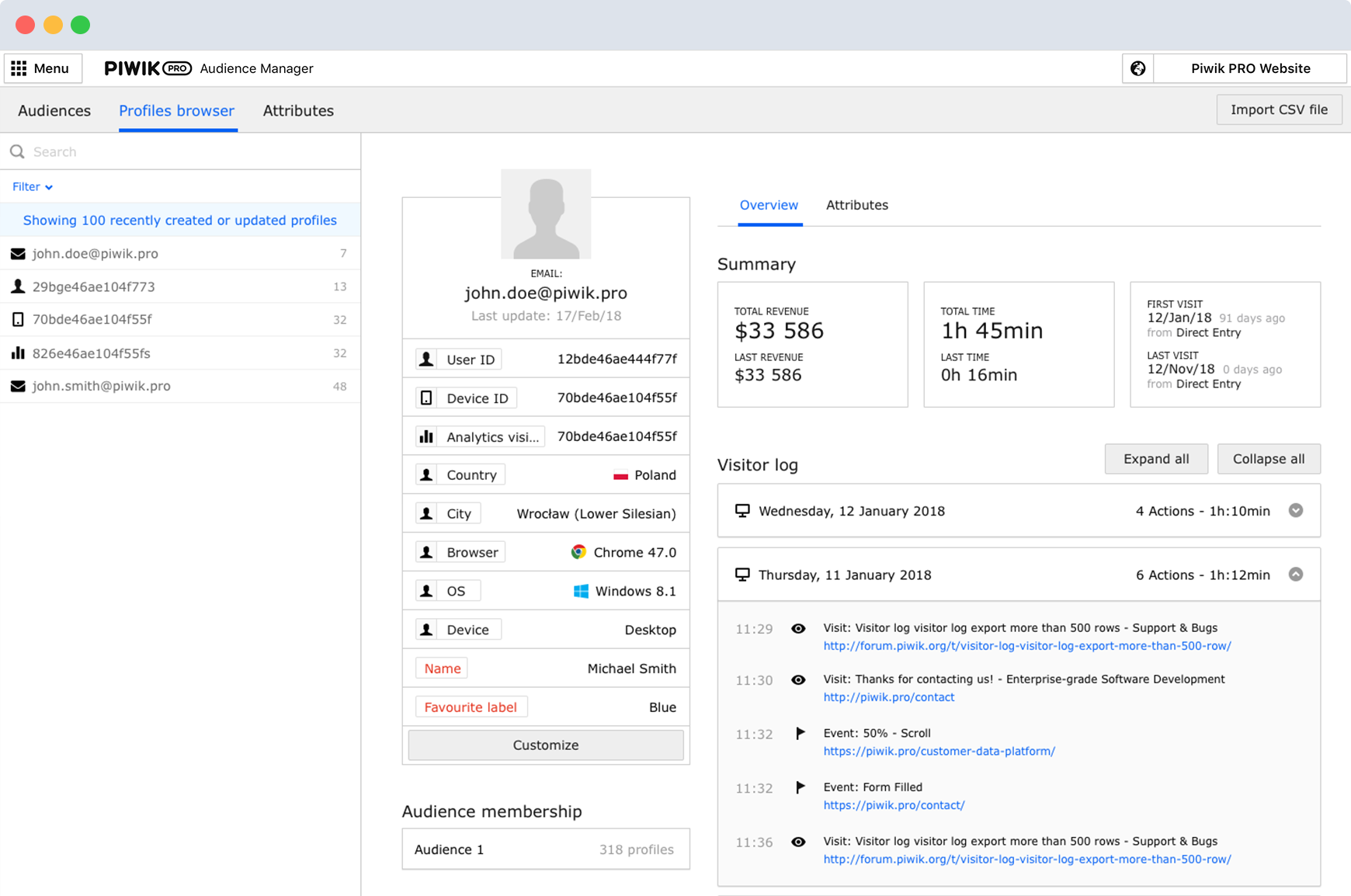    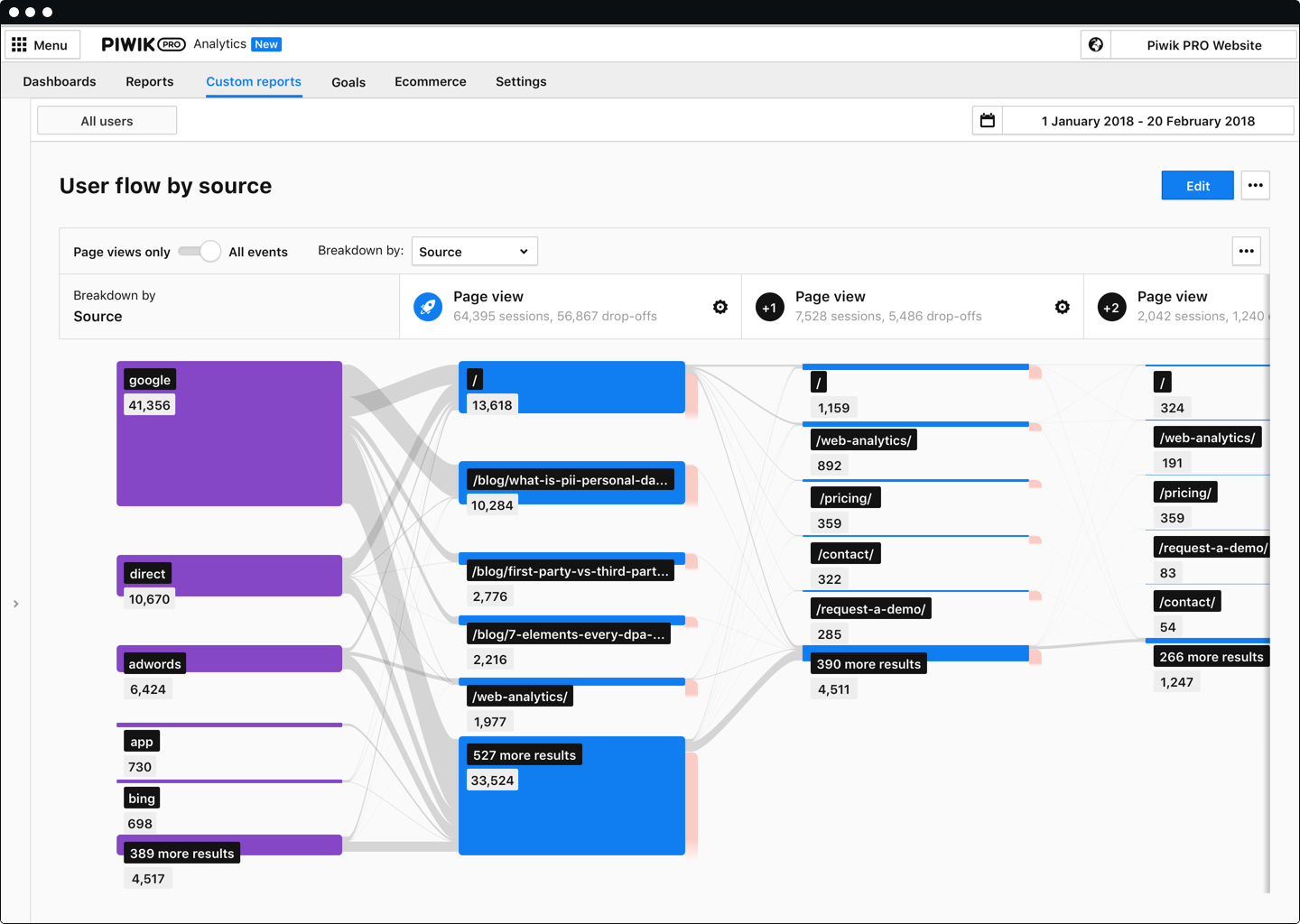  |