Fin is Intercom’s AI Agent for customer service, designed to deliver high-quality answers, even for complex queries. It works with any helpdesk, or it can be paired with Intercom’s next-generation Helpdesk to get the full Intercom Customer Service Suite.
$0.99
one-time fee per outcome
Kustomer
Score 8.7 out of 10
N/A
Kustomer is a customer service CRM platform built for managing high support volume by optimizing experiences throughout the customer service journey. Kustomer was acquired by Facebook in late 2020, but spun out in 2023 and re-launched as an independent entity, Kustomer, LLC.
$89
per month per user
Magnolia
Score 9.8 out of 10
Mid-Size Companies (51-1,000 employees)
Founded in Switzerland in 1997, Magnolia is a CMS used to build composable digital experiences. Magnolia helps create fully integrated customer experiences and speeds up digital delivery of content. Magnolia boasts 480 enterprise customers, thousands of Community Edition deployments, and more than 200 certified Magnolia Partners around the world. They further state that their enterprise customers include Sanofi, Generali, the Atlassian, The New York Times, Harley Davidson, and Union…
$3,500
per month
Pricing
Fin by Intercom
Kustomer
Magnolia
Editions & Modules
Fin with your current helpdesk
$0.99
one-time fee per outcome
Copilot add-on
$35
per month per user
Pro
$99
per month For analysis of 1,000 conversations
Fin with Intercom’s Helpdesk
from $39 + $0.99 per Fin outcome
per month per seat
Enterprise
$89
per month, per user
Ultimate
$139
per month, per user
DX Core
$3500
per month
DX Cloud
$6000
per month
Offerings
Pricing Offerings
Fin by Intercom
Kustomer
Magnolia
Free Trial
Yes
No
Yes
Free/Freemium Version
No
No
No
Premium Consulting/Integration Services
No
No
Yes
Entry-level Setup Fee
No setup fee
No setup fee
No setup fee
Additional Details
Fin comes with a 90-day money-back guarantee. Here's how it works:
Intercom states that users who sign up for the Fin Guarantee Success Program and do not achieve at least a resolution rate of 65% will be paid $1M. This program is designed for high volume customers.
Eligibility criteria:
High volume customers (over 250k monthly conversions) in North America and Europe. Intercom states that phase one of this program will admit customers on Intercom Helpdesk or Zendesk.
All plans require an annual subscription and 8 users minimum.
FIN is great if you need someone to direct the customers based on their problems. You also have the option to use multiple languages if you have a worldwide customer base, so that's great. If you provide enough documentation to feed it, FIN can also solve tickets on its own, which enables your team to focus on other tasks. You can also have him handle conversations in other applications, such as Discord or Slack, and have them create ticket issues in JIRA if your team uses it.
I would say the greatest strength of Kustomer is its flexibility. In the hands of a skilled admin, it can be adapted to tons and tons of different use cases. I've been able to make custom displays for different groups of agents, produce complex cross sections of users, draw interesting data relationships combining marketing contacts and customer-initiated contacts. For example, there's really no other data source in our company which could tell you which users received a specific promo code and checked out with it, received their delivery within 14 days and then can related that to the number of times they contacted us about using our product. At the intersection of communication, marketing, data, and relationship-management, Kustomer shines at the center. I would say it falls short when you are trying to coordinate multiple "side conversations" with multiple sources to resolve an issue. This is a tough task for any type of platform, but if you're maintaining 3 different email chains with a 3PL partner, the customer, and a separate internal conversation, it would be confusing anyway!
Magnolia is a very capable DXP, that provides client with lots of flexibility in composing its own stack. While the core of the platform is a content management system, the open architecture of Magnolia DXP allows it to connect to any platform, allowing client to extend the capabilities. One scenario would be a centralized content hub - where through a single platform, content authors can choose which channel to distribute what content. For example, long form content for consumers viewing on a laptop, short form content for those using a mobile browser. This allow the client to personalized the experience based on channels. Another scenarios would be leveraging on GenAI - using Magnolia's built-in connector to ChatGPT. If that is not the service that one desire, you can always connect to another AI service such as Google Gemini. With GenAI, connected, content author can use AI as co-pilot to help them scale up their content production.
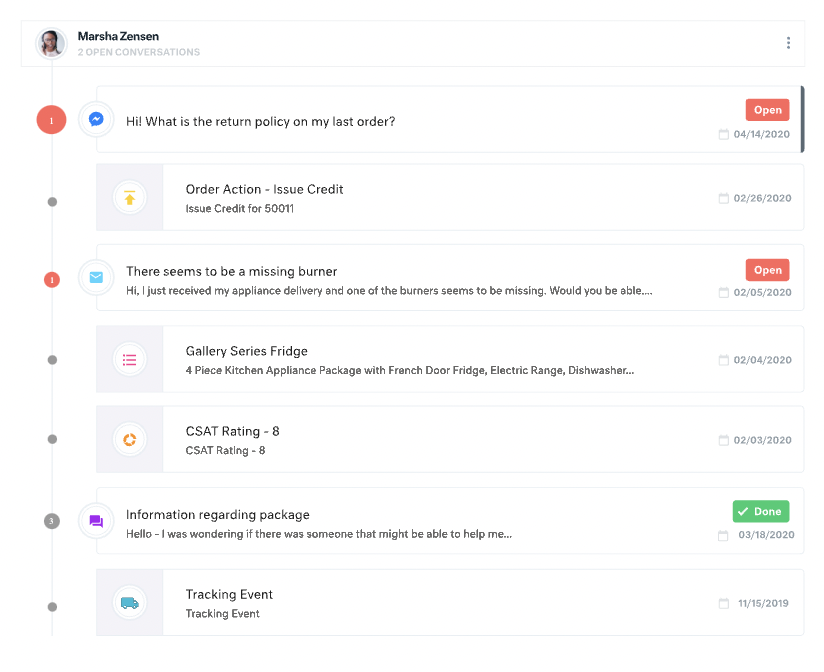
All customer data (past orders, communication with customer service, rewards account data) is in one place. This helps agents avoid confusion and reduces the number of tabs they need to open.
The Knowledge Base (or K Base) is very helpful. Any time we roll out a new policy or have a limited-time promotion, we can add all the relevant information and worksheets there for the convenience of the agents. That way they can stay in a chat while looking up the answer to a question.
We can seamlessly move from chat into email if the customer leaves or the queue times are too long. All the interactions will stay on the customer profile page, so they are kept up to date.
Speed of development - time to delivery from zero to MVP was excellent
Ease of use - the authoring experience is very easy to build and train
PAAS/SAAS - the managed service platform removed the traditional overhead of running in-house technologies, meaning we could focus on value add, with less time spent keeping the lights on.
It seems some users really struggle to figure out how to escalate to a human (especially through email).
Not excited about how "soft" resolutions still count as resolutions and are paid for. Though some abandoned cases appear to be able to be concluded as "the user got the answer they needed", there are others where they clearly didn't, because they just open up another chat (or even more), trying to get more info. This pads the resolution stats and makes it seem more effective than it actually is.
Cost -- Fin is quite expensive. It helps us with scaling coverage, but we're not really saving money.
For our team, the feature that defaults all notes to begin in "done" status is difficult. Throughout each day we need to have notes open and assigned back and forth to different teams, and we have to remember to manually "open" each note. There is too much room for human error with this setting, and it is easy for important notes to be missed if a user forgets to open the note.
Similarly, it can be hard to remember to assign emails/notes to a particular team in addition to a user. We almost exclusively work out of team inboxes, and if someone on Care writes an email to a customer, the email will automatically be "done" when it is created, and it will be assigned to the user who wrote it, but not also to the user's team. There are instances where an email needs to be snoozed for several days/hours with further action needed, and unless the user remembers to assign the email to their team it may "awake" from the snooze and not be visible to anyone except the user who created it. Similarly to my first comment, this leaves a lot of room for human error and is not very intuitive.
Personally, I do not love that all tickets/emails/notes are jumbled together in the same inbox. While this gives visibility to everything on the "to do" list at the same time, it can be visually overwhelming. We have created unique folders for certain types of projects or categories of work, but have experienced tech glitches or just the awkwardness of another step to manually read the note, determine what type of category it is, and then manually assign it to another folder. Would love to have things auto-sort and take out this manual lift.
I love the idea of the autopilot setting, but we have not been able to use this for our work because it sorts items based on time, and not based on priority. In our line of work, we may have an urgent situation arise that needs attention before an email that was sent in 60 minutes ago. The autopilot feature would push the email to my associates sooner than it would the urgent situation from 5 minutes ago. Due to this, we manually monitor inboxes and assign work to ourselves and others.
The documentation provides samples that are often out of context, and difficult to know where the provided example code should be implemented. More tutorials providing the full project or step-by-step instructions on how to implement subject material would help greatly. Baeldung is a resource I would consider the gold standard in how this is done in other spaces.
The use of JCR and Nodes makes object serialization/deserialization painful. Jackson compatibility or similar would be a welcome enhancement to the developer experience. Maybe leveraging code-gen from light modules to build model classes when possible could help accomplish this.
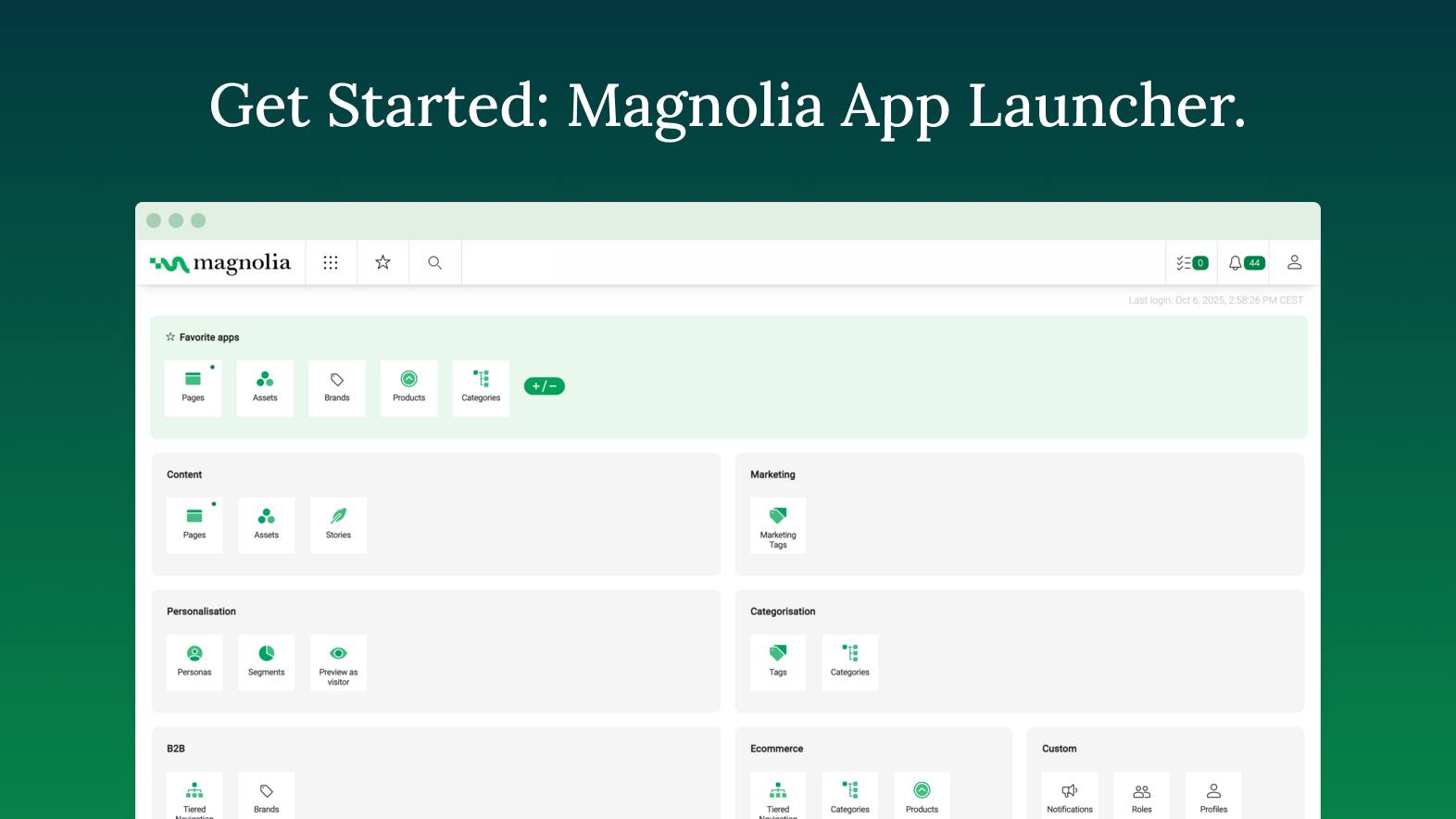
Modifying the home layout from light modules is frustrating. It seems that any configuration overrides made merge with the default rather than overwriting, which makes for a difficult combination of guess-and-check while referencing the documentation to see what should be in each row/column when making changes.
Including "mark all as read" or "delete all" in the notifications app would be a great quality of life improvement. It seems that by default, users have to individually select messages and operate them.
We have been and will be continuing our journey with Intercom and nothing too concerning has happened that I have experienced or heard of that has us on the edge yet. If it ever happens it will be something along the lines of "Outgrowing" the use of need of the platform.
The core experience is solid but the key friction across our team is that there are so many new features for improving Fin are being launched. Content improvements, guidance settings, recommendations, trends, and monitors are each useful in isolation, but they sit across separate areas of the platform with no clear starting point. The recurring feedback from my team is that it is hard to know where to focus. A consolidated "Improve Fin" section could really improve the experience, the ideal option would be a training page where our team could improve Fin in one place, ideally by answering questions and Fin would then be able to add those details in the right place, where it's creating new guidance or building procedures. I feel that would make uptake a lot quicker.
There is a learning curve, but it is more than worth it, especially to have a dedicated resource pointed at Kustomer and any other software it interacts with. The basic implementation is useful, and powerful - certainly a MASSIVE upgrade over taking care of your customers in an email inbox or shuffling between multiple windows and applications! It is also set up really well to grow and reconfigure with your business. I'm a big fan.
We've shown it to a number of users both clients and our own team and despite initial apprehensions, they "get it" very quickly. It's intuitive and friendly and quick to perform daily tasks. We once had a client tell us "Using Magnolia makes me smile" which says it all for us.
I gave [it] 7/10 only because of the loading time of pages. Otherwise, I think it deserves an 8. Normally this is not an issue per [se] but considering the rating matrix and as I have been asked to honestly write about it. Yes, the page loading times could be improved.
I can get help by asking Fin questions about itself. It answers accurately, citing its own Help Center resources with visuals. It can reason and dialogue well. But when it comes to getting human support for Fin, it is not as quick. It can sometimes take a few days. They are polite and well-meaning. Some things aren't their fault (product limitations), but there was one occasion where something took a long time to resolve with lots of back and forth but it was I who found out the error in the end that they missed, so they didn't really help resolve it.
I did not reach out to Kustomer support when we had an issue. Still, whenever we provide feedback to our manager regarding what can improve based on our experience using Kustomer, our manager always comments that Kustomer support always replies with some positive feedback based on our suggestions.
You always get an answer based on your SLA. But you always get a solution. That's the successfactor in this case. To often i was frustrated about people in a company without even a clue what there product is about or how to solve a problem. Magnolia's Support Team does a very good job and try to help you in most of the cases
Although we have not utilised a specific chat box like Fin before in other websites, we have used ChatGPT and Claude within our general work. Our Product and Engineering team make use of Devin within Azure Dev Ops to support with their work. However, Fin is the most suitable for what our Support Team requires as this can be integrated into our chat with customers.
Apps like Intercom, Zendesk, and Gorgios all treat customer inquiries as tickets, just tracking that one issue or interaction with a customer. Kustomer treats each customer as an individual, which allows us to provide top-notch customer service. Customers love that we're able to be more conversational and informal, while still solving their issues quickly. It also helps us build relationships with customers and increases repeat orders.
I've used several CMSs like AEM and EpiServer, and comparatively, they all excel at different things. Magnolia is the best to develop for/against. Episerver has the best/most fluid UI in terms of content editing, and the overall admin experience AEM is just all around sucks.
New role opportunities — Using the “Fin-first” approach has reduced the workload for our Tier 1 team, giving them more time to focus on their own career growth. It’s also opened the door to a dedicated, AI-focused role, where a team member regularly reviews Fin’s answers and makes updates to help it perform even better.
Enabling Fin has also reduced our response time and allowed us to meet SLA's.
We’re getting so much positive feedback — which is not something you traditionally associate with a customer care team — because we’re making it effortless for customers to deliver both positive and negative feedback, and we can now resolve the bad feedback really really quickly.
Primarily from our increased efficiency with Kustomer, we’ve seen a significant reduction of $3 to $4 for every cost per contact.
Magnolia has brought about positive impacts. For instance, we need not outsource web design and marketing services because thanks to this software, we can handle most work inhouse
The software is affordable with no compromises on capabilities and therefore it is gives us value for money.