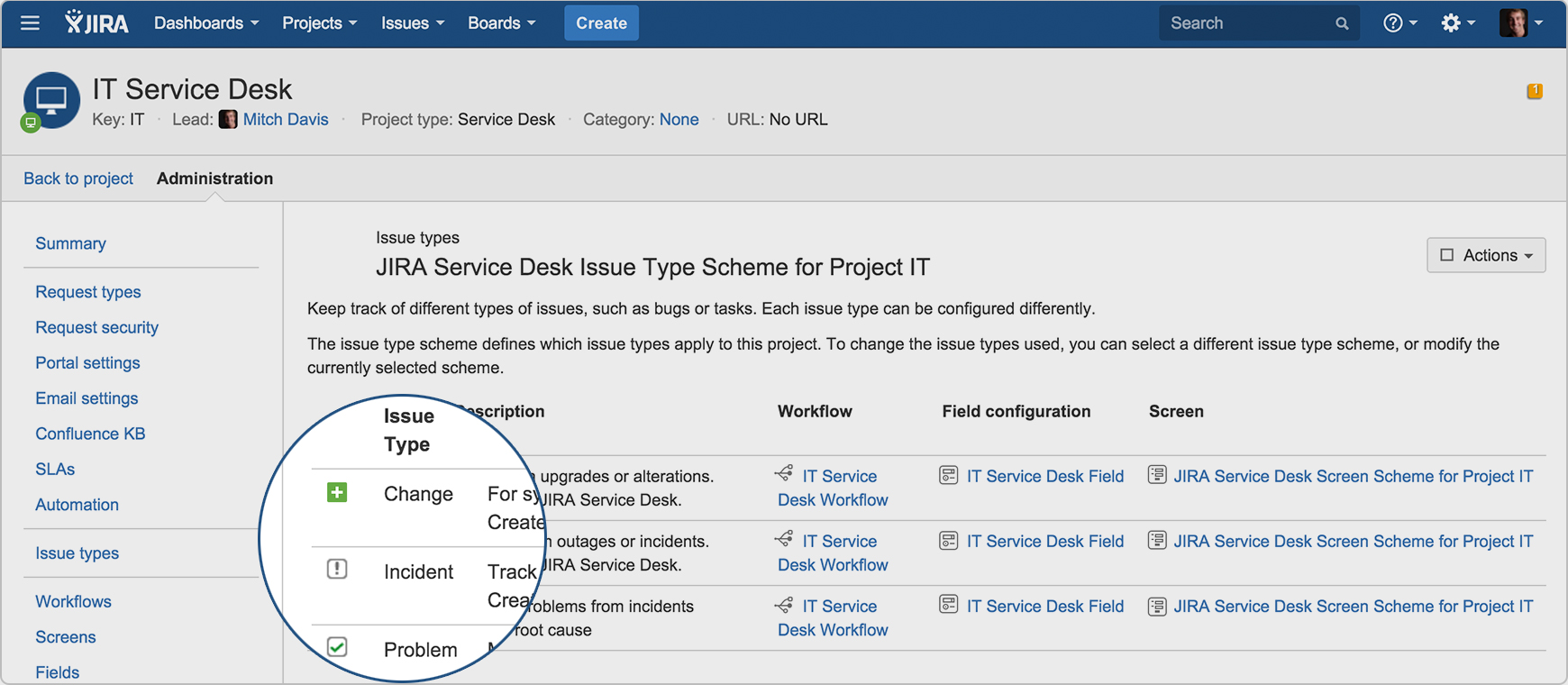
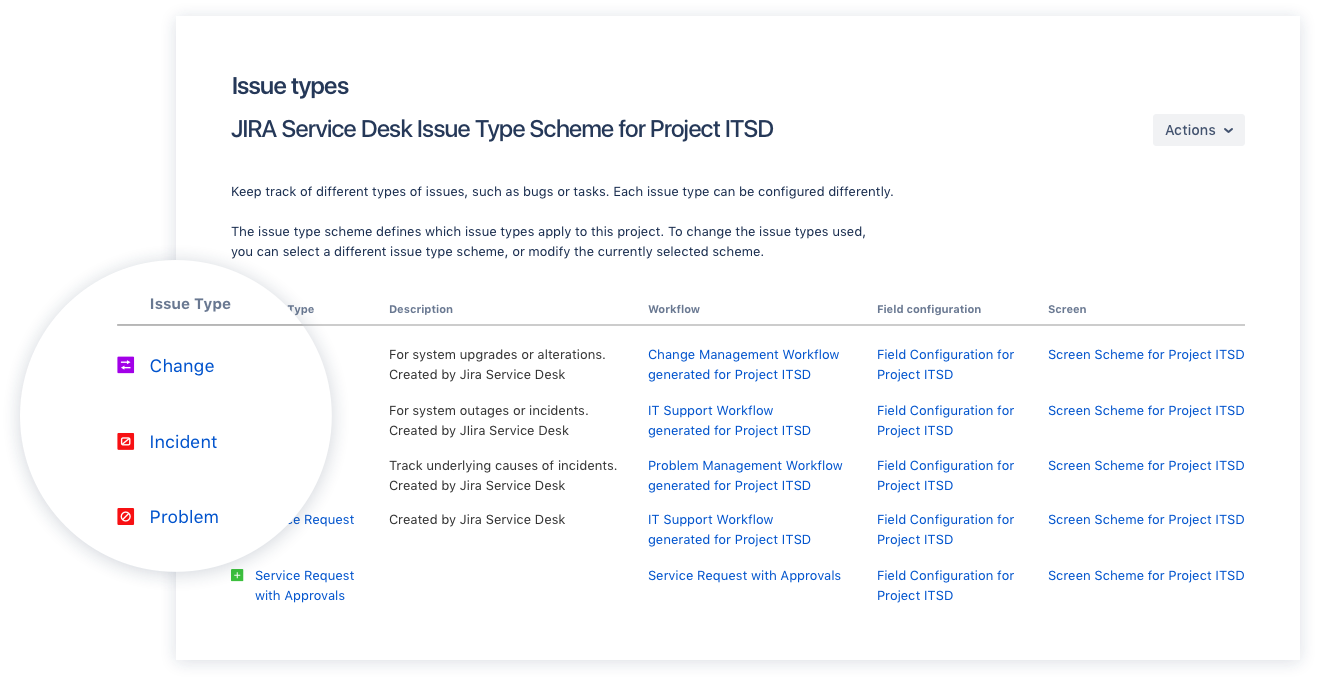
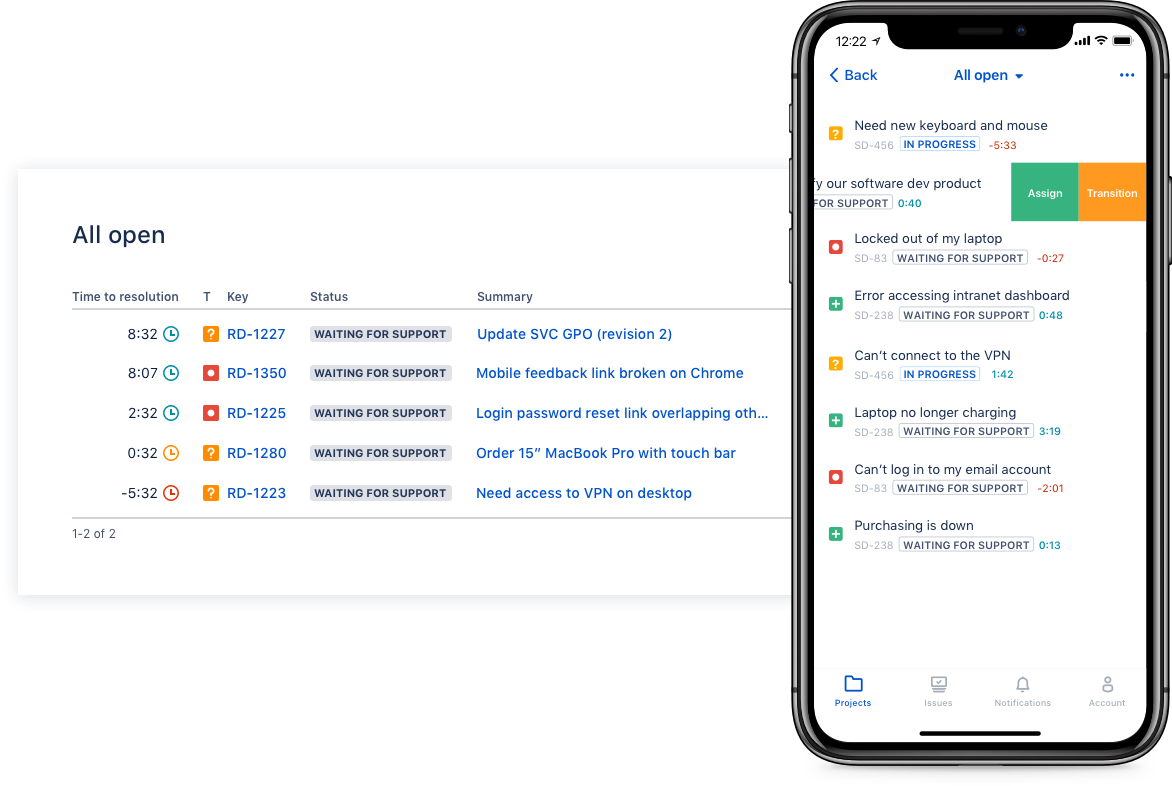
Jira Service Management (formerly Jira Service Desk, now including features from the former Mindville Insight, acquired by Atlassian in June 2020) is a service desk software that is purpose-built for IT, service, and support teams. The software provides everything IT and support teams need out-of-the-box for service request, incident, problem and change management. Jira Service Management integrates seamlessly with Jira Software so that IT and development teams can work better together. Users…
$0
per month
Oracle Service
Score 8.2 out of 10
N/A
Oracle Service is the help desk and customer experience management platform from Oracle. The technology was developed and supported by RightNow Technologies as RightNow CX for cloud-based call center automation, until that company's acquisition by Oracle in 2011 for about $1.5 billion.
N/A
TOPdesk
Score 8.4 out of 10
Mid-Size Companies (51-1,000 employees)
TOPdesk is the flagship highly-modular cloud-based or installed ITSM service desk and asset management solution from the Dutch company of the same name, for enterprise companies.
$76
per month Per agent
Pricing
Jira Service Management
Oracle Service
TOPdesk
Editions & Modules
Free
$0
per month
Standard
$20
per agent/per month
Premium
$40
per agent/per month
Enterprise
Contact sales team
No answers on this topic
Essential
$76
per month Per agent
Engaged
$109
per month Per agent
Excellent
$155
per month Per agent
Offerings
Pricing Offerings
Jira Service Management
Oracle Service
TOPdesk
Free Trial
Yes
No
Yes
Free/Freemium Version
No
No
No
Premium Consulting/Integration Services
Yes
No
Yes
Entry-level Setup Fee
No setup fee
No setup fee
Optional
Additional Details
—
—
The TOPdesk license model:
- Modular: Organizations purchase only the modules needed
- Saas or On premise
- Supports unlimited number of assets.
- Service agents based.
- Discount available for annual pricing.
It was the most complete package, requiring the lesser adjustments compared to the others, had the most options to tailor to our specific needs, and the price for the Cloud hosted version was fair.
I think JIRA is best suited for IT tickets and service requests. Comparison is hard, but I use JIRA on a daily basis and I cannot think of a better alternative for the task we are using it for.
The biggest benefit that I see using Oracle Service Cloud is in terms of the technology stack that it uses. This translates to ease of access to resources regarding the skill sets that organizations need to maintain the product.
Oracle Service Cloud stay on top of my list. Well, also because I was part of the technical implementation. I have had more possibilities on this especially SaaS solutions do not give so much freedom for customization. It is really important to have a solution that really …
TOPdesk
Verified User
Advisor
Chose TOPdesk
TOPdesk has all the modules we need, without being overly complicated.
TOPdesk is easy to understand, flexibel and ready to grow with you as an organization.
Verified User
Employee
Chose TOPdesk
More features, better support.
Verified User
C-Level Executive
Chose TOPdesk
Topdesk was the more complete product for us (e.g. it has a CMDB - We use JIRA in our development teams but it has no CMDB integration.). It has a reasonable TCO: an OK price, easy installation, implementation and configuration (it is not too complex) and easy to use for end …
I think using a ticketing system is very easy to use and allows multiple teams to create help desks in the same portal. In terms of internal usage, I think this is a great option. However, suppose you're trying to keep internal items and external helpdesks in the same instance. In that case, this is not ideal, as there is no effective way to separate the two instances to protect internal data better.
Oracle Right (Oracle Service Cloud) was an important evolution in the group's ombudsman channel management processes. We brought the Oracle Service Cloud to digitize the processes for capturing and managing the group's ombudsman channel, no longer operating manually (MS Excel).
Oracle Service Cloud (Right Now) brought about an important evolution in the management processes of the group's ombudsman channel, where activities that were performed manually, repetitively and with risk of errors, are now operated by the Right Now platform itself, whether by API, or by automation of the tool.
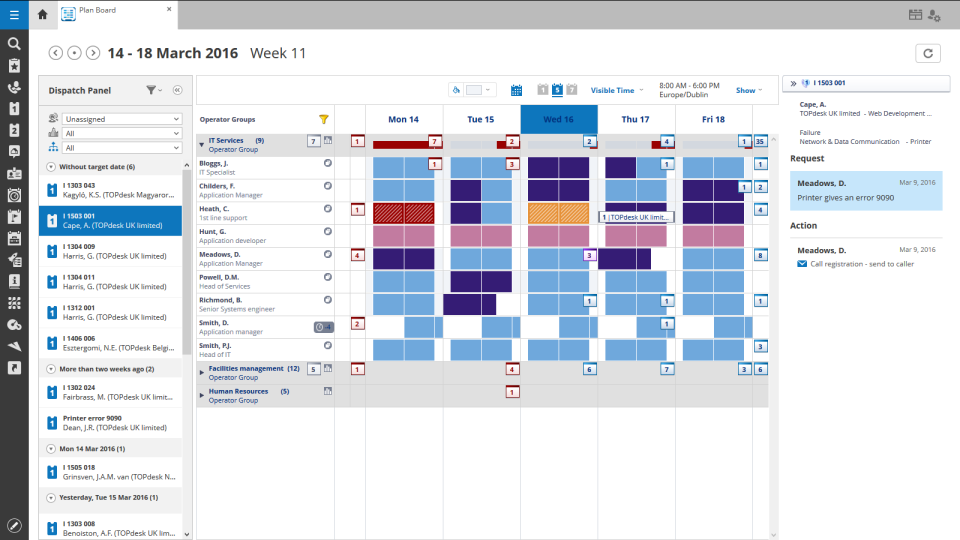
We had a smaller team of 6-7 people and for us it was perfect. It was very easy for us to book time per ticket and keep track of what we were spending the most of our time on. Escalating tickets was easy because of the prebuilt emails and message saving features. The typical features are all there of course such as incident, project management, etc. TOPdesk is highly customizable and we felt like we always had a good oversight of the KPI's, time management and customer satisfaction ratings. Our management liked the reporting features, the customizable dashboard and the data visualization. In my personal experience, TOPdesk also had the best search feature, and with the tags we were also very easily able to find the tickets we needed.
Integration with many of the most common tools companies are using (Slack, MS Teams, Salesforce, ... etc)
Natural workflow with Jira (as product development / project management tool) which makes the full fix and follow up of the tickets / issues very easy to follow
Allow multiple different entry points and work flows for as many different needs your teams / company have
Oracle Service Cloud needs a better built in integration with Oracle Social Cloud or it needs to build in more Social network capabilities.
SMS is handle via a third party application but could be built in as part of the product.
The knowledge foundation product needs a better way to handle multiple languages. Currently you have to purchase an additional interface for each language. You can purchase the more expensive Knowledge Advance which does have a better language feature.
In the current contect the requirments is around having a tool that is focused and can handle large ticket volumes and tracking incident, problem and user requests concerning end users. Jira has built in functionality to address the above practice needs faily easily and has a substantial amount of customizable reports for generating the relevant intelligence.
Although RightNow is extremely flexible, the flexibility comes with a price. It is often not intuitive which settings you need to change (and under which menus these setting are buried) to enable the system to do what you want. Also, sometimes the system can do things you need, but you don't initially realize it. When RightNow sells a system to a new customer, I think it should come with X hours of consulting time with a RightNow expert. The customer should be able to consult with this expert over the next year to get advice concerning how to configure the system to achieve desired needs. Often RightNow Support would just answer "no" when I asked if I could do something, but then I would find another way to achieve my goals after talking with other companies using RightNow.
It just works, has some continuous development and an easy-to-use interface, which is important especially because not all our colleagues are technical experts (or in other words, "capable of more than switching on and off the computer"). We use a large range of functions and therefore it would be really hard to replace TOPdesk in our company.
If you're used to other tools in the Atlassian ecosystem, you'll feel right at home with JSM. It's also a platform that technical folk can easily pick up. However, I wouldn't recommend using JSM as a company's first jumping off point into Atlassian. There are a lot of other 'newer' tools that provide sleeker ITSM systems at a similar cost.
The learning curve is fairly steep; but for something that has this much capability, it's nearly impossible to make it "easy". The layout and organization are at least reasonably intuitive. The hardest part-- the "weakest link"-- is the portal development (where you can build help centers and other end-user pages.) The capabilities there are significant, but the learning curve for that part is especially steep and it takes a fair amount of expertise to be able to update it.
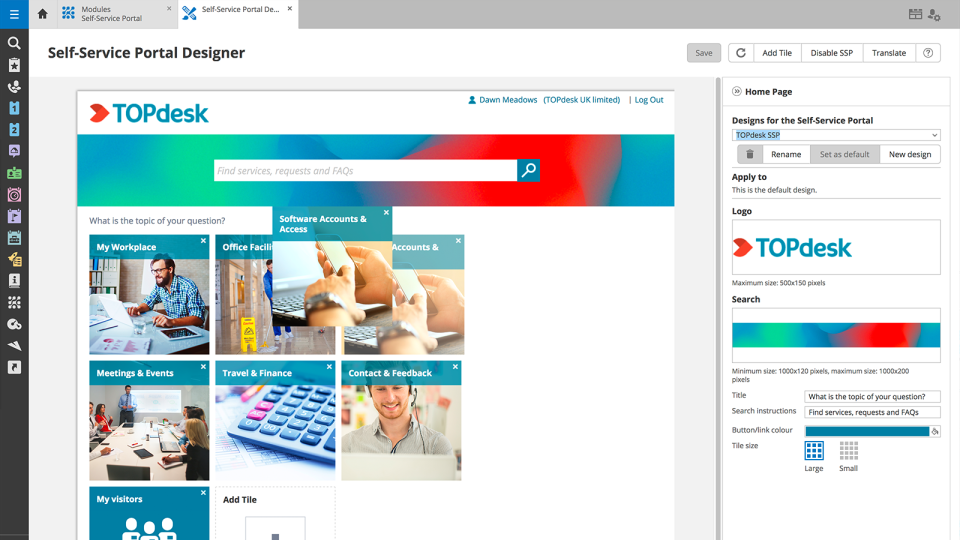
In short, we've been able to remove many pain points, automate multiple things, and empowered the end-user by being able to manage more items via the Self Service Portal. We've been able to do more than we were able to do with our previous ITSM platform. The TOPdesk development team added some things recently that will allow us to make some other things more efficient.
Like I said somewhere else in this review: the helpdesk of TOPdesk is top of the bill! In the Netherlands, that is. I can not plea for the helpdesks in other countries, but I guess the TOPdesk organization will make sure the quality of the helpdesk is the same in every country.
We use a lot of tabs and fields on our incident workspace, which should slow the system down, but it's still quite fast, and we continue to optimize whatever is possible.
Although being a SAAS solution, TOPdesk performs pretty fast. One can imagine that any SAAS solution is slow or has hiccups, but we have not experienced such with TOPdesk. Pages load quickly, logging in goes smoothly. We have made reports on premise in the past - that always took some time, as you might expect with such complex tasks. It seems that in the SAAS solution TOPdesk somehow has managed to make it even faster!
I gave JIRA a 9 rating since for me JIRA works according to its purpose. Since there is a customer portal, our clients can leave a comment or communicate with us using the PR ticket that way it is easier for us to also request any additional information we need for our investigation.
Technicians seem to be assessed based solely on how quickly they close the issues. I've had to reopen requests multiple times because they didn't actually solve my problem. Also, when the issue has even a moderate amount of complexity, the technicians often instruct me to "open another SR" to handle the other issue. I'm the customer, I shouldn't have to follow their processes, they should handle that for me. But even when I create the new SR, it seems like their right hand isn't talking to their left - they aren't reading back to the previous issue for context. So I get bounced around a lot, and I have to tell them how to do their job
Most if not nearly all questions are answered within the same or a few days. The helpdesk is very knowledgable about their product and are always willing to help. The only downside is that for more difficult questions it can take a while due to the experts being further removed from the helpdesk. But they are always willing to answer questions, even if they are not directly related to a problem with the service.
Most of our training was given while doing user acceptance testing, and getting the system approved by the market. When ever we were in doubt, our implementer helped us along. Later on we started exploring by our selves.
We had Topdesk in-house here training staff for almost a month (2-3 hour meetings 3x a week.) It was invaluable and we were able to take that training and share with the rest of our IT staff. Once implemented we were able to fly from there. The challenges we found were in how to get started. Once started the knowledge base offered from Topdesk has been invaluable.
Online training documentation is easy to access and consume. There is no real challenges with finding information on how to use the product and some really helpful knowledge base items that show us how valuable these options are in our own implementation of it. The online training we've used has been self driven
Work with a RightNow expert during the implementation. Explain features that would you like to have. Often, somebody who really knows the system can show you what you need to do to achieve the desired results. Where a RightNow support engineer or a consultant might say "the system can't do that," a RightNow application engineer will listen to what you need, and often come up with an alternate path to achieve it
It was a challenge to port over years of the same thing and we ended up keeping old ideas in Topdesk that we will eventually weed out as time passes and we learn how users view categories and flows of tickets. Planning is key but bear in mind that just because you used to do it this way doesn't mean you still have to
Zendesk is a similar ticketing system that our organization used before JIRA Service Desk. The main drawback of Zendesk was that it can only be used as a cloud service. This means that our company data would be living on the internet at the hands of their security team. Another drawback of this is the price is significantly more expensive rather than hosting it yourself. Zendesk does have some additional features such as commenting on multiple tickets at once that JSD does lack. However, switching to JSD was significantly more cost effective because we have the ability and the infrastructure to host our own ticketing system, something that Zendesk could not provide. Ultimatley switching to JSD saved us money and allows the ability for integration with all of the other Atlassian Suite products that we use on a day to day basis.
TCS' customers who also selected Oracle Service Cloud over Salesforce Service Cloud and GE's ServiceMax in the Mfg. vertical in which I work, did so because of the robust ability of Oracle Service Cloud and its APIs to integrate with other value-add solutions for manufacturers such as IoT applications, Big Data Analytics, and Field Service applications.
Spiceworks is an easier-to-use Help Desk solution but it lacks all other features that Topdesk has. Freshdesk was just too much for our environment. It was cost-prohibitive for our intended use. TOPdesk fit our org size and budget better than the others.
TOPdesk is very flexible and scalable. Every department in you organization can you the software. Perhaps some persons need some training, but that can be provided by TOPdesk ot some keyusers.