Optimizely Content Management System (CMS) is purpose-built for marketers, and fully composable for developers. The CMS supports the end-to-end content lifecycle, helping users to deliver on-brand, high-impact digital experiences that 'wow' audiences.
N/A
Paligo
Score8.7 out of 10
N/A
Paligo is a component content management system (CCMS) that helps teams manage complex technical documentation through structured authoring, content reuse, and controlled publishing.
If you want to build a website quickly there are plenty of ways to do so with some great examples and plenty of support both from the company and in the forums. if you want to build a more complex structure you can but be ready to spend the time to build exactly what you need as a solid foundation goes a massive way before building out content and making those choices early and sticking with them helps
A de minimis incentive was given to thank the reviewer for their time. The incentive was not used to bias or drive a particular response, nor was the incentive contingent on a positive endorsement. TR verified that a representative sample of customers was invited. More Info
One of the biggest strengths is the structured authoring, which not only gives clean content for users but is also well-suited for providing AI content. I also make good use of content reuse, which simplifies maintenance and documentation updates when features change. The taxonomy has allowed me to create versioned documentation on our site that correlates with customers' installed software versions. We're switching over to using the API for publishing to our website and that will be a nice switch from the publication structure we've used previously. The tool doesn't, at this time, allow me to connect it to a custom GPT or create one that would be based on our style guide. There also isn't an MCP server option to work better with my Claude configurations.
A de minimis incentive was given to thank the reviewer for their time. The incentive was not used to bias or drive a particular response, nor was the incentive contingent on a positive endorsement. More Info
I think the user interface for content admins is very good and very competitive. And compared to other providers, the technology that CMS in particular has. So the way it integrated the net ecosystem is very well because it follows the MBC pattern. So basically it just allows really simple implementations for what would normally be complex components on any other sort of vendor that's out there.
A de minimis incentive was given to thank the reviewer for their time. The incentive was not used to bias or drive a particular response, nor was the incentive contingent on a positive endorsement. More Info
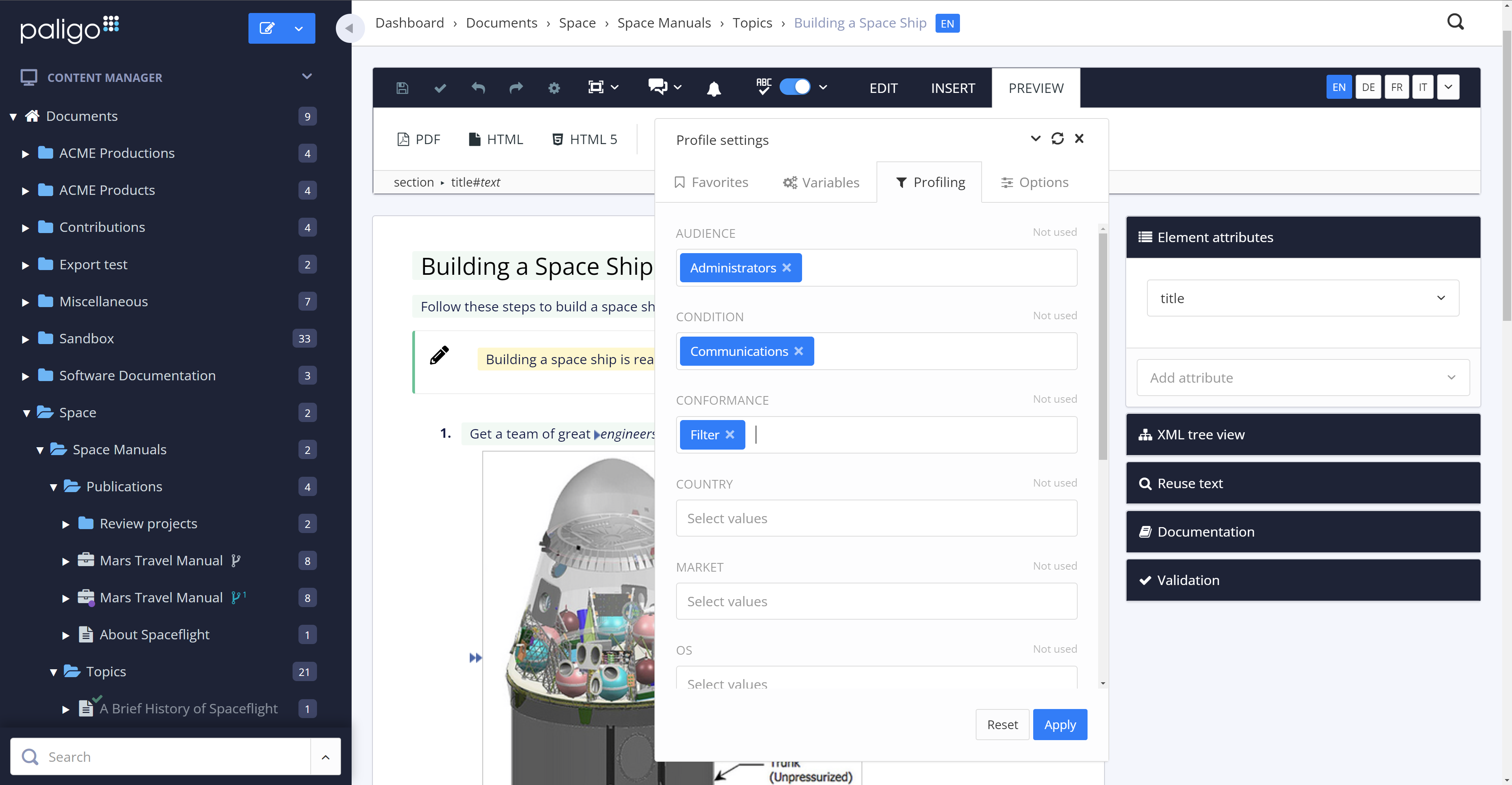
The review mode is super convenient. Comparing a snapshot of the previous versions with the current one clearly outlines the respective changes and reduces the necessary content to review tremendously.
The option to reuse text fragments is another handy feature. Text fragments will be updated whenever the original text fragment is altered is also extremely helpful.
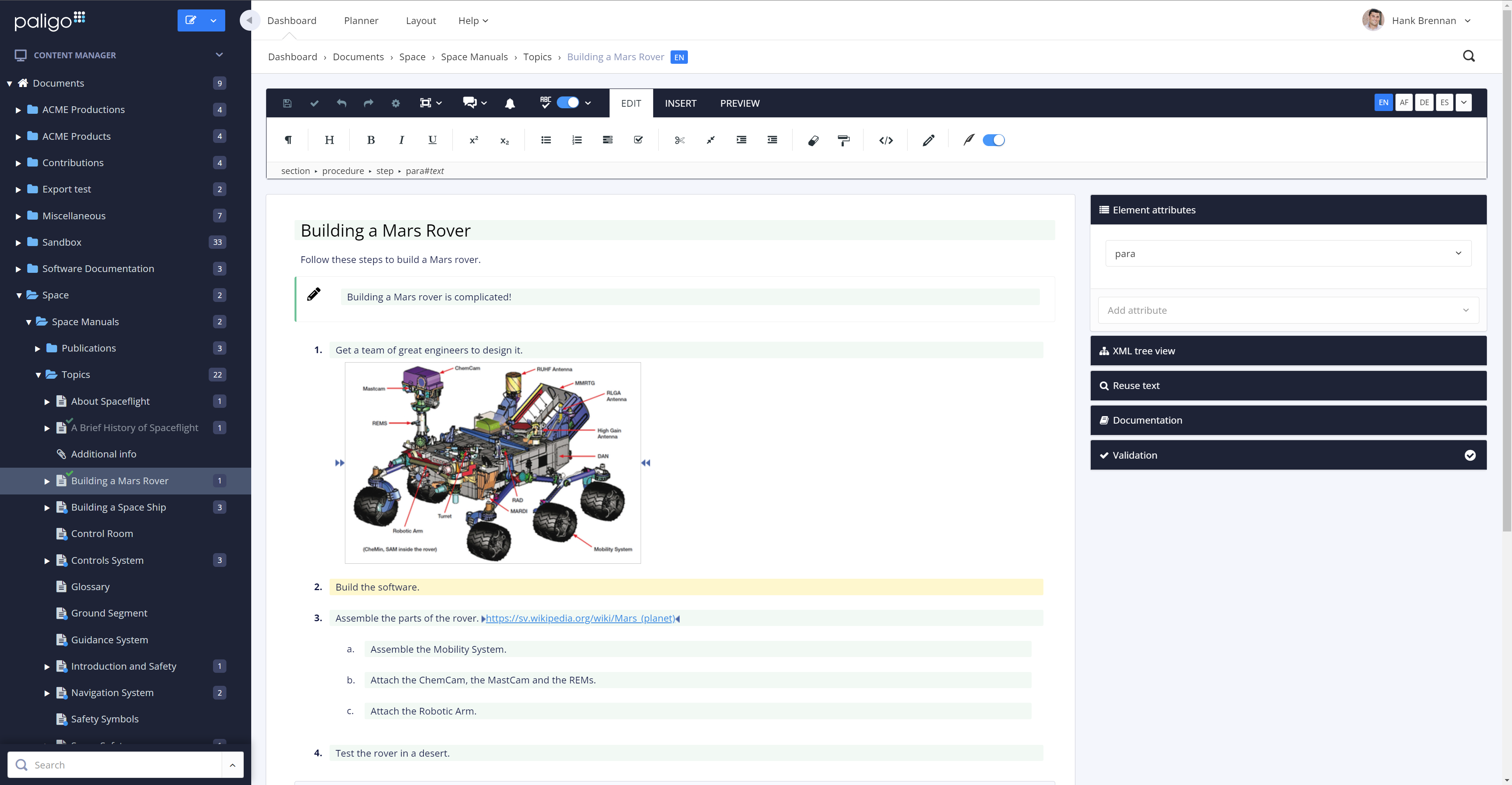
Managing a content's structure was never easier. An intuitive drag & drop functionality allows you to design your document's structure however you like.
You can also fork content, in addition to reuse text fragments. This is another helpful option that no longer requires you to create repetetive chapters over and over.
A de minimis incentive was given to thank the reviewer for their time. The incentive was not used to bias or drive a particular response, nor was the incentive contingent on a positive endorsement. More Info
Magento did have some nice tools for creating product groups or carousels for promotion. Opti seems to be lacking in that.
A blog - maybe this is available and we don't have it installed, but a searchable blog would be very appreciated.
Structured Data/MicroData - maybe it's our install, but this seems to be missing
Meta data: we have access to limited types and need to make a request from IT, it would be nice to be able to access more to adjust for SEO needs.
When in a folder on the BLOCKS tab, it would be wonderful to hit the MEDIA tab and stay in that same folder.
I have some less technical people that will make folders with spaces - which Opti handles, but it would be great if it wouldn't accept a space or gave an error message not to use them.
I think I know why the extra code is added to urls and image links, but it causes issues when taking things from our testing site to the live site. For example, I need to copy the Navigation from Inspect Element on testing to put it in production. I have learned to work around it, but it's not my favorite.
A de minimis incentive was given to thank the reviewer for their time. The incentive was not used to bias or drive a particular response, nor was the incentive contingent on a positive endorsement. More Info
The amount of CSS/JS required to customize a site's appearance can be cumbersome
Product documentation can be lacking, specifically with integrations; in some cases, support offered no real help when trying to solve a problem with an integrated service
Some features require extensive development experience to use, which can sometimes be an obstacle to less-experienced team members
A de minimis incentive was given to thank the reviewer for their time. The incentive was not used to bias or drive a particular response, nor was the incentive contingent on a positive endorsement. More Info
Since I work on the implementation side of things, and do not directly own licensing for Ektron CMS, I have to base this rating off of how I think it will be received or presented to customers looking to start a new site deployment. I try to remain CMS agnostic, though my specialty is with the .NET and Microsoft stack. Because of the experience I have working with Ektron, I tend to be more forgiving with the shortcomings as I am familiar with how to work around them or past them from experience. Being familiar with the community available also helps, as you become familiar with the best approaches to find solutions to your issues. Each product has it's ups and downs and all of them are only going to be as good as the company or development team implementing them can make them. This is EXTREMELY important to remember when choosing a CMS, as it can make or break your expensive investment.
A de minimis incentive was given to thank the reviewer for their time. The incentive was not used to bias or drive a particular response, nor was the incentive contingent on a positive endorsement. More Info
From our editors perspective they find the CMS system easy and to clear to use. Our developers find it very easy to design on and appreciate the level of service support available. It's also always evolving and getting better every year. We find this investment reassuring and encourages us to try keep pace and see how we can continue to push the envelope and continue to improve all aspect of our websites and online touch points.
A de minimis incentive was given to thank the reviewer for their time. The incentive was not used to bias or drive a particular response, nor was the incentive contingent on a positive endorsement. More Info
Reuse feature was the main reason for selection Paligo. It is the most powerful feature for us as now we have only one source of content that is used in all other documents through reuse. Makes it very easy when we need to update the content (in some cases at least once a quarter) and batch publishing makes it very easy to publish 100s of documents in one click
A de minimis incentive was given to thank the reviewer for their time. The incentive was not used to bias or drive a particular response, nor was the incentive contingent on a positive endorsement. More Info
I attended multiple trainings/tutorials early in the process. The vendor-supplied content about Optimizely was engaging for users/attendees (I often analyze training content, compliance programs, governance plans), which helps our OCM people by having good "word of mouth" about the product long before a rollout ever happens. I actually when the user-focused portion of the Optimizely Academy twice in 2022 to ensure I had a grasp on operability and to be able to support the training and OCM efforts
A de minimis incentive was given to thank the reviewer for their time. The incentive was not used to bias or drive a particular response, nor was the incentive contingent on a positive endorsement. TR verified that a representative sample of customers was invited. More Info
All the support requests I've submitted have been resolved in one way or another. Sometimes it takes some back and forth, which is to be expected. This is where being on a different continent becomes a drawback. Since we became Enterprise users, we've also had an additional level of help and support from a dedicated account manager in the US, and the resolutions seem to come more quickly
A de minimis incentive was given to thank the reviewer for their time. The incentive was not used to bias or drive a particular response, nor was the incentive contingent on a positive endorsement. More Info
Ektron is one of the best solution for .Net platform. Over the years have improved the performance issues that the previous versions had. My only complain is right now you can't do Page builder pages if you choose to have a MVC architecture
A de minimis incentive was given to thank the reviewer for their time. The incentive was not used to bias or drive a particular response, nor was the incentive contingent on a positive endorsement. More Info
A de minimis incentive was given to thank the reviewer for their time. The incentive was not used to bias or drive a particular response, nor was the incentive contingent on a positive endorsement. More Info
Optimizely Content Management System is much more feature rich, and less complex that the other CMS platforms we have used. Optimizely Content Management System is more intuitive in how the content is structured and how easy it is to pull blocks of content to create the layout of a page.
A de minimis incentive was given to thank the reviewer for their time. The incentive was not used to bias or drive a particular response, nor was the incentive contingent on a positive endorsement. More Info
We moved from Flare to Paligo. One of the main reasons was the fact that Paligo is a cloud product. Collaboration with anyone outside of our team was more difficult with Flare. Also, maintaining a server for Flare content was going to become an issue, and overall I felt the Flare desktop product was prone to errors and issues. The flexibility of assigning Paligo licenses was a huge factor, as was the stability of the cloud platform.
A de minimis incentive was given to thank the reviewer for their time. The incentive was not used to bias or drive a particular response, nor was the incentive contingent on a positive endorsement. More Info
A de minimis incentive was given to thank the reviewer for their time. The incentive was not used to bias or drive a particular response, nor was the incentive contingent on a positive endorsement. More Info
I am not involved in the financial decisions for my company regarding Paligo; the decision to migrate our content to this environment predates my hiring. However, I know that the migration effort from WordPress to Paligo was an initially heavy lift, but any content migration effort would be. I believe that ultimately, getting our content out of WordPress was a positive move, and I look forward to seeing what Paligo will help us accomplish in the future. Sorry, no hard numbers from me. :)