Storify was a social curation platform that collects updates from social networks, to create a new story format that is interactive, dynamic and social. It was acquired by Adobe, and has been retired (May 2018).
N/A
Uberflip
Score 8.2 out of 10
N/A
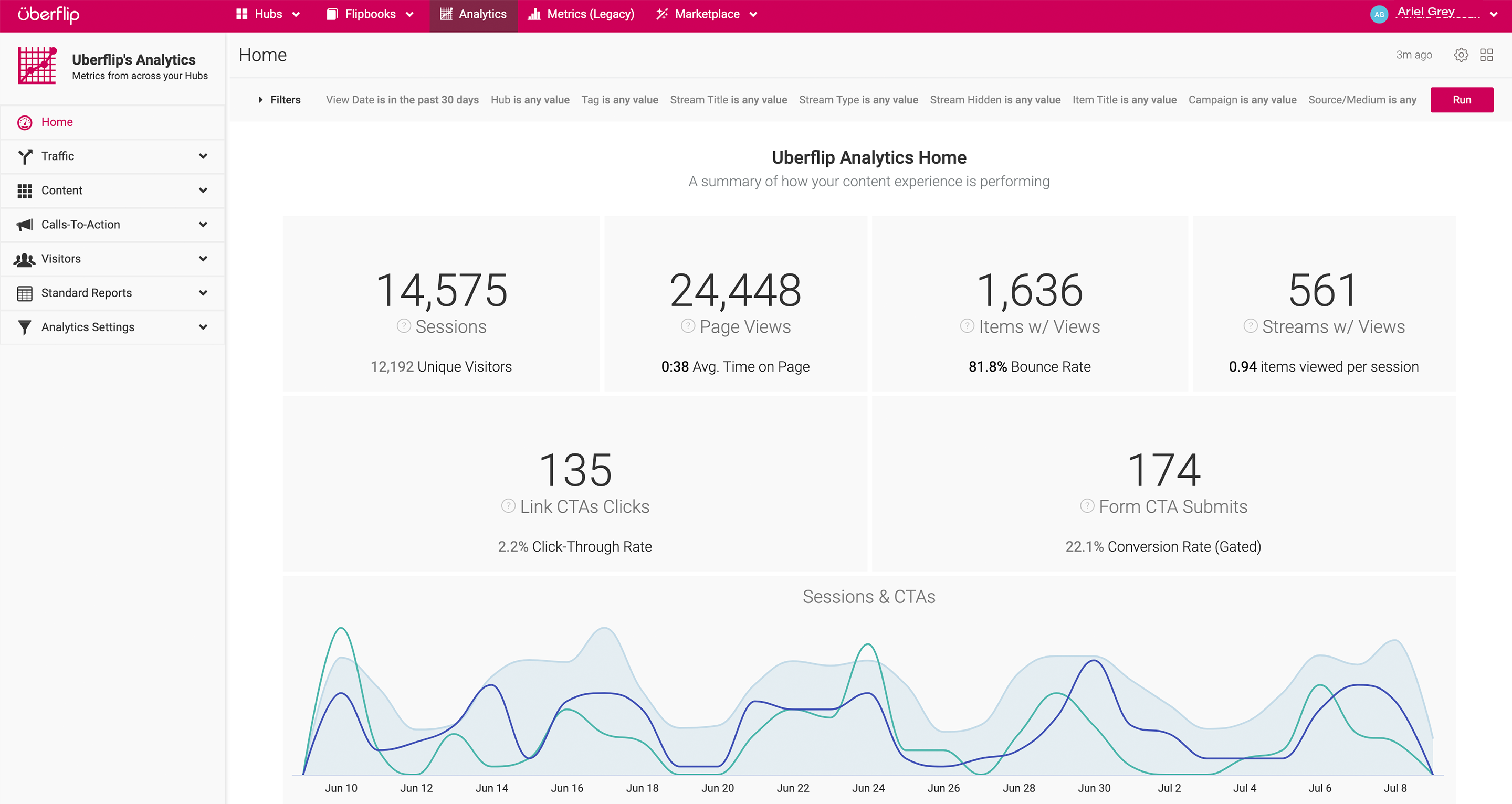
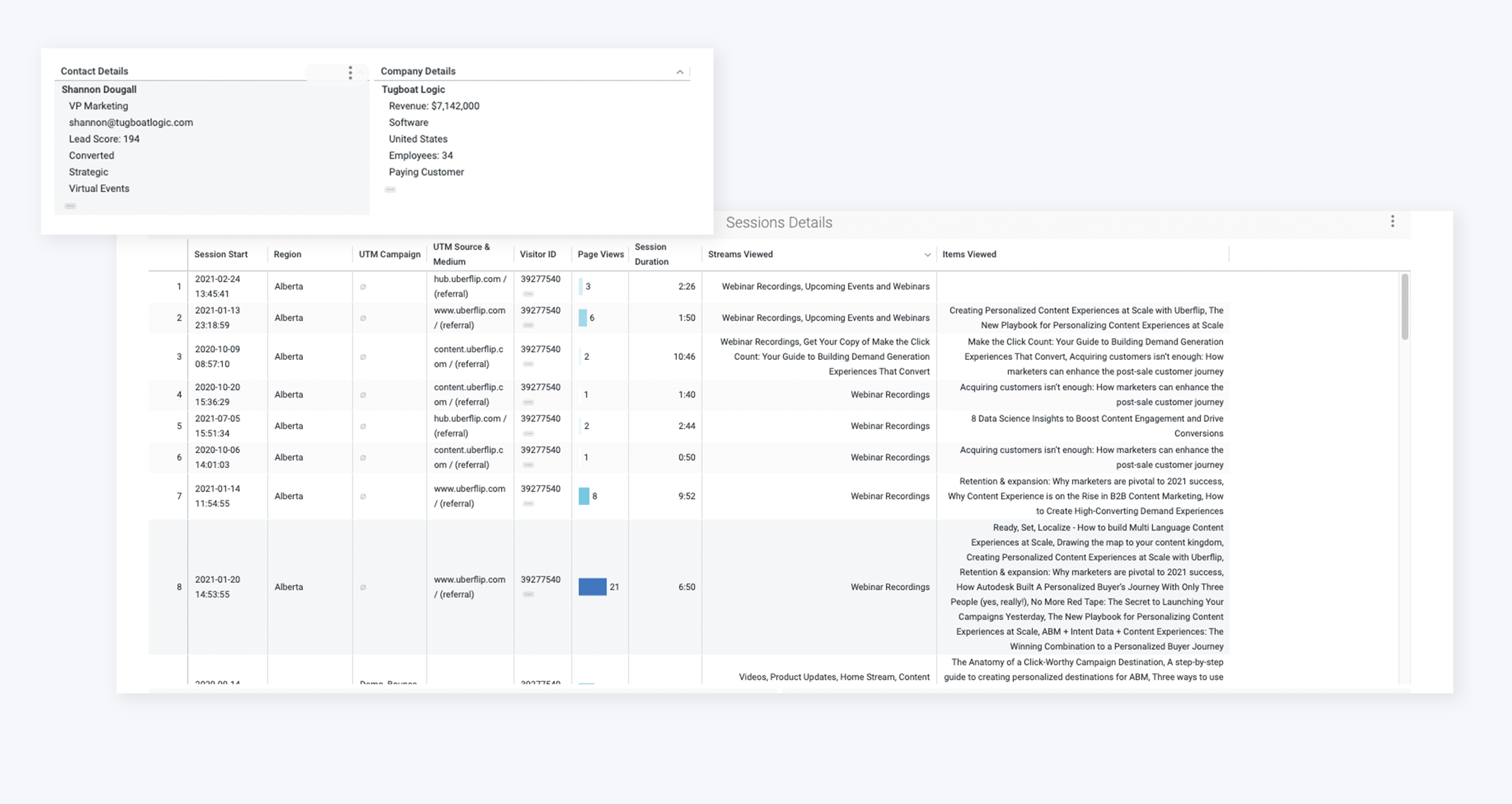
Uberflip is a content marketing platform from the Toronto company of the same name. Central to Uberflip is its content hub for aggregating, centralizing, organizing, and finally curating content for delivery to targeted audiences in streams, culminating in the call-to-action (CTA). Uberflip also contains analytics that show how effective these CTAs are (and in what context they are effective or not) so poor content can be confidently dropped in favor of what works.
For $200 monthly the user…
If you have a lot of clients whom have a strong social media presence, then RebelMouse would be a good option for you. It helps streamline all of your social media posts, so that everyone can be on the same page. Pretty cool stuff. It's even good for your own company (we played with it for a while). I would highly recommend anybody looking to create consistency in their social media campaigns to use RebelMouse
I would advise that Storify is easy to use and includes many built-in resources, such as search tools, but that its application can be improved even more by combining it with other tools such as Google News (also accessible in Storify, but using standalone site is easy), Twitter (corporate and 3rd party) search tools and media management / "clipping" services like Vocus
Uberflip is well suited to bring your larger organization into sharing content. Instead of relying only on marketing to be driving content, Uberflip has made it easy to integrate content into the sales process or client services process, with the ability to make the experience unique to sales or CS. Where Uberflip may not be as suited is if you are looking for landing pages to capture leads, most of the time for landing pages designed to sell a product you want to add specific feature copy and be able to place a gate over content without having a user jumping from page to page, while also having the gate capturing information and allowing you to trigger activities from your marketing automation system. Uberflip doesn't allow you to add copy or manipulate a landing page and only allows you to add information from a gate to a static list, which does not allow you to automate the process.
RebelMouse is actually open to almost any concept of building your layout. They offer a number of templates as well as the ability to use your own custom layout. Since I'm picky with that kind of stuff, that really appeals to me.
Hosting is super simple. Like, it's as simple as signing up and creating as many sites as you would like with unlimited bandwidth and either a custom URL – which is something I really appreciate.
The platform was built for marketing, It takes all these different approaches of reaching people and makes them easier to use simultaneously all in one feed. Super cool stuff.
In today's world, some stories break or even take place on social media. Storify allows journalists to easily curate these conversations about news and shape them into stories.
Storify's interface is easy to use and can be taught in minutes. My college journalism students take to it quickly and love working with it.
Storify can employ any social media that I can think of. If a story is being discussed in the social media world, you can find it in words, photos, videos, etc.
Telling stories through Storify is a creative process that I see becoming more prominent in the future.
Products you create in Storify are easy to embed or use for other purposes.
Initially setting up automation is confusing, and not easily explained through their site – especially if you want to streamline everything in your feed. In a nutshell they need to walk you through some things when you're starting up, and they just don't do that.
There's a lack of intuitive design that can also be confusing to people just starting out. Took me a while to shift through some tabs before I found my footing in the program – and i'm fairly tech savvy!
The company's website isn't exactly intuitive, and can turn away customers. Some people in my work have even visited the site and walked away from it actually confused as to what the service provides. Poor user interface on that part.
We like to live-tweet academic conferences and events. We think of it as collaborative note-taking. Storify is a great place to "file" these notes for later reference, but it falls a bit short as a place to go during the live-tweeted event. This is due to the fact that it is slow to refresh, if I add a tweet to the story, it can take up to a few minutes for it to appear for other users viewing that story. So we definitely use Storify in these events, but it's an after thought rather than an integrated part of the live activity.
Storify is not as powerful as other social media platforms when it comes to driving new audiences to our content. Facebook, Twitter, and Google + help us expand our networks. Storify is more functional as an organization tool that we can use to engage our existing network.
Each Storify story seems to exist in a silo. It does not make natural connections between stories that might be emerging around the same interest or topic. In academics for example, we have created Storify stories around the value of a Liberal Arts Education. It turns out that others were doing the same, but we only discovered that by accident; Storify was not connecting the dots for us.
Storify is worth it if you and your organization is creating a lot of social media buzz. If there are less than 15 people that are a part of the social media conversation, you really don't need to use this tool. It's most effective as an organizational storytelling tool, so you need to find a way to get people talking about you before you implement it.
This serves all of our content marketing needs, but our sales team does need a more robust sales enablement solution. It's hard to have the engagement/usage data for different kinds of content in disparate systems. But I've looked for years and been unable to find a one-size-fits-all solution to solve all marketing and sales enablement use cases.
From the day I first started using it, Storify has always made total sense. It's not the kind of product that forces you grit your teeth a lot or go into cumbersome customer support areas or fumble around forever only to be unhappy with the end result. I have been able to successfully use the product from the beginning
For me this has been very easy to use. Once we got the basics down it was easily repeatable and if we did end up having questions our point of contact was very helpful and fast in getting our questions answered. If it was above their capabilities they brought in a support professional who really made it easy for us to learn and replicate their steps.
The support and the team at Uberflip is THE BEST!!! They are seriously so great. They got to know me on a personal level and really cared about getting my Hub set up the way I wanted and they want my Hub to be successful. They even took a few of us out to dinner when they were in my area for a marketing event. They are always there to help me and only a quick email or phone call away
It wasn't exactly training but there was a step by step check list of things in a project the Uberflip team shared with me. There were links to helpful articles on it that walked me through how to set things up
Practice makes perfect. The more often any new tool is used, the more comfortable the implementer is with the tool. Also, there is a natural tendency with any new tool, to want to use it a great deal. Identifying proper uses as they relate to your overall marketing goals is key to any decision to use a tool.
The implementation team was with us every step of the way, helping us map what needed to be done, providing examples of other customers and being as hands-on as we needed
There's really not a program like RebelMouse, at least not in my experience. This program has helped us immensely with our social media presence (as I've been praising in this review). I would highly recommend it. If there's a better program out there, I have yet to hear about it
I addressed this in an earlier comment, but Storify is truly the best that I have found for displaying things in a narrative form. Other alternatives are more visually pleasing (like Tint, RebelMouse), but don't handle the narrative form so well. Those other platforms also do not display text only social posts quite as well.
When it comes to asset management, Uberflip has a HubSpot beat. That doesn't mean HubSpot isn't necessary for other functions, but when it comes to the content itself, the backend organization, reporting (item and stream level), and delivery of the content is much more useful in Uberflip. Otherwise, they have the same learning curve.
My Storify stories ran the gamut of thousands of readers to a few dozen. That was on me as far as how engaging the content was/interest in the topic I came up with, probably the length of the Storify stories as well, and how much my stories were shared by others. Those reader numbers were not unique by the way, and unfortunately counted when I looked at my own story (even though I was logged in and they could tell it was me).
My objectives were to let people in on a narrative story they may have missed and to cement a passing social conversation into something more long-lasting. These Storify stories are now a part of a Tumblr blog and thus can be more easily accessed. Those aren't hard and fast numbers, but Storify helped me reach my objectives nonetheless.
As somewhat of a disclaimer, my use of Storify was not conducted for a client but as a social media experiment so I could interact with some digital transmedia storytelling. Storify was simply one piece of an integrated online persona. That being said, it was easy to track how many people had seen my Storify stories to see which were the most popular.