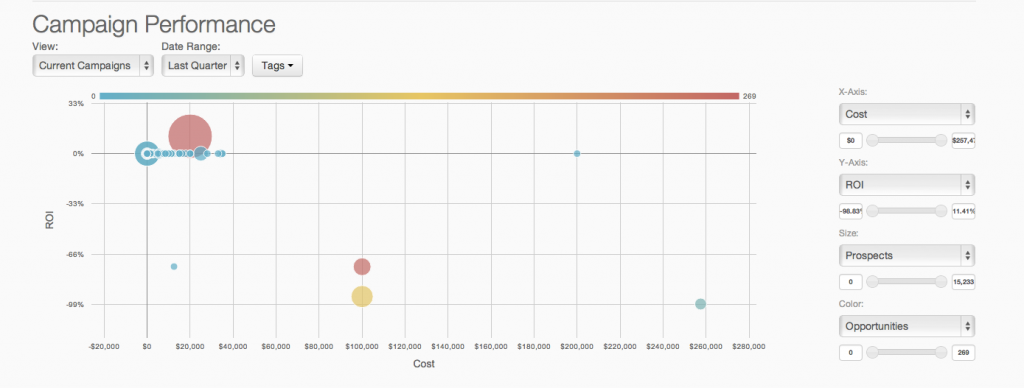
Marketing Cloud is a cloud-based digital marketing platform, used by marketers can segment their audience, deliver personalized messages, track campaign performance, engage leads and accounts, and optimize strategies based on real-time insights.
$1,250
per month per installation
Webflow
Score 8.7 out of 10
N/A
Webflow is a Website Experience Platform for modern marketing teams, used to visually build, manage, and optimize websites that offer both the consumer experience teams expect and enterprise-grade performance and scale.
$18
per month
Pricing
Salesforce Agentforce Marketing
Webflow
Editions & Modules
Account Engagement
$1,250
per month
Engagement
$1,250
per month
Intelligence
$3,000
per month
Loyalty Management
$20,000
per month
Personalization
$100,000
per year
Data Cloud for Marketing
$108,000
per year
Basic
$18
per month
CMS
$29
per month
Ecommerce - Standard
$42
per month
Business
$49
per month
Ecommerce - Plus
$84
per month
Ecommerce - Advanced
$235
per month
Offerings
Pricing Offerings
Agentforce Marketing
Webflow
Free Trial
Yes
Yes
Free/Freemium Version
No
Yes
Premium Consulting/Integration Services
Yes
No
Entry-level Setup Fee
No setup fee
No setup fee
Additional Details
—
Up to a 22% discount available for annual pricing.
More Pricing Information
Community Pulse
Salesforce Agentforce Marketing
Webflow
Features
Salesforce Agentforce Marketing
Webflow
Email & Online Marketing
Comparison of Email & Online Marketing features of Product A and Product B
Salesforce Agentforce Marketing
7.5
171 Ratings
2% below category average
Webflow
-
Ratings
WYSIWYG email editor
7.6122 Ratings
00 Ratings
Dynamic content
8.0153 Ratings
00 Ratings
Ability to test dynamic content
6.7112 Ratings
00 Ratings
Landing pages
7.6121 Ratings
00 Ratings
A/B testing
7.2151 Ratings
00 Ratings
Mobile optimization
6.8111 Ratings
00 Ratings
Email deliverability reporting
7.5132 Ratings
00 Ratings
List management
8.2129 Ratings
00 Ratings
Triggered drip sequences
7.495 Ratings
00 Ratings
Lead Management
Comparison of Lead Management features of Product A and Product B
Salesforce Agentforce Marketing
8.1
124 Ratings
4% above category average
Webflow
-
Ratings
Lead nurturing automation
8.6109 Ratings
00 Ratings
Lead scoring and grading
8.1110 Ratings
00 Ratings
Data quality management
7.5116 Ratings
00 Ratings
Automated sales alerts and tasks
8.3101 Ratings
00 Ratings
Campaign Management
Comparison of Campaign Management features of Product A and Product B
Salesforce Agentforce Marketing
7.5
114 Ratings
1% above category average
Webflow
-
Ratings
Calendaring
7.6103 Ratings
00 Ratings
Event/webinar marketing
7.497 Ratings
00 Ratings
Social Media Marketing
Comparison of Social Media Marketing features of Product A and Product B
Salesforce Agentforce Marketing
7.5
88 Ratings
2% above category average
Webflow
-
Ratings
Social sharing and campaigns
7.583 Ratings
00 Ratings
Social profile integration
7.539 Ratings
00 Ratings
Reporting & Analytics
Comparison of Reporting & Analytics features of Product A and Product B
Salesforce Agentforce Marketing
7.8
124 Ratings
6% above category average
Webflow
-
Ratings
Dashboards
8.2118 Ratings
00 Ratings
Standard reports
7.6123 Ratings
00 Ratings
Custom reports
7.5100 Ratings
00 Ratings
Platform & Infrastructure
Comparison of Platform & Infrastructure features of Product A and Product B
Salesforce Agentforce Marketing
7.6
124 Ratings
2% above category average
Webflow
8.2
13 Ratings
6% above category average
API
6.990 Ratings
8.213 Ratings
Role-based workflow & approvals
6.989 Ratings
00 Ratings
Customizability
7.0111 Ratings
00 Ratings
Integration with Salesforce.com
7.8113 Ratings
00 Ratings
Integration with Microsoft Dynamics CRM
8.814 Ratings
00 Ratings
Integration with SugarCRM
8.311 Ratings
00 Ratings
Third-party software integrations
7.324 Ratings
00 Ratings
Internationalization / multi-language
00 Ratings
8.311 Ratings
Security
Comparison of Security features of Product A and Product B
Salesforce Agentforce Marketing
-
Ratings
Webflow
7.8
16 Ratings
5% below category average
Role-based user permissions
00 Ratings
7.816 Ratings
Web Content Creation
Comparison of Web Content Creation features of Product A and Product B
Salesforce Agentforce Marketing
-
Ratings
Webflow
8.1
19 Ratings
4% above category average
WYSIWYG editor
00 Ratings
8.119 Ratings
Code quality / cleanliness
00 Ratings
8.418 Ratings
Admin section
00 Ratings
6.919 Ratings
Page templates
00 Ratings
8.318 Ratings
Library of website themes
00 Ratings
8.315 Ratings
Mobile optimization / responsive design
00 Ratings
9.519 Ratings
Publishing workflow
00 Ratings
8.418 Ratings
Form generator
00 Ratings
7.115 Ratings
Web Content Management
Comparison of Web Content Management features of Product A and Product B
I think the product, by definition, is meant for marketing — and we use it exactly for that, for running campaigns. That’s the best-suited use case for the product. I don’t think it’s really meant to be used for anything else — that’s just not how it’s designed.
Since the purpose in my case is to build a small professional looking site to present project outcomes and other research, I can create custom fields and design experimentations. Webflow builds sites that are super professional, with many amazing templates that don't look cheap. Additionally, I can test responsive layouts. Apart from this, I used 1-2 static pages to illustrate key findings for example what a multilingual site could look like with screenshots without needing CMS in free version, which are all the valuable skills to acquire. Compared to WordPress, Webflow is expensive with limited free features, although it has really cool additional features that will make the site I build stand out.
Saves time- because I don't have to do double entry of content.
It saves money. I like that it is an all-in-one system, so I don't have to host elsewhere.
Flexibility - Webflow provides me with a lot of flexibility in my webpage design, allowing me to adjust pages as needed, depending on the content types.
Brand recognition is still behind WordPress, which can make it a challenging sell for clients looking to play it safe in their CMS decision.
The CMS is ideal for smaller datasets, but higher content sites introduce some minor challenges.
Alignment between designers and developers is key prior to implementation. The flexibility of the platform requires careful planning to avoid over-engineering.
As of right now we have not seen any other program that integrates as seamlessly into our Salesforce platform. We have barely scratched the surface of all the features and use cases. It would be irresponsible to make a move to another platform in the near future. We have not come up against any limitations that would prompt a need to switch
You won't find another solution that has as many features as Salesforce Marketing Cloud Interaction Studio. We all know Salesforce, we all know how big they are and it's not for nothing... Their tools do most of the things you want, need and even imagine. Using it is complicated, but the usability is infinite.
Webflow is very easy for a beginner to get started with and achieve good results, but to achieve an expert level of understanding requires experience and some web development knowledge. HTML5, CSS3 and JavaScript knowledge aren't required to use Webflow, but an expert will know BEM class naming patterns, be able to create reusable elements and design systems, and add 3rd party integrations that require custom code.
Upgrades and timing of the upgrades were communicated well and planned during off hours for our work. If we did have a campaign scheduled during that time, it would kick-off after the system was back active. There were a few unplanned system down times, but it was a rare occurrence and those times were also short in duration.
In my experience, their customer service is an absolute joke, I tried reaching out to them they took forever. I had to keep following up with them as if they never received it in the first place. It’s a new platform, so guidance is needed. Tried the university they offer, in my opinion, it is completely useless, I would just completely move on from this website.
Though the make up of MA apps is not built this way today, it would be nice to see them become more real-time. The integration between Salesforce and Pardot is not a true real-time integration. If I modify something in Salesforce, those changes are not automatically reflected in Pardot immediately. There is a delay of about 15 minutes before the systems sync. This delay, although not long, is less than ideal We would love the systems to be integrated real time such that changes are propagated from one system to the other immediately.
In my opinion, it is horrible, the rendering takes forever. I have the newest MacBook and the platform will still lag and slow down on me. I’m not a developer, I am a designer which makes it worst because I am using the features they are providing not extra coding features. In my opinion, it is a horrible platform really, stay away.
They are really responsive and more than not solve the problem or give you insight to how you can manage the solution yourself. I do find however sometimes a long delay on the more complex issues when they need to loop in other departments. but overall a good experience with support
I haven't had to engage them from a support perspective; however, there is a considerable user community for tips/ideas/troubleshooting and the like. I believe the Pro plan supports additional resources but we didn't find that the cost justified the outcome. Overall the need for support has been relatively minor.
The trainers at the Pardot user conference (Elevate and Connections) were very knowledgeable and presented the material well. Again, the content was targeted to more of a new user audience, and was not really relevant for folks who had been using the product for 2+ years.
Pardot's online training touches on all topics briefly and vaguely without much indepth exploration into how a final outcome could look, such as Nurturing Campaigns, Email templates, landing page templates, etc... The only true way to uncover Pardot's full capabilities is to have Front End design and coding experience. Without this key skill set, I would not recommend Pardot to another business.
From an IT perspective, once you set up the Javascript beacon and start collecting data there is a waiting game. During this time you can start labeling your site actions which can be labor intensive for a single person, but you don't really have the final end-users on the platform yet. We did a lot of training so users were experienced, but it wasn't until they had their first tasks to accomplish that they started using the system and had questions. I'd recommend setting up some immediate goals for an end-user to start segmenting for the purpose of displaying message campaigns so you can jump start end-user action.
We use Salesforce Marketing Cloud for lead management, generating reports, tracking customer and dealer information, inputting orders, and more. I prefer HubSpot for email marketing and automation because it is easier to use and the emails are designed much better. We currently use Salesforce and HubSpot, and we are very happy to have both, as they have different pros/cons.
A lot more design control and easier to create a custom site, and then also to scale that site going forward. There's a lot about WordPress I miss, though, when it comes to managing a blog—user permissions, SEO control, edit HTML version of posts.
Prior to this, we had no solution and literally were doing things on paper in a world where technology is outpacing paper. Having this process optimized has made it easier for the sales and marketing people to change information. From the training perspective, it has allowed us to see holes in where we could create additional support training, so the ROI here has been a lot more than just the optimization of a process.
I feel it doesn’t perform the way it’s supposed to and it doesn’t have any beneficial factors to it. In my opinion, there is no reason to use a platform like this when Wix and Shopify, and WordPress exist. I believe Webflow is a platform that shouldn’t exist and it’s only popular because of the hype it received. I tried it and hate it completely.
Salesforce Marketing Cloud allows us to more efficiently reach out to a higher number of prospects.
Salesforce Marketing Cloud allows us to nimbly communicate important messages in a timely fashion to facilitate conversion.
Salesforce Marketing Cloud allows us to track who is opening our messages so that we can stop sending to those not interested and focus on the most engaged audiences.