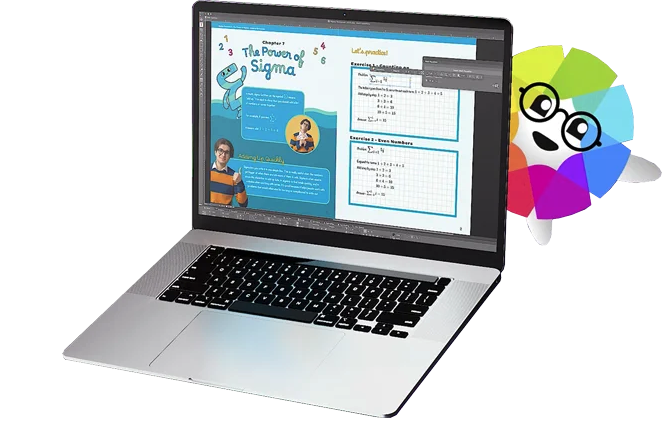
Adobe InDesign supports creating digital and print documents such as flyers, stationary, posters, and other types of media, with rich graphics, images, and more. Adobe InDesign is available standalone or as part of the Adobe Creative Suite collection of media management and creation products.
$31.49
per month
Canva
Score 9.1 out of 10
N/A
Canva is a popular, simple online graphic design tool. Users can import images, use templates to design banners and logos, or pay to use Canva's premium stock images/paid templates (elements starting at $1).
$12.95
per month
QuarkXPress
Score 9.0 out of 10
N/A
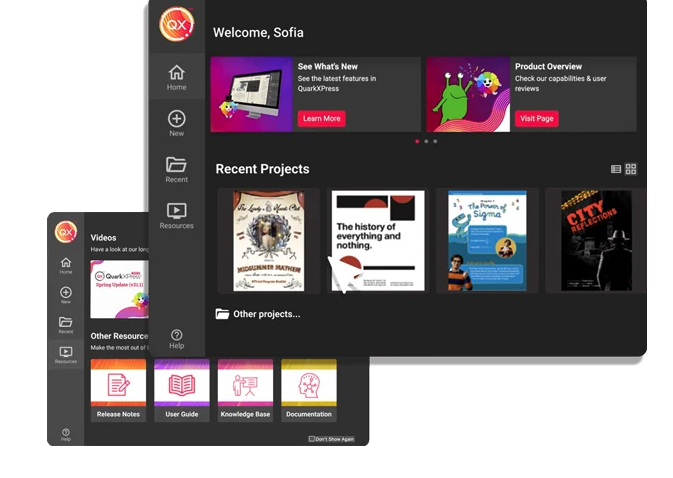
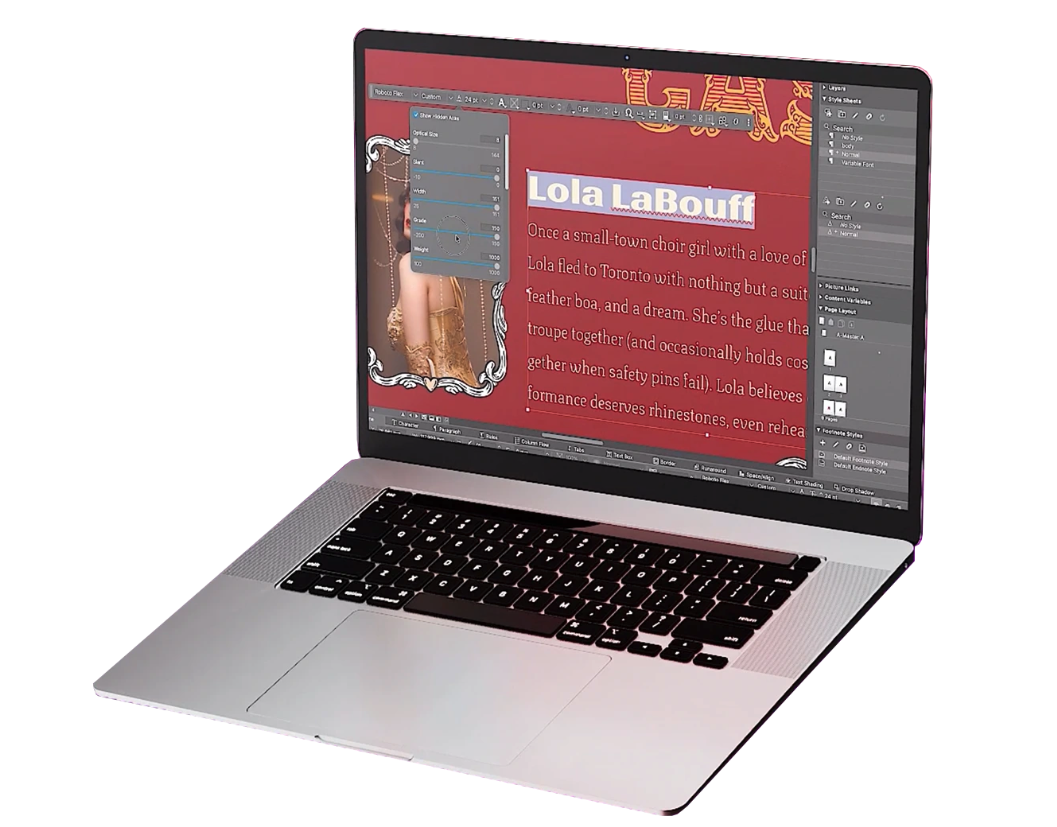
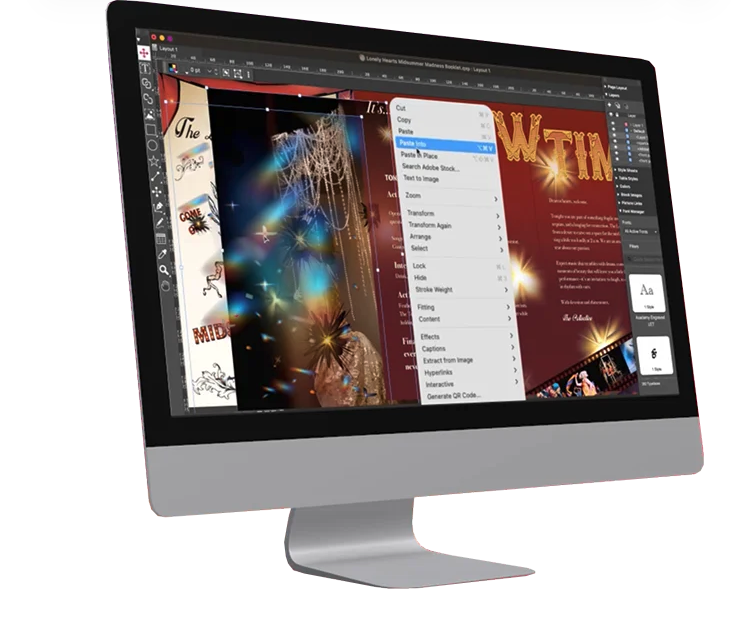
QuarkXPress from Quark Software headquartered in Denver introduces modern responsive web design with Flex Layouts, reimagined Tables, and productivity-boosting design features.
$279
per year
Pricing
Adobe InDesign
Canva
QuarkXPress
Editions & Modules
Monthly Plan
$31.49
per month
Annual Plan, Prepaid
$239.88 ($19.99)
per year (per month)
Annual Plan, Paid Monthly
$251.88 ($20.99)
per year (per month)
Pro
$12.95
per month
Enterprise
$30.00
Per Month Per User
QuarkXPress Subscription License
$279
per year
QuarkXPress Perpetual License
$629
one-time fee
Offerings
Pricing Offerings
Adobe InDesign
Canva
QuarkXPress
Free Trial
No
No
Yes
Free/Freemium Version
No
Yes
No
Premium Consulting/Integration Services
No
No
No
Entry-level Setup Fee
No setup fee
No setup fee
Optional
Additional Details
—
—
—
More Pricing Information
Community Pulse
Adobe InDesign
Canva
QuarkXPress
Considered Multiple Products
Adobe InDesign
Verified User
Manager
Chose Adobe InDesign
Not fully integrated with Adobe Photoshop and Adobe Illustrator. We used Quark before we migrated to InDesign. Users don't want to go back, mostly because of hte tight integrations with the Adobe products. Even our freelancers and vendors use InDesign and would not go back to Qu…
InDesign is simply put, the best out there for the design of print and e-docs.
Canva and Microsoft Publisher both have great features and benefits, but they don't have quite the robust tools and features that are sometimes necessary when designing an item. If you need something …
Adobe InDesign, QuarkXPress and Affinity Publisher work similarly in the big picture. The newest on the market, Affinity Publisher takes many cues from its predecessors but still remains a less sleek product. Still, I use Publisher on my own and find it to have great …
The others do not include the robust features of Adobe InDesign. Some of the subscription or pricing models are not affordable or would be an additional cost. Adobe has the most flexibility in regards to pricing. Microsoft Publisher is the least recommended product and is not …
Microsoft Word is probably the most popular word processor, and I've been using that since I was a little kid, but InDesign gives you all the word processing tricks and then some with the ability to arrange every small part of your layout.
Canva is a web-based design tool that allows you to use a large library of templates for everything from social media images, presentations, flyers, and business cards. It is very user friendly for beginners or simple projects. InDesign can do all that Canva can do and much …
Adobe Illustrator and QuarkXPress are great but also very limiting. I personally love illustrator but it's not meant to create page layouts when working on multiple pages and I'm used to working with QuarkXPress because of printers in the past but a majority of the printers …
Quark used to be used much more. Adobe InDesign is now the preferred layout software for publishers. Canva is not as robust and does not have the same functionality.
Until the development of InDesign, I was a faithful user of QuarkXPress. I knew Quark like the back of my hand. Once I decided to make the change, I realized how robust InDesign was compared to "old faithful." It took a little time to learn the nuances. Now, I can't imagine …
We use both in our company. Adobe InDesign for those more carefully considered, important design jobs. Canva for throwaway design jobs like flyers, newsletters, etc.
Canva is a valuable design tool for simple applications, such as creating a social media banner, flyer, or leaflet, particularly for those with no prior design experience. Its use of templates and straightforward tools to add pictures and text makes it a good choice for …
Quark used to be the go-to product for print layout design but I feel they really fell behind in the race against Adobe. The clunky user interface and what I felt were often limited options for adjusting fonts, tracking, kerning, leading etc really made it cumbersome, and …
Adobe InDesign is a more cohesive program with stronger features and control. It is best used for more indepth presentations and publications. I use it primarily because it allows for more creative and personalized layouts which is useful for showcasing the work I present to …
Verified User
Professional
Chose Adobe InDesign
InDesign's real benefit is it's integration with the other Adobe products, allowing you to work fairly seamlessly with multiple types of design file on a project. The creative cloud allows you to store and use assets quickly and efficiently on multiple projects and really …
These mentioned softwares are great but also limiting. I like working on Adobe Illustrator but it's not meant to create page layouts while working on multiple pages.
Adobe InDesign is definitely better structured and perfectly organised. I am a huge supporter of creativity in the communication field, yet I believe in the importance of balance and design. Adobe InDesign proves to be stronger than its competitors because it leaves room for …
Verified User
Employee
Chose Adobe InDesign
While Quark stalled out, InDesign continued to improve its product features year after year. Also, the integration with other industry standard software (Photoshop and Illustrator) is a no-brainer.
I have previously used Quark Xpress, but as Adobe InDesign became the leader for professional designers, I transitioned to [Adobe] InDesign. I find Adobe InDesign a lot easier to work with. I have tried Affinity Publisher, but I have not [gotten] very far with trying it out. I …
Publisher and Quark both work, but they don't play well with Adobe products, which makes you waste a lot of time converting Illustrator and Photoshop files into bitmaps for use in them. This can lead to issues with image quality, on top of wasting time and energy. The …
InDesign is much more user friendly and is compatible with other Adobe products. InDesign is more versatile and more widely used. Compatibility with other designers, agencies, and promo companies makes work and collaboration easier.
InDesign had more features and flexibility many years ago when I learned how to use it, and compared to Quark, I found it to be a better product and haven't gone back since.
The two big guns in page layout software are InDesign and Quark Express. At one time, Quark was the go-to software. A majority of Pre Press shops employed Adobe Illustrator, Photoshop, and Quark Express. Over the years, though, InDesign has surpassed Quark.
All of the other Adobe programs focus on other important design aspects and all are equally powerful in those specific areas. The other “publisher” programs are very limited, cumbersome to use/customize content, and are not created with the design team in mind. They produce …
Canva is easier to use and requires less experience. Canva is also so easy it makes it significantly faster to produce content than using any Adobe products. Canva allows you to use professional designs and can help even make the most novice designers produce …
Canva takes the top used features in Adobe PhotoShop, Illustrator, and InDesign and combines them all into an easy to use web based software. What's not to love about that? Sure, you can't do insane photo editing in Canva, but it does have a nice selection of stock photos that …
Adobe products, well compared to Canva has a wide and long learning curve. Adobe spark almost comes close to Canva but lacks these tiny features that Canva focuses on to make the product irresistible to use. Canva also does a great job organizing and recording the designs in …
I have InDesign but have struggled to become proficient with it. Canva is a more cost-effective and user-friendly alternative. Our designer still works in InDesign and for a designer, it has superior features, but to get some projects completed quickly with higher quality, …
Canva is easier, faster, and less expensive than Adobe. It allows for people who are not graphic artists to create quality professional looking content fast. I have been able to save hundreds of dollars annually with a single Canva pro subscription vs. a full Adobe …
Canva has a special niche when it comes to stacking up against the products that I listed above. When it comes to learning curve, with Canva, there is virtually no learning curve; the interface of Canva is easy for any user. Where I reach my limit with Canva is that it …
Canva is free, and the free-to-use option is extremely generous and fills many needs across our company. We have not even had to consider upgrading to a paid option because everything we already need is right there. The learning curve is also great, unlike Photoshop in …
Honestly, Adobe is a great product for designers that know what they are doing, I didn’t have time to teach myself a new program or how to use it. Canva is extremely user-friendly and strat forward. If I ever had an issue o could perform a quick Google search and fix the problem.
QuarkXPress has more user-friendly features compared to Adobe InDesign where we can set up the page layout for any sort of medium. We can compress the pdf size here as per the requirement. Also, we can export pdf in a quicker manner by choosing it as a default output format.
InDesign is a fantastic program as well; I just prefer QuarkXPress because I better understand how it "thinks"/is programmed, due to years of working with it.
QuarkXPress simply blew the competition out of the water when it came to pricing and scalability in our business. Every employee that uses Quark always speaks very highly about using the software. We are not a large company but, the amount of money saved on the cost of each …
My preference has always been QuarkXPress because I have more experience. InDesign is a similar program, just used differently for our journal layout design.
Adobe InDesign is very well-suited to creating professional-looking page designs. If you want a newspaper or magazine to have attractive pages that go beyond simple templates, InDesign is the best option out there, to my knowledge. It's less suited to scenarios where people without page design skills are responsible for creating pages, as it requires some training and skills to use effectively.
They are suited to serve the non-profit space, offering premium features at no charge for up to 50 users. They provide tools for non-graphic designers that help to create appealing and attractive pieces. For those who are unsure about where to start with a project, Canva offers templates that can be edited to suit the current need.
I used QuarkXPress to maintain a proper page layout for the UI which I receive from a UIUX developer. I develop Graphic Illustrations on the digital canvas to create creative content on the page design set and to develop designer headlines and sub-headlines where writers and editors can amend the text and place the copped images.
Customization - With Adobe InDesign, as well as many other applications in the Adobe Creative Suite, I can fully customize my workspaces and save different workspaces. This makes it easy to navigate through my project and have the panels and tools I need easily accessible and configured based on my project needs.
Styles - Adobe InDesign has character styles, object styles, and tables styles. This speeds up my workflows and allows me to easily apply the same format across multiple elements. This is super helpful, especially when working with length documents.
File compatibility - I can easily export my files into so many different file types.
The Book feature - This feature is really helpful when creating books or very long documents with multiple sections.
It helps you find the right design and helps you start with the right template
It helps in creating for all platforms, basically you need to create the design only once and Canva takes care of the rest by resizing the design for whichever platform you want to publish it to.
It also comes with a content planner which is extremely helpful for obvious reasons. It relieves you from the hassle of posting when the right time hits.
There's a Brand feature which is also extremely fascinating as it helps you store all your brand information (even color) at the same place.
I have a hard time coming up with any improvements, perhaps increase the number of free elements to use in design.
Maybe, Canva should check if you start editing a previous document to see if you want to change the current design or create a new one as a clone of the current document (design).
I'm sorry, I really can't think of a 3rd. Overall, I really like working in Canva.
I've had great experiences with the product and plan to continue to use it. It has been my go-to product for designing and creating materials. I have had great luck with it and have been able to create all of the needed marketing materials that have been requested for our company.
The ease of use makes Canva a powerful tool for manipulating images, creating original content, and testing ideas without requiring the involvement of graphic design or more time-intensive image editing software such as Photoshop. While it doesn't have the full functionality of a mature software, such as Photoshop, The speed and simplicity of Canva makes it a necessity in a business of any size
If you know what you are doing it is an amazingly granular and powerful application. You can control pretty much any aspect of the design and layout of your documents and make changes globally and rapidly. But, if you don't know what you are doing...you will be staring at your screen in bewilderment for a long time. You can learn it, but be ready for a hefty time investment.
It is super easy to use, but it could be limiting if you're on a small device. It is easier on a bigger device because you can resize graphics and text easier than with your fingers on a small device. I do think it's perfect and easy for non-designers who don't have any training. As long as you have a good eye for visuals, Canva is a wonderful substitute for graphics programs on-the-go.
This is an industry standard. It is intuitive and pretty simple. I have been using it for 40 years and by no means do I use its potential, rather it does just what I want it to do.
I have yet to encounter Canva being offline in at least 6 years of using it regularly. They also announce well in advance if there may be upgrades to the code and the hours during which there may be issues accessing the service.
I haven't ever had issues with a slow-loading site and there haven't been any lag issues within the software. There have been maybe a handful of times over the past six years where I have tried to upload a large image and it will slow down as it loads the last megabyte, but I have yet to have the system time out or require any interference by me
Adobe support is ok but not great. Chat support often doesn't initially understand the question at-hand and it takes awhile to get to the right agent. Phone support has long wait times, and though I've had more luck there, it does take quite a time investment if you are looking for help. However, Adobe does have some online learning solutions available as well as a knowledgebase for frequently asked questions. If you're looking to learn how to use the platform, there are lots of resources which can typically be found in a few Google searches. If you have a technical issue with the system, that's going to be a bit more of a time investment as far as getting a tech's assistance to resolve the problem.
Overall, Canva is easy to use, easy to train others to use, allows for creativity with a professional look without enormous associated costs. The mobile apps works almost as easily, but at a minimum allows for easy review and downloading in a pinch. Really, anyone can learn to use Canva quickly and will immediately benefit from the results.
Remember to download the mobile app onto your phone for easy image manipulation on the go. Adding company colors, logos, and typefaces to your company account is an easy process. When images are uploaded, these can also be shared between accounts within a company, as can canvases you've created for easy editing among teams.
Microsoft products do not match the aesthetic tools that [Adobe] InDesign offers, cannot support the customizable options available for export, and do not produce documents with as high a degree of accessibility. That said, they do have their place in collaboration in a team- I'd consider Office to be the first step and [Adobe] InDesign to be the final product.
Canva is faster and easy to use. There aren't complex menus like Adobe products and everything is generally intuitive. Menus are mostly open and visible or relatively small. Small changes to the program add to it's usability rather than detract. I also appreciate that Canva helps the user become more creative through use. By giving you editable examples through templates you can choose to re-design something ir create something from scratch w/ a similar concept or feel. Canva often gives me ideas that I can implement into my design or into the entire project even. I also like how Canva is intuitive in it's approach. The program gives you suggestions when it comes to graphics, etc. without getting in your way if you know what you already want
QuarkXPress simply blew the competition out of the water when it came to pricing and scalability in our business. Every employee that uses Quark always speaks very highly about using the software. We are not a large company but, the amount of money saved on the cost of each license was about 60% when compared to the competitors' products.
Very easy to add accounts and share content between them. Collaboration is also easy to manage and can be done on a project-by-project basis. The cloud-based software means it is incredibly fast to add a coworker and have them editing images within minutes. A live internet connection is required to access Canva so this is something to consider if expecting to use the software while on journeys without access to wifi etc
A great ROI for time in my small architectural practice, [especially] when a design has been updated and a report needs to be submitted. We can be submitting many reports that all look similar, clean and beautiful. We just save as the file and replace the images with more updated images. This way the client finds it easy to navigate updated reports, as many as they can be.
As far as ROI is concerned, Canva has proven itself time and time again as having a positive impact for business.
Just yesterday, I had to prepare an hour-long presentation on the fly; the great reviews of the presentation and the materials (all made in Canva) only served to advertise for Canva and it proves that Canva is a smart investment.
I don't think in the time that I have been a Canva pro user that I can say that my ROI has been negatively impacted. Highest recommendation. The software more the casually pays for itself time and time again.