Numbers is a spreadsheet application developed by Apple Inc. as part of the iWork productivity suite. It is available for Mac and iOS, or for Windows in a browser via its cloud edition.
N/A
Microsoft Excel
Score 8.9 out of 10
N/A
Microsoft Excel is a spreadsheet application available as part of Microsoft 365 (Office 365), or standalone, in cloud-based and on-premise editions.
$6.99
per month
Stackby
Score 9.0 out of 10
N/A
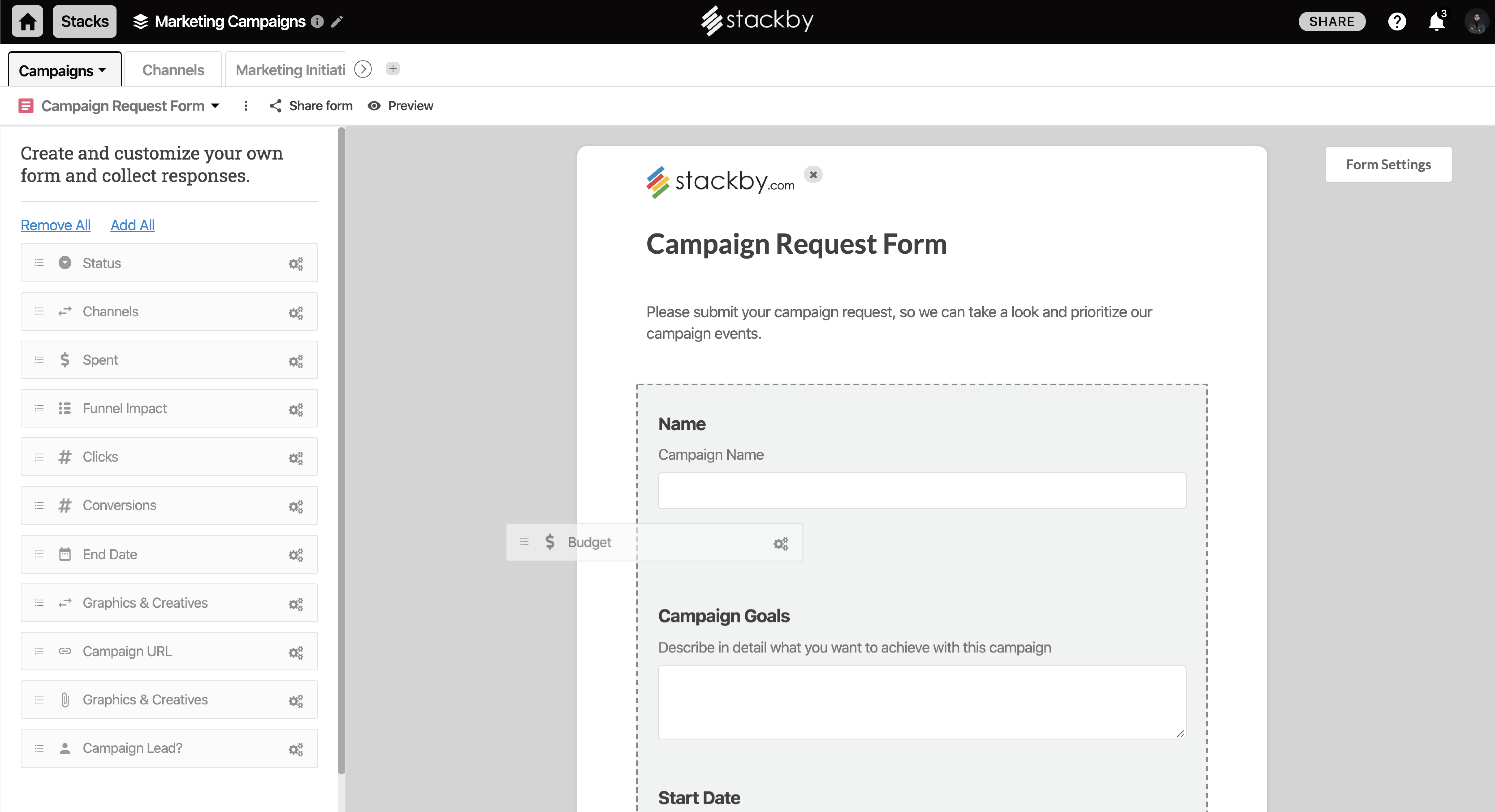
Stackby is designed to bring together the simplicity of spreadsheets, the functionality of databases and integrations with best business APIs to let anyone build their own tools, the way they want. No coding needed. Users can build a database from scratch, import data from pre-existing sources like spreadsheets or Google Sheets, or choose from over 100 pre-built templates across multiple categories. Stackby offers over 25 unique column types like text,…
I think Apple Numbers is inferior to both Microsoft Excel and Google Sheets. Google Sheets is more readily available for everyone and does not have the requirement that someone be on a MacOS system. Microsoft Excel, being the industry standard for spreadsheet management, has …
Apple Numbers is more aesthetically appealing than Microsoft Excel and Google Sheets. I would say, however, that Microsoft Excel seems to have more tools and bells and whistles than Apple Numbers does. In that same vein, however, Apple Numbers has more bells and whistles than Go…
I would say excel is top tier, but you are going to pay a premium price for it. A small step down is a price savings and two tools that are really similar: Google Sheets and Apple Numbers. If I had to pick one I would pick sheets as it is easier to collaborate with. For …
If you're an Apple user, Apple Numbers is for you. If you primarily operate on PC and Android, you will find more compatibility with Excel. Both platforms perform similar functions -- you can create charts, graphs, and figures. Excel was the pioneer spreadsheet software but …
We all work with Apple devices in this organization. So we mostly use this software. It is very well synced in Apple ecosystem and provide very attractive data representation by its graphics and charts. In few scenarios we use MS Excel also but we always try to stick on Apple …
Microsoft is more user friendly in my opinion. More applications and systems are compatible with excel versus Apple Numbers. More companies we do business with use Excel for invoicing and warehouse management which makes Excel stand out from other software like it. It is …
I've used a few of the mobile spreadsheet programs that you can find on the app store and found them to be inferior to Excel, even the mobile version. Access is better than Excel for certain situations but it is largely overkill much of the time and requires a time investment …
Excel will always be selected because it's part of the Office Suite. We started to use Smartsheet, but the onboarding and training process took too long when compounded with licensing setup & costs. Apple Numbers works well, but without the maturity of Excel. Since Apple …
Excel stands out from Google Sheets and Apple Numbers with its extensive range of advanced functions, including financial, statistical, and data analysis tools, surpassing the capabilities of its competitors. As the universally recognized industry standard, Excel offers better …
PowerPoint is excellent for displaying information in a far more visually engaging, relatable manner. However, where it is lacking is the ability to get to that point in analyzing competing deal information, building formulas around it, things of that nature.
Excel is a far superior product compared to Numbers as far as it's usability, simplicity, and functions. I do like the ease of sharing that Google Sheets offers and that's an advantage, but otherwise, very similar. Often I use Excel over Google because of how user friendly it …
Apple Numbers is the PERFECT tool if you are looking to plan a conference at your church. Furthermore, if you are a youth pastor, Apple Numbers is incredibly useful in keeping track of how much each of your high school students has accumulated funds towards their summer camp bill. Lastly, Apple Numbers is perfect if you are trying to keep track of all your upcoming preaching opportunities.
I don't really know another program as powerful as Excel. I've used Google Doc programs but do not feel they come close. So far, anytime I've needed a table of some sort for data, whether it's budget oriented or information off a survey, the best system has been Excel. We do web audits on occasion and we create an Excel worksheet featuring every URL of the pages we're auditing, notes, data about the content, information about files attached to the page and other information to help us determine what pages need updating, deleting or otherwise. We also use Excel primarily to export our Google Analytics to in order for us to create reports for clients that need to see specific information about their traffic.
Based on my experience, I can provide specific scenarios where Stackby is well suited and others where it may be less appropriate: Project Management: Stackby is an excellent choice for project management scenarios. Its ability to create custom databases, track tasks, assign responsibilities, and collaborate in real-time makes it highly effective for managing and monitoring project progress. CRM and Sales: Stackby is well suited for managing customer relationships and sales processes. Its customizable database structure allows for organizing customer information, tracking leads, managing deals, and generating reports. The ability to integrate with other tools further enhances its usefulness in CRM and sales workflows. Content Planning: Stackby is a great fit for content planning scenarios. Users can create databases to manage editorial calendars, track content ideas, assign tasks to team members, and monitor content performance. Collaboration features facilitate seamless content collaboration and ensure timely publishing.
It is very good at embedded formulas and tying cells to one another
It allows me to compare deals terms on a side-by-side basis and talk my clients through it easily.
It is very helpful as well in terms of allowing me to filter/sort results in many different ways depending on what specific information I am most interested in prioritizing.
Excel offers collaboration features that allow multiple users to work on the same spreadsheet, but managing changes made by different users can be challenging. Excel could improve its features by offering more granular control, better tracking of changes, and more robust conflict resolution tools.
Itcan be a barrier to productivity when importing and exporting data from other applications or file formats. To improve its features, it should offer better support for standard file formats and more robust error handling and reporting tools.
Excel can be challenging for finance students and working professionals, but it can be improved by offering more robust tutorials, better documentation, and more user communities and support forums.
Implement the same views available on desktop into the mobile app
Internal automations (like Airtable)
Ability to implement and display info as a dashboard (like Airtable)
Polish up the formatting of formulas, inputting them causes user frustration due to the formula input cursor jumping around
Better intelligence and ease of inputting data in bulk i.e have the fields automatically identify what data is being input and format appropriately (like Airtable does)
Excel remains the industry standard for spreadsheets and has maintained simple and straight-forward formula writing methods. Although there is a learning curve to do more complex calculations, there are countless help sites and videos on the Internet for almost any need.
I think it has fine basic functionality. The cell management on a basic level is relatively intuitive, but the more complex tasks are the harder it is to understand how to execute in Apple Numbers. I think it aligns with Apple's core products in aesthetics, but that is where the perks in UI end.
I'm giving it a 7 because it is my go to. But the fact other prefer Google Sheets when working with a team does get irritating. I've used the online version of Microsoft Excel that other teams can get into and it still seems behind Google Sheets. It's a little clanky and slow? If that's even a term.
Stackby is overall pretty easy to use, especially if you're used to something like Airtable or SmartSuite. Some of the pages seem like near exact clones (though they put their own creative spin on things). I'd prefer a slighty fresher interface (like SmartSuite), but I'm willing to sacrifice that for the better price and great customer service.
Implementing Numbers effectively, whether for personal use or within an organization, requires understanding its strengths and limitations to maximize productivity
If you're an Apple user, Apple Numbers is for you. If you primarily operate on PC and Android, you will find more compatibility with Excel. Both platforms perform similar functions -- you can create charts, graphs, and figures. Excel was the pioneer spreadsheet software but Apple presents a simpler, more modern, spreadsheet.
Out of Microsoft Excel, Microsoft Power BI, IBM SPSS, and Google Sheets, Microsoft Excel is by far the most common tool used for anything data-related across organizations. Accordingly, our organization has also implemented Microsoft Excel as a first-step tool. We recently adopted Microsoft Power BI (the free version), and use it occasionally (mostly for creating dashboards), but it is less commonly understood by stakeholders across our organization and by our clients. Accordingly, Microsoft Excel is more user-friendly and because of its popularity, we can easily look up how to do things in the program online. Google Sheets is a comparable alternative to Microsoft Excel, but because it's cloud-based and we have sensitive data that needs to be protected, we chose against using this software. Finally, a few users (including myself) have access to and utilize IBM's SPSS. For my role, it's a helpful tool to do more rigorous analyses. However, because of its cost and limited functionality as a simple spreadsheet, we only use it for more complex analyses.
I have also tried Ora.Pm. Infinity has better graphical interface, but nowhere near as many features and the UI isn't as effective (i.e, moving around with keys). Grist has a much more technical interface and it comes from being more of a database/interactive spreadsheet vs Stackby. Grist has much more functionality in terms of formulas, but is much harder to learn to use and less other functionalities. Ora.PM is more of a test at a task management app, and doesn't compare - Stackby is much better.
Each user can use it to whatever level of expertise they have. It remains the same so users can contribute to another's work regardless of whether they have more or less expertise