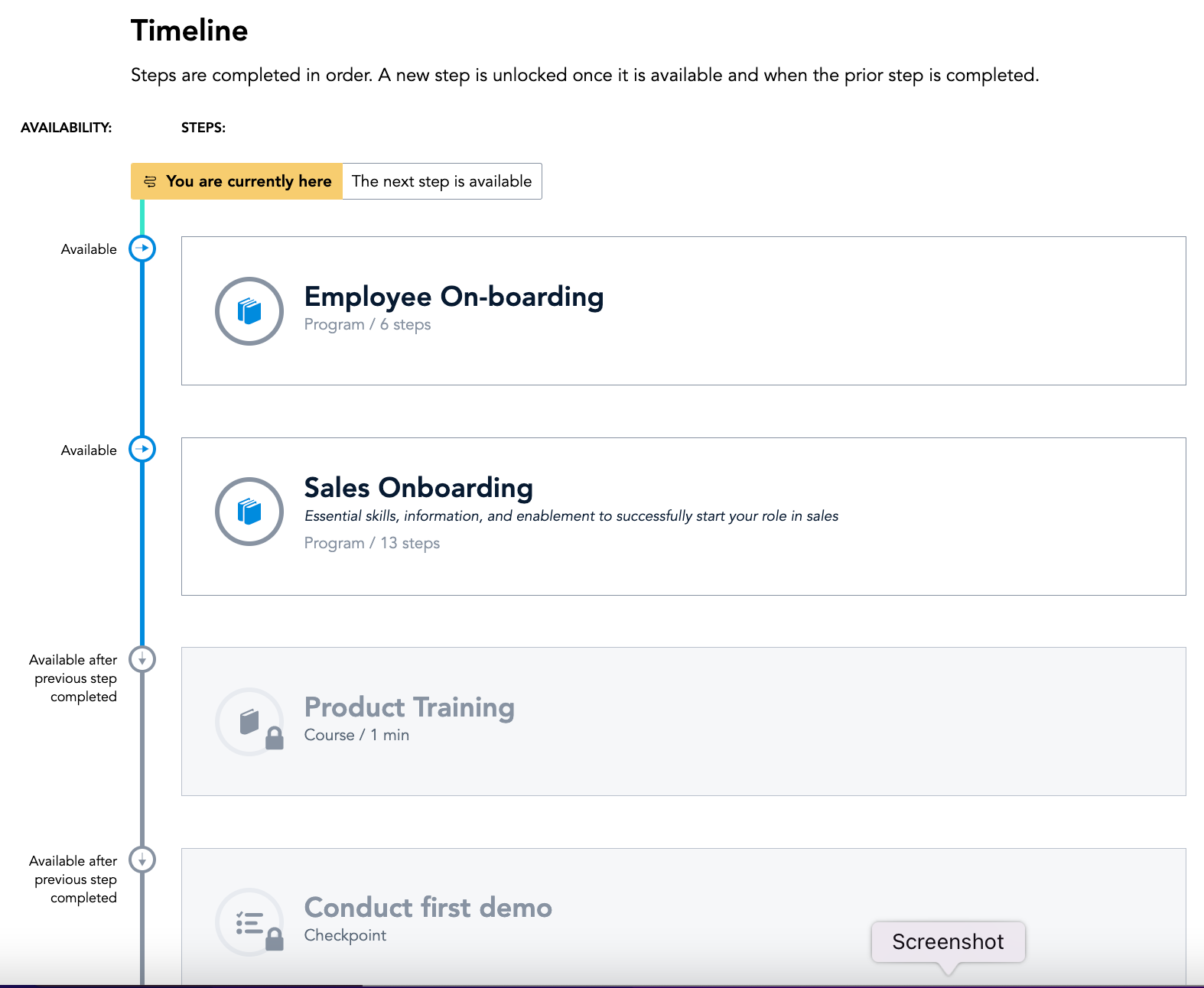
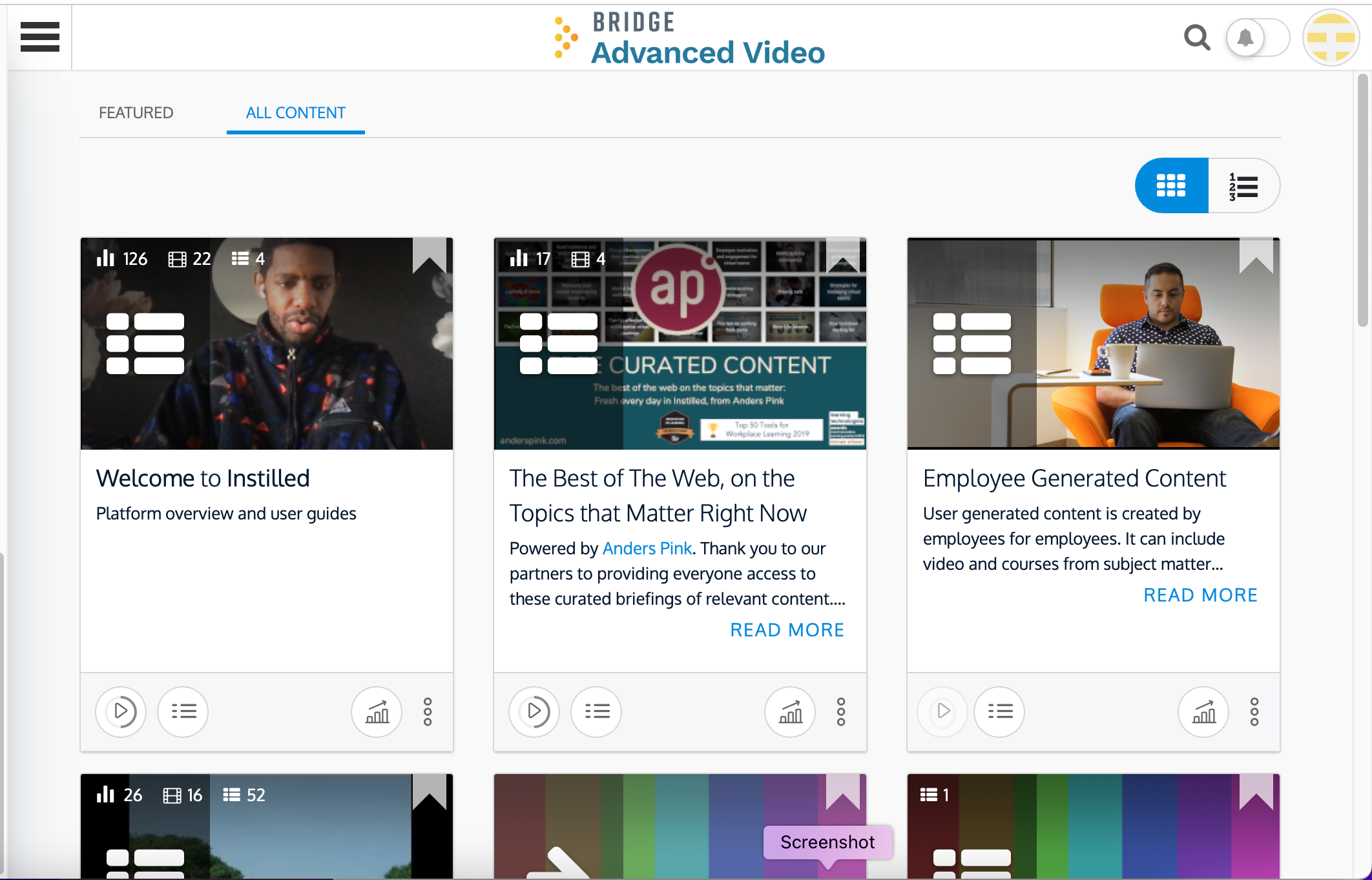
Bridge is an integrated talent management platform that combines learning management, performance management, career development, and engagement measurement into one platform. Bridge enables companies to develop their people with live, virtual, on-demand and experience based training, manager/employees 1:1s, and career development plans. Used by more than 1000 companies worldwide, Bridge helps companies achieve their strategic people development goals by facilitating connection, alignment, and…
$15,000
per year
Canvas
Score 8.6 out of 10
N/A
Instructure is an educational software company based in Sandy, Utah. It is the developer of the Canvas learning management system, which is a comprehensive software package that competes with such systems as Blackboard Learning System, SumTotal and Saba.
N/A
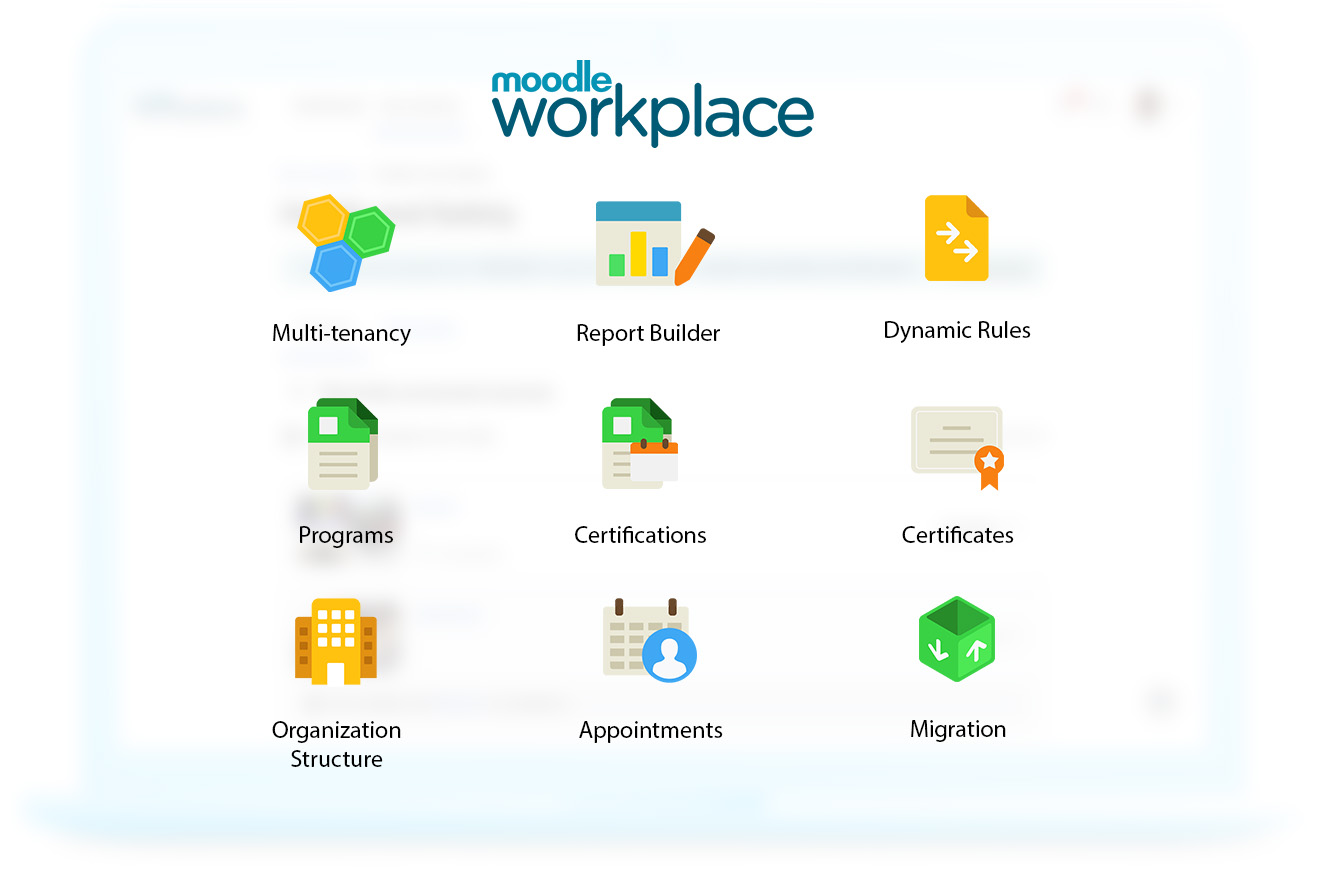
Moodle
Score 8.1 out of 10
N/A
Moodle is an open source learning management system with hundreds of millions of users around the globe and translated into over 100 languages, used by organizations to support their education and training needs.
N/A
Pricing
Bridge LMS, Skills & Performance Management
Canvas
Moodle
Editions & Modules
Learn (LMS)
Contact Sales
Talent Suite (LMS and Skills)
Contact Sales
Full Suite (LMS, Skills and Performance)
Contact Sales
No answers on this topic
No answers on this topic
Offerings
Pricing Offerings
Bridge LMS, Skills & Performance Management
Canvas
Moodle
Free Trial
No
Yes
Yes
Free/Freemium Version
No
Yes
Yes
Premium Consulting/Integration Services
Yes
No
Yes
Entry-level Setup Fee
Required
No setup fee
Optional
Additional Details
—
Must contact vendor for pricing information.
—
More Pricing Information
Community Pulse
Bridge LMS, Skills & Performance Management
Canvas
Moodle
Considered Multiple Products
Bridge LMS, Skills & Performance Management
Verified User
Professional
Chose Bridge LMS, Skills & Performance Management
Bridge is more open and more compliant with modern technologies than other systems we looked into. Some of them wouldn't run SCORM 2004 (only 1.2). Others wouldn't give back the SCORM data we fed to the system. Bridge also had the simplest interface out of any of the systems we …
Bridge was the obvious choice. I started exploring Canvas and discovered that the university was testing Bridge for possible acquisition. I became an early adopter and user. The single sign-on and integration with PeopleSoft data were huge.
We vetted over 20 LMS providers 3 years ago when we looked to partner with Bridge. I can attest that there is not a better solution on the market that is built with the end user at the center of design and implementation.
The decision to use Canvas was not mine; however, I happily use it. I have used Blackboard before and that is a great LMS. Prior to Canvas, we used Moodle here at SAE Nashville. Moodle (at least the version we used) was odd looking, difficult to interface with, and was limited …
Executive Director of Adult Education, Online Learning, and Learning Architecture
Chose Canvas
I have evaluated Blackboard, Desire to Learn, Moodle, and Canvas. I felt that Canvas provides the best overall experience for all users with its ease of use, ease of learning the new system, and customer support.
Canvas is a new age LMS. It allows teachers and instructional designers to scaffold and plan their courses in many different ways incorporating custom styling option and LTI integrations that I was never able to use in Blackboard or Moodle.
Canvas provides a nice blend of intuitive, simple interfaces with strong functionality. Other products will often try to do too much and become bloated (e.g., BB) or are not mature enough to provide reliable functionality in key areas without extensive support (e.g., Moodle). …
Canvas is the most advanced and most versatile of the products I have used in the past. It has more features and is better able to be customized by the user. Programs like Classroom, Moodle, and Edmodo are geared more toward younger users and therefore do not have the same …
Canvas is much more flexible and modern than Moodle or Blackboard where I started with programs like this in 2013. I don't actually make this choice though. In other words, I didn't select Canvas, but I am happy that the administrators here at CWU made that selection. I think …
Canvas is a pricey option, at least when compared to something open source like Moodle. Personally, I don't feel that Canvas has the same ability to customize as Moodle. However, the customer support from Canvas makes it stand out. With an open-source platform, it might be …
How content is delivered using Moodle is not up to the mark when compared to Canvas. The user interface is clunky when compared to a much simple and easy to understand user interface that of Canvas. Configuring Moodle can be quite tedious if one comes from a non-IT background. …
Verified User
Engineer
Chose Canvas
Moodle is open source and it is free. So we can implement our own server with Moodle very easily. But it is not very customizable. When we need a new feature, it is very hard to change as we do not have the ability to change. Canvas has been great help in this because we can …
Canvas is more cost-effective when compared to Blackboard Learn. Canvas has lately worked on features improvement especially in the grade center, for example, moving columns around like an Excel sheet, a feature not found in Blackboard Learn.
Canvas is a stronger platform. I used it as a teacher AND as a student in graduate school, and it is just the most put-together, professional version of a learning management system that I've used or seen. I do assume that Canvas is more expensive than its competitors, which …
Canvas was far easier to use, more feature rich, and much better supported. Teachers and students prefer it to the other solutions we've evaluated or used in the past. Anything that kids can use with minimal instruction is a major win for schools.
Canvas's ease of use and ease of administration were huge deciding factors in the decision to use Canvas as our preferred LMS. We found that on average Canvas took 1/3 the clicks to accomplish the same tasks as Blackboard, and the structure of data in Canvas is far superior to …
Canvas is easier to use, easier to develop, and easier to organize. My experiences with other learning management systems have been varied as both instructor and student, and Canvas truly makes the experience streamlined and worth it. The data is always accessible if you know …
Canvas is easier to use, navigate, and explain. Most of our customers prefer Canvas over the other learning management systems. The only challenge they find is linking non-app integrated content. Thus we set this up for them.
I've used Moodle, e-college, others, but Blackboard was the last LMS adventure we had. I had to evaluate these services prior to selecting Canvas, and based on my evaluation, and the resources that the University of Texas at Austin afforded us, I am confident that we made the …
Vice President for Technology Innovation and Consumer Experience
Chose Canvas
Canvas does not compare well against Corporate Learning LMSs like HealthStream and Absorb Anywhere LMS, but it does well against Blackboard, WebCT (no longer around), Desire2Learn, etc. It also does well against MOODLE, but MOODLE is very versatile - can be used as a corporate …
Canvas is head and shoulders above the other systems for features. responsiveness, openness, and ease of use. We went with Canvas because it was a step forward into the future of learning and our faculty wanted it. It has been a positive experience for us.
We felt that Canvas had the most modern interface, was the simplest to use, offered the best support, and offered the most features. The others products are all very good, but for our needs Canvas offered the most value for an institution our size and with our set of needs.
Canvas offers similar navigational and interactive tools as other LMSs; however, as an ISD, I have been most impressed by the quality of the overall look and feel of Canvas. Visually, courses published with Canvas have a more professional overall appearance. I believe this is …
During the RFP process we evaluated a number of platforms. Additionally, we were formally a Blackboard school. We needed our LMS to customize due to our unique relationship of 15 community colleges sharing resources including student enrollment. Canvas was up to the challenge …
Bridge is suited for scenarios where you need ppl to complete steps in order or test that they received the correct amount of knowledge after watching a video. I do think Bridge is less appropriate for companies that use it in external training scenarios as there is some key functionality missing. We gotten very good at brainstorming and finding solutions/ways to get Bridge to work the way that we need it to
It is really well suited for school situations like knowing what [assignments] need to be done when, getting feedback, getting points, finding the slides that the teacher used for explaining an [assignment] or theory. I think It would be less suited in business situations because it's [primarily] made to be a [one-way] communication tool for schools. Businesses need more control on individual levels I think[.]
Moodle is great for any environment where a class or other learning activity needs to be completed in an asynchronous manner. It can be used to post information, create interactive threads for discussion, issue quiz and exam work with grading, track and grade progress, and keep track of attendance. It is an overall wonderful solution for managing asynchronous learning.
Bridge is designed for the user so it is intuitive and easy to use.
Bridge includes an authoring tool so building custom content is fast and easy.
Bridge does a good job of providing user information for managers. Managers can quickly and easily see how many courses their reports are enrolled in and if anyone is overdue on required courses.
Bridge is also built with learning science in mind. There are multiple options for assessments, including an option for verified tasks to be completed to demonstrate proficiency.
Creativity options for teachers to create a virtual space that still has fun graphics and accessibility options.
Canvas has versatility in viewing options for assignment due dates such as the calendar built in feature as well as the dashboard options to display upcoming and due assignments.
Allowing teachers to create community with each other and collaborate in each-other's space.
Discussion platforms within classrooms for students to communicate with each-other and with their teachers.
Easy messaging portal within each virtual classroom.
Bridge could improve their categorization feature for trainings; folders would be great!
I'd like to see more ways to add content in the Bridge native environment in the future. Being able to create tables, infographics, and other training materials right in the system would be a great time saver.
The interface is not very intuitive. You must know what you are looking for in order to navigate effectively.
Although installation of Moodle is easy, it is a little more difficult to configure it with your other Learning tools. As an example, LDAP synchronization is a little difficult.
The interface is a little dated, even though new releases keep coming out (which is great!) none of them really add value to the appearance of the platform.
It has been very useful to our organization in getting compliance training complete. We have a 24/7/365 organization with some folks only working 2 days a week during the summer only, many work full-time jobs elsewhere and can't make weekday programs and facilities don't have to alter schedules to get mass numbers of people through training like you have to do with live training..
The other LMS tools have fallen behind. One reason is they are not able to update their systems, features, toolsets in a timely manner. While other LMS providers release bug fixes and new features several times a year, schools struggle to install and implement them in a timely manner. It is not uncommon for a school to take 6 months to a year to fully install and implement new releases on other LMS platforms. With Canvas, those features are released every 3 weeks, and there is nothing for a school to do other than choose to turn them on once released. This has allowed Instructure to innovate faster, and get new features and tools to customers quicker. Other factors include great pricing, customer support, and the innovative way in which LTI is implemented in the tool.
We use it because it is what have committed to back in 2011. Perhaps Moodle will evolve and advance in a positive way that will alleviate most of our user-based gripes? Perhaps it will not appear to be as cost effective given the need for a certain level of engineering and support staff to maintain it at a future level of sustainability? It's hard to say. As an enterprise scale critical application, we like it, but don't love it. Our instructors don't particularly like it at all.
The functions in Canvas are well integrated and consistent across the application, and mostly intuitive. Overall navigation and setup is streamlined through integrated features and navigation. The feedback we've gotten from our program participants is that it is easy to learn to use. It also integrates well with third party software like Google Docs and Blackboard Collaborate web conferencing software
Moodle can be used on a tablet, on a mobile phone, and on a PC. It is easy to navigate for learners and figure out for administrators. The learners can easily complete tasks and the administrators can easily track completion. The last thing about Moodle that one may not realize is that it somewhat resembles Facebook in its layout. This means that users are already familiar with the interface and therefore they are more comfortable using it.
Yes, Moodle is always available. We are self-hosted and Moodle is always up and available. The only time that it is not available is when we are upgrading it each semester. It is then down for just a few planned hours. That is in-between semesters and we let the faculty and students know. We do it on a Friday evening and it is back up within a few hours.
Moodle is an excellent LMS in relationship to any other one that I have seen or used. The pages load quickly and the reports complete in a reasonable time frame. Moodle has taken on Respondus, StudyMate, BigBlueButton, Turning Tech, Turnitin2, Certificates, Attendance, Tegrity, Questionnaire, Virtual Programming Lab, and Badges. All of these programs work right in with Moodle and do not cause any issues. Instructors may also use Camtasia and Snagit software as well as using webcams, downloading videos from the Internet, adding into books, or any of the many other areas within Moodle. Our instructors use the grade books without many problems and really don't ask questions much anymore. We upgrade Moodle every semester and are currently on 2.9+. Our instructors have basically learned to use most of the resources and activities.
I do not personally use Canvas support since we have a central office that helps us. However, our central office always has the answers we need and are always able to solve our issues - so I would assume that get great support from the Canvas team on their end. They also offer great training, which uses materials directly from Canvas
Moodle is open source, and must be evaluated in that context, but one also has to provide a fair comparison to competing products with commercial backing. Support varies depending on the component of Moodle. Bug reports in Moodle Core that affect security or stability are dealt with promptly. Functionality requests or features not working smoothly may or may not be addressed, depending on whether the functionality desired matches the "vision" of Moodle HQ. The user community provides excellent support for initial installation and configuration, but more complex questions may go unanswered, unless they are noticed by someone who happens to know the answer. The support forum feature at the Moodle site (the same feature used within Moodle itself) does not provide granular subscription to topic discussions, apparently by design, and Moodle HQ seems resistant to changing this feature.
Once you purchase and sign the contract there is nothing to install or hardware to buy. You can almost immediately start using it and have courses up and going within weeks. We signed in December and had pilot courses online ready to go for the start of school in January
Find a partner who will work with you during the implementation process. Be sure to provide ample training for veteran users on the changes and for newbies on the overall product.
Our previous LMS was Symphony. Hands down, there is no comparison. Switching to Bridge was the best decision made by our management team. All we used Symphony for was for our monthly compliance training. Many times people would complain that they would need to retake their compliance course as Symphony would lose records. It became a hassle having to retake a course because you didn't save a copy of the completion certificate. Bridge allows for more than just compliance training AND we are able to see if learners didn't complete their courses via the reports.
Canvas is more secure, has a cleaner design, and has more features. For the features, they have in common canvas still stacks up against [Smart school] by going for the extra mile. Besidfor e that, [the] canvas looks a lot more [professional] than [Smart school]. I didn't make the decision myself to get canvas instead of [Smart school] but I'm happy they did.
Blackboard has clear advantages in rubric management, and offers a content management system of its own. The largest barrier is cost for smaller or financially-disadvantaged organizations. However, as in any IT project, adequate resources must be made for even "free" software.
Well, I administer Moodle for a dozen of our divisions and there is a wide range of flexibility between offerings. I have course instructors who use every module i their course, chock full of videos, pictures, links to web tools for synchronous sessions within the asynchronous course. I also have others who are content with a syllabus, a few pdfs, links to podcast lectures and a few simple assignments. No matter if your organization is big or small, or if your requirements are strict for credentialing or non-existent (for internal know-how), Moodle can accommodate you.
Certainly, Bridge was not an inexpensive option when we were reviewing platforms. To date, we have not seen a positive ROI but believe that will happen in the near future as we expand an offering of an additional program.
Reviews from our users indicate that they appreciate the professional and easy to use features Bridge provides, along with the video based design of the program.
The program we developed with the Bridge platform supports our position as educators in our industry.
While it certainly takes more time to develop an online training vs a face-to-face we can offer the same content over and over again and meet a larger audience. There's no way we could have offered these trainings face-to-face to the same size audience. Economically it's just not feasible. Moodle allows us to share multiple trainings on a variety of topics over extended periods of time in a cost effective way.
The impact on early interventionists is still being evaluated, but we do know that early interventionist now have more ways to access professional development than in the past. The ability to customize the registration page has allowed us to track which agencies in Virginia are having their staff participate and we can see which topics are favored above others.
Other LMS's were far too costly. Aside from the monthly hosting fees (less than $200 a year), and the time it took to do the initial install and setup, Moodle is free. Once it's setup the only elearning costs are related to the development and creation of each training and then the setup of training on Moodle. This allows us to devote more time and money to the development and creation of more courses vs. the management of the system.
Minimal tech support for the users is required and most requests are limited to lost/userid passwords. The course designer is able to manage tech support needs for the users because so few requests are received.