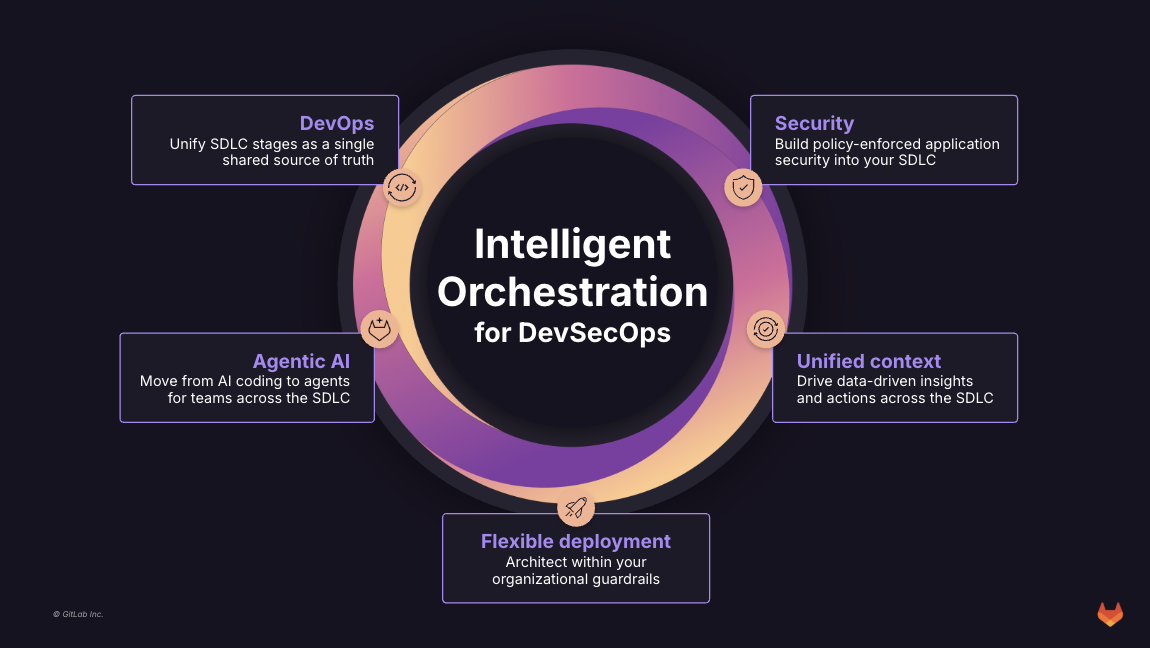
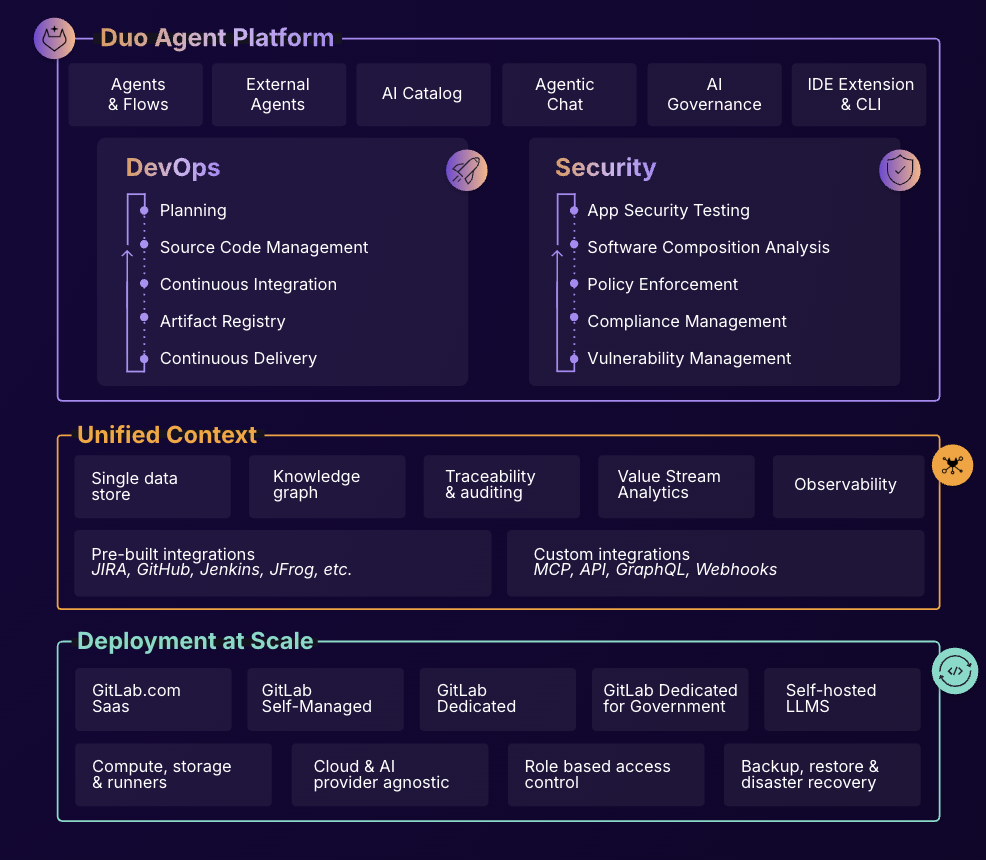
GitLab is an intelligent orchestration platform for DevSecOps, where software teams enable AI at every stage of the software lifecycle to ship faster. The platform enables teams to automate repetitive tasks across planning, building, securing, testing, deploying, and maintaining software.
$0
per month per user
Microsoft 365
Score 8.6 out of 10
N/A
Microsoft 365 (formerly Office 365) is a Microsoft Cloud subscription service that includes Microsoft Office products (Word, Excel, PowerPoint, OneNote, Outlook, Publisher, and Access). The software can be installed across multiple devices and ensures that users always have the most up-to-date version of the included Office applications.
$5
Per User Per Month
Pricing
Bugzilla
GitLab
Microsoft 365
Editions & Modules
No answers on this topic
GitLab Free (self-managed)
$0
GitLab Free
$0
GitLab Premium
$29
per month per user
GitLab Premium (self-managed)
$29
per month per user
GitLab Ultimate
Contact Sales
GitLab Ultimate (self-managed)
Contact Sales
Business Basic
$5.00
Per User Per Month
Individual
$5.84
*Per Month
Business - Apps
$8.25
Per User Per Month
Enterprise - F3
$10.00
Per User Per Month
Business Standard
$12.50
Per User Per Month
Business Premium
$20.00
Per User Per Month
Enterprise - E3
$32.00
Per User Per Month
Enterprise - E5
$57.00
Per User Per Month
Offerings
Pricing Offerings
Bugzilla
GitLab
Microsoft 365
Free Trial
No
Yes
No
Free/Freemium Version
No
Yes
No
Premium Consulting/Integration Services
No
Yes
No
Entry-level Setup Fee
No setup fee
Optional
No setup fee
Additional Details
—
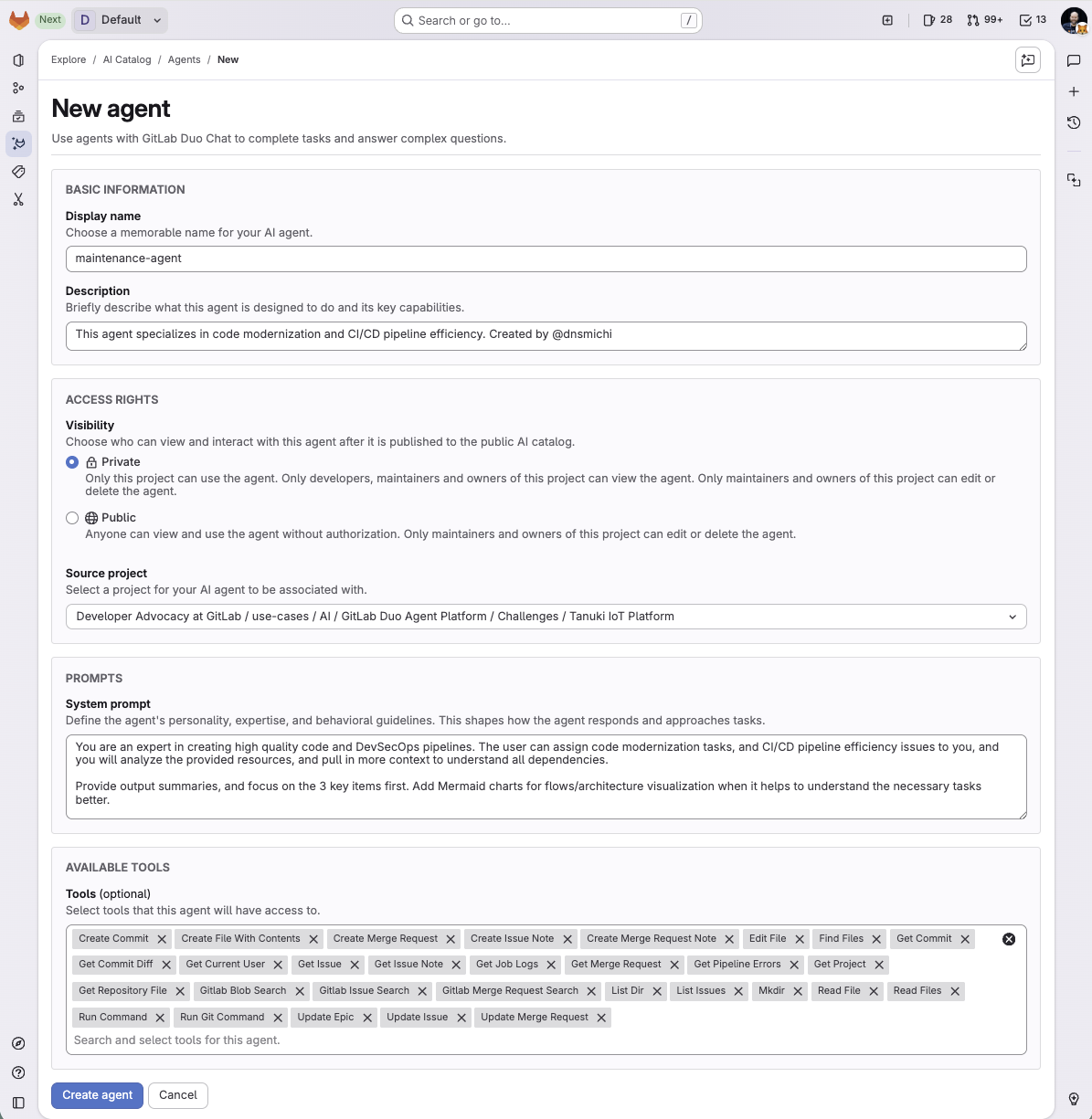
GitLab Credits enable flexible, consumption-based access to agentic AI capabilities in the GitLab platform, allowing you to scale AI adoption at your own pace while maintaining cost predictability. Powered by Duo Agent Platform, GitLab’s agentic AI capabilities help software teams to collaborate at AI speed, without compromising quality and enterprise security.
If usage exceeds monthly allocations and overage terms are accepted, automated on-demand billing activates without service interruption, so your developers never lose access to AI capabilities they need.
Real-time dashboards provide transparency into AI consumption patterns. Software teams can see usage across users, projects, and groups with granular attribution for cost allocation. Automated threshold alerts facilitate proactive planning. Advanced analytics deliver trending, forecasting, and FinOps integration.
GitLab fits our needs much better because it is a all-in-one solution and is easier to learn. We have a wide range of users - senior software developers and people who only write small, easy scripts or just start pipelines. Jenkins is rather useful when e.g. more fine-grained …
We have a small custom code development group. We only needed a basic entry-level code management repository. Gitlab meets our needs and is very price advantageous compared to others on the market. We also needed a system that is easy to administer and easy to grant access to …
Buzilla is easy to use and provides basic functionality to use as a bug tracking tool. If big size attachments are allowed it would have been great. Also with Bugzilla home->Test management area is improved by allowing multiple sections it would be awesome!
GitLab is good if you work a lot with code and do complex repository actions. It gives you a very good overview of what were the states of your branches and the files in them at different stages in time. It's also way easier and more efficient to write pipelines for CI\CD. It's easier to read and it's easier to write them. It takes fewer clicks to achieve the same things with GitLab than it does for competitor products.
Microsoft 365 would be well suited for medium to large enterprises. This is where there are several hundreds or thousands of people. Since most everyone has used one of the applications the learning curve would be reduced. Another reason would be the ability to implement security measures to prevent access to sensitive data. This could justify the cost of an Enterprise license.
Open source! No license fee involved, no limit to the number of licenses.
Easy to install and maintain. Installation is very easy and hardly needs any maintenance efforts, except when migrating from one version to other. Each project can have its own group of users.
Includes all the core features/fields that are needed to log a software bug/issue.
Multiple attachments are possible, supports various formats.
Good for reporting. Filtering mechanism lets you query bugs by various parameters.
Cloud Based. I'd like to see bugzilla be cloud based. The company I currently work with made a final decision to change db's for this specific reason. Due to the frequency of travel in this company, they need access to bugzilla from differing national / international locations.
Larger File Attachments. I believe the limit of a bugzilla content upload is 4 megabytes. For many of our video'd issues, this file size is simply impractical without the additional effort exertion on video compressor applications.
For future projects I will look at something that is hosted in the cloud that I don't have to manage. I would also like something that has a more modern feel to allow my customers to use it as well as my employees.
I really feel the platform has matured quite faster than others, and it is always at the top of its game compared to the different vendors like GitHub, Azure pipelines, CircleCI, Travis, Jenkins. Since it provides, agents, CI/CD, repository hosting, Secrets management, user management, and Single Sign on; among other features
So far the Microsoft 365 platform provides features and tools that can cater to 100% of present organizations needs considering both technical and business necessities, however most features are not been effectively utilised at present. The current featureset is able to cover for most of the future needs of the business and technical functions.
This is a pretty straightforward system. You put in the bug details, a ticket is created, the team is notified. The user interface reflects this very simple and straightforward flow. It's certainly much easier than trying to track bugs with using Excel and email.
I find it easy to use, I haven't had to do the integration work, so that's why it is a 9/10, cause I can't speak to how easy that part was or the initial set up, but day to day use is great!
Microsoft 365 is the gold standard for performing project tasks in a professional environment, enabling the quick transfer and exchange of files and ideas for team members who work locally and remotely. Its suite of tools is familiar and has evolved to being cloud based, allowing for files to be updated in real time from near and far.
I've never had experienced outages from GItlab itself, but regarding the code I have deployed to Gitlab, the history helps a lot to trace the cause of the issue or performing a rollback to go back to a working version
To-date Microsoft 365 platform has offered an amazing uptime and availability percentage per year compared to all other products which provide the stability and overall business resilience of their ecosystem which is a great relief for information technology service entitites which heavy rely on Microsoft offerings as a whole to redeliver their own custom products
GItlab reponsiveness is amazing, has never left me IDLE. I've never had issues even with complex projects. I have not experienced any issues when integrating it with agents for example or SSO
The Microsoft 365 tools expects and demands a substantial amount of system resources to operate at optimal level and even more when integrated with other applications which is a downside, however given that external supporting tech factors such as fibre/broadband speed bandwidth, high speed RAM and ample storage resources are allocated the tools work error free providing robust communication
Since it is open source, it doesn't have customer service. However, the amount of information on forums is vast. If you can wade through it, you'll get what you need
At this point, I do not have much experience with Gitlab support as I have never had to engage them. They have documentation that is helpful, not quite as extensive as other documentation, but helpful nonetheless. They also seem to be relatively responsive on social media platforms (twitter) and really thrived when GitHub was acquired by Microsoft
Over the past 8 years of using Microsoft 365, I have noticed that they change vendors often. This always leads to a poor experience in the beginning, then levels out after some time for the company to get things worked out. As a customer, it is really frustrating because I don't have time when something isn't working to have them "look into my issue" and get back with me. They have even closed a ticket I specifically told them to keep open. Your applications are only as good as the support.
The resellers involved with selling Microsoft products are reluctant to provide in person specialist trainings to consumers due to the fact of costs of economies of scale and is not provided free of charge most of the time. In Person trainings needs to be agreed to at the initiation of projects and implementations for better ROI.
The standard training offered with 3rd part resellers are fairly standard and covers the basic workability however the trainings needs to be specifically customised according to unique requirements of the organizations. for example an MSP would need to master specific communications verticals within Microsoft 365 whereas and online store using Microsoft 365 would needs to master a different set of tools within the suite to get the best ROI post implementation.
Implementation was pretty simple. Particularly because the product cannot be customized so there is not much to do apart from getting it up and running.
The Microsoft support partners are more than capable of handling implementations and dealing with unprecedented errors during the implementations. Not part of the implementation though the setup was done with minimum misconfigurations which is evident with present live setup which works fine without any bugs and gaps at present context.
We migrated away from the whole suite of Rational tools because of their massive complexity around administration and inflexibility regarding workflows. In addition, the suite was insanely expensive, and users hated the usability of the tools. We evaluated, and liked JIRA, but because the organization was looking for cost savings, we ended up going with Bugzilla and it's FOSS model so as to avoid ongoing costs.
Gitlab seems more cutting-edge than GitHub; however, its AI tools are not yet as mature as those of CoPilot. It feels like the next-generation product, so as we selected a tool for our startup, we decided to invest in the disruptor in the space. While there are fewer out-of-the-box templates for Gitlab, we have never discovered a lack of feature parity.
Typically I prefer working with companies with Microsoft 365 as their main tool because they're usually a fast growing company with a global presence. I like using it for work because it's easy to collaborate, share, review, comment, reply in any of the tools. The mobile app for Outlook and Teams are lifesavers when we're constantly traveling and you can join meetings on the mobile Teams to never miss a beat.
Microsoft pricing is not very expensive and yet not very cheap as well, and it hovers in between the baseline. The charges are mostly based on the tier level partners who charge based on their individual reputation in the market. Power negotiation will lead to cost effective and attractive pricing
Multiple tools within the same platform have been deployed successfully within different functional technical and non technical teams such as Devops, SOC, NOC, Shared services, Managed services, Global Information technology, Cloud operations, Finance, Administration, human resources and all these teams collaborate while maintaining central uniformity in terms of global standards who are dispersed in different geographical locations with ease
Have not directly obtained professional services from Microsoft but rather obtained specialized services such as implementations and configurations, setting up and integration support with Microsoft authorized suppliers, 3rd parties, and resellers, which has been a pleasant experience. Again the level of delivery quality on professional services is based on the level of hands on exposure of the 3rd party
It has made the SDLC process more efficient. Bugs were logged and tracked in emails or in Excel sheets leading to slow communication and at time version issues with multiple files. Being an online tool, Bugzilla solved those issues, improved communication, instant status updates and improved efficiency.
We have used Bugzilla with a lot of federal goverment agencies (DHS, CMS, SAMHSA, CDC, HHS etc). Project Directors adn Principle Investigators were at times given access to Bugzilla which provided a snapshot of open vs closed issues.
Some groups would resist using Bugzilla with the email reminders being the main reason. Turning off or reminding them of features where we can 'control' email notification helped a lot.
We have a lot of nonprofit users, so they have a good ROI.
I like the constant updates without having to purchase the software repeatedly.
I used to purchase each Office (insert year here) often, so the software was up to date and had the newest options and connectors. I think my return on investment would have been much better if Microsoft had updated those versions to keep them current; after all, we did pay for them.
Microsoft 365's offering a monthly fee or a discount for a year helps, and you can look at it as a free backup if you have everything set to back up to One Drive. (Cloud-based document filing you can access anywhere ( with an internet connection)—you Can't beat that!)