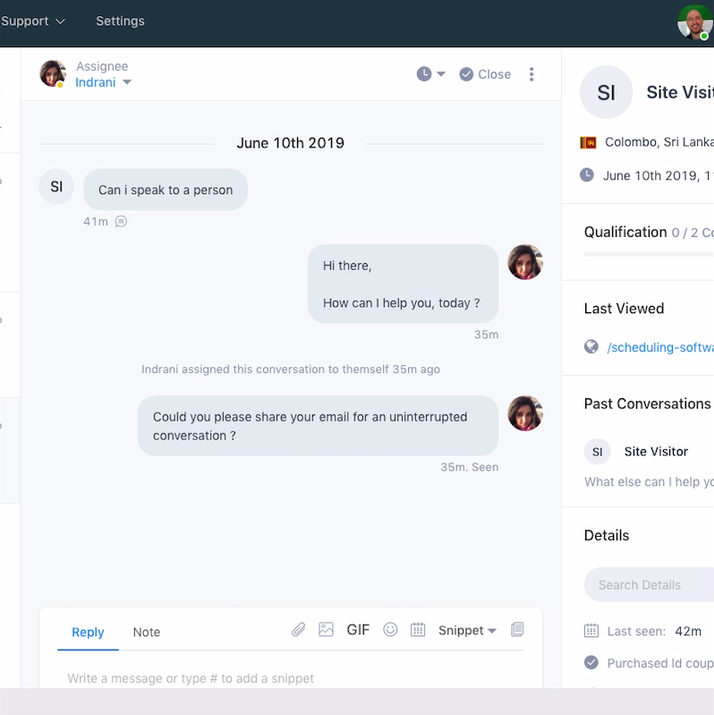
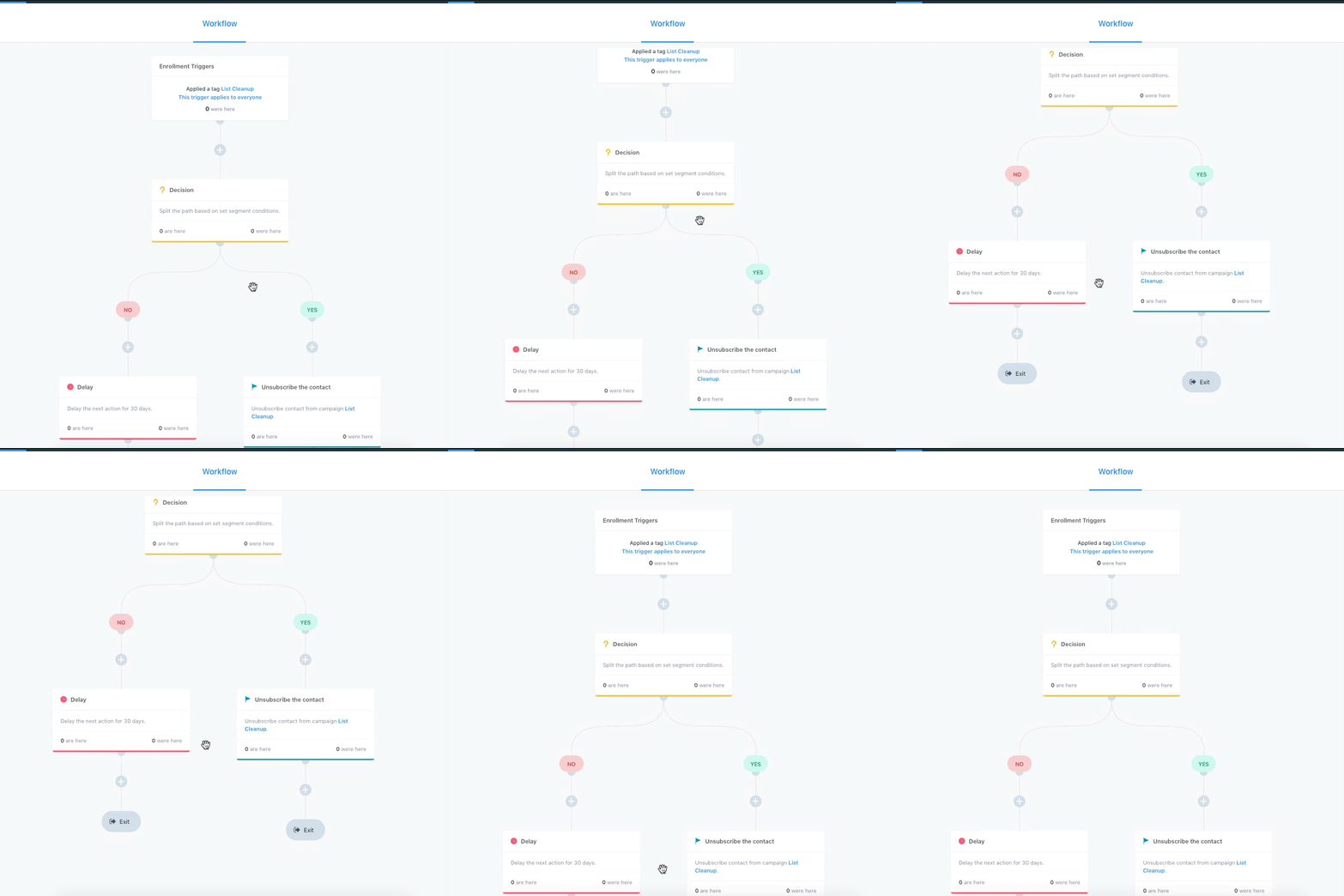
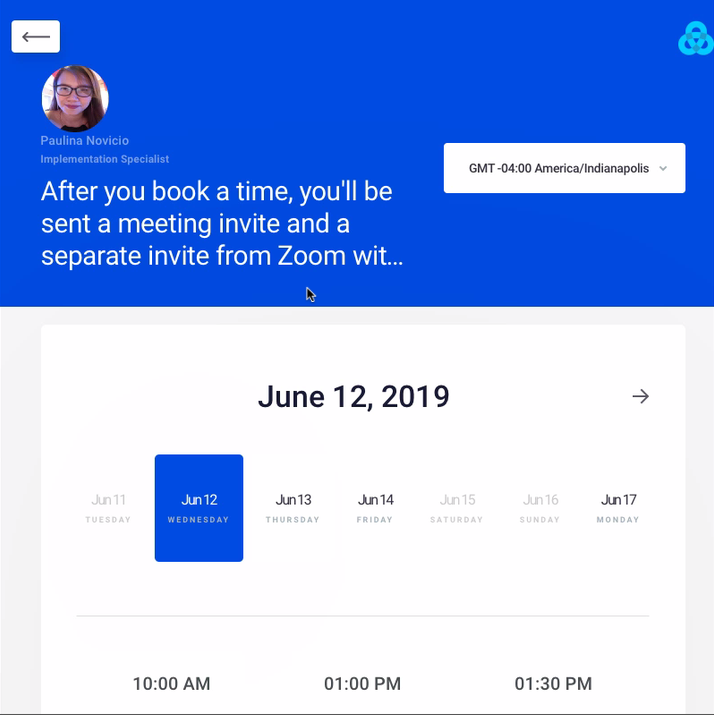
Gist is a unified marketing, sales, and support platform. It includes live chat, a help desk, knowledge base, email marketing, marketing automation, opt-in forms, and more.
$29
per month
Fin by Intercom
Score 8.7 out of 10
N/A
Fin is Intercom’s AI Agent for customer service, designed to deliver high-quality answers, even for complex queries. It works with any helpdesk, or it can be paired with Intercom’s next-generation Helpdesk to get the full Intercom Customer Service Suite.
$0.99
one-time fee per outcome
Salesforce Agentforce Service
Score 8.5 out of 10
N/A
Service Cloud is a customer service platform that helps businesses manage and resolve customer inquiries and issues. It provides tools for case management, knowledge base, omni-channel support, automation, and analytics, enabling companies to deliver exceptional customer service experiences.
$25
per month
Pricing
Gist
Fin by Intercom
Salesforce Agentforce Service
Editions & Modules
Professional
$29.00
per month
Premium
$99.00
per month
Fin with your current helpdesk
$0.99
one-time fee per outcome
Copilot add-on
$35
per month per user
Pro
$99
per month For analysis of 1,000 conversations
Fin with Intercom’s Helpdesk
from $39 + $0.99 per Fin outcome
per month per seat
Starter Suite
$25
per month
Pro Suite
$100
per month per user
Enterprise
$165
per month per user
Unlimited
$330
per month per user
Agentforce 1
$550
per month per user
Offerings
Pricing Offerings
Gist
Fin by Intercom
Salesforce Agentforce Service
Free Trial
Yes
Yes
Yes
Free/Freemium Version
Yes
No
Yes
Premium Consulting/Integration Services
No
No
No
Entry-level Setup Fee
No setup fee
No setup fee
No setup fee
Additional Details
—
Fin comes with a 90-day money-back guarantee. Here's how it works:
Intercom states that users who sign up for the Fin Guarantee Success Program and do not achieve at least a resolution rate of 65% will be paid $1M. This program is designed for high volume customers.
Eligibility criteria:
High volume customers (over 250k monthly conversions) in North America and Europe. Intercom states that phase one of this program will admit customers on Intercom Helpdesk or Zendesk.
To begin with, the attitude in all these well-established brands is absolutely horrendous as they think they run the world. Gist is so friendly and every time I have spoken to anyone of them they all take it personally and help you to the end. I have even been helped many times …
We used Intercom in addition to Salesforce (where we provided support for our core business customers), and to Ada (core business customer chat interface). Because we had a separate product with a smaller, more lightweight business base, Intercom was perfect for providing …
We found Intercom's layout to be more user-friendly and the options for integration and setup to be much easier than with other products we looked for.
We've used both Drift and Salesforce chat at Owl Labs in the past, and I didn't find them to meet our needs or customer needs the way Intercom has been able to. Intercom ranks higher for us regarding Integrations offered, customization, AI functionality, and user-friendliness. …
Verified User
Contributor
Chose Fin by Intercom
Keep in mind that my day-to-day focuses mainly on Help Center/article content. That's all I'm comparing/evaluating in this specific response. Intercom has come a long way in the two years or so that I've been using it. They've made major strides toward feature parity for …
We have selected Intercom as an affordable alternative to Salesforce Cloud when we were a small startup with smaller operations and volumes. We have gone bigger and now Intercom is much more expensive than Salesforce for us. They have changed their pricing strategy many times …
If your marketing model is selling products, services, or SAAS where you are doing inbound marketing and your website will do most of the lead generation and conversion, this is a great product. From live chat, support, event tracking, and automation, you could almost put your entire business on autopilot. If your marketing model is mostly outreach to cold leads and conversion, this software currently does not have any type of sales stages or task generation. I would still use Gist for website inbound but use another software for outreach and cold leads then when they become a lead put them into Gist for marketing automation.
FIN is great if you need someone to direct the customers based on their problems. You also have the option to use multiple languages if you have a worldwide customer base, so that's great. If you provide enough documentation to feed it, FIN can also solve tickets on its own, which enables your team to focus on other tasks. You can also have him handle conversations in other applications, such as Discord or Slack, and have them create ticket issues in JIRA if your team uses it.
I think Service Cloud is best suited for medium to large operations that require both proactive and reactive service. It’s a great fit for post-sales support. However, I wouldn’t recommend it for very small companies because it can be quite costly, and many of the features may go unused. Salesforce also performs best when you have a capable team managing it, so it’s important to consider your organization’s size and readiness before starting. Once you do, I recommend exploring other parts of the Salesforce ecosystem—Service Cloud works even better when integrated with Sales Cloud, since it allows better visibility across teams.
Customer service via a unified inbox so you dont have to separately monitor your twitter, Facebook or IG account for consumer communication there. Gist unified all into one inbox, better than anyone else I've seen in the market. They archive all communications and tie them back to a single user so you get unified customer history / data.
Marketing segmentation and automation: they track user history and behavior across the site and have super detailed segmenting capability, on par with ActiveCampaign's, but better I'd say. Better UI for the marketing admin person, and more unified data than in AC.
Live chat and chatbot. Usually it's either one or the other but with Gist you can do both seamlessly.
Email to case is an interesting piece of it. The threading is very strong, sometimes too strong, but it does very well at handling the incoming emails.
The omnichannel routing, using skill-based routing is really effective.
Pathing. So making the workflow and helping the team understand what it is that they're trying to do, what they have to accomplish, those step-by-step pieces. That's really helpful.
Plan limits can be confusing. For example, there is a monthly charge for support and a monthly charge for "growth," plus there's a separate charge depending on how many contacts and seats you have. Perhaps this is normal in the industry, but it can make it a little challenging to understand the bill every month.
The vast amount of features means development will never be as fast as you'd like it to be (even though they release updates all the time). This may not actually be a valid concern, and it certainly isn't unique to Gist (who doesn't have a wishlist they're waiting on their favorite SaaS to get to?), but I do believe the likelihood of being stuck without your desired feature being developed goes up a lot as the product gets bigger and bigger.
Email deliverability has been less than perfect in the past, but it has improved drastically in the last year.
It seems some users really struggle to figure out how to escalate to a human (especially through email).
Not excited about how "soft" resolutions still count as resolutions and are paid for. Though some abandoned cases appear to be able to be concluded as "the user got the answer they needed", there are others where they clearly didn't, because they just open up another chat (or even more), trying to get more info. This pads the resolution stats and makes it seem more effective than it actually is.
Cost -- Fin is quite expensive. It helps us with scaling coverage, but we're not really saving money.
We had a principle initially to try and use Omni as much as we can from the user experience perspective, but have found that fairly restrictive. It was very difficult to actually get the right customer experience and customer engagement going. So we're actually on a journey at the moment to replace all of our Omni with Lightning web components that gives us that flexibility. That's probably one area where we've had some challenges in terms of how we've used the product out of the box.
Gist is a quite reliable service with a lot of added values. We don't need to pay for different Saas for these important features. If I had an issue the team was super responsive and helpful, that is essential for every business. The email delivery is great, so virtually no email has landed into spam folder
We have been and will be continuing our journey with Intercom and nothing too concerning has happened that I have experienced or heard of that has us on the edge yet. If it ever happens it will be something along the lines of "Outgrowing" the use of need of the platform.
Professional edition works best for a small company with lower call volumes and is very useful but as you grow exponetially I think it has limited ability to do all the things we want to - SLA management, defect, release management to name a few. Reports and dashboards being available in real time.
It’s pretty simple, but it does a lot so there are more complicated features which depend on an individuals ability for software implementation. I am not an IT expert and I’ve managed to implement everything myself, others that are more tech-minded may find everything easier.
The core experience is solid but the key friction across our team is that there are so many new features for improving Fin are being launched. Content improvements, guidance settings, recommendations, trends, and monitors are each useful in isolation, but they sit across separate areas of the platform with no clear starting point. The recurring feedback from my team is that it is hard to know where to focus. A consolidated "Improve Fin" section could really improve the experience, the ideal option would be a training page where our team could improve Fin in one place, ideally by answering questions and Fin would then be able to add those details in the right place, where it's creating new guidance or building procedures. I feel that would make uptake a lot quicker.
I had Salesforce experience prior to using Service Cloud which made it a little easier to learn and navigate, but overall my team (some who had no Salesforce experience) caught on very quickly and found Service Cloud to be easy to use.
Working on an application that caters to customer needs requires a platform that acts as a mediator between the actual person and the client. This mediator handles the customer and resolves many of their doubts, helps them map through the entire process, and automates the processes. Such a platform is Salesforce Service Cloud. For queries that cannot be serviced by the platform, it creates a separate ServiceNow ticket for us, and it is assigned.
The Salesforce Service Cloud generally has very good performance, however the overall new Lightning user experience can bring that down. For example, if you have too many tabs open, then it can take a while for the Lightning UI to load. This UI is probably not well equipped to handle loading of all of that information at once, but Users tend to leave their tabs open all day long. It can also be fickle depending on which browser you use, what extensions you have installed, and whether you've cleared your cache. This can be the downfall with any software as a service though, not just Salesforce
Fantastic support. Ask a question, get an answer within 24 hours every time. And sometimes within a few minutes. They've always come through for me, helpful and, even when it's an issue on my end, they point me in the right direction.
I can get help by asking Fin questions about itself. It answers accurately, citing its own Help Center resources with visuals. It can reason and dialogue well. But when it comes to getting human support for Fin, it is not as quick. It can sometimes take a few days. They are polite and well-meaning. Some things aren't their fault (product limitations), but there was one occasion where something took a long time to resolve with lots of back and forth but it was I who found out the error in the end that they missed, so they didn't really help resolve it.
Salesforce offers support, although it generally gets routed to overseas support teams first, and once they are unable to help, it gets escalated up the chain to higher tiers. Frequently, the answer back from support is that there is no native solution, and we either have to turn to the AppExchange for some solution provided by another developer, or custom build our own solution.
Our in-person training was provided by our implementation partner and it was quite good. This was in part because we were already working with them and so it naturally leant itself to a good training relationship. And because they were building our customizations and configuring things, they could then provide training on those things naturally.
Trailheads are great but it was often unclear what actually applied to our organization. This made it difficult to get a whole lot out of it. Part of it is that because the basic Salesforce features didn't quite work for us, we had to add customizations, which then nullified a lot of the training.
I would go through an implementation very differently knowing what I know now. It was difficult coming from systems we liked in post-sales service and having to adapt to the clunky and underwhelming feature set in Salesforce. I would trim back our expectations
Gist combines all our previous products into one application and adds many more features that would require more apps. Gist is excellent and a no-brainer all-in-one application when compared to having to manage multiple applications at higher cost. The support from the whole Gist team has been extremely responsive.
Although we have not utilised a specific chat box like Fin before in other websites, we have used ChatGPT and Claude within our general work. Our Product and Engineering team make use of Devin within Azure Dev Ops to support with their work. However, Fin is the most suitable for what our Support Team requires as this can be integrated into our chat with customers.
We selected this product because we already had some competencies in Salesforce. We own a Salesforce partner with expertise in this area, and on top of that, Salesforce purchased it — it was originally called Velocity. When Salesforce decided to acquire it, that finalized the decision for us.
They are perfect for me as a someone who needs a lot of bang for the buck. The chat messenger device on my website alone has brought me new prospects that I did not have to spend money recruiting.
I am able to save hours of time with the automated emails that are GDPR compliant.
I don't have to pay for a designer to have excellent looking emails either.
New role opportunities — Using the “Fin-first” approach has reduced the workload for our Tier 1 team, giving them more time to focus on their own career growth. It’s also opened the door to a dedicated, AI-focused role, where a team member regularly reviews Fin’s answers and makes updates to help it perform even better.
Enabling Fin has also reduced our response time and allowed us to meet SLA's.
We have cut our service team in half over the past 5 years due to the efficiency of the tool
The amount of direct inquiries to our technical team is less than 10% compared to the number support tickets that get entered in the system for them to work in a more organized manner
Responses are 100% more timely because tickets can be responded to by any individual in the queue or on the team, as opposed to direct emails to just one person