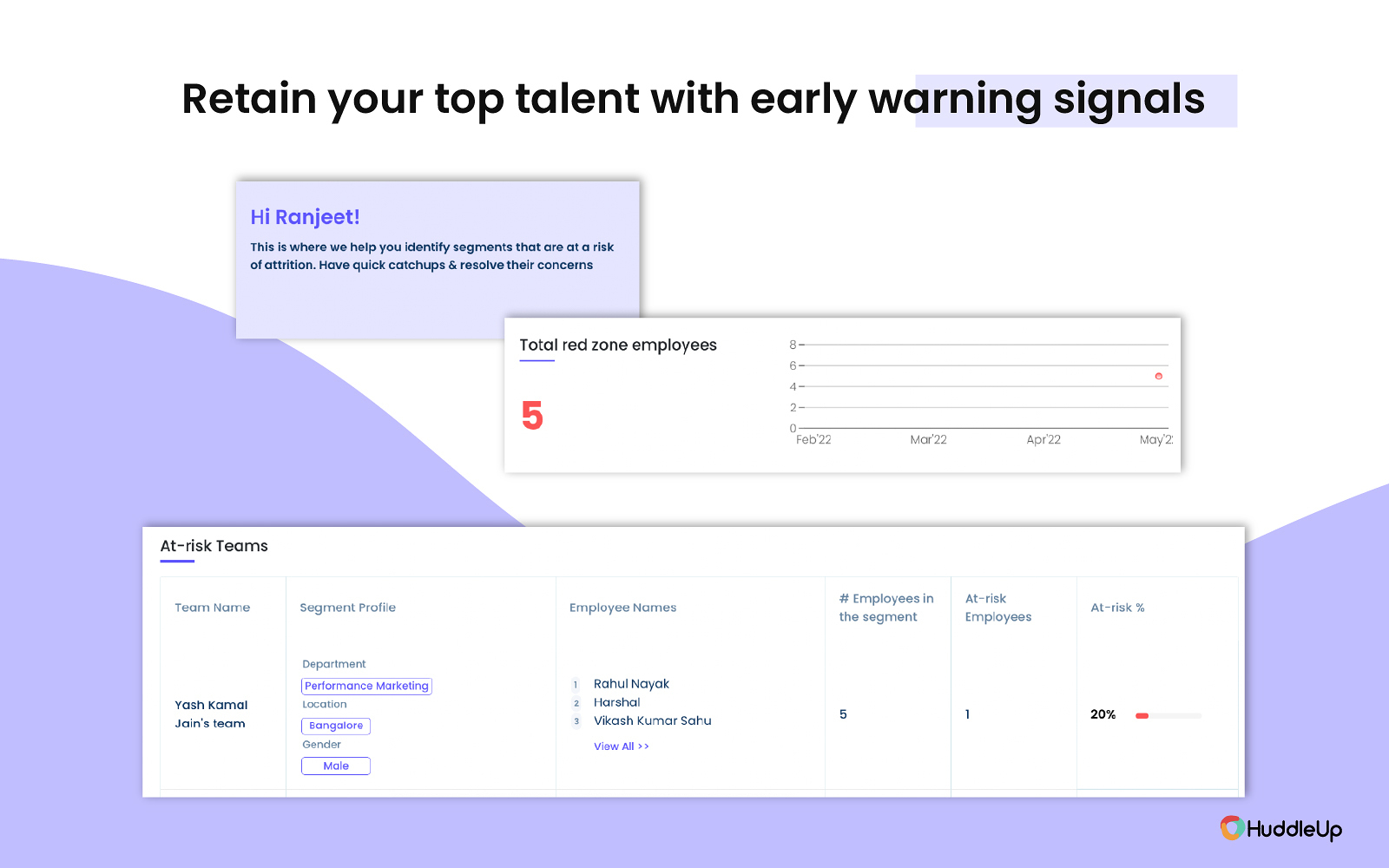
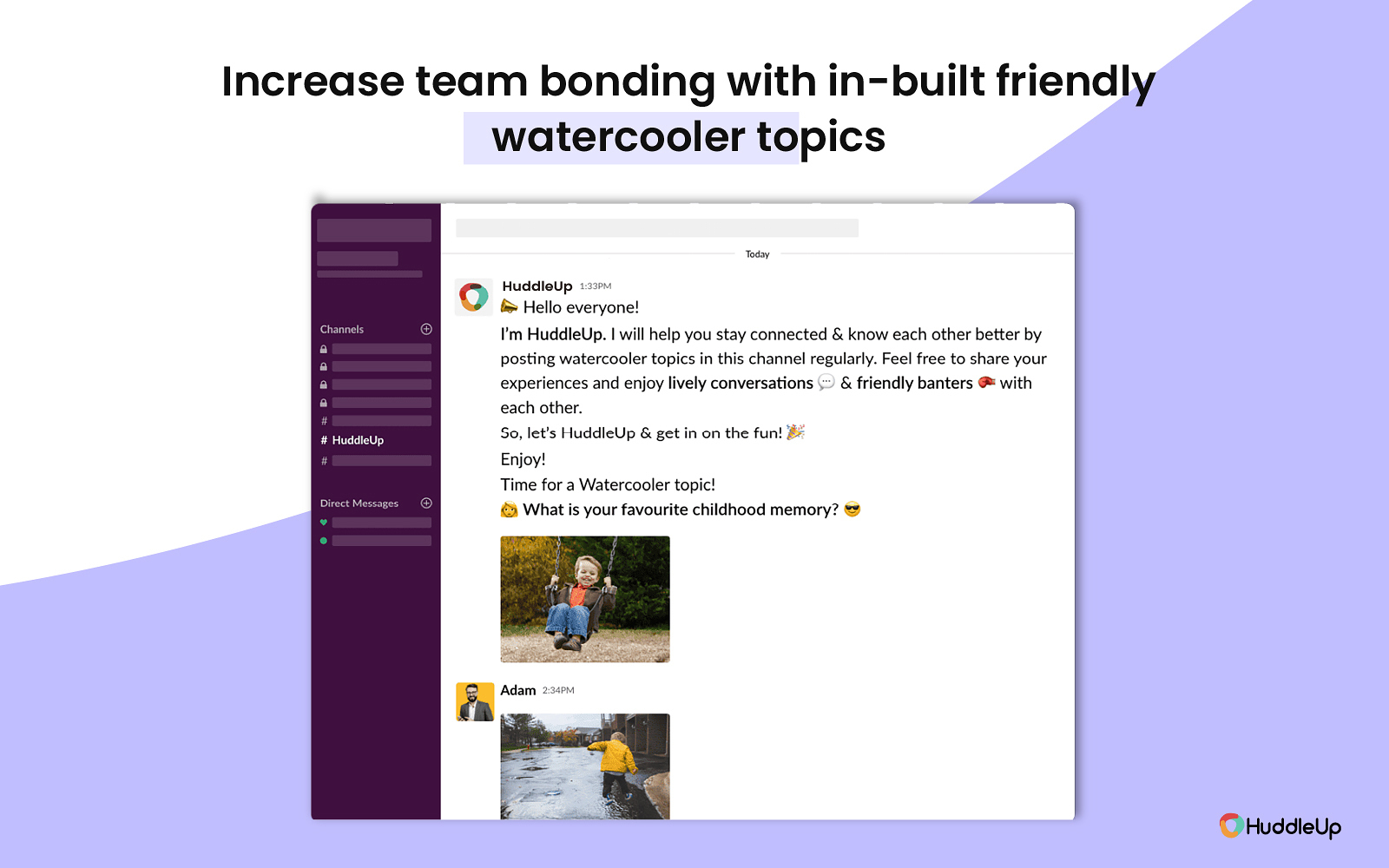
HuddleUp is an app for Managers & Employees to get the actionable feedback they need to build engaged, high-performing teams. It helps to fight team burnout, celebrate wins, share anytime feedback and build psychological safety, all within Slack. The vendor states that teams using HuddleUp can experience: - an increase in talent retention - an increase in engagement levels -…
N/A
Jive
Score 8.7 out of 10
N/A
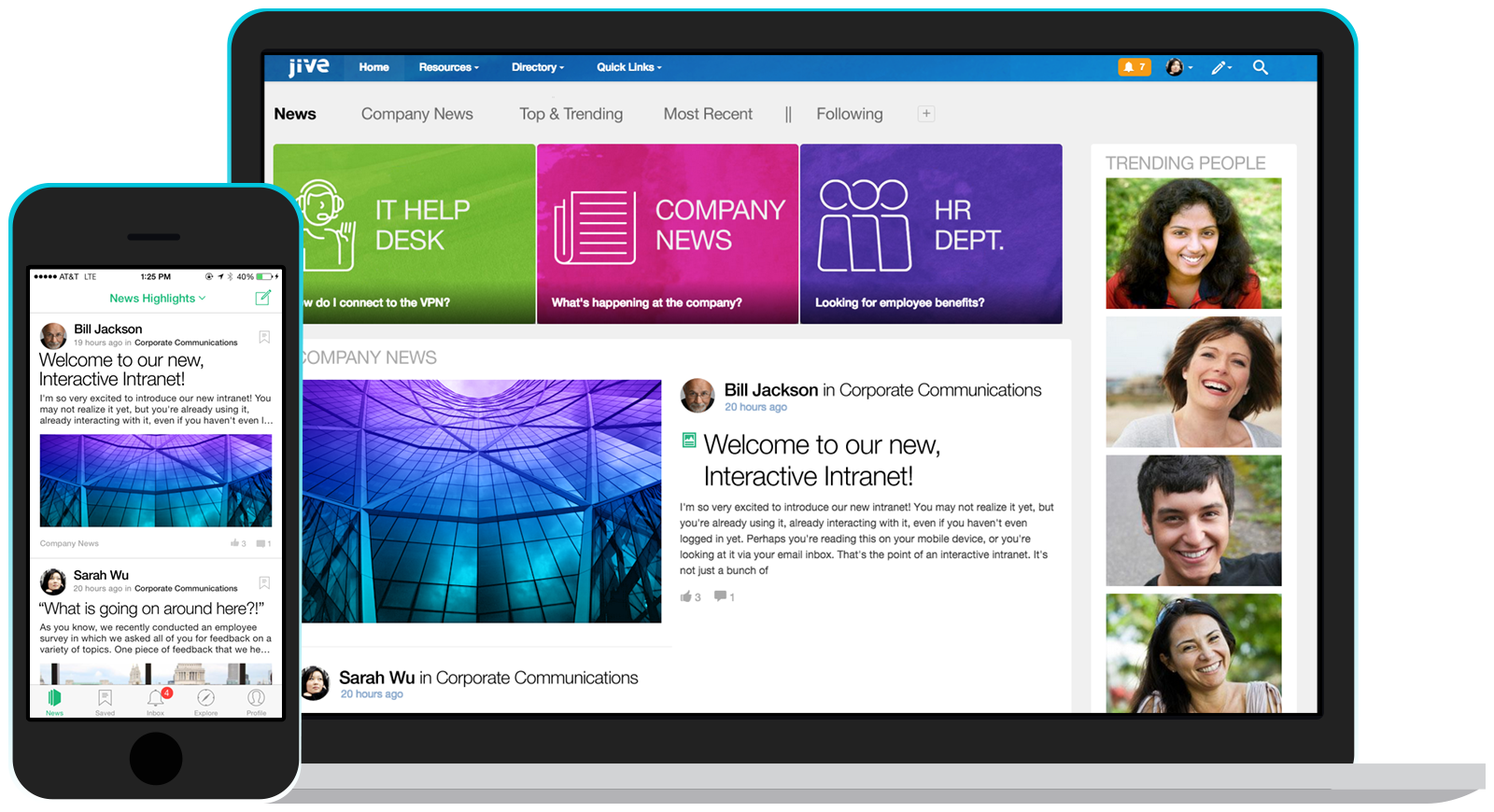
Jive Software, part of the Aurea family of customer experience solutions, provides the gateway to an organization's most important assets – its knowledge and people. Jive's interactive intranet solution promises to connect people, information and ideas to help businesses outpace their competitors. The vendor says the product has more than 30 million users worldwide across every industry, and is consistently recognized as a leader by top analyst firms.
N/A
Workplace from Meta (discontinued)
Score 8.0 out of 10
N/A
Workplace was a business communication tool from Meta with features like Live Video and Groups, that connected employees. Its discontinuation began in August of 2025, and by June 2026 a full shutdown is anticipated.
N/A
Pricing
HuddleUp
Jive
Workplace from Meta (discontinued)
Editions & Modules
No answers on this topic
No answers on this topic
No answers on this topic
Offerings
Pricing Offerings
HuddleUp
Jive
Workplace from Meta (discontinued)
Free Trial
Yes
No
No
Free/Freemium Version
Yes
No
No
Premium Consulting/Integration Services
No
No
No
Entry-level Setup Fee
No setup fee
No setup fee
No setup fee
Additional Details
If you are 100+ members team, ask for a customized pricing at hello@huddleup.ai
—
—
More Pricing Information
Community Pulse
HuddleUp
Jive
Workplace from Meta (discontinued)
Considered Multiple Products
HuddleUp
No answer on this topic
Jive
Verified User
Anonymous
Chose Jive
We had a Google phone number set up before and Jive was a lot better option than that. It is more consistent and can be configured much easier and with more advanced settings. Additionally, based on the pricing as well as working with the rep on our account, it was a perfect …
We also use Skype to communicate in our organization. They are both useful for organizational communication. The good thing is in Jive, you will have your own personal timeline. Jive also has a newsfeed or timeline that you can browse where you can see the latest updates from …
Jive provided phone support which can be useful in case of emergency. Jive's initial pricing was free which helped jumpstart the process. It also provided JIRA integration which we needed for certain teams. Jive also had Zendesk integration which was useful for support teams to …
We use Jive to keep in touch and share mass updates/important information to the company. It's a good way to keep up to date on what's going on, read articles others share and get to know each other a little better.
We found that Jive had integrations with the existing IT infrastructure/tools which was nicely aligned with our strategy of playing nice with the existing ecosystem, rather than compete against it. Jive uses a technology stack that is well known by our organisation …
I honestly don't recall what we briefly used before Jive - it wasn't good and didn't last long. I think it was under-utilized because you couldn't really do a whole lot with it. Jive does pretty much everything we need it to do, so for that reason alone, Jive is the superior …
I was not involved in the decision to implement Jive versus competitors. My presumption is that the feature set at the time was attractive compared to options like SharePoint. Useful to note that SharePoint seems to have closed the gap in recent years.
I think Jive is a very unique platform in that it is very user intuitive, and acts just like the social networks we've all grown to love and used to. I think it's a great way for the team in disparate locations to stay in touch, and a great way for management to monitor …
Very powerful collaboration tool, intuitive, easy to use and commonly used by software vendors - so once you are experienced with it you can apply your knowledge using it in many places.
Jive is a little behind the curve in comparison with the latest Microsoft features. Jive's lack of native capabilities to support work that requires process or structure increasingly puts it at a disadvantage.
Jive works more with how people actually work and not how admins think that people should work. For example, relying on a folksonomy of tagging instead of a restricted taxonomy is far more practical with how users actually search for content. By putting the power to the users, …
Without getting into specifics, Jive is relatively strong in terms of more 'ready to deploy' business solutions that require less overhead on the client organization side in terms of IT infrastructure, operational support and ongoing administration and maintenance. While some …
Verified User
Anonymous
Chose Jive
Drupal would be much better suited. They have fast version upgrades and immediate customer support. Jive lacked in all those areas
Verified User
Anonymous
Chose Jive
I have worked on Lithium and Liferay. LifeRay has an advantage that it is opensource and will be cheaper. However it lacks the ton of features provided by Jive. Lithium does not support advanced customizations (except for theming). Jive does have the capability to customize …
Workplace from Meta just had better features and better support. Their features were released much earlier than Yammer - making innovation top of mind for the company.
Workplace [from Meta] far outstrips the others as it allows you to create an information hub, as well as just enabling conversations. The Newsfeed, Groups and the Knowledge Library all make it really simple for the end-user to find information, and the familiarity of having …
We can compare Workplace in general from email communication (we use Bananatag tool for this). Our email communication and Workplace communication are sometimes competitors. RIght now, we have much higher analytics of email read rate/open rate than on Workplace activity. It may …
Having used both Salesforce Community Cloud and Workplace from Facebook for several years, I can honestly say that there is no comparison between the two. The folks at Facebook know their stuff and how to produce a product that welcomes engagement and this has carried over into …
The other helps out only for files and project management. With Workplace place you can go farther in project management and communication between the different teams. It's really a game-changer for every company that as adopts this tool. If you take it, you will see a really …
I think that Workplace facebook is more intuitive for users than Slack or Yammer, it allows you to create groups and send information to everyone in a cleaner and more accessible way, as well as having more functionalities. In the case of Telegram, the functionality is more …
Workplace is so much better than Slack. It is a far less overwhelming way to message employees and provide input and status updates on projects. I feel like Slack is just a never-ending message board and it's all over the place, but with Workplace's familiar interface to …
Sr. Learning & Development Consultant, E-Learning Specialist
Chose Workplace from Meta (discontinued)
I was not involved in the selection process, so I'm afraid I can't be of much help with this. I do know that my company is a stickler for security, though, as well as for making sure that the vendor is financially stable, so I would assume that Workplace by Facebook passed both …
Any other tool used before is not UI familiar as Workplace by Facebook. So now most of companies are migrating to Workplace because it's very easy to use, UI is perfect similar to Facebook which is widely used by everyone now. Also to keep fun in organizations after the …
Slack has very limited features when compared with Workplace by Facebook. It looks like we have to make a group or something like that and start chatting like telegram or WhatsApp. It has some additional features and a professional look when compared with the social media apps, …
I have tried a host of products and found Workplace to be superior to many others based on pricepoint, user interface, features I need and use, and adding some great features I now use. The integration of Live into the Workplace platform is great for team meets, big …
I always liked basecamp but it isn't perfect for every company. It doesn't have as a diverse field of things it can provide like Workplace by Facebook does. Workplace by Facebook is definitely better in almost every sense other than sharing documents. I think Basecamp is better …
The other video conference tools out there are more polished and robust. We still use Zoom for larger, important calls; calls with clients outside our organization (who don't have access to Workplace by Facebook Chat); and when we need to share screens to a group call …
We used SLACK and Trello, but Workplace is so great that we replaced both. Trello solves other problems with internal communication, our clients improved so much that we only use Trello for special projects. That is very important to us, so it is a great ROI.
Workplace by Facebook offers more features with less of a learning curve than other options, which has helped adoption and usefulness. It is built for communication, which it excels at. However, it is not built to address all business needs and other project management, …
In some ways, Workplace offers some interesting features not always found in similar products. For some, this can be in the form its easy to use screens and interaction features. On the other hand, some of its features are less streamlined, making it hard for users to …
Workplace by Facebook has an easy-to-use, interactive and friendly interface compared to the competitors, leveraging the original Facebook design and features to improve user experience and collaboration.
It is free for non-profits, and easy to use. However, it is not very popular. Once the user gets to know this software, it is easy to use. It's also a good connectivity tool -- instant messaging, group chat, files sharing, etc., can be easily done, and can be referred to at a …
Facebook is the one Common word across Globe. Almost Everyone knows how to use it. And if this is capable of handling workplace requirements, then it is perfect competitor for anything in market.
Hangouts is positioning itself as a simpler service. It does not need to have a complete feed or directory of all of the users. Slack works more like Workplace, but feels more limited. Workplace feels more like a community board and can bridge distances between remote teams and …
We being a SaaS company are really happy with the concept and the entire procedure that HuddleUp follows. What I feel is that a company with up to 500/600 employees should definitely use this product. I also feel that this product will help employees to stay connected in a remote working set-up because they have a feature of social connection wherein they regularly connect employees over Slack.
The content in the news section isn't totally responsive - meaning if I have a small window taking up half my screen, the images for the headline articles may not load properly and when I maximize that window, it's left with ugly half-loaded images. Also, the collaboration feature for Office documents is great in theory but tends to cause more pain than it's worth to just download the document and open it separately in Word or Excel.
I think Workplace by Facebook is a great communication vehicle for any mid-sized to large company. (Since it's more groups-oriented than "regular" Facebook, it might not work well for smaller companies.) I also don't have any idea what the cost is for having it, but that also be a reason that it wouldn't be worth the expense for smaller companies. For larger companies, I think it's a terrific way for folks to communicate with one another and for "the powers that be" to communicate with employees. Facebook Live is only suitable when you have a limited number of people who need to be on screen and it wouldn't really be suitable as a vehicle for instructor-led online training -- it's really most suitable for presentations (although, via the comments area, does allow for questions to be asked in writing)
It is so easy to introduce to employees because it has the same look and feel as Facebook, which the majority of our employees are already familiar with.
It's a communications, collaboration, and file/document sharing tool all rolled up into one. It eliminates the need for other software.
Our HR team uses it constantly to keep employees up to date on company news and for polling to get feedback on new initiatives.
Limited project management options - no good way to track tasks or projects, so other tools are needed.
Easy to dismiss for people who don't see the value - the Facebook-like nature of the tool can be a liability when it comes to wanting management to take it seriously.
Chat interface has downsides - the standalone chat applications can be a bit buggy, and the chat interface within the web view is not ideal.
No intuitive way to message a group - chat options like Slack are better at easily messaging a group or department, where in Workplace you have to be a member of a group to start a conversation.
There are always external factors that can impact this decision but currently, the Jive platform is maintaining its lead in the market place in this area. If the innovation in this space by Jive continues, then this number will remain high. Integration with other systems and adaptability to changes in the market or in client needs will also make this decision hard to predict more then 6 months into the future
Having to download multiple apps just to use the tool is very cumbersome. Facebook would have make this better by wrapping it in as a main feature within their app, but having to use multiple apps to see discussions and walls is so frustrating.
Uptime was OK. But there was one day that the system crashed for a whole day. Our company was unable to operate. And all the plugins to word/excel froze causing those systems to freeze.
Jive posted a statement to the media saying all customers were up, but we were not.
They did an OK job when I needed them. Except for the one day the system went down. Jive pointed the finger at the hosting company, and the hosting company pointed the finger at Jive. No reliable information came to us.
Workplace by Facebook is an excellent fit in respect of support and documentation. It has excellent tutorials and documentation, as well. The UI and UX are already great as it is developed and maintained by Facebook, so most of the times, there is no need for any support or documentation.
Jive online training is there. It is OK/average. I feel some other companies are doing better. It is not a piece that is required to have a successfully implementation, but it could be useful to improve it
I honestly don't recall what we briefly used before Jive - it wasn't good and didn't last long. I think it was under-utilized because you couldn't really do a whole lot with it. Jive does pretty much everything we need it to do, so for that reason alone, Jive is the superior tool.
We can compare Workplace in general from email communication (we use Bananatag tool for this). Our email communication and Workplace communication are sometimes competitors. RIght now, we have much higher analytics of email read rate/open rate than on Workplace activity. It may be connected with the fact that there is a lot of communication going on on Workplace. And with the emails we have a dedicated unit to monitor and balance the daily/weekly official email load on the associate. Workplace is a live network. Of course, we as admins balance the posts in official groups. But there are lots of other groups where people post whatever they want (like local communities or communities by interest). Why we keep focus on increasing Workplace engagement instead of email communication is definitely because of this instant feedback that we can get with posting. Email communication cannot create this feeling - it's always a one-way communication in our case.
Workplace offers a free version and a more enhanced, and really enhanced, paid version. The free version is a nice place to test the waters out and see if you can get it working at your company. We have only had a positive return on investment, measured in time.
The on-boarding is where you will see the greatest positive gain. You will quickly be up and running and so will the staff. This will decrease the training and implementation period and for many that means a substantial cost savings.
The only negative return that might be realized is if too much time is spent monitoring and policing the content. If trust is there, then employees can share and enhance the use of this tool to be a positive force. As with any communication tool, set guidelines and let the community police itself to some extent.