IBM Security QRadar is security information and event management (SIEM) Software.
N/A
LogicMonitor
Score 9.1 out of 10
Mid-Size Companies (51-1,000 employees)
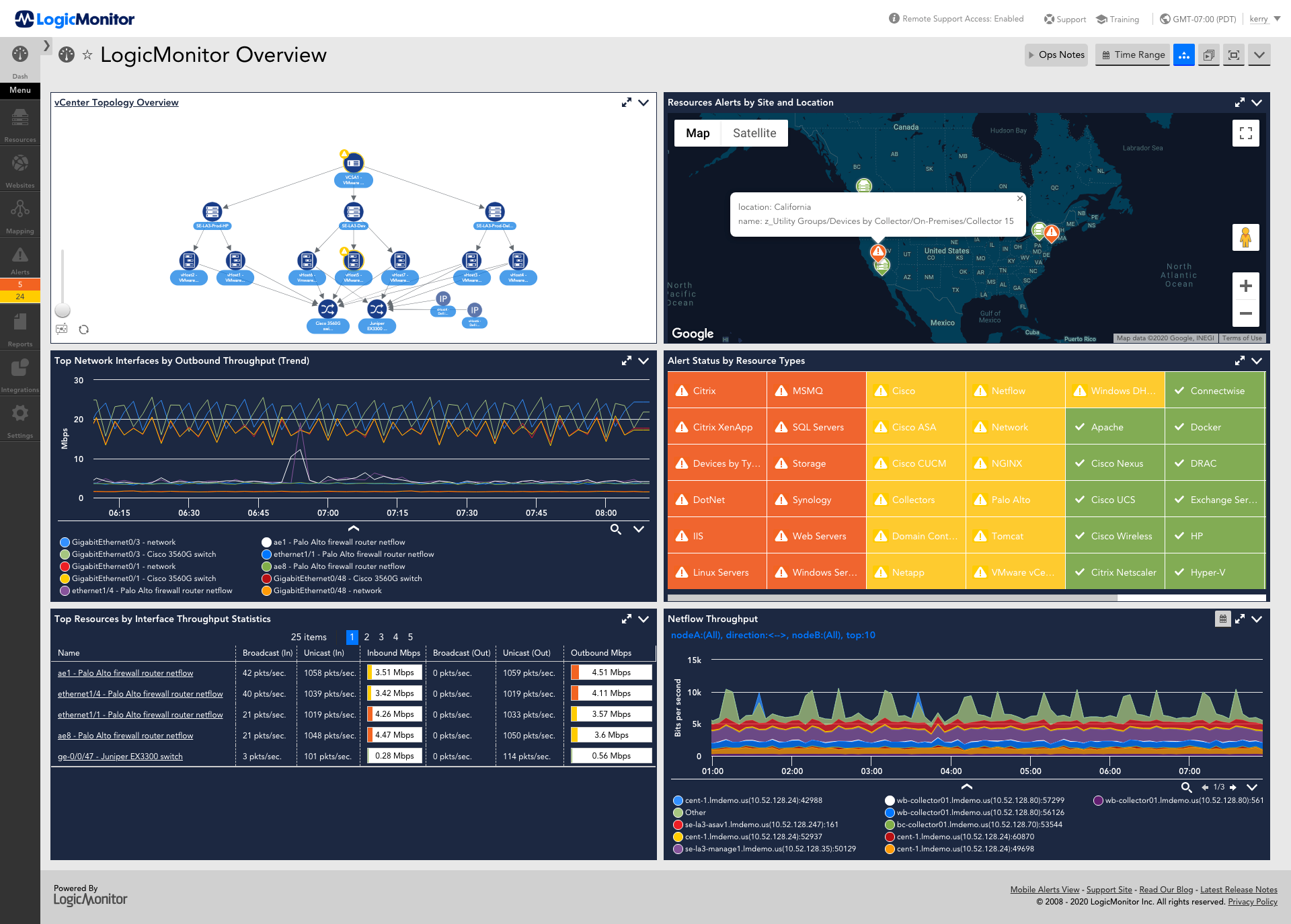
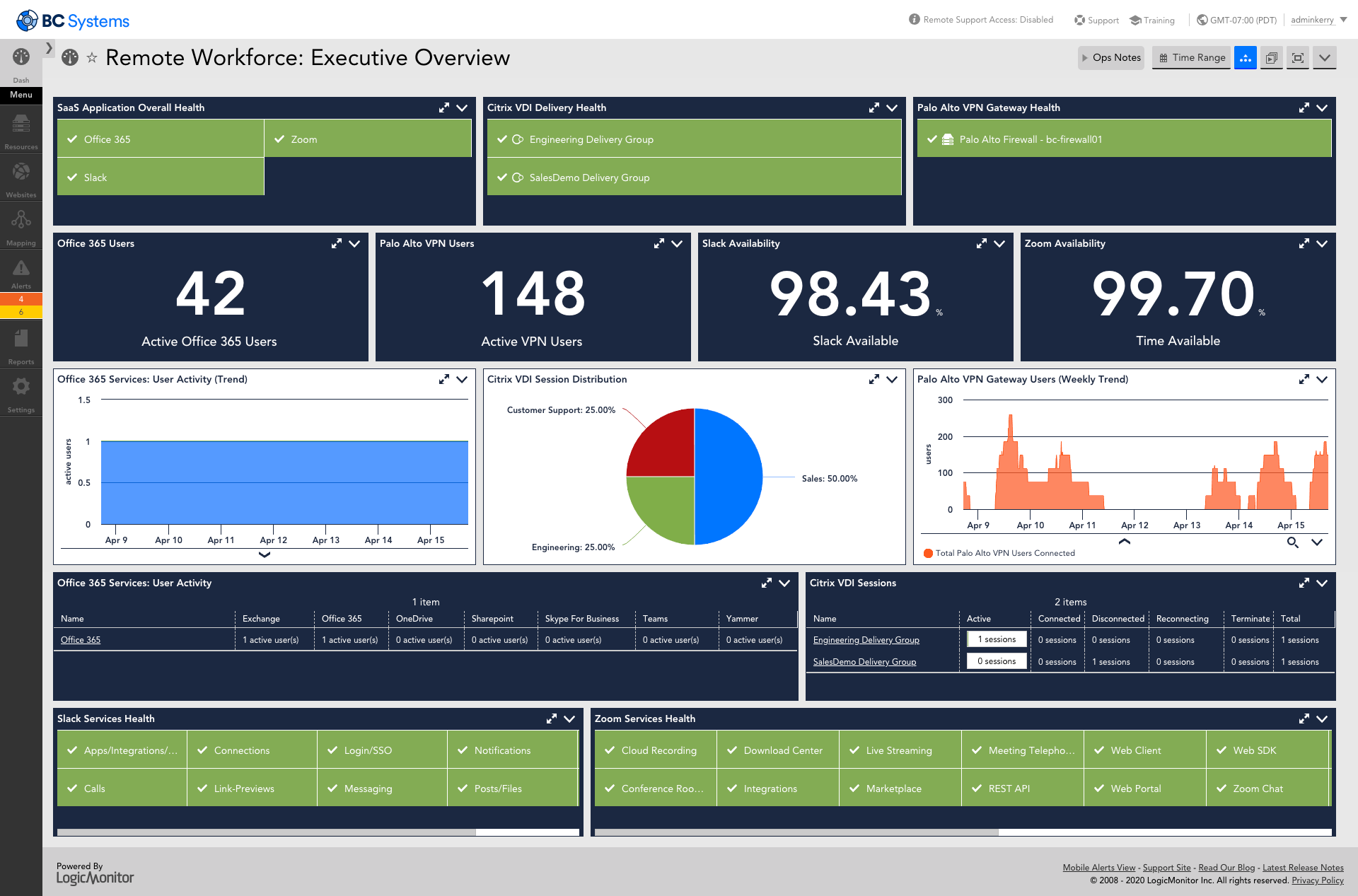
LogicMonitor’s SaaS-based platform, LM Envision, enables observability across on-prem and multi-cloud environments. It provides IT and business teams operational visibility and predictability across their technologies and applications.
N/A
Sumo Logic
Score 8.8 out of 10
N/A
Sumo Logic is a log management offering from the San Francisco based company of the same name.
$3
Per GB Logs
Pricing
IBM Security QRadar SIEM
LogicMonitor
Sumo Logic
Editions & Modules
No answers on this topic
Enterprise
Contact sales team
Website Monitoring
Contact sales team
Essentials
$3.00
Per GB Logs
Enterprise
$4.00
Per GB Logs
Enterprise Security
$4.25
Per GB Logs
Enterprise Suite
$4.75
Per GB Logs
Offerings
Pricing Offerings
IBM Security QRadar SIEM
LogicMonitor
Sumo Logic
Free Trial
Yes
Yes
No
Free/Freemium Version
No
No
No
Premium Consulting/Integration Services
No
No
No
Entry-level Setup Fee
No setup fee
No setup fee
No setup fee
Additional Details
—
Our platform is broken down into Pro and Enterprise Pricing. Pro includes monitoring for all of your cloud, hybrid, and on-premises infrastructure. Our Enterprise package includes all of this, plus our AIOps and Machine Learning functionality that provides dynamic thresholds, root cause analysis, anomaly detection and more!
LogicMonitor only charges by the device. What is considered a device? A device is anything with an IP address that you want to monitor, including a physical device or a cloud resource. This means multiple data sources under the same IP address can be monitored for the same price. Unlike some monitoring platforms. we don’t charge per node, interface, or metric.
Due to its performance, it is a more practical way to analyze and respond to an incident. It is a graphic with good interaction and multiple integrated platforms.
I would always recommend Splunk over IBM Security QRadar SIEM unless you're trying to save money or only onboarding and normalizing well known data sources. IBM Security QRadar SIEM doesn't seem to handle RBA and complicated, chaining correlation rules very effectively and if I …
We chose IBM Security QRadar SIEM not only because it was a leader but because it convinced us it was a solid product suitable for multiple scenarios but most importantly we needed a really secure and powerful software for our infrastructure.
IBM Security QRadar SIEM has been quite a revolutionary siem solution compared to its counterparts. Be it the use case building to maintaining log source integrations, Qradar has proved to be one of the most efficient and easy to use solution. Having IBM SOAR along with the …
It provides practicality by containing several domains in a single tenant and being able to subdivide them in a single place, in addition to the fact that the price is very competitive in the market.
The QRadar licensing process is based on EPS (Events Per Second) and there are no limitations on event collection, regardless of the origin of the logs. This becomes an advantage as the price is agreed between the parties before purchase, so you have knowledge of what you can …
ArcSight is more difficult to understand and administer, and it looks more like a box for programming and needs a lot of high-level skills personnel. IBM Security QRadar SIEM is well suited for organization cybersecurity in large and medium organizations. IBM Security QRadar …
IBM Security QRadar SIEM offers a wide range of features and capabilities, such as behavioral analysis, event correlation and incident management, making it a robust and effective choice.
QRadar's open architecture is easy to integrate with a wide range of security tools and third-party applications, which are available at the IBM X-force library to enhance overall flexibility. Its powerful analytics and correlation capabilities provide advanced threat detection …
I found that IBM Security QRadar SIEM has better threat detection methods and the identification of cyber kill chains followed by attackers. Analysis of the data gives visibility that other SIEM solutions need to improve. Integration in IBM Security QRadar SIEM is also better …
User friendly and use case management portal which helps to get brief idea about security posture based on mitre mapping is best thing i have experienced in qradar.
IBM Qradar takes the best from its competitors. Reliable and stable but sometimes very expensive, the SIEM from IBM offers a wide range of scenarios in which the customers can suite and size their own infrastructures. IBM Qradar doesn't really needs to stack up againt its …
As a part of core security service provider, we could not stand with the tools that are used as a generic data processor. The compliance, log reading and events are well managed in QRadar compared to other tools
I was one of the members who were looking for a better application for our system security, and we tried Datadog and New Relic. Those software were very good for normal usage. New Relic was working fine until we started facing problems if any sudden system increase as it was …
I did use Dynatrace for my freelance work, as I was doing some projects on weekends for some extra income. We used to protect all of the financial information. However, LogicMonitor is used by our organization. I must say I really like LogicMonitor, as it is the best solution …
It was a fantastic product, but I used it in my previous company. After I changed jobs, I became familiar with LogicMonitor because my current employer was considering it. I must say I have not faced any issue within my career since the time I started using it, and we are happy …
We did not use software like LogicMonitor for the same work before, but I must say that my experience with LogicMonitor has been outstanding so far. It helps me to be free of tension. I can now concentrate on the actual work I was hired to do for my company.
Some teams in our company are also using New Relic, and they are pretty satisfied with it. However, I also used it for some time, and I did not find it as flexible as LogicMonitor for our needs. So, yes, I suggested that management remove New Relic, as we have a superior tool …
Our business used the trial period they provided on one of our systems and conducted sessions with all of this software. Our team tested all of these software options before deciding on LogicMonitor, as our business is expanding daily and we needed a system that could …
Basically, we did not have any idea about it and how to choose, but we asked one of our former bosses, as they were very experienced with it, so they helped us by clarifying a few things between New Relic and LogicMonitor, as they told us that if you are looking for an …
We evaluated Datadog, but it was primarily focused on data-related issues. So we decided to use LogicMonitor because it is excellent and offers so many more things than just data protection. It also keeps our systems safe with an advanced alert system, which is more critical …
SaaS monitoring makes so much sense. Why run your monitoring inside the same environment you're trying to monitor, and how do you monitor your on prem monitoring if there's an outage affecting your own infrastructure? Whilst LogicMonitor isn't a specific point solution so …
SolarWinds Access Rights Manager (ARM), SolarWinds NetFlow Traffic Analyzer (NTA), SolarWinds Network Automation Manager (NAM) and Microsoft System Center Operations Manager (SCOM)
When looking for a monitoring tool, LogicMonitor was similar or better than all of them. We moved away from SolarWinds because of its inability to monitor other network environments and lack of a collector or probe type device that could collect remote data. PRTG was very …
LogicMonitor was the most versatile and easy to deploy solution. The data from LogicMonitor could be integrated with our other platforms, so it became the source of truth.
We replaced N-Central with LogicMonitor, and had an extended bakeoff with Datadog. There were many things we liked (and still like) about Datadog, but its deployment model and less agnostic focus were disqualifying for our specific use case.
Our initial business requirements in 2016 were to monitor Vblock and FlexPod deployments. We had specific gaps with particular storage appliances the monitoring tool we used at that time could not monitor effectively. When evaluating the mentioned solutions, LogicMonitor was …
After switching from Solarwinds to LogicMonitor we would never go back. The higher price for LogicMonitor is well worth all the areas that this platform excels when compared to Solarwinds. The support is great, they are available directly through the web portal in a chat and I …
During the evaluation process we looked a number of other solutions, a detailed technically analysis was carried out to map functionlity, deployment and scalabilty across the solutions.
The primary areas that LogicMonitor succeeded are around the simplicity of deployment, …
Domotz didnt cover all devices, for example MacOS devices. Which we dont have a lot of but are still critical to monitor on our network. Solarwinds Network Device monitoring was free and great, however the display was a bit much. Also had a lot of stuff we didnt really need to …
Auvik did not provide historical data and could not monitor as many device types as LM. We found the Auvik collector to be more "buggy" and have had less issues with LM. We do feel that Auvik had a better network topology map and would clearly show device relationship. That is …
LogicMonitor has a ton more ways to customize and monitor specific processes or items that other products simply cannot do. We started monitoring applications and actually logging into them to verify everything from start to finish is fully monitored and is working properly. I …
SolarWinds had the big breach just as we left it. We loved how powerful it was, and how customizable - however, it is an ON-Prem tool, and as a growing MSP, that dynamic didn't and couldn't scale. We then moved to Auvik, which had the cleanest GUI and some neat features. That …
LogicMonitor is much easier to configure, deploy, and manage than Zabbix. Alert tuning and client configuration is clear and intuitive in LogicMonitor. Zabbix is agent based, very convoluted configuration, and is difficult to adjust tuning to minimize false positives and alert …
Sumo Logic works very well out of the gate. For a small business it has given us what we need. I worked at a larger company previously, and we produced so many logs we had to create a custom logging service to handle them all. Cost and availability are big issues when …
It's cheaper, by an ungodly number of dollars. Splunk is insanely expensive. But Splunk is also incredibly fast and efficient. Splunk also holds information indefinitely (forever) so if I wanted to see if a specific end-user clicked a very specific button in 2012, I can search …
We felt the features were comparable and Sumo Logic offered a better price. This was our first log aggregation tool so we don't have a lot of insight for competing products. I speak with many others specifically regarding splunk and it seems to be comparable in many ways except …
Provides the same basic solution as Splunk as it is a central log aggregator. The main difference for us is hosted or cloud vs. on-premise. The other large difference for us was the central management of the collectors. Sumo provides a single view of all the collectors, …
For use this was a better overall solution for our needs. Between reporting, access and the ability to support an external two-factor solution for controlled access.
Comparing them to Logstash and other open source tools, Sumo Logic is a clean, already well built tool that is ready to ingest and analyze data instantly. Other open source tools take a lot of time to build and manage; and their graphs/dashboards are almost always lacking. Sumo …
We had used Splunk previously. Sumo Logic defeats them when it comes to cost, including the costs that would normally come with supporting/managing/patching/upgrading your own infrastructure and storage. Those were wins, but especially the real-time CDN integrations due to Sumo …
QRadar is very well suited on environments where there are not multiple tenants or domains, we do have success on this kind of scenario. IBM Security QRadar SIEM is less appropriate for environments with multiple tenants, specially when each tenant represent a different End Costumer (such as for MSSP companies), those environments require a high amount of rules and building blocks replications, since each tenant will have its own "BB definitions", servers, rules exception, etc. Also, some information, such as EPS count or EPS dropped are generated by QRadar's own log sources, which takes place on default domain, therefore users associated with different domain can not have access to those logs, even when the information is related to other domain's environment. For example, even if Event Collector 1 is associated to Domain A, the log informing its dropped EPS is generated by System notification, log source that must be associated to Default domain.
We have several government departments and universities as our clients, and we conduct online examinations for them. Therefore, our servers require additional security to prevent unauthorized access to our systems remotely without our permission. We were performing an examination for one of our clients when someone from outside attempted to access our systems by creating a backdoor to our servers. Our team was busy handling the examination process and ensuring its smoothness. However, thanks to LogicMonitor, we were alerted at the right time, and we were able to save our data and clients' information with its help.
SumoLogic is a fantastic log aggregator and analysis tool, a fine alternative to Splunk. Searching is powerful and mostly intuitive and results come fast. If you have application logs in clusters or Kubernetes pods that lose their logs every time they're restarted, Sumo is the solution for you
LogicMonitor is very customizable. We can build whatever modules we need, because it uses standard protocols like HTTPS, SNMP and WMI to gather data and metrics.
We like that LogicMonitor is an agentless solution for our use case. Not all customers will allow an agent-based approach to 3rd party tools.
LogicMonitor has thousands of out of the box modules, which work on their own and also act as good baselines for the ones that we will end up customizing more. We are rarely starting at zero when we decide to do something new with LogicMonitor.
LogicMonitor has great documentation, and support has been helpful in the instances where we've needed them.
Log Aggregation and uploading. The architecture for Sumo Logic makes a great deal of sense and works very well.
Automated analysis. It still impresses me how well a newly uploaded log can be broken into intelligent parts, then searched and sorted using their tools.
Dashboards. It might not be what YOU will need as an IT admin, but you can give access to these dashboards easily to business users who love that kind of stuff. Most other types of (monitoring / alerting) tools, for no apparent reason, lack this feature.
Reporting, monitoring, and graphing. Given, you need to have useful log generation for an application or service as a prerequisite for sumo logic to be able to gain use, once it has it is an amazingly powerful tool.
Need to spend more time configuring the system to properly interpret and normalize different type of data collected from multiple resources.
While Rule creation QRadar uses that rules to detect security threats and generate alerts, but to creating and managing rules is bit complex & tedious work to complete.
IBM Security QRadar SIEM is excellent in handling large & complex systems that requires in-depth knowledge and extensive training to configure and maintain the system which includes upgrading, optimization of performance & issue troubleshooting.
With the arrival of IBM Security QRadar SIEM at our company, we have a better vision of all the security needs that may arise, it is a very safe software to use that prevents threats from damaging our IT environment, it is impossible to change it for another software.
This product has met virtually all of our needs. It was easy to implement and has been simple to support. Customization has been intuitive with many options available. They keep adding features and expanding available options. The future of LogicMonitor looks even better than it is today which is very promising. The management and support teams at LogicMonitor are always helpful
As a grade I give 8 as QRadar is not easy to learn. It requires some time to master it. It also needs a team of people actively working on the product. Once you learn to use it the software works very well and it is easy to correlate and understand detected threats. It only takes time to learn how to use it well and configure it properly.
Set up is super easy. Just stand up a small Linux or Windows server to act as a collector. There are no agents to install on monitored devices and all you need is SNMP or WMI access. When creating dashboards, all you have to do is find the widget on the device you want to show up and choose the menu option to add it.
Sumo Logic is very powerful but definitely requires some configuration work to get the most out of it. You can get a certification related to this, but it is definitely not something you can just throw together.
Customer support is Good of IBM, While Using IBM QRadar its deployment is to slow and suddenly stop working and crashed we have contacted IBM Support and Rised a Ticket within a few minute we get call back from customer support and Query Resolved by them Fast And Rapid Support of Ibm
The sales team support we received was top notch. They worked hand in hand to make sure the product met all expectations. So far we have not really had to work with support that much; we have worked with setup team after purchase to deploy product fully. No issues so far and we are four weeks in.
I would give this rating because I attended a free Sumo Logic training at a WeWork in Chicago. I found the training very useful, and I learned a lot of features that I was not aware of before I went to the training. I like the idea that SumoLogic provides free training seminars. I am certified in level1, and I plan on certifying to level2.
The training was very useful and the people who taught us were very knowledgeable. Although the software may initially seem difficult to learn they made things much easier for us.
Initial patience is required to learn how to use the product, and it takes a dedicated team to use it. One person is not enough, and it's not enough to just set it up and check it once in a while. It has to be used daily and kept under control to be used effectively
I did not truly dedicate myself to implementing LogicMonitor. However, I overheard the IT team members explain that "LogicMonitor is perfect for us as it has made most of the work automated, and implementation and training sessions were perfect for us." Thus, I can state that everything went smoothly with our implementation.
I was satisfied with the implementation, as at the time, it was the best way to implement the product with the available feature sets in Sumo Logic. User creation and management became more of an issue during continued use, instead of it being an issue related to deploying the product in our environment.
I would always recommend Splunk over IBM Security QRadar SIEM unless you're trying to save money or only onboarding and normalizing well known data sources. IBM Security QRadar SIEM doesn't seem to handle RBA and complicated, chaining correlation rules very effectively and if I had to write a custom add-on for custom data, I found it easier to do so in Splunk.
We did not use software like LogicMonitor for the same work before, but I must say that my experience with LogicMonitor has been outstanding so far. It helps me to be free of tension. I can now concentrate on the actual work I was hired to do for my company.
We had used Splunk previously. Sumo Logic defeats them when it comes to cost, including the costs that would normally come with supporting/managing/patching/upgrading your own infrastructure and storage. Those were wins, but especially the real-time CDN integrations due to Sumo Logic's collaborations with other vendors. We had spoken to Logentries and discovered that many of the cons we found with Sumo Logic seemed to have been resolved in their product. Their pitfall was that, at the time, Logentries did not have the ability to get real-time log ingestion from our CDN. They said they had a solution, which was scripted, but we had not evaluated/tested. Logentries also did not have a User / RBAC REST API, and are nowhere near the level of compliance that Sumo Logic had (https://www.sumologic.com/press/2015-02-19/sumo-logic-successfully-completes-pci-data-security-stand...). In the end, I believe Logentries and Sumo Logic would be two good vendors to get involved in a bake-off
We have been able to eliminate multiple tools through LogicMonitor's ability to use collectors to run scripts and collect any numerical data from any reachable endpoint along with the customization and widgets available for dashboards. This has allowed for reduced costs and consolidation to a single point of view.
The ability to grant our clients access to see their data in real time has improved both our client satisfaction surveys and attributed to a few point gain in our NPS score. The ease of getting to the data has also reduced the quoting time for our sales teams during renewals to quantify what a client is consuming.
The amount of data that LogicMonitor collects affords our technicians a wide area of review when trying to isolate an issue and find a root cause. With the standard out of box data that is collected we have often been able to set a new threshold on something not previously thought of to proactively alert us in the future after identifying those root causes. This has reduced our Major Issues from 3-5 per month to usually 1-2 or less per quarter.