
Chose MuleSoft Anypoint Platform
MuleSoft Anypoint Platform vs. ReadyAPI vs. TIBCO Integration (including BusinessWorks and Flogo)
MuleSoft Anypoint Platform vs. ReadyAPI vs. TIBCO Integration (including BusinessWorks and Flogo)
| Product | Rating | Most Used By | Product Summary | Starting Price |
|---|---|---|---|---|
 Anypoint Platform | N/A | The Anypoint Platform developed by MuleSoft and acquired by Salesforce in early 2018 is designed to connect apps, data, and devices anywhere, on-premises or in the cloud. This platform was built to offer out-of-the-box connectors as well as tools that architects and developers can adopt quickly to design, build and manage the entire lifecycle of their APIs, applications, and products. | N/A | |
 ReadyAPI | N/A | ReadyAPI (formerly SoapUI Pro, LoadUI Pro, and ServiceV Pro) is a REST and SOAP API functional testing tool that enables software developers, QA engineers, and manual testers to work together to create, maintain, and execute complex end-to-end API tests in their CI/CD pipelines without needing to code. | N/A | |
 TIBCO Integration (including BusinessWorks and Flogo) | N/A | TIBCO Integration is used to connect diverse business solutions, data sources, and devices into a single, seamless system. | N/A |
| MuleSoft Anypoint Platform | ReadyAPI | TIBCO Integration (including BusinessWorks and Flogo) | ||||||||||||||||||||||
|---|---|---|---|---|---|---|---|---|---|---|---|---|---|---|---|---|---|---|---|---|---|---|---|---|
| Editions & Modules | No answers on this topic | No answers on this topic | No answers on this topic | |||||||||||||||||||||
| Offerings |
| |||||||||||||||||||||||
| Entry-level Setup Fee | No setup fee | No setup fee | Optional | |||||||||||||||||||||
| Additional Details | — | — | — | |||||||||||||||||||||
| More Pricing Information | ||||||||||||||||||||||||
| MuleSoft Anypoint Platform | ReadyAPI | TIBCO Integration (including BusinessWorks and Flogo) | |
|---|---|---|---|
| Considered Multiple Products |  Anypoint Platform  Federica Bianco Integration architect Chose MuleSoft Anypoint Platform It enables customers to expose their APIs in a very simple and fast way. It can be used by non-expert developers. It is compliant with all major connection and data representation world standard. |  ReadyAPI No answer on this topic |  TIBCO Integration (including BusinessWorks and Flogo)  Abdul Kader Jailani Haja Mohideen Senior Assoicate Chose TIBCO Integration (including BusinessWorks and Flogo) Mulesoft is yet to mature as a technology, but as an open source product, it does stack up against TIBCO BW in terms of license cost.  Chad Kelly Sr. Director of Technical Architecture, Salesforce Practice Chose TIBCO Integration (including BusinessWorks and Flogo) Products like Jitterbit, Boomi and Anypoint are better at creating robust complex orchestrations.  Vivek Kumar Lead Analyst Chose TIBCO Integration (including BusinessWorks and Flogo) Having used Webmethods, Intellio and Mulesoft, I find TIBCO BusinessWorks more stable and easy to manage. TIBCO BusinessWorks Container Edition looks promising for cloud and containerized environments like any other new generation product.  Benjamin Warrick Integration Architect Chose TIBCO Integration (including BusinessWorks and Flogo) Mulesoft is good for creating APIs.  Simon Xuan, MBA ESB DevOps Tech Lead for USCIS Chose TIBCO Integration (including BusinessWorks and Flogo) Tibco BW is uses its own JVM container to implement java-based multi-threaded application server. It could be implemented in a smaller footprint, microservice-like as well as monolithic way with traditional SOA artifacts. It is robust and high performing.  Enrique Cuevas García TIBCO Platform Lead Chose TIBCO Integration (including BusinessWorks and Flogo) TIBCO is lacking of a centralized placed where the users can upload their "API's", mulesoft is wining here. TIBCO is taking too much to time to get into the cloud solutions.  Javier Ubalde Carramiñana IT Architect Chose TIBCO Integration (including BusinessWorks and Flogo) TIBCO BusinessWorks offers more options and better development experience. Performance and operating applications is also better.  Julien Chouvet Ingénieur Système Middleware Chose TIBCO Integration (including BusinessWorks and Flogo) BW is a good tool that allows flexibility and robustness, along with quick and non-specialized development (at least for 90% of the development work). The administration interface is well done, and provides a good quality of service. Monitoring is a plus that most of …  Deva Datta Sunkara Sr. Software Development Engineer Chose TIBCO Integration (including BusinessWorks and Flogo) We have compared MuleSoft and TIBCO BusinessWorks and BW is much more mature than the MuleSoft product. It is proven and reliable so we have it with us. The only downside for TIBCO BusinessWorks is the cost.  Niranjan Mohapatra Technical Specialist Chose TIBCO Integration (including BusinessWorks and Flogo) Listed above are some middleware products, but it's not correct if we say how TIBCO BusinessWorks stacks up against them and why you selected TIBCO BusinessWorks. Rather, it should be other way around. They all are competing with TIBCO, they all know TIBCO is the most stable …  Sandip Banerjee Sr Tibco consultant Chose TIBCO Integration (including BusinessWorks and Flogo) Mulesoft, Oracle SOA and WSO2 |
| MuleSoft Anypoint Platform | ReadyAPI | TIBCO Integration (including BusinessWorks and Flogo) | |||||||||||||||||||||||||||
|---|---|---|---|---|---|---|---|---|---|---|---|---|---|---|---|---|---|---|---|---|---|---|---|---|---|---|---|---|---|
| Cloud Data Integration |
|
| MuleSoft Anypoint Platform | ReadyAPI | TIBCO Integration (including BusinessWorks and Flogo) | |
|---|---|---|---|
| Small Businesses |  Make Score 9.3 out of 10 |  BrowserStack Score 8.5 out of 10 | Make Score 9.3 out of 10 |
| Medium-sized Companies |  IBM App Connect Score 9.2 out of 10 |  Oracle Application Testing Suite (legacy) Score 8.0 out of 10 | IBM App Connect Score 9.2 out of 10 |
| Enterprises | IBM App Connect Score 9.2 out of 10 |  SoapUI Open Source Score 8.4 out of 10 | IBM App Connect Score 9.2 out of 10 |
| All Alternatives | View all alternatives | View all alternatives | View all alternatives |
| MuleSoft Anypoint Platform | ReadyAPI | TIBCO Integration (including BusinessWorks and Flogo) | |
|---|---|---|---|
| Likelihood to Recommend | 7.9 (24 ratings) | 7.0 (65 ratings) | 8.8 (236 ratings) |
| Likelihood to Renew | 9.0 (1 ratings) | 7.3 (18 ratings) | 1.0 (28 ratings) |
| Usability | 7.4 (4 ratings) | 9.9 (3 ratings) | 4.5 (23 ratings) |
| Availability | - (0 ratings) | 9.0 (1 ratings) | 8.9 (6 ratings) |
| Performance | - (0 ratings) | 8.0 (1 ratings) | 7.2 (6 ratings) |
| Support Rating | 6.8 (4 ratings) | 8.0 (6 ratings) | 7.3 (28 ratings) |
| In-Person Training | - (0 ratings) | - (0 ratings) | 1.3 (5 ratings) |
| Online Training | - (0 ratings) | - (0 ratings) | 5.6 (3 ratings) |
| Implementation Rating | - (0 ratings) | 7.0 (1 ratings) | 10.0 (8 ratings) |
| Configurability | - (0 ratings) | - (0 ratings) | 7.3 (5 ratings) |
| Ease of integration | - (0 ratings) | - (0 ratings) | 7.3 (21 ratings) |
| Product Scalability | - (0 ratings) | 7.0 (1 ratings) | 7.2 (23 ratings) |
| Vendor post-sale | - (0 ratings) | - (0 ratings) | 7.3 (6 ratings) |
| Vendor pre-sale | - (0 ratings) | - (0 ratings) | 7.3 (4 ratings) |
| MuleSoft Anypoint Platform | ReadyAPI | TIBCO Integration (including BusinessWorks and Flogo) | |
|---|---|---|---|
| Likelihood to Recommend | Salesforce
| SmartBear
| TIBCO Software Inc.
|
| Pros | Salesforce
 Deepak Kushwaha Tech Arch Sr. Analyst | SmartBear
| TIBCO Software Inc.
|
| Cons | Salesforce
| SmartBear
| TIBCO Software Inc.
|
| Likelihood to Renew | Salesforce No answers on this topic | SmartBear
| TIBCO Software Inc.
|
| Usability | Salesforce
| SmartBear
 Christopher Saleh Lead QA Engineer | TIBCO Software Inc.
|
| Reliability and Availability | Salesforce No answers on this topic | SmartBear
Christopher Saleh Lead QA Engineer | TIBCO Software Inc.
|
| Performance | Salesforce No answers on this topic | SmartBear
Christopher Saleh Lead QA Engineer | TIBCO Software Inc.
|
| Support Rating | Salesforce
| SmartBear
| TIBCO Software Inc.
 Sebastiano Manzella Solution Developer |
| In-Person Training | Salesforce No answers on this topic | SmartBear No answers on this topic | TIBCO Software Inc.
|
| Online Training | Salesforce No answers on this topic | SmartBear No answers on this topic | TIBCO Software Inc.
|
| Implementation Rating | Salesforce No answers on this topic | SmartBear
| TIBCO Software Inc.
|
| Alternatives Considered | Salesforce
| SmartBear
| TIBCO Software Inc.
|
| Scalability | Salesforce No answers on this topic | SmartBear
Christopher Saleh Lead QA Engineer | TIBCO Software Inc.
|
| Return on Investment | Salesforce
 Nikhil Kohli Service Delivery Lead | SmartBear
 Payam Pirooznia Senior Automation Test Engineer | TIBCO Software Inc.
|
| ScreenShots | Anypoint Platform Screenshots 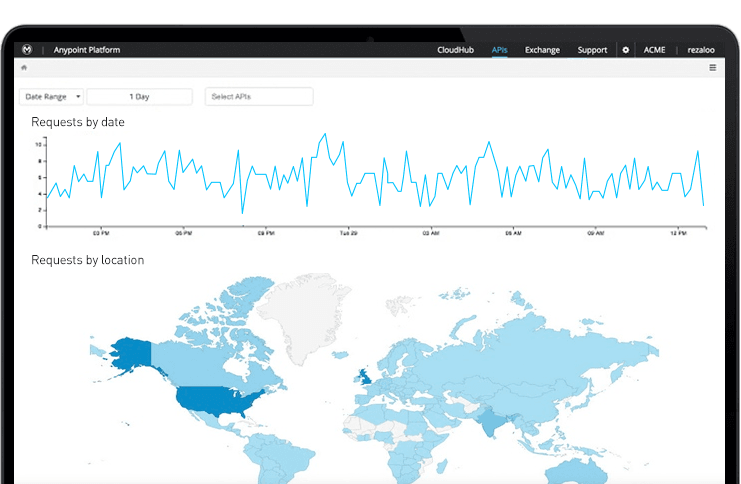 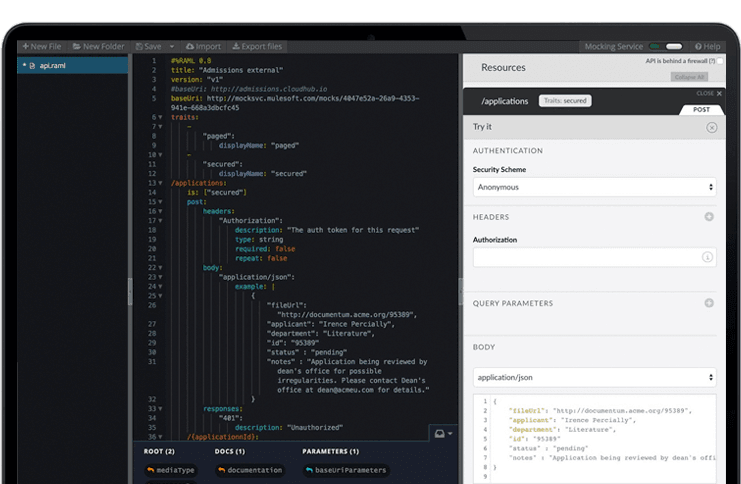 | TIBCO Integration (including BusinessWorks and Flogo) Screenshots     |