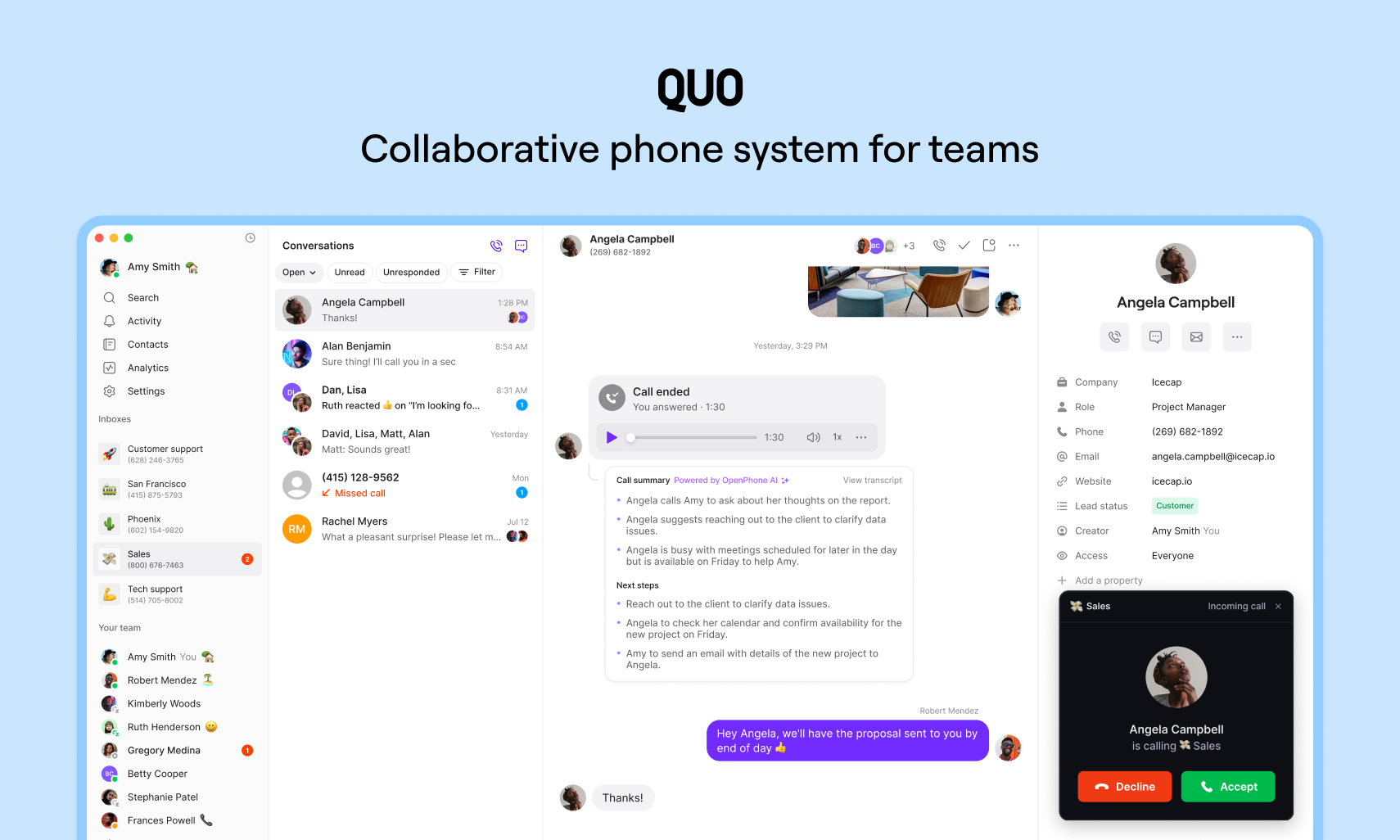
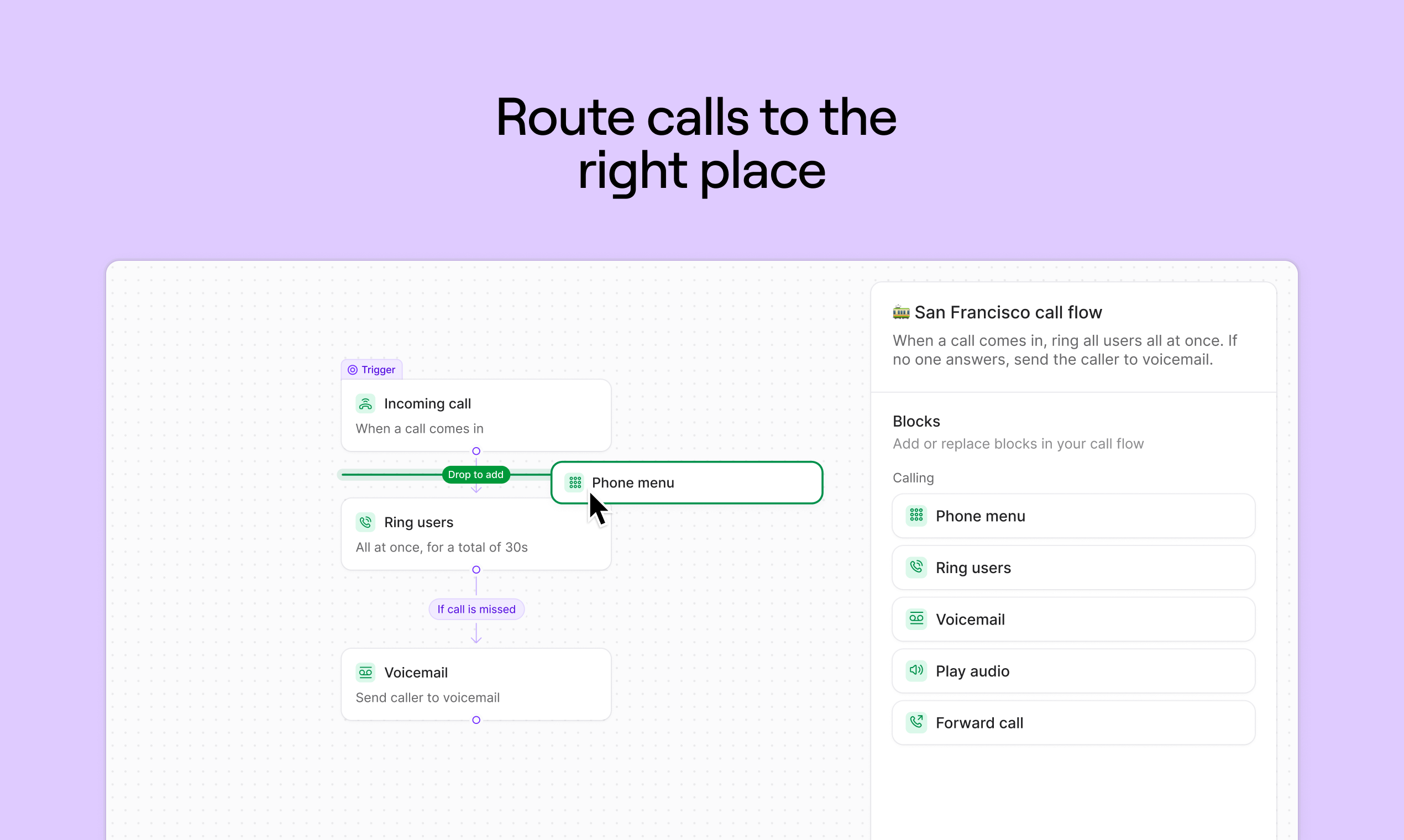
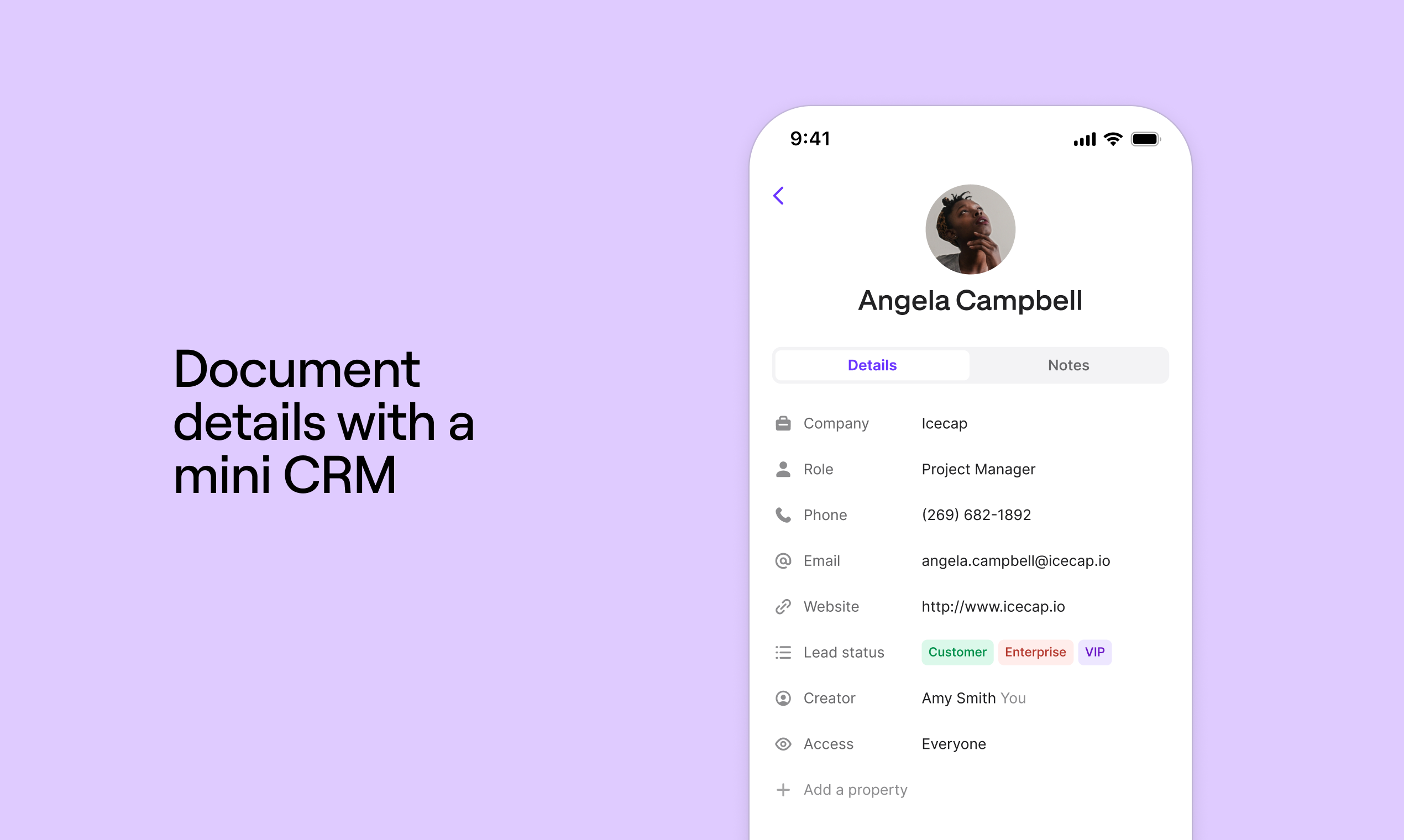
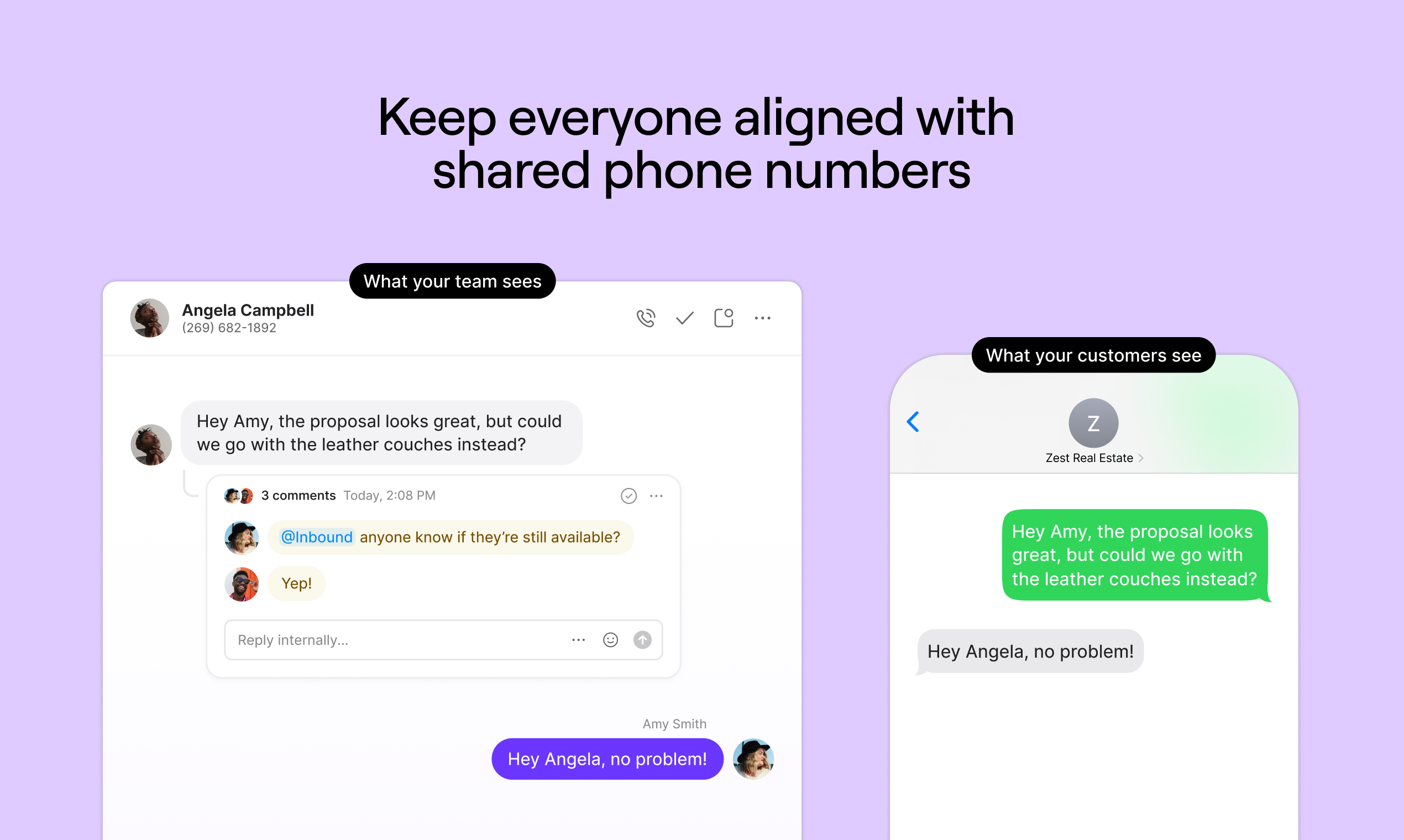
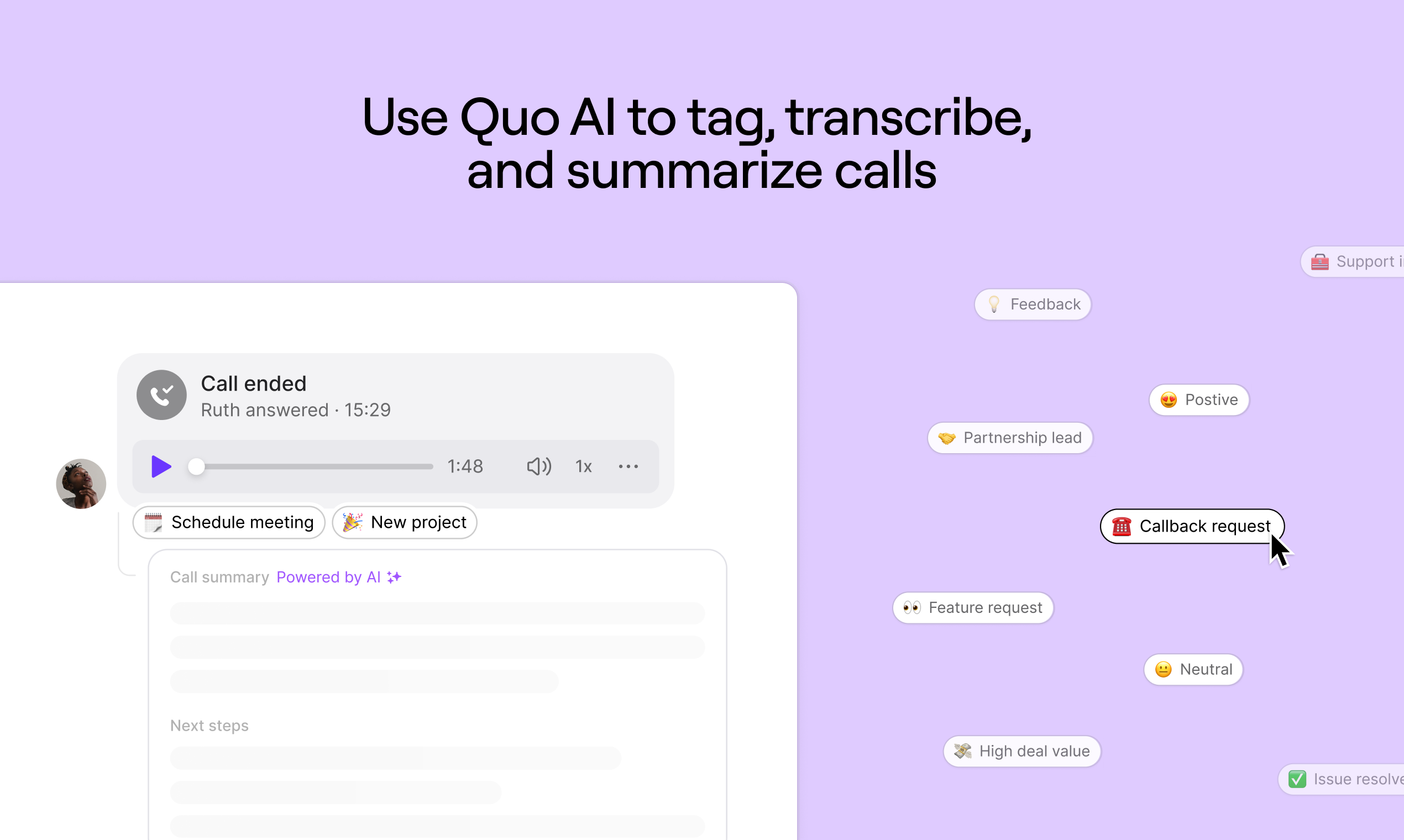
Quo (formerly OpenPhone) is a business phone and VoIP solution designed to help maintain work life balance. Features include incoming call identification, set business hours, contact ownership information to associate calls to teammembers, etc., to help organize call responding.
$19
per month per user
Webex Calling
Score 8.8 out of 10
N/A
Webex Calling is Cisco’s flagship cloud calling solution with over 12 million users worldwide. It delivers an enterprise-grade calling experience that enables customers to replace PBX hardware with a cloud calling solution. Webex Calling's connectivity and collaboration experience includes calling, meetings, messaging, contact center, and integrated devices.
If you have more than 2 people in your organization, then this will save you so much time. Delegation is the key to starting a business. Even when you're a 1 person show, being able to present to your user base the differentiation of options for client communications is critical. As a founder, feeling compelled to be always on is something I strive not to be. OpenPhone gives you that flexibility. I have found it to be less appropriate in complex HIPPA compliant areas, but that is it. OpenPhone really does seem to suit an open array of use cases.
It seems quite able to handle the normal day to day voice call requirements quite well. Our previous Cisco phones had cameras that could do video calls, but if we need that we go to a Zoom session. Conference room use is not terribly convenient, although this might just be a case of us figuring out how to adapt the environment.
Internal calling can be done by searching user in directory or by dialing short code extensions for users. Pretty quick and easy to reach internal people.
Webex Calling integrated seamlessly with call recording solutions making it very useful for compliance call recording which is needed by customer service centres today.
Features like call forwarding, call transfer, conference, voice mail, etc are available.
User authorisation for different types of calls is available.
It provides basic call centre features as well so that companies requiring basic call centre features can use it within Webex Calling.
I think what it's doing is it is still the leader when it comes to being able to present calling platforms. And I mean I guess it's number one competitor from a software perspective is Microsoft Teams, Cisco is doing everything possible to provide open source to enable Microsoft and Cisco to work together, particularly when it comes to user room experiences so that no one is feeling like they're left alone or compromised or somewhat segregated when they're choosing one technology versus the other, which is a great thing.
The service can be intermittent and the call forwarding feature will not always work perfectly. There will be periods of time where the calling feature will not work at all and people on the other end can hear me but I am unable to hear them. It also requires a fairly strong signal which can be an issue if you work somewhere remote or a building without much service.
In my experience, App features are buggy and confusing, and they often don't match the descriptions and screenshots in their documentation. In fact, many of their help links go to 404 "page not found" errors. In my experience, there are frequent outages and quality issues. My customers prefer to talk to me on a different line, because they find it difficult to understand me on OpenPhone.
Cisco Webex Calling is an outstanding cloud collaboration that includes enterprise-grade cloud phone system designed for the modern hybrid workplace. Webex Calling integrates calling, messaging, and meetings into a single, intuitive platform, empowering your teams with unparalleled flexibility and productivity. Benefit from advanced features like HD audio and video, voicemail to email, call forwarding, and intelligent call routing, ensuring crystal-clear communication and efficient workflows from any device, anywhere. Webex Calling prioritizes security and reliability, offering redundant data centers and end-to-end encryption to safeguard your conversations. Its scalable architecture effortlessly adapts to your envolving business needs, providing a future-proof communication foundation. Enhance collaboration and streamline operations with a solution that's not just a phone system, but a comprehensive communication hub.
I've not actually had it ever be unavailable when I needed to use it. As mentioned before, a network outage would take it down, but we have redundant systems for our network connections with automatic failover.
I don't really see this impacting any other system performance at all. The client is very light use on resources, even on my iPhone. I don't know what else it connects to behind the scenes other then the campus directory, but I haven't seen or heard of any impacts. It seems fairly self contained except for wherever it interfaces with the general telephone system connectivity outside the campus.
In my experience, their support feels like the opposite of support. They send you in circles, never directly answer questions, provide vague suggestions with unwanted platitudes, and they often take days between responses to provide that. For me, it's a frustrating experience that leaves you with a net loss of time and energy versus before you reached out to them. In my opinion, you definitely don't get "support".
I have been working for a long time with Cisco as a provider and also Cisco TAC and Cisco Support Engineers. The support starts right beforehand in the documentation of the product you are interested in. From the start you have a good, complete, and detailed and easy to read datasheet and there's always someone available to answer any questions.
OpenPhone has an easier user interface than Grasshopper. Years ago when I was using Grasshopper, I recall that their user interface looked antiquated and full of complications. They would also update the interface just as everyone was getting used to using it. OpenPhone has many more functions. Grasshopper's app did not offer basic functions such as in-app texting between team members, and its call transfer function was incredibly complicated to use. In my opinion, Grasshopper was an inferior service/product in almost every way.
The company uses Microsoft Teams. They do use Microsoft Teams right now and for a long time a lot of the different practices have been using on-premise, contact Call Manager and Unified Communications Express. But Cisco WebEx, the cloud-based product is one of the new ones. And some of our other site practices are also using RingCentral. So cloud calling is not new to the company. For those of us who are familiar with Cisco products, the transition to WebEx calling is not as difficult as it might be for some other products. Going from on-prem to RingCentral, there is more of a learning curve with.
In my experience, Billing lacks transparency, and they have made billing errors (overcharging me) since I started using them. I think the "trust registration" is an insane ripoff charging around $20 for every attempt. Crazy.
So far it has been very reliable, with very little down time that was associated with the product itself. We have had network outages due to external factors such as construction cutting a fiber link, but other than that kind of thing not much for failures.
Webex calling is a good solution for customer which are ready for cloud.
However some customers doesn't want to share their CDR to a UcaaS so Cisco shouldn't focus on cloud opportunity and up to me the gap of investment, marketing, evangelization is too big weighing the pros and cons for cloud too often