TrustRadius: an HG Insights company

MuleSoft Anypoint Platform

Score7.9 out of 10

136 Reviews and Ratings

What is MuleSoft Anypoint Platform?

The Anypoint Platform developed by MuleSoft and acquired by Salesforce in early 2018 is designed to connect apps, data, and devices anywhere, on-premises or in the cloud. This platform was built to offer out-of-the-box connectors as well as tools that architects and developers can adopt quickly to design, build and manage the entire lifecycle of their APIs, applications, and products.

Media

Connect any endpoints using out-of-the-box connectors, dynamic connectivity to API specifications, or by building reusable connectors with Anypoint DevKit™.
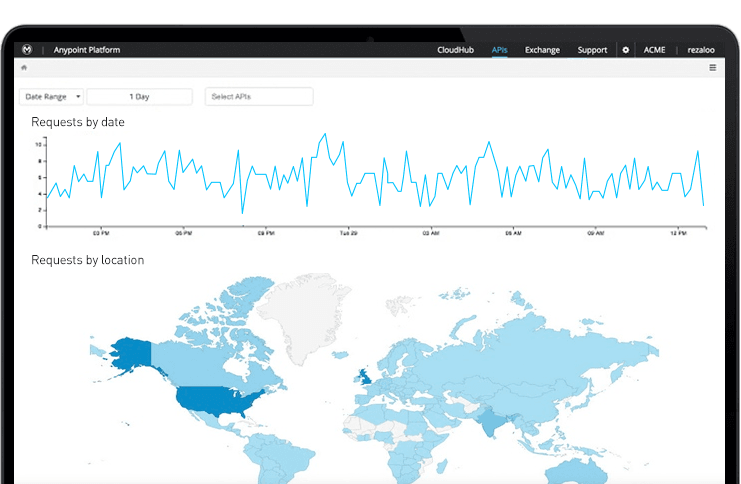
A reporting suite that provides a real-time view of API consumption trends and operational performance. Analytics provides insight into how your API is being used and informs forward-looking design decisions.
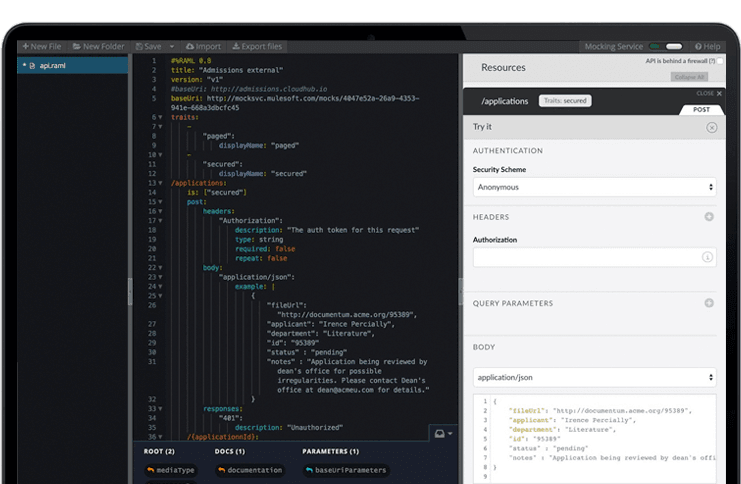
A platform to engage with API developers and drive adoption. Share documentation, examples and manage developer access from a single platform.

1 / 3

Top Performing Features

  • Pre-built connectors

    Pre-built, tested connectors to a wide variety of applications such as ERP, CRM, HCM, Marketing Automation, etc.

    Category average: 8.4

  • Connector modification

    Provision for modification of pre-built connectors to suit specific environments

    Category average: 7.8

  • Monitoring console

    Central console for monitoring resource utilization, system health, ability to start and stop processes, etc.

    Category average: 7.7

Areas for Improvement

  • Support for real-time and batch integration

    Software supports both real-time and batch integrations

    Category average: 7.7

  • Data security features

    Data security features include rights management, LDAP integration, password encryption, etc.

    Category average: 8

  • Data quality services

    Software includes capability to perform data profiling, deduplication, cleansing etc.

    Category average: 8

Mulesoft Review

Use Cases and Deployment Scope

We’re a service provider, and we mainly focus on identifying customers’ problems and solving them. One use case involved a customer who handled a large number of handwritten documents from various vendors, which made it difficult to feed the data into the Salesforce system. So, we used MuleSoft’s automation tool called IDP. Using that product, we scanned the documents through the IDP solution, extracted the information, and inserted it into the database, helping the customer significantly reduce the time spent processing that data.

Pros

  • Yes, the solution we use is IDP. This product primarily works with documents — it helps read them, and with the support of natural language processing, it also allows us to extract information directly from those documents.

Cons

  • IDP is a good product, but when we use natural language and ask Einstein to extract certain information, it doesn’t always perform accurately. Sometimes the data it retrieves is irrelevant, so that’s a challenge — it can occasionally fail to fetch the correct details.

Return on Investment

  • This product is very good and comes with many AI-related features, though some of them are not yet fully stable. That’s a downside, but overall, it’s doing a great job in helping customers achieve their goals.

Usability

Anypoint Platform Review

Use Cases and Deployment Scope

We use it for all our integration needs — integrations with Salesforce, as well as with other third-party systems and related processes.

Pros

  • Basically, on the integration side, it helps connect to different systems very seamlessly, which is a great help for all the integrations between Salesforce, Workday, and others.

Cons

  • It can improve on the AI side of things — that could probably drive more user adoption. I think that’s one area for improvement. So basically, once we have the use of Anypoint enabled with Agentforce or something like that, it would be really helpful for the developers and others, and it could increase productivity.

Return on Investment

  • It’s had a very positive impact on how quickly we can move from development to go-live, mainly because it has prebuilt fragments and similar components.
  • The only negative part, as I mentioned, is the AI — it has some inbuilt agent features, but if it were more like what other Salesforce platforms offer, it would be even better.

Usability

Other Software Used

Workday Human Capital Management

Anypoint Platform Review

Use Cases and Deployment Scope

The use cases we’re looking at mainly involve customers coming to us for insurance quotes. We’re trying to capture those opportunities — understanding what customers are reaching out for and whether we’re able to convert them or losing potential business in that area. So, we’re building a platform for that purpose and aligning our business processes around it.

Pros

  • I think data integration — that’s mainly what we’ve been using it for.
  • Batch jobs and similar processes. Those parts have been working well for us.

Cons

  • I think with MuleSoft, the APIs handle data quite well, but when it comes to different types of data or increased data volumes, that’s where we’re facing some challenges. Maybe we still need to explore more or there could be additional functionality needed, but I think we’ve identified the issue.

Return on Investment

  • Well, we just started — as I mentioned, it’s our first year — so we’ve gone through a lot of development phases. We’re still in the stage of evaluating and testing different scenarios, so I can’t confidently answer that question just yet.

Usability

MuleSoft Anypoint Platform as an API Integration Experience

Use Cases and Deployment Scope

We're using MuleSoft Anypoint Platform to integrate our CRM software Salesforce with various other applications like SAP, AD, Workday etc. The integrations are invoked as APIs majority as REST webservices and for a small number of functions as SOAP Webservice. Many of these services are also opened for external use by proper authentications in place.

Pros

  • Cloud Deployments
  • Plug-and-play compatibility with prefabricated connections
  • We can use XML, JSON, and Java for it.

Cons

  • RAML should be designed and compiled within the MuleSoft Anypoint Platform studio
  • The MCD Certifications come with only 2 years of validity which makes it costly each time to go for paid certifications
  • While developers can eventually master MuleSoft Anypoint Platform, it takes some time

Return on Investment

  • Mulesoft can be used to provide an integration platform to a large number of systems like Salesforce, SAP, and others
  • An excellent option to develop microservices and real-time integrations
  • Time saver as it is very fast in data transformation and prototyping the services

Usability

Alternatives Considered

Amazon API Gateway

Other Software Used

Atlassian Crowd, Atlassian Confluence, Jira Product Discovery

Mulesoft is the leading integration solution connecting all areas of the business.

Use Cases and Deployment Scope

Mulesoft Anypoint Platform enables us to seamlessly integrate our SAP ERP business system with a variety of other business-critical systems that support our processes in the supply chain, manufacturing, logistics, sales order processing, warehousing, distribution, support, reporting, and analytics.

Pros

  • Integrates SAP with non-SAP systems to support our business.
  • Performs well.
  • Seamlessly integrates much like a native integration tool.

Cons

  • Price of licensing is a little on the high side.
  • Cost of customizing can be high due to specialized skills required.

Return on Investment

  • The only negative is the high cost to acquire Mulesoft licenses and consulting support.

Alternatives Considered

IBM API Connect