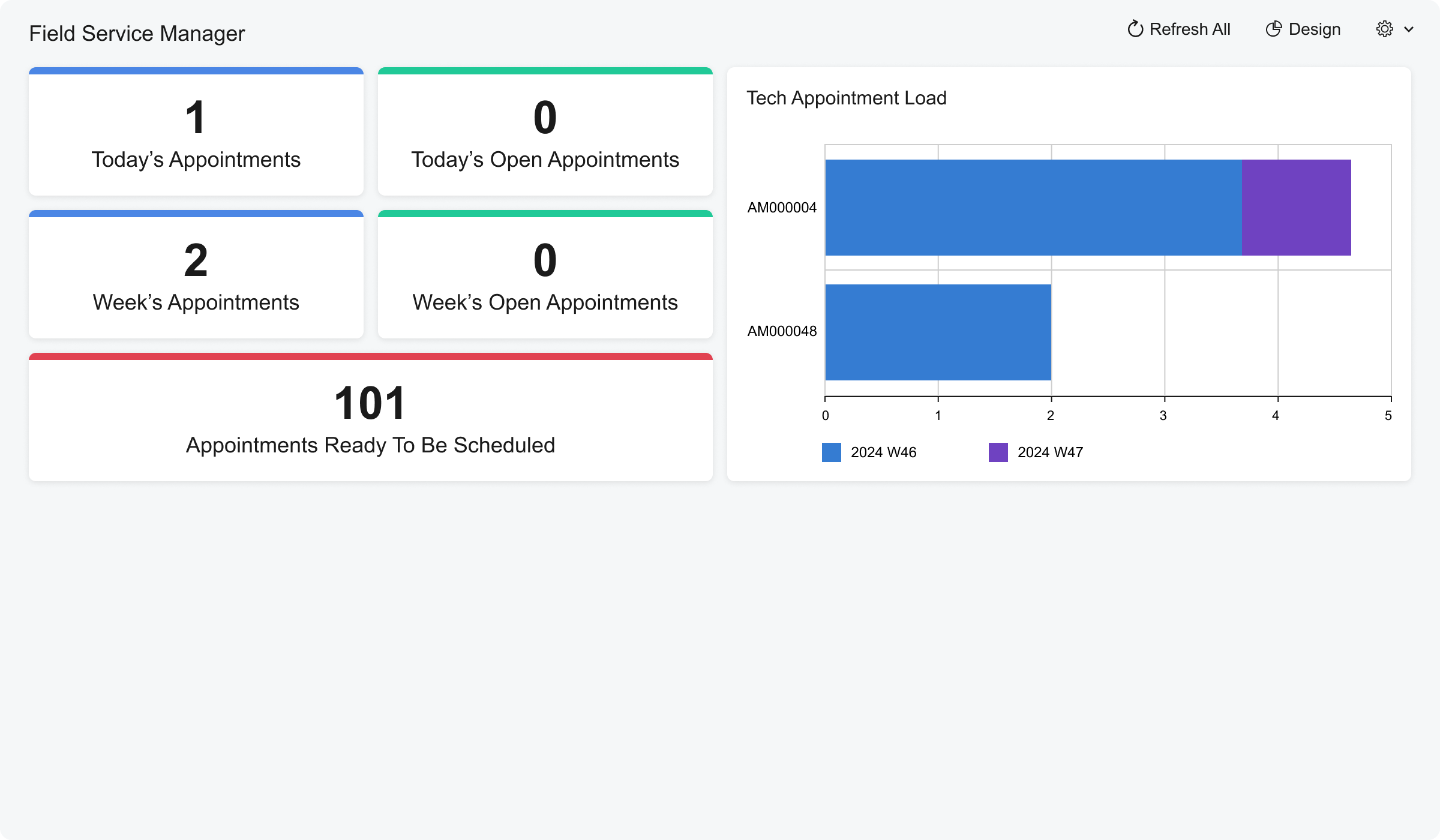
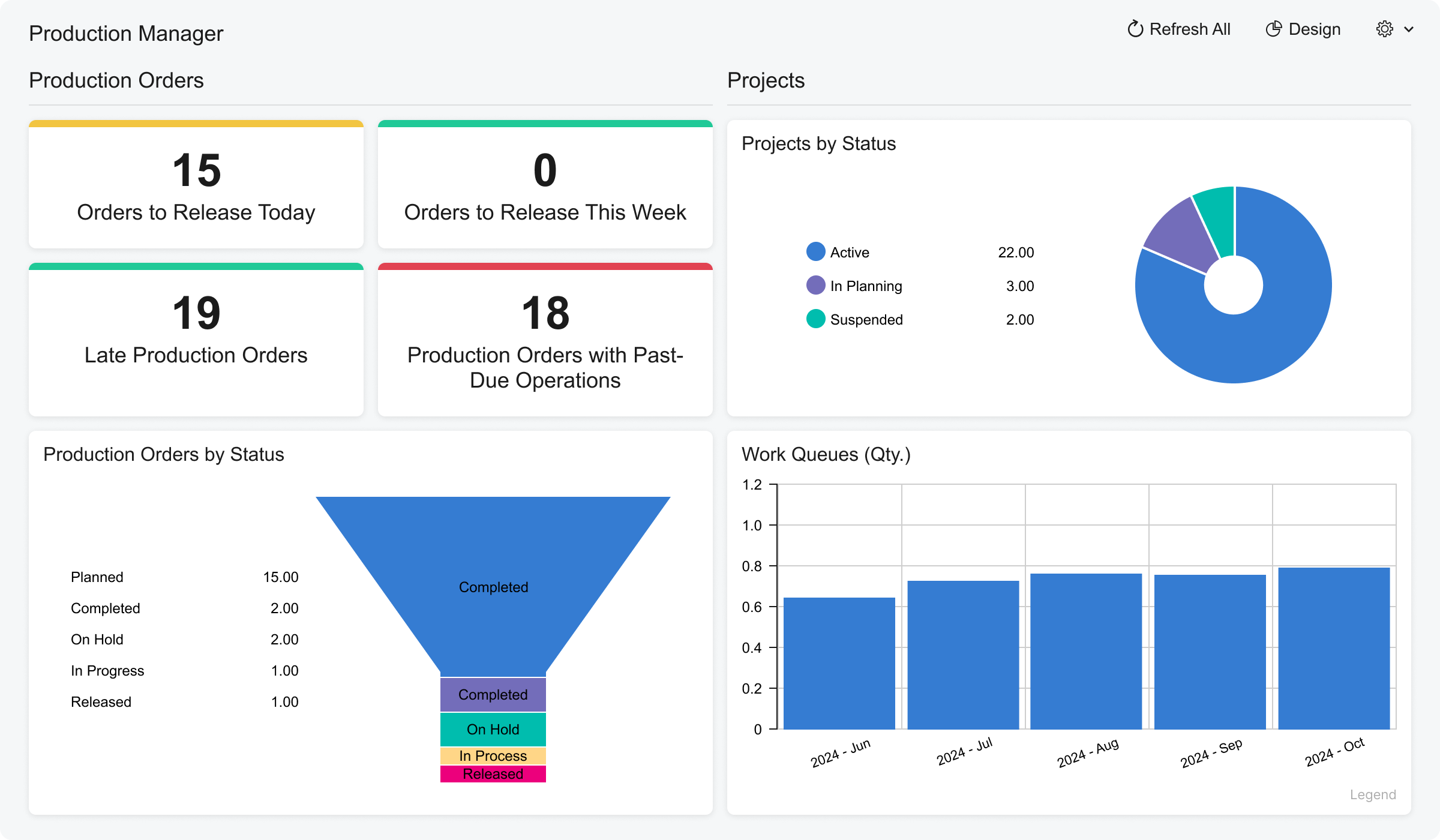
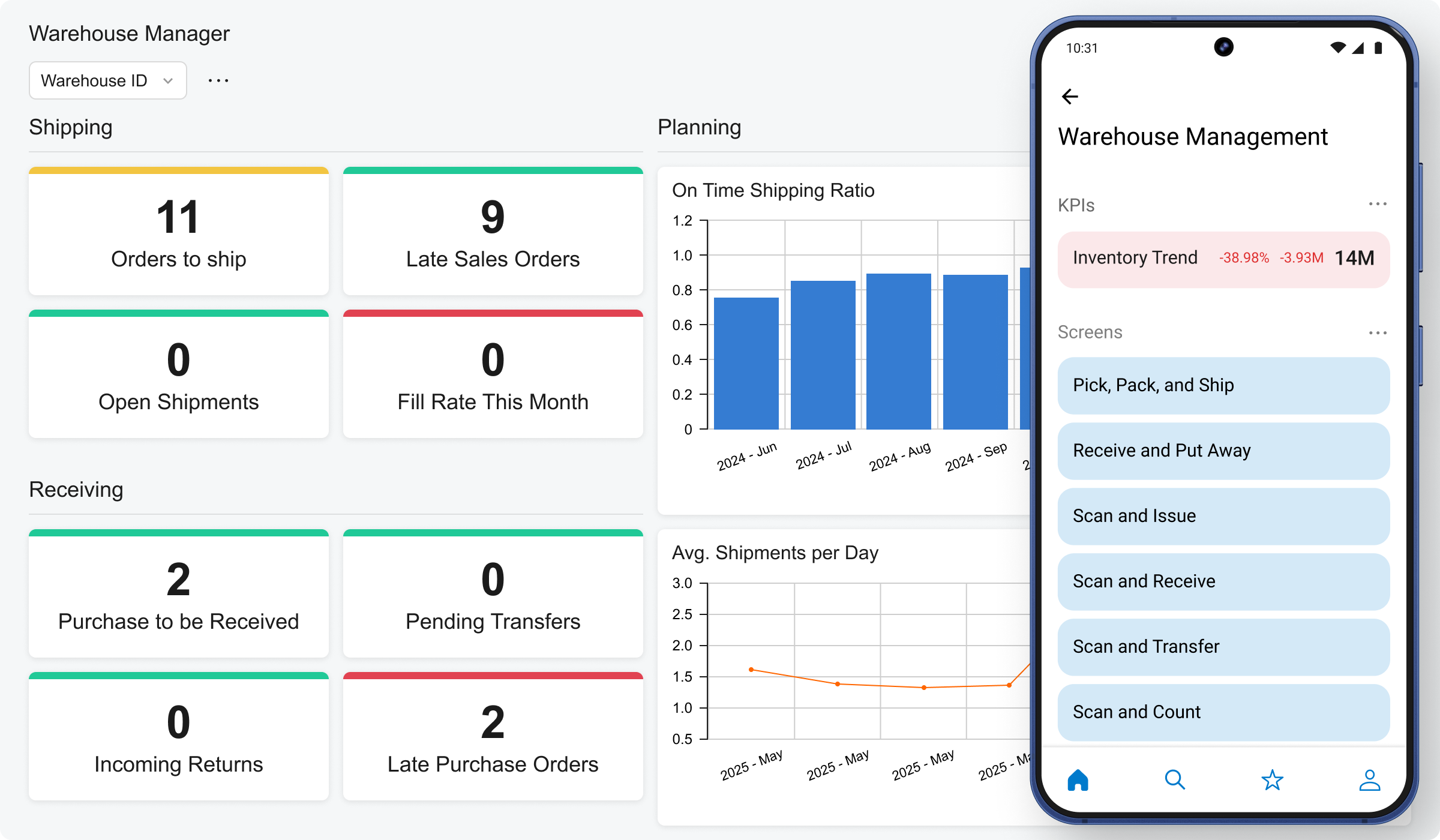
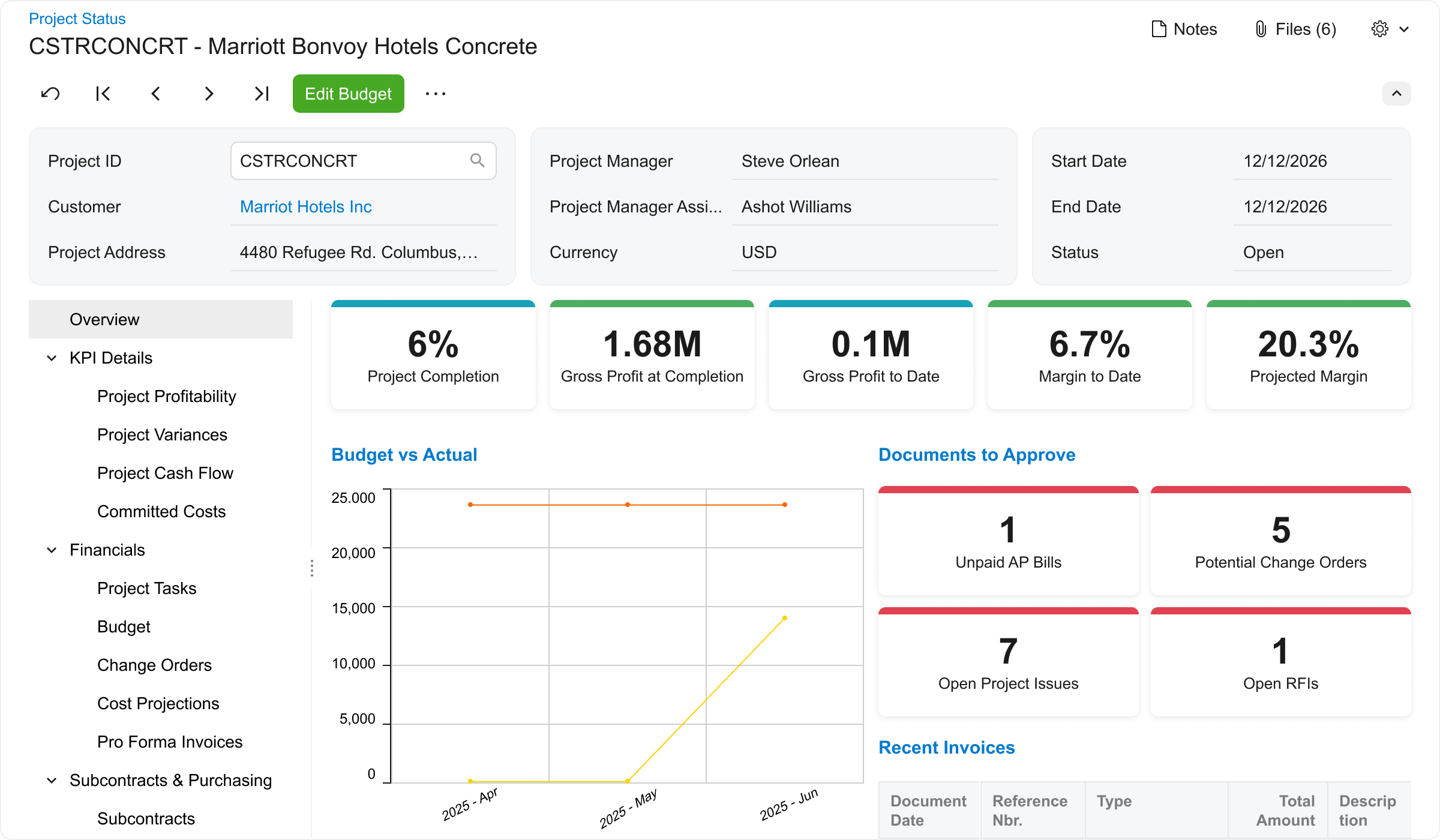
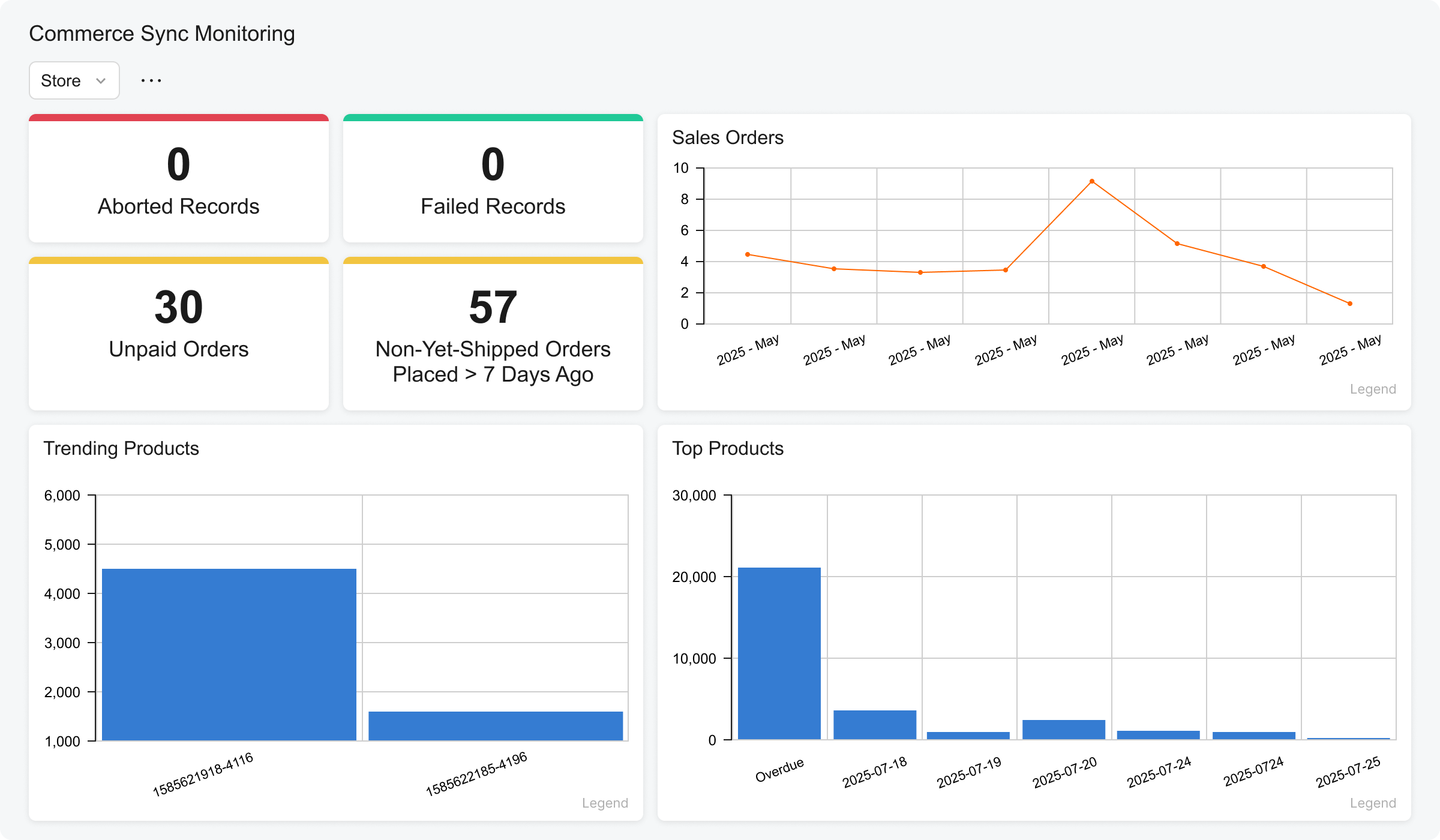
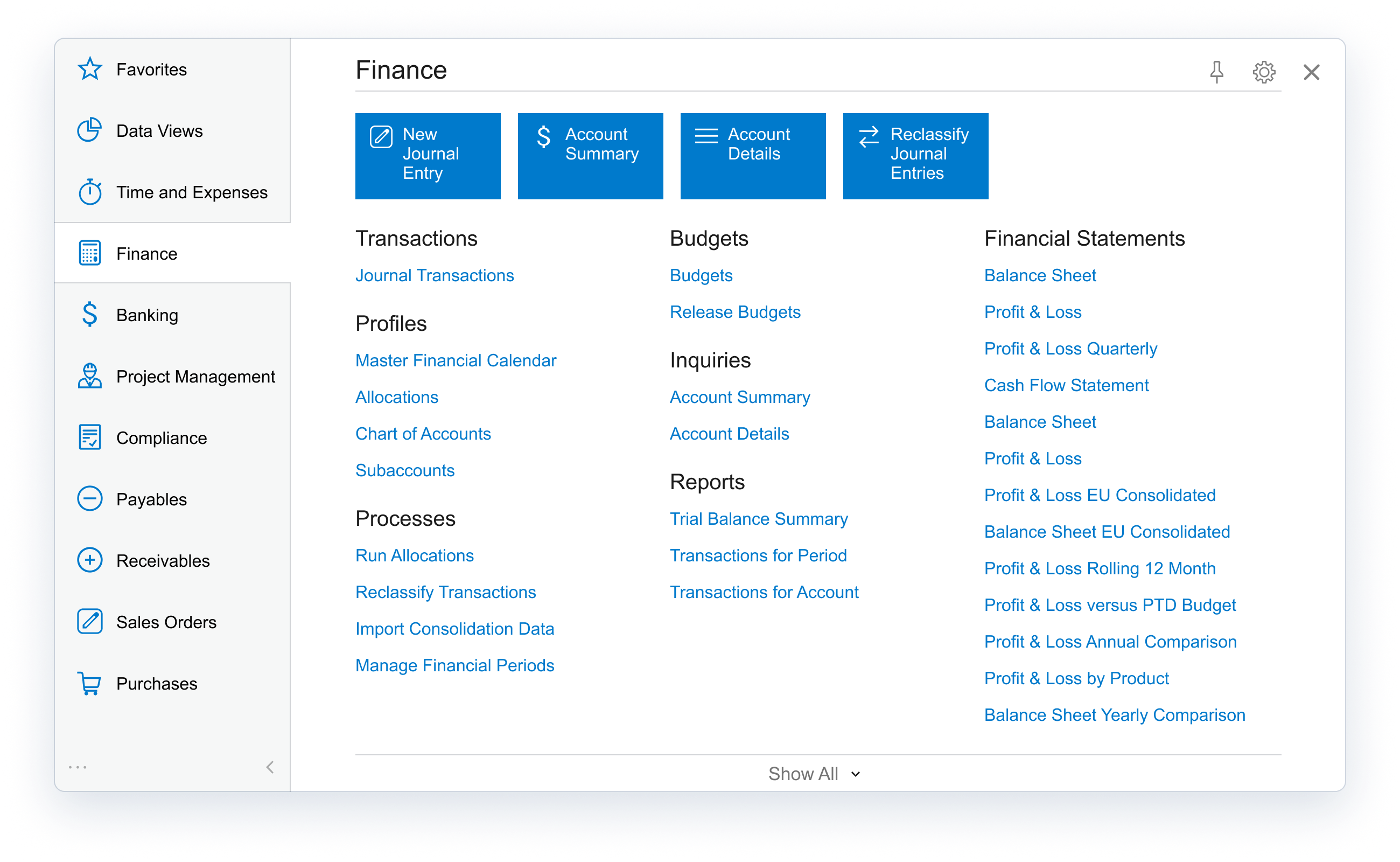
Acumatica delivers a set of cloud-based business software applications with dashboards, reporting tools, integrated document management, centralized security, and customization tools.
$1,000
per year
Microsoft 365
Score 8.6 out of 10
N/A
Microsoft 365 (formerly Office 365) is a Microsoft Cloud subscription service that includes Microsoft Office products (Word, Excel, PowerPoint, OneNote, Outlook, Publisher, and Access). The software can be installed across multiple devices and ensures that users always have the most up-to-date version of the included Office applications.
$5
Per User Per Month
Pricing
Acumatica
Microsoft 365
Editions & Modules
No answers on this topic
Business Basic
$5.00
Per User Per Month
Individual
$5.84
*Per Month
Business - Apps
$8.25
Per User Per Month
Enterprise - F3
$10.00
Per User Per Month
Business Standard
$12.50
Per User Per Month
Business Premium
$20.00
Per User Per Month
Enterprise - E3
$32.00
Per User Per Month
Enterprise - E5
$57.00
Per User Per Month
Offerings
Pricing Offerings
Acumatica
Microsoft 365
Free Trial
No
No
Free/Freemium Version
No
No
Premium Consulting/Integration Services
Yes
No
Entry-level Setup Fee
No setup fee
No setup fee
Additional Details
Pricing is always consumption-based with no five-year lock-ins or termination penalties.
The Acumatica ERP pricing structure allows adding casual users, suppliers, and customers without paying for additional licenses.
The cost is based on the features and resources utilized, not on the number of users who access the system. An Acumatica partner works with users to understand specific requirements, determine the proper resources and modules for the company, and presents a price for the license.
Amazing improvement. We selected Acumatica because it works on Macs, is browser-based yet we keep our data on our in-house servers, and it completely modernized our system.
Our line of work is what made the cut for us. The other applications didnt have a lot of wiggle room when it came o construction and finance. SAP proved out to be expensive for us and Filemaker suited us more as the manufacturing execution system rather than ERP system.
Much more easy to use and more cost effective. Seemed to be a better support network through Acumatica University and our VAR. In general, the look and feel was much better also.
Being cloud based it is more cost effective from a hardware and licensing standpoint. You have more vendors that support the product as well for 3rd party add ons.
Acumatica has been integral a in being our core erp. However, we do need to lean on these types of integrations and customizations in order to better serve our customers.
There were no other similar products we viewed. We left wolfepak in one company and quickbooks in another. I do not feel these are comparable systems to Acumatica ERP
Coming from Sage, when you have to post financial data, it locks the system. Acumatica, there is no delay, there is no downtime. Dashboards. My CEO recently asked me, "I really want to see what our top customers are and what markets that they're spending the most money in." Acumatica had that widget already prepared for me.
Microsoft 365 would be well suited for medium to large enterprises. This is where there are several hundreds or thousands of people. Since most everyone has used one of the applications the learning curve would be reduced. Another reason would be the ability to implement security measures to prevent access to sensitive data. This could justify the cost of an Enterprise license.
Real-time access to financials across firm's locations in India for better in-house sales, cost and financial health analysis
The tool is great with respect to the creation of dashboards and KPI reporting to get visual picture of profitability and cash flow metrics across projects
Mass updating existing BOMs or Production Order Details. For larger orders, especially if many things need to be changed it can take a painstakingly long time to update each production order one-by-one.
The product configurator is too flat, we definitely need nested configurations that can capture variable subassemblies.
Accounting has room for improvement, I don't really like the idea of SO Invoices living in a separate spot until they are Released. I have had complaints from our accounting personnel since they have to leave the "Accounting World".
We are highly likely to renew because Acumatica has become the foundation of our ERP strategy replacing another ERP system with a more flexible, scalable platform while improving governance, planning, and operational visibility. Ongoing stabilization, roadmap investment in IBP and automation, and strong alignment across Finance and Operations give us long‑term confidence in the platform.
So far the Microsoft 365 platform provides features and tools that can cater to 100% of present organizations needs considering both technical and business necessities, however most features are not been effectively utilised at present. The current featureset is able to cover for most of the future needs of the business and technical functions.
The processes are very intuitive and easy to use. Whether you are entering AP bills, timecards for payroll, or AR invoices, the processes are similar and easy to use. The drill-down capability is also a huge plus as you can easily toggle between different modules without having to leave the screen you are in and navigating through a menu to get the information you need. We found that the standard reports out of the box are lacking. Our implementation did not go so well and when we were finally ready to run financial reports, it was both disappointing and frustrating to discover that the P&L was highly summarized and to get a detailed report required having to do a lot of formatting myself. I was able to figure it out on my own, but when our financials were already delayed getting published, I did not really have the time to spend trying to figure out how to build my own P&L.
Microsoft 365 is the gold standard for performing project tasks in a professional environment, enabling the quick transfer and exchange of files and ideas for team members who work locally and remotely. Its suite of tools is familiar and has evolved to being cloud based, allowing for files to be updated in real time from near and far.
To-date Microsoft 365 platform has offered an amazing uptime and availability percentage per year compared to all other products which provide the stability and overall business resilience of their ecosystem which is a great relief for information technology service entitites which heavy rely on Microsoft offerings as a whole to redeliver their own custom products
The Microsoft 365 tools expects and demands a substantial amount of system resources to operate at optimal level and even more when integrated with other applications which is a downside, however given that external supporting tech factors such as fibre/broadband speed bandwidth, high speed RAM and ample storage resources are allocated the tools work error free providing robust communication
I would rate the overall support for Acumatica an 8 out of 10. The support team is generally responsive, knowledgeable, and helpful when resolving issues or answering questions. Documentation and community resources are also useful. However, response times can occasionally vary depending on the complexity of the issue or support queue, which slightly affects the overall experience.
Over the past 8 years of using Microsoft 365, I have noticed that they change vendors often. This always leads to a poor experience in the beginning, then levels out after some time for the company to get things worked out. As a customer, it is really frustrating because I don't have time when something isn't working to have them "look into my issue" and get back with me. They have even closed a ticket I specifically told them to keep open. Your applications are only as good as the support.
The resellers involved with selling Microsoft products are reluctant to provide in person specialist trainings to consumers due to the fact of costs of economies of scale and is not provided free of charge most of the time. In Person trainings needs to be agreed to at the initiation of projects and implementations for better ROI.
The standard training offered with 3rd part resellers are fairly standard and covers the basic workability however the trainings needs to be specifically customised according to unique requirements of the organizations. for example an MSP would need to master specific communications verticals within Microsoft 365 whereas and online store using Microsoft 365 would needs to master a different set of tools within the suite to get the best ROI post implementation.
I'd say the partner selection is critically important. I think the software is very easy to implement. It's very customizable to your business. Finding a partner that will work with you to understand your business and your needs is the critical piece to make sure that the system goes along with it.
The Microsoft support partners are more than capable of handling implementations and dealing with unprecedented errors during the implementations. Not part of the implementation though the setup was done with minimum misconfigurations which is evident with present live setup which works fine without any bugs and gaps at present context.
Having used Pastel for a long time in the business, it lacked certain features, or the system was not probably setup for our business needs and requirements at the time. It was also not 100% cloud based and needed to be used through remote desktop which had its limitations. Zero just had 10% of what our business needed.
Typically I prefer working with companies with Microsoft 365 as their main tool because they're usually a fast growing company with a global presence. I like using it for work because it's easy to collaborate, share, review, comment, reply in any of the tools. The mobile app for Outlook and Teams are lifesavers when we're constantly traveling and you can join meetings on the mobile Teams to never miss a beat.
Microsoft pricing is not very expensive and yet not very cheap as well, and it hovers in between the baseline. The charges are mostly based on the tier level partners who charge based on their individual reputation in the market. Power negotiation will lead to cost effective and attractive pricing
From my understanding, the P.O. module is not very robust, at least the last time I inquired about it. At the time, it had a one-to-one match, with one invoice for one P.O. and that isn't practical for many businesses. I don't believe it would be an easy system to use for sending out invoices, if we had thousands of retail utility customers. We do a small number of invoices because we sell wholesale power, not retail, so we only Invoice the municipality. Not each utility customer.
Multiple tools within the same platform have been deployed successfully within different functional technical and non technical teams such as Devops, SOC, NOC, Shared services, Managed services, Global Information technology, Cloud operations, Finance, Administration, human resources and all these teams collaborate while maintaining central uniformity in terms of global standards who are dispersed in different geographical locations with ease
They are very responsive and knowledgeable about the product. If the rep doesn't have the ability to solve the issue, they quickly get someone else involved to assist us.
Have not directly obtained professional services from Microsoft but rather obtained specialized services such as implementations and configurations, setting up and integration support with Microsoft authorized suppliers, 3rd parties, and resellers, which has been a pleasant experience. Again the level of delivery quality on professional services is based on the level of hands on exposure of the 3rd party
I feel like I am not using it to it's potential and it's frustrating to know that it can do more than I am able to use and more help with that would be great
The implementation was a lot of customize building and I felt like some of it could have been built by my partner rather than having them sit and watch me enter a bunch of stuff, especially when a lot of it was over my head in understanding
We have a lot of nonprofit users, so they have a good ROI.
I like the constant updates without having to purchase the software repeatedly.
I used to purchase each Office (insert year here) often, so the software was up to date and had the newest options and connectors. I think my return on investment would have been much better if Microsoft had updated those versions to keep them current; after all, we did pay for them.
Microsoft 365's offering a monthly fee or a discount for a year helps, and you can look at it as a free backup if you have everything set to back up to One Drive. (Cloud-based document filing you can access anywhere ( with an internet connection)—you Can't beat that!)