Adobe Acrobat DC is the current version of the well-established document / PDF management solution, part of the Adobe Document Cloud (the other part being Adobe's eSign services based on technology acquired with EchoSign in 2011).
$29.99
per month per seat
Bluebeam
Score 9.2 out of 10
N/A
Bluebeam Revu is a PDF management, control, and editing tool. It enables collaboration and markup within shared documents across projects’ life cycles and has takeoff and bid creation capabilities.
$240
per year per user
Canva
Score 9.1 out of 10
N/A
Canva is a popular, simple online graphic design tool. Users can import images, use templates to design banners and logos, or pay to use Canva's premium stock images/paid templates (elements starting at $1).
I prefer Adobe Acrobat to Bluebeam because it has the functionality that I need and because I use so many other Adobe products, it's an easy transition for me. Bluebeam is much more cumbersome and really just has more construction-focused functionality that I don't need on a …
Adobe Acrobat is light-years beyond GIMP. Not only is it a better way to view photos for documents, it is far easier to use at it is visually pleasing and easy to navigate. Adobe is more robust than Canva. Though Canva has more creative capabilities, Adobe has more …
The most important factor in choosing and using Adobe Acrobat is that it is an Adobe Suite software and nicely integrates with the other Adobe software we use to create print projects, such as InDesign, Photoshop, and Illustrator. It is also convenient that Acrobat has the free …
Zoom does not have a video editor. Canva has great marketing and social media production ability, but it is not as flexible as Adobe Acrobat. Canva has ready made templates that Adobe Acrobat does not have which make it really accessible, but it does not have the video …
Adobe Acrobat is different from any other software that I use, and it's usage is very specific. While other apps are more for designing and creating, Adobe Acrobat is more for PDFs exclusively and in a reading/editing format.
it doesn't show in the list but PDF gear is a similar product - however we feel more comfortable with Adobe Acrobat for security and brand recognition.
PandaDoc is less customizable for creating/editing documents, less security but is much better when sending to a client and needing them to add text since the client would a paid subscription with Adobe Acrobat if I sent it that way
Adobe Acrobat has more features and very convenient to use. Aside from that, because of the software integration of Adobe Acrobat. You can convert everything using that. The security feature of Adobe Acrobat is very reliable.
Then you can access that with other Adobe Products …
I selected Adobe Acrobat because of the following reasons..
1. It provides the Ai powered features and straight forward cloud integration which is not available with other providers. 2.Adobe Acrobat has global certifications of market standards for security and compliance areas.
Adobe Acrobat was chosen because we use Adobe Creative Cloud which includes most of their applications including this one. I have a familiarity using this program whereas my experience with others that are similar is more limited.
We ultimately decided to go with Adobe Acrobat as they are a well recognized name in the industry. We deal with a lot of private agreements, business and marketing plans and we needed a top tier known program to ensure safety and compliance as well as confidentiality. It is …
In my experience, Adobe Acrobat offers more advanced features and security safeguards than competitors. It may come at a price, but you feel that you can trust in the brand and the abilities of the platform when compared to competitors. With that in mind, some users may find …
Initially we went with standardization, we were users of the Creative Cloud Suite and thought across the board would be the way to go. Pricing was a big factor, and it was good at that time. We have started to go a different direction as the price has increased and …
We liked Adobe Acrobat better due to the increased security versus other options. It also works easily with Microsoft and can be set as the default program to open PDFs. While some of the other options we evaluated offered similar interactions with non-Adobe products, Acrobat …
Adobe Acrobat is the standard and the easy to use package prevailed over the competition. There are free alternatives out there but they do not offer an as intuitive or use-friendly package.
I have nothing negative to say about Adobe Acrobat, either. I think the feature set of both it and Bluebeam Revu stack up very well with each other. I would suggest running a demo of both, and pick the one that is easiest for you. Our employee's with Acrobat experience took a …
I personally like the tools that Bluebeam offers over Acrobat and feel that, for my company, Bluebeam was much better suited. Scaling tools, markups, as-builts, RFI’s, submittal approval, and detail creation all really show its strength.
PDF file sharing is really easy and simple, so users can markup and others can view them in real-time. Also, editing PDF files to crop, batch, remove, or replace pages is really efficient compared to Adobe Acrobat DC. Plus, the licensing fee is pretty small compared to Adobe …
Bluebeam Revu has essentially replaced Adobe Acrobat as our default PDF viewer and editor, because its robust suite of architecturally-focused tools allow for better review of documents and creation of simple graphic diagrams. The scale and measurement tools are especially …
I believe Bluebeam is actually easier to learn and use versus Adobe Acrobat. With it’s how to videos and great customer support, there’s basically not a problem that cannot be figured out. As far as PDF modification, I believe Bluebeam’s tools and screen configuration is very …
Bluebeam is targeted towards construction professional and offers features and built-in markups that I use everyday. Acrobat is a generic program that requires more training and set-up for use specific to construction and design. Bluebeam was more cost-effective than Acrobat, …
Years ago I used Adobe which was not well suited for CAD drawings. I soon found Bluebeam which at the time was a wonderful game changer. Sadly, my recent experience has caused me to begin searching elsewhere for new software.
Bluebeam is a more advanced PDF editor and better suited for the engineering and construction industry. It has far more tools and better capabilities for collaborative viewing, marking up, and sharing of documents.
Bluebeam definitely blows Adobe out of the water in the basic to the basic comparison. You will have to do more research on how exactly to use all the tools if you have never used the program before such as myself.
Much better. The features are greater, the layout is better and you can just do so much more. The features alone and what you can do with it makes it worth it. Also, it allows for you to edit and create in a much more user friendly way. All of our engineers love using it …
Bluebeam Revu is a no-brainer in the AEC space. Stop wasting money on owning adobe and Revu. Revu can replace all of your Adobe usage. With a good change management process, Revu can meet the needs of your entire organization. The Bluebeam team will be with you every step …
Revu was much easier to use, more cost-effective, and is more generally used in the construction and design industry than Adobe. We found Adobe to be more of a resource hog, as well as being bloated with offers for other Adobe applications, which many times would slow down a …
Bluebeam is a good in-between of Adobe and Photoshop. If you're not looking to do photo editing, but need more capabilities than just line work, Bluebeam is perfect.
We've used these other products in conjunction with Bluebeam mainly because Bluebeam lacks RFI/COR/PO/Mark-up/revision tracking, and doesn't handle punch lists or tasks.
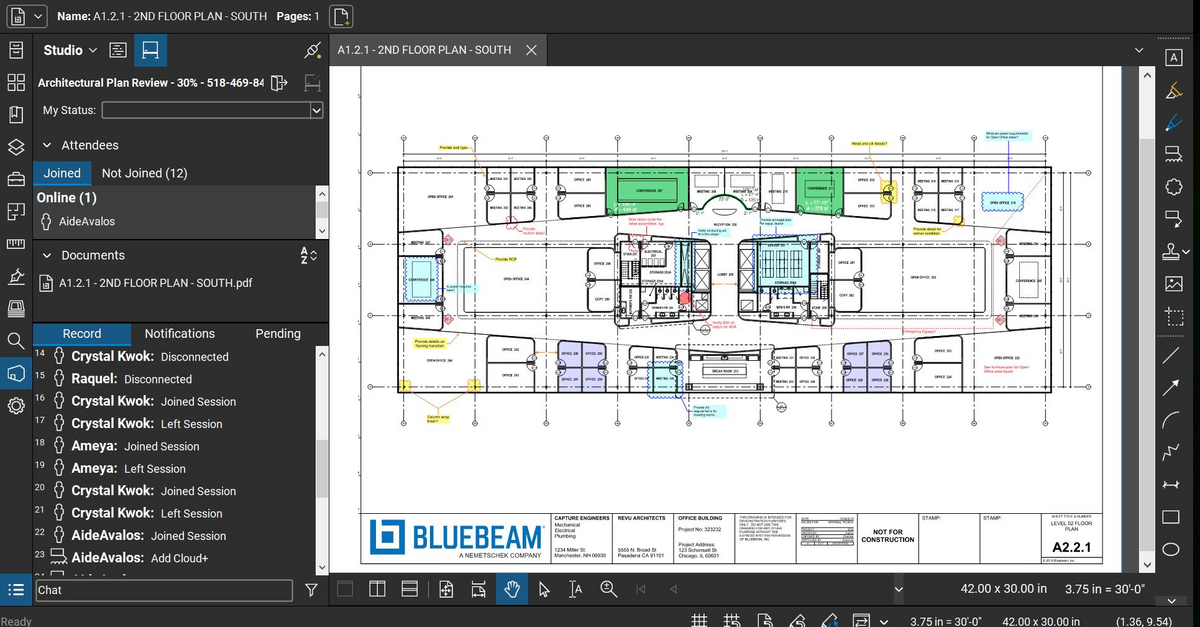
Bluebeam Revu has a much more sophisticated interface that allows you to mark up documents in many different ways. It can store tools for standard markup use. It provides digital signatures which can be very useful for many document types. By creating a Revu studio, multiple …
The newer Adobe interfaces are poor. Adobe does not do as well with drawing markup or takeoff tools. Adobe does seem to render some drawing files more quickly though. Adobe text document markup feels a bit more polished. Bluebeam was selected for better tools specific to …
There is no comparison. The editing tools, batch tools drafting tools, personal environment profiles, settings, printing, calibrating, direct connecting apps that links Bluebeam to AutoCAD and Revit. This is an extremely powerful program that is amazingly helpful and I probably …
Bluebeam Revu is a better product than Adobe because it focuses more on achieving construction related goals. We selected Bluebeam Revu because others in our office had used it and recommended that we integrate it throughout the company.
Bluebeam is above comparison for the construction industry. They've invested everything into delivering the features that everyone needs and making them as simple to use as possible. Their customer service is unparalleled in listening to the features their customers want and …
Canva takes the top used features in Adobe PhotoShop, Illustrator, and InDesign and combines them all into an easy to use web based software. What's not to love about that? Sure, you can't do insane photo editing in Canva, but it does have a nice selection of stock photos that …
Canva has a special niche when it comes to stacking up against the products that I listed above. When it comes to learning curve, with Canva, there is virtually no learning curve; the interface of Canva is easy for any user. Where I reach my limit with Canva is that it …
Canva is FREE! That is why this makes Canva the best! You only upgrade for specific fonts and templates. Canva is seriously the most amazing tool out there and has no competition!
In my previous experiences, all of my attempts at Graphic Design were based on hashing various pictures and icons together in programs such as Microsoft Word, Powerpoint and Paint. These designs reek of amateurism and anyone who has used these programs can identify their …
I am a one-person Marcom department for a school. While I have some experience with Adobe products, Canva makes it really easy to quickly design eye-catching materials for social media, our website, flyers, etc. I love that I can upload our logo and other branding elements to …
Canva is a free tool that provides you with powerful features to use in your content marketing. It is easy enough for the DIY user and powerful enough for many pro designers. There are many use-cases where you need more powerful tools, but if you're looking for something …
All these programs I've used before are fairly similar in terms of what they are able to do. I just personally really like the templates, fonts, and images that Canva provides because as someone who's not the most adept when it comes to designing, this makes it easier for me to …
If your work involves a lot of received PDFs, be it contracts, scanned docs, or multi-part files that need reorganizing before they go anywhere useful, Acrobat fits there well. It's basically what we use it for, and it does that job reliably enough. Where it gets less appropriate is anything collaborative or when you are on a tight budget: paying this much for a tool that slows down on heavy files and doesn't do real-time editing is hard to justify unless you genuinely need the OCR and format editing on the side. For a lighter use case, there are cheaper options that cover most of what people actually need.
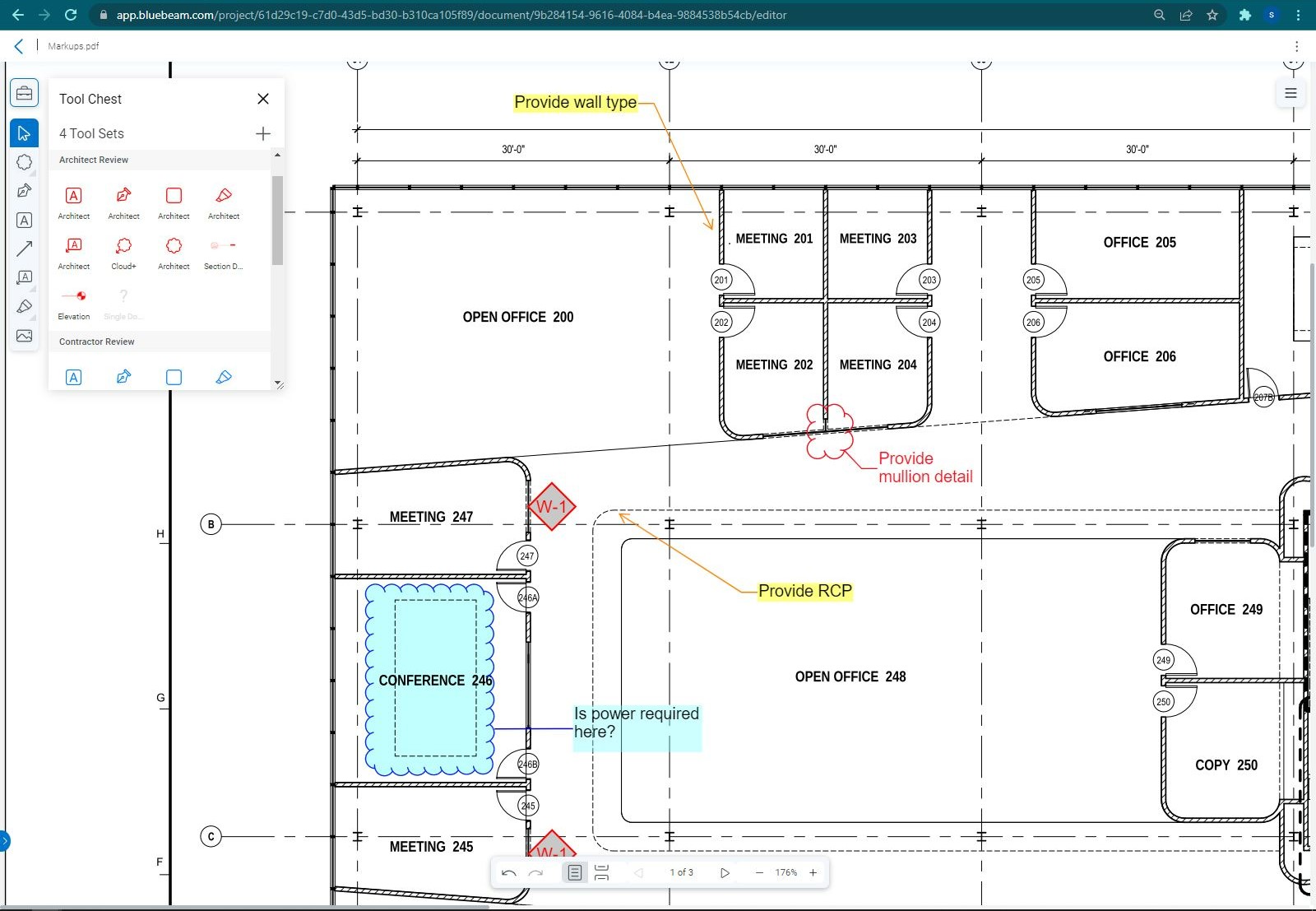
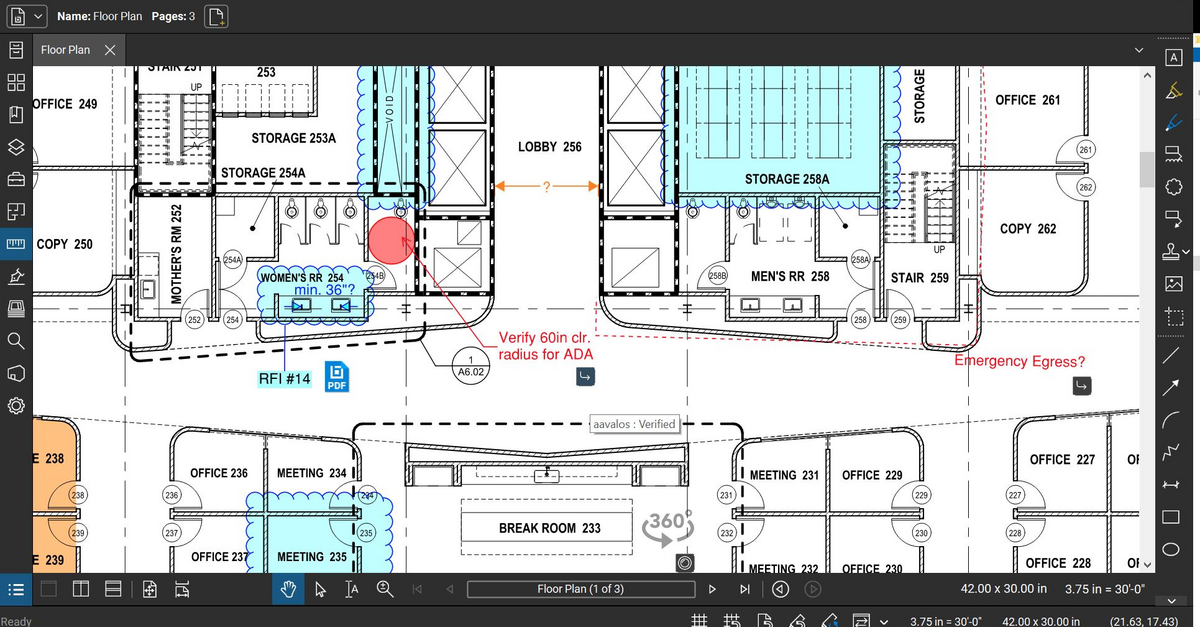
The program is great for editing construction drawings, stamping/approving official documents and overlaying revised documents to see design changes. You can use it as an estimating takeoff tool, estimating database, document control, cloud document storage, the list goes on! Bluebeam poses many applications for the user to utilize for the desired needs. There may be some other software that has one specific function that can perform the specific task better, but Bluebeam is a holistic program with many tools for use.
They are suited to serve the non-profit space, offering premium features at no charge for up to 50 users. They provide tools for non-graphic designers that help to create appealing and attractive pieces. For those who are unsure about where to start with a project, Canva offers templates that can be edited to suit the current need.
Once you set Bluebeam Revu as your default PDF handler, it launches immediately when clicking a PDF to open. The speed with which it opens documents is impressive.
Creating PDF's out of other documents, such as Word, Excel, JPG's, etc. is simple.
Digitally signing documents is a simple, secure process. You can keep your signature password-protected, yet still access it quickly.
The Bluebeam Revu mobile application ( I use the iOS version on an iPad Pro), is awesome. Not only does it handle PDF's like you would expect it to, it allows for effortless digital signing of documents on the fly. Nice to be able to quickly sign a document and email right back out from the tablet no matter where I am.
It helps you find the right design and helps you start with the right template
It helps in creating for all platforms, basically you need to create the design only once and Canva takes care of the rest by resizing the design for whichever platform you want to publish it to.
It also comes with a content planner which is extremely helpful for obvious reasons. It relieves you from the hassle of posting when the right time hits.
There's a Brand feature which is also extremely fascinating as it helps you store all your brand information (even color) at the same place.
For as amazing as Adobe Acrobat is, a lot of the time it does feel like one of the more clunky and slow Adobe programs.
Ability to edit text! Adobe Acrobat sometimes struggles with fonts and editing the text ends up messing with the text in weird ways.
It would be cool to have multiple versions of the same preflight single fixups! I use the same single fixup but need to adjust it for multiple sizes! I'd like to be able to save another version of it with the different sizes.
If you have several tabs open and you try to drag one out for a side by side view then you do not have all the modification options and you have to combine them back together.
There is a lag time when hitting the print option.
There is also a lag time when opening files, sometimes I think the window is frozen.
I wish the basic version also had basic file editing, as in editing a document as Adobe does.
I have a hard time coming up with any improvements, perhaps increase the number of free elements to use in design.
Maybe, Canva should check if you start editing a previous document to see if you want to change the current design or create a new one as a clone of the current document (design).
I'm sorry, I really can't think of a 3rd. Overall, I really like working in Canva.
Adobe Acrobat works seamlessly with the other Adobe products we use that are industry-standard. We will certainly continue to use Adobe InDesign, Photoshop, and Illustrator, meaning it will always be convenient to work seamlessly with Adobe Acrobat for our organization. We are happy with the performance of Acrobat and it's meets our expectations.
Bluebeam is a powerful PDF viewer and mark-up tool. We are more familiar with it than Adobe Acrobat Pro or other viewers, and it has more features geared towards construction document managers than Acrobat Pro does.
The ease of use makes Canva a powerful tool for manipulating images, creating original content, and testing ideas without requiring the involvement of graphic design or more time-intensive image editing software such as Photoshop. While it doesn't have the full functionality of a mature software, such as Photoshop, The speed and simplicity of Canva makes it a necessity in a business of any size
It’s a very easy app to learn and software is essential. I feel like the app could load a bit faster but overall, is one of my go to apps. Makes reading and editing pdfs easy and I enjoy the usability of the app. It is definitely something I make sure to have downloaded on any computer I’m working from
I'm constantly finding that Bluebeam Revu does more than I knew it could. And when I find something that it can't do, I've found that Bluebeam truly listens to its user base and will work to incorporate any good suggestion when feasible.
It is super easy to use, but it could be limiting if you're on a small device. It is easier on a bigger device because you can resize graphics and text easier than with your fingers on a small device. I do think it's perfect and easy for non-designers who don't have any training. As long as you have a good eye for visuals, Canva is a wonderful substitute for graphics programs on-the-go.
We have not had availability issues with Adobe Acrobat, or at least none that I am personally aware of. Some may encounter crashes of the software during outages of electricity in their city or neighborhood, which no one can plan for, but with generators in our organization, we have been lucky not to have outages
I have yet to encounter Canva being offline in at least 6 years of using it regularly. They also announce well in advance if there may be upgrades to the code and the hours during which there may be issues accessing the service.
One of the best features of Adobe Acrobat is its speed and stability. When dealing with massive multi-page files, having to reload a crashed program over and over again would slow down progress unnecessarily. And expanding on that, having the table of contents generated allows me to skip to different pages with ease, a necessary feature with exceptionally long files. word searches are even more helpful with text recognition.
I haven't ever had issues with a slow-loading site and there haven't been any lag issues within the software. There have been maybe a handful of times over the past six years where I have tried to upload a large image and it will slow down as it loads the last megabyte, but I have yet to have the system time out or require any interference by me
For a while, Acrobat DC crashed pretty frequently. I contacted Adobe Acrobat support about the problem. At first support was unable to provide a solution. After about a month Adobe's software engineers provided a fix. I just wish it had taken less than a month to solve the problem.
Its hard for me to give a rating on this one as we rarely have to use the support feature for Bluebeam. However, when we have used it, they have been ultra supportive in helping us get exactly what we needed. I know another engineer was trying to figure out a feature and the rep gave a detailed tutorial on how to complete the task
Overall, Canva is easy to use, easy to train others to use, allows for creativity with a professional look without enormous associated costs. The mobile apps works almost as easily, but at a minimum allows for easy review and downloading in a pinch. Really, anyone can learn to use Canva quickly and will immediately benefit from the results.
I was not involved with the implementation process, so I cannot answer this question. However, when it was installed on my computer system, they did so virtually. I just sat there while they took control of my computer over the network and watch them install it, lickety split
Remember to download the mobile app onto your phone for easy image manipulation on the go. Adding company colors, logos, and typefaces to your company account is an easy process. When images are uploaded, these can also be shared between accounts within a company, as can canvases you've created for easy editing among teams.
In my opinion, both complement each other. Microsoft clearly has with Copilot the AI Edge. However, the visual dynamics of Adobe Creative are Outstanding and provide a balanced approach to creativity, utilizing both Excellent, user-friendly Tools.
We feel there is not another program out there that would compare to Bluebeam at this current time. Some of the other programs out there do not include studio or the overlaying process which is one of our main uses. The ease of hyperlinking makes this product stand out the most.
Canva is faster and easy to use. There aren't complex menus like Adobe products and everything is generally intuitive. Menus are mostly open and visible or relatively small. Small changes to the program add to it's usability rather than detract. I also appreciate that Canva helps the user become more creative through use. By giving you editable examples through templates you can choose to re-design something ir create something from scratch w/ a similar concept or feel. Canva often gives me ideas that I can implement into my design or into the entire project even. I also like how Canva is intuitive in it's approach. The program gives you suggestions when it comes to graphics, etc. without getting in your way if you know what you already want
I find that many users aren't aware of many features of the software they use, nor may they be comfortable with learning multiple-step processes. For the simplest of PDF purposes (scanning, downloading, exporting), it gets a thumbs-up. For anything involving electronic signatures, meh--causes eyes to glaze over, or forgetting what all is involved.
Very easy to add accounts and share content between them. Collaboration is also easy to manage and can be done on a project-by-project basis. The cloud-based software means it is incredibly fast to add a coworker and have them editing images within minutes. A live internet connection is required to access Canva so this is something to consider if expecting to use the software while on journeys without access to wifi etc
Adobe Acrobat has saved us time in managing documents. In this day, everything is fast, moves fast, and keeping up with that pace demands software that functions at the same level. Adobe Acrobat does that. It has streamlined the steps I need to take to edit and create documents we need to manage our customers.
Adobe Acrobat removes the worry and stress associated with managing a large influx of documents. Something as simple as a document featuring an image that was sent to us upside down. Using the old method, I would have to open other software, click 'Edit', find the 'Rotate Image' button, click it a couple of times, save it as a JPEG, then attach it to Word, and finally save it as a PDF. It was a grueling process that consumed a great deal of time. Now, I simply open the image, and Adobe automatically recognizes it is upside down and fixes it for me. I can save and move on; it literally takes me seconds. Amazing.
Adobe Acrobat is intuitive and easy to use, and the additional apps are relevant to the needs that come up. If I have an idea, I can go to the available apps and find exactly what I need. Impressive and speaks to the years of experience this company has had to fine-tune its product and make it obvious that it is aggressive in staying on top.
A major positive aspect is being able to take your computer home without taking the entire set of paper drawings. They have made it so easy to navigate a set of drawings that I can work at home using only the digital drawings.
Collaboration with owners and architects has been a great feature. Setting up a Bluebeam studio and having everyone get in and mark things up, then having the architect be able to go in and see what markups have been added, has made the constructability review process much much better.
Even when not working on drawings, Bluebeam is a very good tool for working with standard PDF documents. The markup tools are very easy to use.
The negative aspect is the takeoff function because some people would like estimators to use the Bluebeam takeoff because it would make their job easier down the road; however, the actual act of doing a full scale takeoff in Bluebeam would require much more time.
As far as ROI is concerned, Canva has proven itself time and time again as having a positive impact for business.
Just yesterday, I had to prepare an hour-long presentation on the fly; the great reviews of the presentation and the materials (all made in Canva) only served to advertise for Canva and it proves that Canva is a smart investment.
I don't think in the time that I have been a Canva pro user that I can say that my ROI has been negatively impacted. Highest recommendation. The software more the casually pays for itself time and time again.