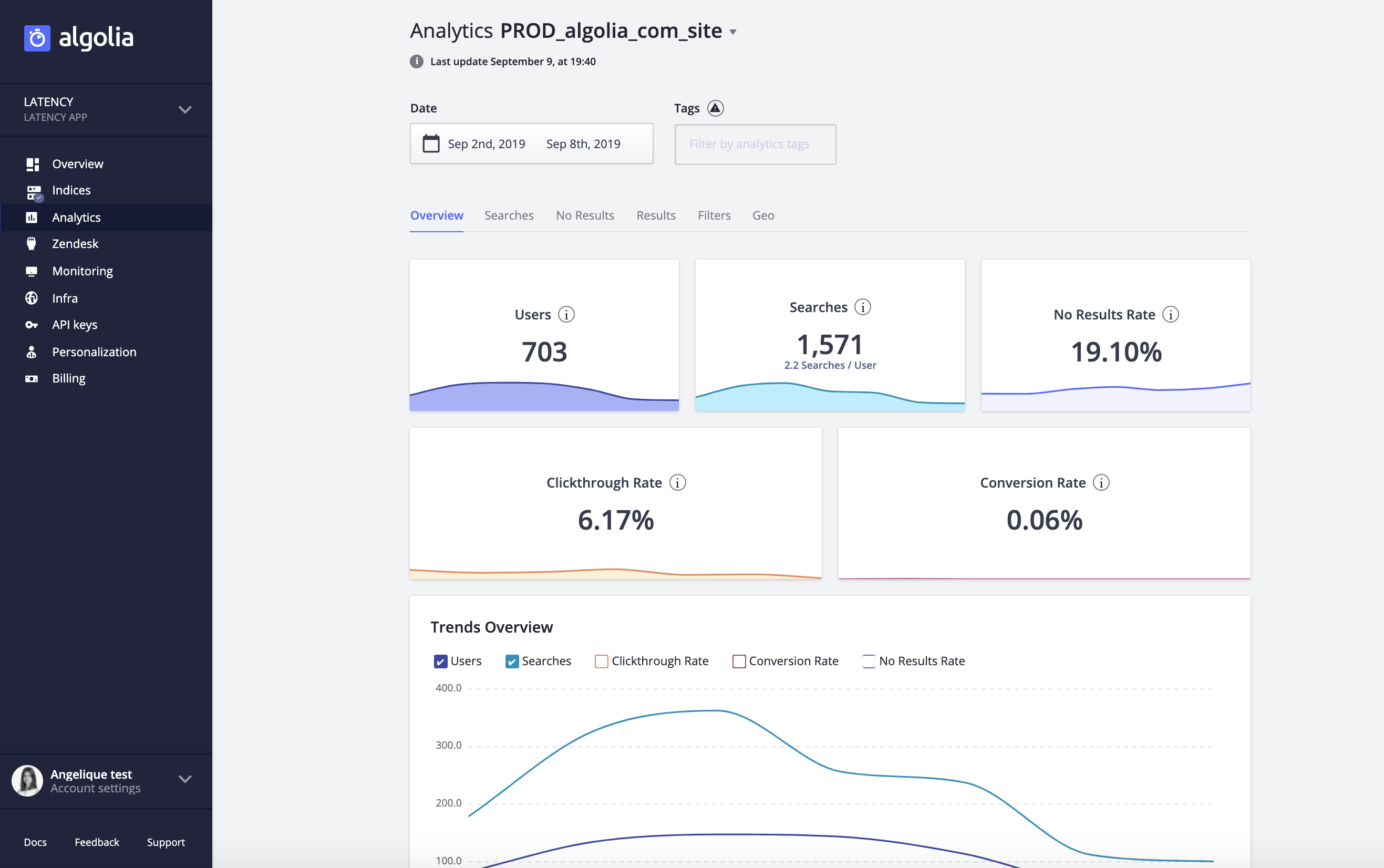
Algolia offers AI-powered solutions to improve online search and discovery experiences, with tools for business teams and APIs for developers that help to improve user engagement and conversions across websites, apps, and e-commerce platforms.
$0
per month 10k search requests + 100k records
Dynamic Yield
Score 9.0 out of 10
N/A
Dynamic Yield is presented as an AI-powered Experience Optimization platform that delivers individualized experiences at every customer touchpoint: web, apps, email, kiosks, IoT, and call centers. The platform’s data management capabilities provide for a unified view of the customer, to allow the rapid and scalable creation of highly targeted digital interactions. Marketers, product managers, and engineers use Dynamic Yield for: Launching new personalization…
N/A
Yext
Score 8.0 out of 10
N/A
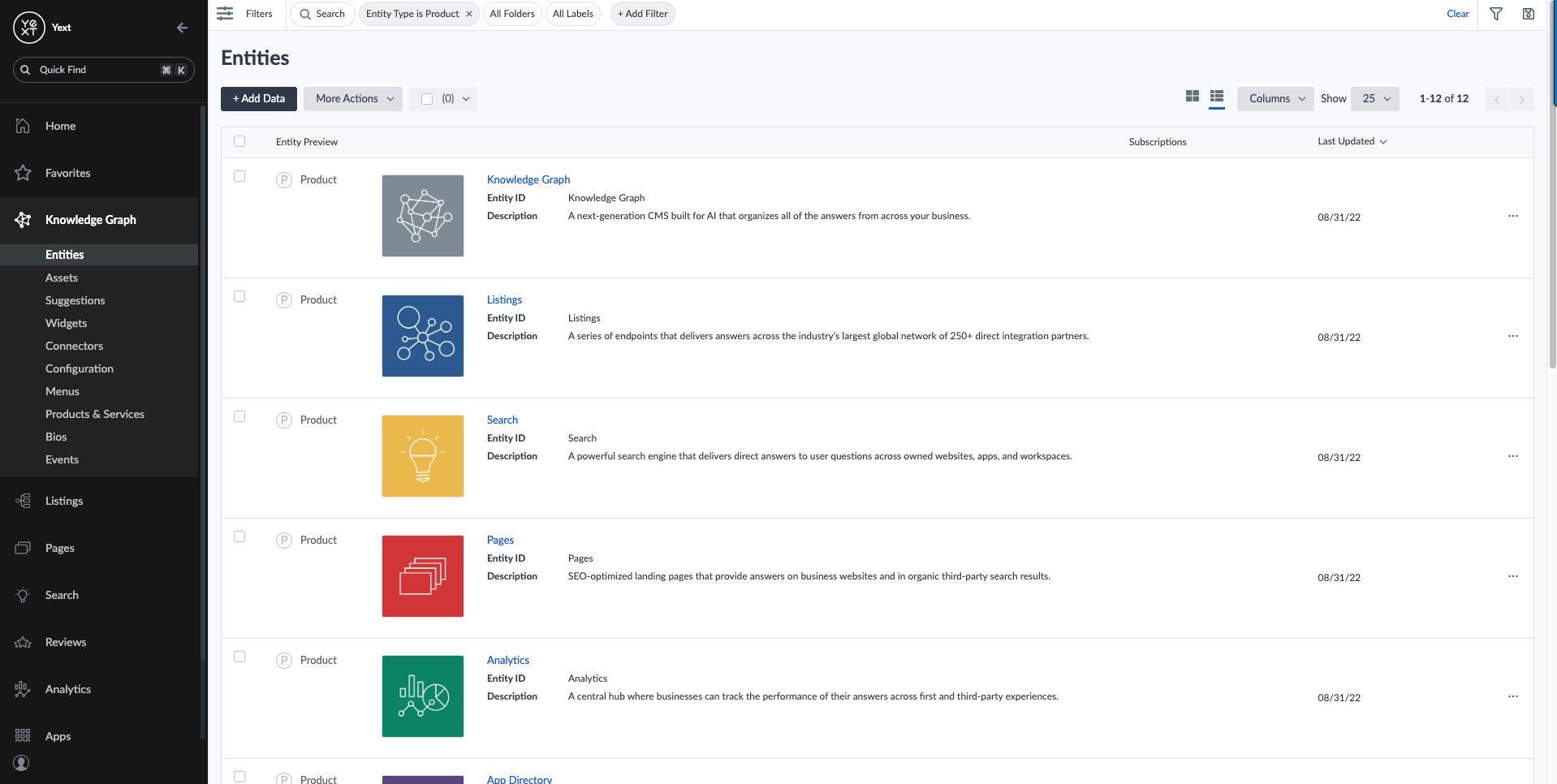
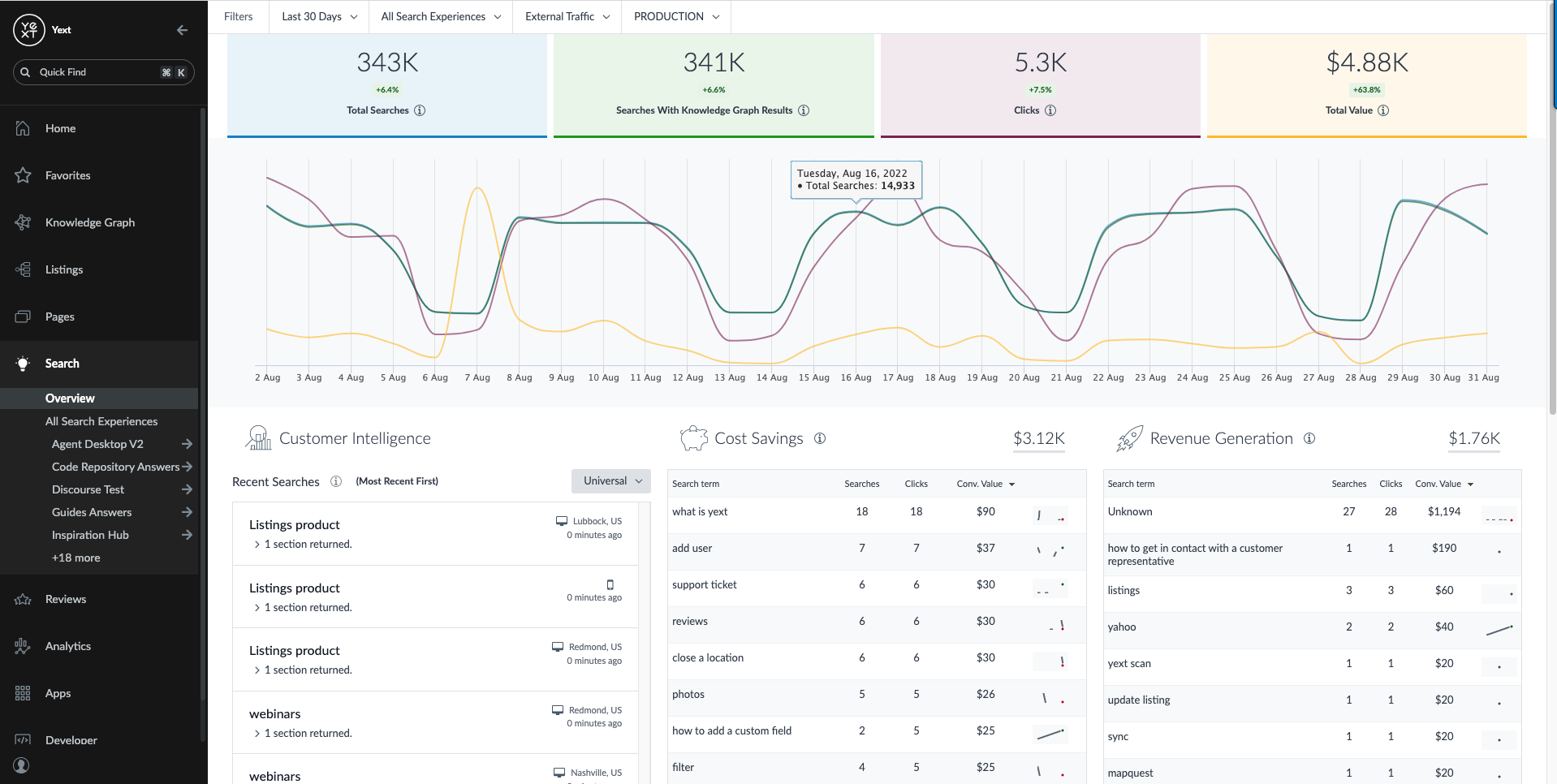
Yext is a digital experience software provider headquartered in New York, New York.
N/A
Pricing
Algolia
Dynamic Yield
Yext
Editions & Modules
Build
Free
per month Up to 10,000 search requests + 1 Million records
Grow Plus
Free / Pay as you go
per month 10K searches/month & 100K records included; $1.75 per extra 1K searches, $0.40 per extra 1K records
Grow
Free / Pay as you go
per month 10K search requests & 100K records included; $0.50 per extra 1K searches, $0.40 per extra 1K records
Elevate
custom
per year
Elevate
Custom
per year Custom search requests and records — volume-based discounts available
No answers on this topic
No answers on this topic
Offerings
Pricing Offerings
Algolia
Dynamic Yield
Yext
Free Trial
Yes
Yes
Yes
Free/Freemium Version
Yes
No
No
Premium Consulting/Integration Services
Yes
Yes
Yes
Entry-level Setup Fee
Optional
No setup fee
Optional
Additional Details
Pay as you go, scale instantly, or upgrade anytime for advanced features and capabilities.
—
The cost of Yext varies depending on a number of factors such as package type, business size, entity count, and more. To create a solution that fits your business goals, please contact us or request a demo.
Dynamic Yield is on a whole different level compared to anything I've tried before. The different types of campaigns you can make with DY covers all your needs. If you can't find a suiting campaign type, or even template, you can use Dynamic Content or Custom code to create …
Algolia is both well-suited to replace Shopify's out-of-the-box search and to very large sites with millions of products in their catalog. Algolia provides a specialized solution that benefits from very large R&D budgets and ongoing investment. Algolia offers a more retail- and open-design solution than competitors such as Amazon or Google search, which offer fewer options and fewer features.
For us, it is well suited for personalization. Since we are hospitality brand, we have different rooms sales inclusion based on different segmentation like Mem or Non-mem, Global or UAE, we have to personalize our landing pages accordingly so that we show the relevant information to relevant audience. The inactivity pop up box and newsletter signup popups work good for us. It does not work well in some scenario like Dynamic Yield offers built-in analytics focused on campaign and test performance, but it’s not a replacement for tools like GA4, Adobe Analytics. It lacks deep funnel tracking or complex reporting capabilities.
We have multiple branch locations throughout our market area. It's very challenging to manage the web listings for each location, with a large volume of listings across numerous platforms for each of those locations. Yext significantly reduces the workload by allowing me to make a single update and Yext automatically pushes the notifications across the other platforms
Users get instant feedback as they type, even with complex filters like brand, model, price range, and financing eligibility. This speed significantly improves engagement and reduces bounce.
A user searching for “Camry 2020” or even “Camary 20” still sees relevant Toyota Camry listings from 2020. This reduces friction, especially on mobile where spelling errors are common.
Algolia handles multi-faceted filters efficiently. For example, a user can filter by location, transmission type, color, or inspection status without any lag.
We fine-tune the ranking of search results based on what matters to our business—like prioritizing cars with higher margins or better availability in key cities.
We can experiment with different ranking formulas or UI variations to improve KPIs like lead conversion or time-to-first-interaction.
Provide fantastic support, both in relation to strategy/best practice and troubleshooting.
An easy to use interface, as a user who is relatively new to Dynamic Yield I find that it is an intuitive platform to use.
The ability to segment and drill down on data allows for really specific insights which, whilst not necessarily being leveraged on a testing basis, can be super valuable from a greater marketing perspective.
Yext provides information within the portal on how you can enhance your listings as well as how you can fix any issues with your listings that may exist.
Yext's dedicated account managers can help you with any issues that may arise. For example our location pin on Apple Maps was wrong on one of our clinic listings and our Yext account manager reached out directly to Apple support and fixed the issue.
Better integration of features (ex. synonyms feature is great but isn't respected by their re-ranking product)
Tooling to reduce spam search queries being triaged by system/logged to analytics panels
More automated summaries of analytics (ie. recommend synonyms to add, trends noticed in search volume in specific areas of site, easier ways to leverage API vs using website UI)
Brand templates could need complex CSS/custom code.
We'd like to see a little "i" next to specific labels, which elaborates on what is meant. For example, when I hover over "Dynamic allocation," I get something like "An advanced form of A/B testing where the best-performing variations receive higher traffic."
Jargon (for example, for audience targeting) can be overwhelming for new users; therefore, clearer, user-friendly explanations are needed.
Cost. This platform offers a lot of powerful features, but it has an expensive barrier to entry.
Annual contracts limit flexibility for smaller companies
The biggest drawback is that you need to keep your subscription active or listings/citation data will revert back to what it was pre-Yext implementation
Algolia is a great tool, we didn't have to build a custom search platform (using Elasticsearch for example) for a while. It has great flexibility and the set of libraries and SDKs make using it really easy. However, there are two major blockers for our future: - Their pricing it's still a bit hard to predict (when you are used to other kind of metrics for usage) so I really recommend to take a look at it first. - Integrating it within a CI/CD pipeline is difficult to replicate staging/development environments based on Production.
implementation took a long time but also, DY has really proven that they are transforming and adapting their platform to be more user friendly and the right technology choice for their brand or company
Personally I find the Algolia integration not very complicated and the service super reactive. In terms of configuration, it's quite complete, at the end what matters is what we are able to index on Algolia. With rich data, the tool is amazing and a lot of things are possible.
Setting up strategies, audiences, and experiences is simple and fast. It is incredibly easy to modify the appearance of your site and optimize every aspect with the Dynamic Yield Personalizations. However, while the data visualization on an experience level is easy to modify and analyze, exporting the data in meaningful ways is time consuming.
Yext is pretty easy and straightforward to utilize out of the box. While I work for a digital marketing agency, and this is second nature to me at this point, I do believe the average SMB owner with zero digital marketing experience could be a proficient Yext user within 1 hour or so of usage. It's easy
Performance is always a major concern when integrating services with our client's websites. Our tests and real-world experience show that Algolia is highly performant. We have more extremely satisfied with the speed of both the search service APIs and the backend administrative and analytic interface.
It’s non existent. No tech support and no customer service… my application was blocked and is currently inactive causing huge business disruption, and I’m still waiting days later for a response to an issue which could be resolved very very quickly if only they would respond. Very poor from a company of that size
Overall, the support is very good. If you are a partner (my case), they assign you a customer success manager, that helps a lot. Also, there is a technical person to provide support to the partners, again a great help.
My only "complain" is that with some complex issues, the support may delay in providing you with a solution. Sometimes that can cause some tension with your client.
Have been very impressed with the support we receive from Yext. I always feel I am listened to and if I have any problems or concerns they are quickly addressed. I have multiple ways to obtain support, either technical or strategic support, and they are responsive. I couldn't ask for more.
Algolia gives way more control for a non-developer than AWS Elasticsearch Service. Previously we'd have to have our developers make adjustments to site search relevancy, typos, prioritizing certain attributes over others, etc. but now the marketing and website team can do that themselves in the Algolia dashboard
Dynamic Yield provides far more capability and ready-to-go templates for small-medium sized businesses, as well as decent API implementation for businesses who want to have a deeper integration. The ease of implementation and faster time-to-market is why we chose Dynamic Yield.
We initially chose Yext because it provided the greatest control for our multiple listings. Plus, it had access to the most publishers. However, when evaluating Synup we were very impressed. You would not go wrong to choose either!
Overall is a scalable tool as the environment and the backend functions are the same and many things are done directly on the tool so without the need of further specific developments. However some things could be improved such as documentation for integration that could help in doing whitelabel solutions
Users who had abandoned our product (attributing slow search speeds as the reason) returned to us thanks to Algolia
We used Algolia as our product's backbone to relaunch it, making it the center of all search on our platform which paid off massively.
Considering we relaunched our product, with Aloglia functioning as its engine, we got a lot of press coverage for our highly improved search speeds.
One negative would be how important it is to read the fine print when it comes to the technical documentation. As pricing is done on the basis of records and indexes, it is not made apparent that there is a size limit for your records or how quickly these numbers can increase for any particular use case. Be very wary of these as they can quite easily exceed your allotted budget for the product.
Most tests have had a positive impact on either revenue or conversion rate - quite often in double digits.
Dynamic Yield has also helped us to stop some particular initiatives through direct interaction with the customer base via questionnaires or by a test proving negative quicker than rolling out a permanent feature.
Consistency in business listing management - without Yext, we would surely have more inconsistencies with our business address across the web. This can lead to poor communication to our customers, and potentially lost business if we lose trust as a reputable business.
Yext saves me hours of legwork to manage numerous web listing platforms individually.