Basecamp is a web-based project-management tool. Basecamp offers features standard to project management platforms, as well as mobile accessibility, unlimited users, and 3rd party integrations. Basecamp is priced by space requirements and concurrent projects.
$15
per month per user
Salesmate
Score 10.0 out of 10
Mid-Size Companies (51-1,000 employees)
Salesmate is a single platform that helps create personalized experiences across marketing, sales, and service touchpoints across all channels – email, text, chat, web, calls, and eCommerce. It is designed to enable users to generate more leads, close more deals, and build lasting customer relationships. It replaces many disjointed systems to save users time and money. Salesmate offers businesses: …
$29
per month per user
Workamajig
Score 7.3 out of 10
N/A
Workamajig is a project management system with capabilities such as file sharing, resource management, and revenue projection.
$41
per month per user
Pricing
Basecamp
Salesmate
Workamajig
Editions & Modules
Basecamp Plus
$15
per month per user
Basecamp Pro Unlimited
$299
per month (billed annually)
Basecamp Free
Free
Limited Capabilities
Basic
$29
per month per user
Pro
$49
per month per user
Business
$79
per month per user
Enterprise
Custom
In-house
$41
per month per user
Agency
$41
per month per user
Enterprise
Contact
per month per user
Offerings
Pricing Offerings
Basecamp
Salesmate
Workamajig
Free Trial
Yes
Yes
No
Free/Freemium Version
Yes
No
No
Premium Consulting/Integration Services
No
Yes
No
Entry-level Setup Fee
No setup fee
Optional
No setup fee
Additional Details
—
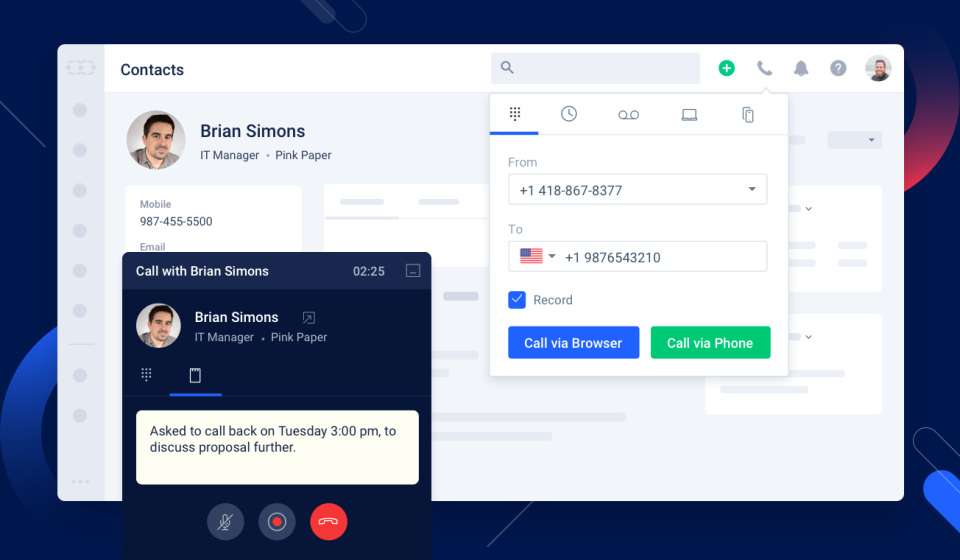
We offer built-in calling:
Starting at $1.10 per month for your phone line & pay as you go credits
—
More Pricing Information
Community Pulse
Basecamp
Salesmate
Workamajig
Considered Multiple Products
Basecamp
Verified User
Professional
Chose Basecamp
My previous company felt that it was an "all in one" platform because it was one place to house our documents, it has the messaging option, and it was easy to keep track of important dates through it where clients/assisting teams could see.
Basecamp is a wonderful tool for teams of varying degrees of technical knowledge, teams managing lots of different types of "agifall" and waterfall projects, and teams that are remotely distributed. It's probably less useful for more strictly agile-focused development teams, compared to other more flexible software applications like Jira and Asana.
Salesmate gives us everything we need as a small business, with a clear interface, and can adapt to any business. If I was being ultra picky, I would perhaps suggest the ability to remove or hide certain modules not applicable to our niche, e.g., we are a B2C business, so the company module is not really useable for us, but this is not a negative by any means.
If you're looking for a system to help you address accounting that's not suited for marketing agency structures, this is the right tool. It is a bit cumbersome, but it has streamlined our reporting, billing, estimating, and tracking. As for project management, it's great that it integrates with the estimating and finances, but it's just not enjoyable to use. The interface is clunky. So if project management is your main criteria, I'd choose something else. We would never use it to collaborate with clients either because I'd be afraid of making them frustrated by the tool, so we use Basecamp to do that.
Task management - It is very easy to add, organize and discuss tasks within Basecamp's interface.
The "Campfire" function is great for communicating when you just have a quick question for someone on the team.
Notifications - Basecamp lets you decide how often and about what you'd like to be notified. The ability to respond to messages in Basecamp directly via email saves a lot of time.
The Platinum version has a particularly robust time tracking system, down to a 'timer' function that can be critical for an agency like mine where you want to be accountable for billing a client arruately
The ability to make projects available only to those who are permitted to assign their time to it has apparently been very helpful during our revenue reconciliation meetings where time incurred is reviewed against scope
The mobile app, while I still feel needs some work, is pretty handy for a quick calendar check if I'm in a client meeting and cannot utilize my browser to get information
High Learning Curve. It's true that it can be easy to use, but to use well and effectively takes some time to learn. It's recommended to have an agreed-upon system in your team of what tools to use and when.
Notification Overload. If people aren't careful they could send a notification to everyone when only a couple people were meant to be prompted. And since emails are sent by default, you could have your mailbox overloaded with unnecessary updates. This is where it takes a bit of training in your team to have an agreed-upon system.
Lack of organization with Archived Projects. I will often need to reference an archived project to make a new one, but there is only a list of archived projects in alphabetical order, with no way to organize by archive date, or even search.
The search feature can be buggy and does not allow for highlighted text to be typed on. You must clear the box or hit backspace before typing. The only app in my life that does this.
The dashboard button is pointless if it still makes you choose between legacy or classic.
WMJ's interface is dated. Despite an html5 driven "sheets"-based interface, it takes a lot of time and effort to manage the interface, which could be streamlined considerably. On a UX/UI scale of 1 to 10, with 10 being the best, WMJ would earn a 6 from me.
Despite the amount of documentation available, there is a distinct lack of clarity in that documentation, and it doesn't fully cover everything you would expect. Branching thoughts, for instance, are not addressed. Additionally, because there are two editions of the software online, there are two support sites that aren't sequestered. So information from both commingles, creating confusion.
Support is available on an email and phone basis. They strongly encourage you to use email, however, and they are resistant to phone time. This is likely because the support staff is limited in number, but has a great depth of knowledge. If you want immediate phone support, however, YOU ARE OUT OF LUCK. You are placed in a queue and the odds of same-day help are low. For email, the response is usually within an hour, but when you are stuck with a configuration issue, or need to generate a report and don't know how to do something, waiting is not optimal. That said, the support team is TERRIFIC.
When I bring new people onto a project, it's immediately obvious how to use Basecamp. I don't have to worry about teaching them the features or walking them through it, it's just incredibly user-friendly. For this reason, I'll continue to renew my subscription even as new people are brought onto production jobs or the client changes.
Very happy with the customer service and the overall functionality of the program. With new features always being launched and discussed I'm looking fwd to growing with them
It is easy to use, even for clients who have no experience with the platform. It can only get a little cumbersome to ensure that a client can't see certain documents you might want to keep in the Docs & Files folders. And sometimes, getting a client to actually use an unfamiliar platform can be a challenge.
It's so easy, and the support is top notch and I love Salesmate. Seriously the best CRM on the market right now, which I was able to customize exactly the way I needed to, with their support with me every step of the way. I will be working with SalesMate for a long time if not forever.
I've never experienced downtime while using Basecamp, or been unable to access it when I needed it. That's not to say they've never had downtime, but I've been lucky enough not to encounter any, and I work odd hours, including late nights when maintenance is often undertaken.
For the many reasons I've given, Basecamp is a very strong program. There are a few features I can imagine that might make it even better, but I don't have a basis for comparison to be able to say that there is definitely a better one out there. I've noticed that Basecamp has evolved a bit from the time I started using it until now, so that makes me think that the producer of this program values it and believes in continuous improvement. If you could use the features offered by Basecamp, I would think you could use it with confidence.
The support team at Salesmate is top-notch. They provide live chat support within the platform and answer typically in under a minute. They are always incredibly quick to respond to questions and provide insightful information. Getting started on the platform is easy as you always have support nearby.
Decide the process before implementation - i.e. when it's due 8/9 does that mean 8am, noon, 5pm, 11:59pm? Check your to-do list frequently Set-up templates - just not with the dates (they can be funky)
Pretty good, but [Basecamp] has its drawbacks. Honestly I find the interface non-intuitive and sometimes have trouble figuring out how to change the status of a task. Perhaps it has something to do with the way it was originally set up by the admin, but I'm not sure. I liked Jira's drag and drop obvious functionality, but the project management side of the software was lacking. Smartsheet has excellent project management functionality, but the task management isn't as good.
Very similar in overall layout and user experience...but the features blow these others out of the water. Where alternative solutions had features either lacking or as an upgrade (ie having to spend an extra $10-$30/month/user) Salesmate has these features out-of-the-box
Workamajig was selected over a decade ago when there were very few project management platforms that has integrations with other platforms, support for Agile, KanBan, etc etc. Most of the other offerings did not offer the type of security available with us hosting an on premises server behind a VPN although now there are plenty of cloud based solutions that have security compliance greater than what we can provide (fedRamp, etc.)
It has saved me time when having to get the same message out to multiple restaurants
It has helped us make smarter operational decisions because we can all collaborate on an answer in a shorter amount of time (instead of calling a meeting!!!)
The calendar function allows us to plot out our marketing agenda for the month and add/change it together as needed. The chef will post his recipe, the managers will cost it out, the social media manager will post pictures on it, and ultimately we will get that information out on an info sheet to the staff by printing the page.
The agency switched to an hourly allocation so our clients were subject to a certain amount of hours each quarter. JIG helped us keep track of who was going over hours or who had some to spare. Once the clients went over we would use JIG to help charge the additional fees for going over. It helped keep clients accountable.
It was used to keep track of time sheets and through those time sheets, the directors were able to make a case for more employees on certain accounts. The corporate team hired 3 additional people that were truly needed and our time sheets helped reflect that.