Overview
ProductRatingMost Used ByProduct SummaryStarting Price
Drupal
Score 6.7 out of 10
N/A
Drupal is a free, open-source content management system written in PHP that competes primarily with Joomla and Plone. The standard release of Drupal, known as Drupal core, contains basic features such as account and menu management, RSS feeds, page layout customization, and system administration.N/A
Jira Service Management
Score 7.9 out of 10
N/A
Jira Service Management (formerly Jira Service Desk, now including features from the former Mindville Insight, acquired by Atlassian in June 2020) is a service desk software that is purpose-built for IT, service, and support teams. The software provides everything IT and support teams need out-of-the-box for service request, incident, problem and change management. Jira Service Management integrates seamlessly with Jira Software so that IT and development teams can work better together. Users…
$0
per month
Joomla
Score 8.3 out of 10
N/A
Joomla! is a free and open source content management system used to publish web content. Included features are page caching, RSS feeds, printable versions of pages, news flashes, blogs, polls, a search function, and support for language internationalization.N/A
Pricing
DrupalJira Service ManagementJoomla!
Editions & Modules
No answers on this topic
Free
$0
per month
Standard
$20
per agent/per month
Premium
$40
per agent/per month
Enterprise
Contact sales team
No answers on this topic
Offerings
Pricing Offerings
DrupalJira Service ManagementJoomla
Free Trial
NoYesNo
Free/Freemium Version
NoNoNo
Premium Consulting/Integration Services
NoYesNo
Entry-level Setup FeeNo setup feeNo setup feeNo setup fee
Additional Details
More Pricing Information
Community Pulse
DrupalJira Service ManagementJoomla!
Considered Multiple Products
Drupal
Chose Drupal
Drupal cannot really compare to Joomla. Joomla is also a free CMS, is faster to set up, is faster to load for visitors, is easier to maintain, and the extensions are much more reliable - even the free ones.

Drupal and WordPress are very different, as Drupal has the power to be …
Chose Drupal
WordPress is like working with an old brick building, aesthetically it's appealing, but restructuring it is difficult, messy, and often takes a considerable amount more effort. It isn't as feature rich, most of the module add-ons are either not well made, or not open-source, so …
Chose Drupal
Drupal is highly customizable unlike WordPress and Joomla. It may take a longer time to set up but it works well for the needs of the organizations it is set up for.
Chose Drupal
Drupal has a huge amount of community support and a plethora of modules to choose from that add new site features for both users and admins. Joomla! would be a close second but I lack enough experience with it to say if it provides as much customization options. OpenCMS is open …
Chose Drupal
WordPress has more plugins and it is easier for editing (as a platform) for developers, but Drupal is built on a modern programming language structure and principles, this it makes it much more efficient as CMS. Joomla is another CMS system but it is not widely popular as WordPr…
Chose Drupal
Drupal is the king of enterprise opensource content management systems. It is the most robust and comes from the most forward thinking community. Drupal 8 is designed for the next evolution in web design and development. WordPress and Joomla! are stuck in the web 2.0 revolution …
Chose Drupal
Drupal is well known for being the most flexible of the "Big 3" players in the CMS space. While WordPress remains the most popular due to ease of setup and use, it lacks the flexibility, depth, and modularity of Drupal, causing it to be less desirable when you want more control …
Chose Drupal
Joomla is terrible. I would never recommend Joomla over Drupal. Drupal's community is much more active and new product updates come out much more quickly.

Chose Drupal
WordPress would be the best alternative to Drupal that I've seen, but in my experience, Drupal is better at complex websites that need a lot of customization. WordPress would be much better suited for a blog than Drupal.

I only briefly looked at Joomla, and I wasn't impressed.
Chose Drupal
We did a comparison of Drupal against Joomla, WordPress, and Ingeniux. We found that its multiple themes available for web pages, user management, comment management, and form generation stands apart from its competitors.
Chose Drupal
Drupal is far more usable and stable than Joomla!, and the developer community support is significantly stronger. While Drupal is often compared to WordPress, they are fundamentally different platforms, and in most projects, it's very clear when the requirements are beyond what …
Chose Drupal
We use both, for different projects (Joomla and Drupal). Drupal proved to be more robust, more secure and more integrable with PHP applications.
Drupal requires a more senior technical team but allows for more complex activities. It's great if you have a medium to a large …
Chose Drupal
Drupal can be more complex to learn, but it offers a much wider range of applications. Drupal’s front and backend can be customized from design to functionality to allow for a wide range of uses. If someone wants to create something more complex than a simple site or blog, …
Chose Drupal
In my mind, Drupal and WordPress are the top open source CMSes, and I rarely recommend not going with an open source CMS. WordPress can be great, especially for single developers, but I find that the code structure and extensibility of Drupal makes it superior for many use …
Chose Drupal
Drupal has strong role-based permissions for users, powerful content blocks for editing, and granular customizing options in their views. For a company or organization requiring a lot of customization, Drupal can be a really powerful tool. However, Drupal does require …
Chose Drupal
We went with Drupal due to prior experience with Drupal as a CMS, however, the previous site was not as complex.
Chose Drupal
Drupal like any other software has its own unique strengths and weaknesses. We didn't select to use it for any particular project of our own, we chose to offer Drupal to our end users so that they can make a decision on their own of what the product excels at.
Chose Drupal
I have used Joomla (a long time ago), and Wordpress. Joomla seemed like a beginner's tool for someone looking for a lightweight CMS. Wordpress is slowly getting there where Drupal is now, but still far behind. Though Wordpress' admin section is beautifully designed and very …
Chose Drupal
I normally prefer to use WordPress if I need CMS capabilities. If I need more than that, I go with framework. Drupal could be an option when you have to develop something more complex than a blog, or pure content pages.
Chose Drupal
Drupal is a powerful choice for a CMS. Although having complex admin menu and setup process, it has quality security, SEO and speed built in as default. Drupal has caching built into the system, making it double the speed of other compared CMS’s like WordPress. Drupal is …
Chose Drupal
Drupal is better than all of these other products 10 times over simply because you can do anything that those other products can do and so much more. You'd need a combination of those products to do what Drupal can do all on its own. Each of those products have inherent …
Chose Drupal
Personal experience with WordPress has been that it offers a small fraction of the tools found with Drupal. Experience with Joomla was that add-ons were too far-reaching; they did not allow combining a few smaller tools to craft your final goals. Personal experience with Django …
Chose Drupal
We opted against Wordpress and Joomla simply because of scalability issues. Each of those platforms are great for performing specific tasks, like creating basic pages, blogs, etc. However, when it comes to building an infrastructure that is going to support 50,000+ users with …
Jira Service Management

No answer on this topic

Joomla
Chose Joomla!
WordPress and Drupal are all backed by corporate groups that don't foster the open source community which I want to support. Joomla! is non-profit and 100% volunteer based and the time I put into Joomla! outputs a better product for my clients and everyone else.
Chose Joomla!
Number one difference is the community. I can't stress it more. The joomla! community (both online, and offline) is extraordinarily friendly and accommodating. I have never heard of anyone who felt looked down upon or ridiculed for any type of question, request, or need. If …
Chose Joomla!
Joomla and Concrete5 have about the same capability and similar issues. Purchasing a SAAS like Squarespace, Weebly or Wix would be worth the price to remove the hassle of Joomla. A more robust free CMS like WordPress or Drupal would be a better solution if you wanted to remain …
Chose Joomla!
I think Joomla is on-par with Drupal and Umbraco and similar platforms, but WordPress does seem to be above it. WordPress has become so common that there are more and more features becoming available to it that exceed the Joomla platform and make it hard to compete with. WordPre…
Chose Joomla!
Joomla! is the #2 Open Source CMS behind WordPress, which we also use, and ahead of Drupal, which we have evaluated but decided not to pursue. Joomla! generally performs better than WP for clients that need more complexity to their websites, including flexibility in templating, …
Chose Joomla!
We chose Joomla! over Drupal or WordPress because it's in the middle ground between those two systems. We needed something that can be extended down the road if we need it, but at the same time, it can't be too complex. We felt Drupal is too complex and WordPress seems to be …
Chose Joomla!
WordPress is designed in a way to make it fairly fool-proof for the admin, but in this approach, it handcuffs the user from having control or making it easy to do, in many cases, what are basic things (changing the title, URL segment, etc...). With the exception of the …
Chose Joomla!
All the reviews I read are lazy. They all say the same old, WP is easy, Joomla! harder but good and Drupal security. But that's so old, as they were measuring a decade ago. Joomla! has moved ahead. Its got over 70 languages and has been multi-language from the start. [It] was …
Chose Joomla!
Joomla is one of the least intuitive options and has had some issues with updates in the past, as compared to WordPress. Magento has similar issues, but Joomla doesn't have as much flexibility as Magento (and of course, Joomla does not have e-commerce features built-in). …
Chose Joomla!
Overall, I think Joomla! stacks up low compared to the above platforms, particularly through a lens of SEO and mobile responsiveness.
Chose Joomla!
Joomla! is much easier than those products and with the strong support from Joomla! community and the availability of Joomla! plugins and extensions, then in my point of view, Joomla! is better. Also, Joomla! is very suitable for Portal and e-Commerce creation. Many features …
Chose Joomla!
We utilize Joomla! because it is open source, has one of the largest open source communities, and is flexible across all types and sizes of business environments. Joomla! also provides steady security updates which are installable from within the CMS (WordPress has been failing …
Chose Joomla!
Joomla! is widely open and customizable whereas WordPress and Drupal have limits.
Chose Joomla!
There are other great products out there such as WordPress or Drupal. Each platform has its own use and they are all great.

WordPress - This product is amazing for blogging. If you want a blogging site this is the platform to use. I recommend looking into WordPress for Joomla - h…
Chose Joomla!

Before I settled in on using Joomla for the City of Pomona, I experimented with WordPress and Drupal, as being the right fit for the new website. Each time I went through the analysis, research and development, both WordPress and Drupal, came up short for quickly delivering a …

Chose Joomla!
WordPress is not a content management system in that it is based upon the concept of blogging where articles are displayed in a linear fashion based on their date of publication. You can make WordPress a CMS through hard work and twisting its navigation system and widgets to …
Chose Joomla!
WordPress is the next competitor, a more complete and robust CMS, with extension solutions to add increased functionality. Well supported by the Joomla community, and strong contractor support for building site projects. It's not as programming friendly as Drupal, but a good …
Chose Joomla!
After trying WordPress and Drupal, I've realized Joomla is the best middle ground CMS to use. It seems to solve every problem I've had for all sorts of websites. It has great e-commerce solutions, custom app solutions, social web platform solutions, etc. And the list goes on. …
Chose Joomla!
Again, this was largely our clients decision, and a majority of the time based on our specific target audiences needs, Joomla was the best choice. If you were building a web solution that was primarily a blog, I'd likely recommend WordPress. If you were working with a very …
Chose Joomla!
Joomla offers more but is harder to learn.
Chose Joomla!
Drupal, compared to Joomla!, is even more customizable and flexible, and is even more modular. Joomla! reels the developer in a bit more and offers a less complicated way to get from start to finish. The outcome, of course, is that Drupal has a steeper learning curve and can …
Chose Joomla!

Joomla! can seem a little more complex to use than WordPress right out of the gate. However, that additional complexity brings with it immense power to add and customize the site to perform anything you want it to do. While WordPress is working to add more CMS capabilities with …

Chose Joomla!
In today's market there is no 'best' CMS, only the right CMS for your web sites requirements. I have used WordPress, Drupal, and Joomla over the years. WordPress is a great CMS, but it started, and in my opinion, continues to largely support more simple blogs and portfolio's. …
Chose Joomla!
I have used Drupal and Wordpress as well, overall I think Joomla is easier to work with than Drupal and more robust than Wordpress.
Features
DrupalJira Service ManagementJoomla!
Security
Comparison of Security features of Product A and Product B
Drupal
8.1
73 Ratings
1% below category average
Jira Service Management
-
Ratings
Joomla!
8.4
51 Ratings
2% above category average
Role-based user permissions8.173 Ratings00 Ratings8.451 Ratings
Platform & Infrastructure
Comparison of Platform & Infrastructure features of Product A and Product B
Drupal
7.6
68 Ratings
2% below category average
Jira Service Management
-
Ratings
Joomla!
6.8
48 Ratings
13% below category average
API7.063 Ratings00 Ratings7.346 Ratings
Internationalization / multi-language8.159 Ratings00 Ratings6.347 Ratings
Web Content Creation
Comparison of Web Content Creation features of Product A and Product B
Drupal
6.4
77 Ratings
20% below category average
Jira Service Management
-
Ratings
Joomla!
7.8
54 Ratings
0% above category average
WYSIWYG editor5.970 Ratings00 Ratings8.253 Ratings
Code quality / cleanliness8.074 Ratings00 Ratings8.651 Ratings
Admin section6.577 Ratings00 Ratings8.349 Ratings
Page templates5.776 Ratings00 Ratings7.052 Ratings
Library of website themes5.667 Ratings00 Ratings6.450 Ratings
Mobile optimization / responsive design6.571 Ratings00 Ratings7.650 Ratings
Publishing workflow6.775 Ratings00 Ratings8.450 Ratings
Form generator6.271 Ratings00 Ratings7.646 Ratings
Web Content Management
Comparison of Web Content Management features of Product A and Product B
Drupal
6.2
76 Ratings
18% below category average
Jira Service Management
-
Ratings
Joomla!
7.6
52 Ratings
2% above category average
Content taxonomy6.770 Ratings00 Ratings7.951 Ratings
SEO support6.071 Ratings00 Ratings7.750 Ratings
Bulk management6.266 Ratings00 Ratings8.149 Ratings
Availability / breadth of extensions6.169 Ratings00 Ratings7.052 Ratings
Community / comment management6.168 Ratings00 Ratings7.350 Ratings
Incident and problem management
Comparison of Incident and problem management features of Product A and Product B
Drupal
-
Ratings
Jira Service Management
8.5
85 Ratings
3% above category average
Joomla!
-
Ratings
Organize and prioritize service tickets00 Ratings8.884 Ratings00 Ratings
Expert directory00 Ratings9.02 Ratings00 Ratings
Service restoration00 Ratings9.52 Ratings00 Ratings
Self-service tools00 Ratings8.176 Ratings00 Ratings
Subscription-based notifications00 Ratings10.01 Ratings00 Ratings
ITSM collaboration and documentation00 Ratings7.771 Ratings00 Ratings
ITSM reports and dashboards00 Ratings6.772 Ratings00 Ratings
ITSM asset management
Comparison of ITSM asset management features of Product A and Product B
Drupal
-
Ratings
Jira Service Management
10.0
1 Ratings
19% above category average
Joomla!
-
Ratings
Configuration mangement00 Ratings10.01 Ratings00 Ratings
Asset management dashboard00 Ratings10.01 Ratings00 Ratings
Policy and contract enforcement00 Ratings10.01 Ratings00 Ratings
Change management
Comparison of Change management features of Product A and Product B
Drupal
-
Ratings
Jira Service Management
7.5
79 Ratings
14% below category average
Joomla!
-
Ratings
Change requests repository00 Ratings8.472 Ratings00 Ratings
Change calendar00 Ratings6.52 Ratings00 Ratings
Service-level management00 Ratings7.777 Ratings00 Ratings
Best Alternatives
DrupalJira Service ManagementJoomla!
Small Businesses
ManageWP
ManageWP
Score 10.0 out of 10
Agiloft Service Desk (discontinued)
Score 9.0 out of 10
ManageWP
ManageWP
Score 10.0 out of 10
Medium-sized Companies
RWS Tridion Sites
RWS Tridion Sites
Score 9.0 out of 10
Agiloft Service Desk (discontinued)
Score 9.0 out of 10
RWS Tridion Sites
RWS Tridion Sites
Score 9.0 out of 10
Enterprises
RWS Tridion Sites
RWS Tridion Sites
Score 9.0 out of 10
ManageEngine ServiceDesk Plus
Score 9.3 out of 10
RWS Tridion Sites
RWS Tridion Sites
Score 9.0 out of 10
All AlternativesView all alternativesView all alternativesView all alternatives
User Ratings
DrupalJira Service ManagementJoomla!
Likelihood to Recommend
6.0
(84 ratings)
7.9
(85 ratings)
8.2
(75 ratings)
Likelihood to Renew
1.0
(19 ratings)
10.0
(1 ratings)
10.0
(28 ratings)
Usability
6.6
(18 ratings)
8.3
(10 ratings)
8.1
(14 ratings)
Availability
9.7
(3 ratings)
-
(0 ratings)
9.9
(2 ratings)
Performance
8.9
(2 ratings)
-
(0 ratings)
7.8
(2 ratings)
Support Rating
1.0
(5 ratings)
9.1
(25 ratings)
10.0
(4 ratings)
In-Person Training
8.0
(1 ratings)
-
(0 ratings)
-
(0 ratings)
Online Training
6.0
(2 ratings)
-
(0 ratings)
8.0
(2 ratings)
Implementation Rating
5.1
(4 ratings)
-
(0 ratings)
8.7
(3 ratings)
Ease of integration
9.0
(1 ratings)
-
(0 ratings)
-
(0 ratings)
Product Scalability
8.0
(2 ratings)
-
(0 ratings)
9.9
(3 ratings)
User Testimonials
DrupalJira Service ManagementJoomla!
Likelihood to Recommend
Open Source
If you want to set up a basic Not For Profit (NFP) Membership system and content base, Word Press is easier than Drupal. However, if you have specific needs that require a fair bit of customisation then Drupal is the best CRM available. If the webmaster is confident with PHP and SQL, Drupal allows a lot of creativity.
Read full review
Atlassian
I think using a ticketing system is very easy to use and allows multiple teams to create help desks in the same portal. In terms of internal usage, I think this is a great option. However, suppose you're trying to keep internal items and external helpdesks in the same instance. In that case, this is not ideal, as there is no effective way to separate the two instances to protect internal data better.
Read full review
The Joomla Project
If your developers want to have some fun, Joomla offers the stability and friendliness to do custom coding. Certain marketing initiatives require us to get "cute" with the interface, and Joomla allows for that a bit easier than WordPress (and definitely easier than sites like Squarespace). The security of Joomla is also always a plus.
Read full review
Pros
Open Source
  • Drag and drop functionality is easy to use
  • Easy to switch between straight text and HTML content
  • Ability to easily have multiple environments so that pages can be built in b/c-stage before they are approved and published
  • Solid user experience where it's clear how to navigate the platform
Read full review
Atlassian
  • Integration with many of the most common tools companies are using (Slack, MS Teams, Salesforce, ... etc)
  • Natural workflow with Jira (as product development / project management tool) which makes the full fix and follow up of the tickets / issues very easy to follow
  • Allow multiple different entry points and work flows for as many different needs your teams / company have
Read full review
The Joomla Project
  • Security. Its got many new features in the new Joomla! 4 which make the already good security even better. I like the ability to use my Yubi keys to log in with the new webauth standard, I don't think any other CMS has that built in
  • W3C Accessibility Guidelines (WCAG) 2.1 (with AA compliance)
  • Really good SEO that gets our sites to the top of the search engines again without the need for any extra things
  • Speed, it gets a really good score (100%) in the google lighthouse on our server, can't beat that
Read full review
Cons
Open Source
  • This is not an easy CMS to work with if you don't have a good understanding of website development. It isn't "plug-and-play" like Wordpress or Shopify.
  • Over time, doing major updates to the system can be taxing, especially if you aren't well-versed enough in doing system updates in line with your "child" theme and code.
  • The CMS can become somewhat cumbersome with server resources if not carefully optimized while you build and customize it to your liking.
Read full review
Atlassian
  • Navigating through issues outside of a kan ban board can be confusing and task heavy.
  • It's easy to clutter up the tool. It could use some easy clean up capabilities.
  • User interface is decent, but could use work to make it more intuitive.
Read full review
The Joomla Project
  • Because Joomla's user community is smaller than WP, it lacks as many choices from 3rd party developers, meaning it can be a little more difficult to find the right extension for what you need to accomplish
  • Along the same vein, most of the best 3rd-party software for Joomla! is paid
  • Simple features such as Add to Menu and Cache cleaners should be adopted as part of the Joomla! core, though they are available as extensions
  • Joomla! could use a simpler and easier URL rewriting process
Read full review
Likelihood to Renew
Open Source
The time and money invested into this platform were too great to discontinue it at this point. I'm sure it will be in use for a while. We have also spent time training many employees how to use it. All of these things add up to quite an investment in the product. Lastly, it basically fulfills what we need our intranet site to do.
Read full review
Atlassian
In the current contect the requirments is around having a tool that is focused and can handle large ticket volumes and tracking incident, problem and user requests concerning end users. Jira has built in functionality to address the above practice needs faily easily and has a substantial amount of customizable reports for generating the relevant intelligence.
Read full review
The Joomla Project
I gave it a rating of 10 because I just love how Joomla! works, how it is set up and how it handles many users. Also it is very fast, and there is no overload on the MySQL database or servers ever.
Read full review
Usability
Open Source
As a team, we found Drupal to be highly customizable and flexible, allowing our development team to go to great lengths to develop desired functionalities. It can be used as a solution for all types of web projects. It comes with a robust admin interface that provides greater flexibility once the user gets acquainted with the system.
Read full review
Atlassian
If you're used to other tools in the Atlassian ecosystem, you'll feel right at home with JSM. It's also a platform that technical folk can easily pick up. However, I wouldn't recommend using JSM as a company's first jumping off point into Atlassian. There are a lot of other 'newer' tools that provide sleeker ITSM systems at a similar cost.
Read full review
The Joomla Project
Joomla! 3.x is easily installed either manually or via a script provided by your host. It contains most of the tools needed to begin creating websites right from the start. Those features that it doesn't have are easily installed via links and buttons from the thousands of extensions available in the community
Read full review
Reliability and Availability
Open Source
Drupal itself does not tend to have bugs that cause sporadic outages. When deployed on a well-configured LAMP stack, deployment and maintenance problems are minimal, and in general no exotic tuning or configuration is required. For highest uptime, putting a caching proxy like Varnish in front of Drupal (or a CDN that supports dynamic applications).
Read full review
Atlassian
No answers on this topic
The Joomla Project
No answers on this topic
Performance
Open Source
Drupal page loads can be slow, as a great many database calls may be required to generate a page. It is highly recommended to use caching systems, both built-in and external to lessen such database loads and improve performance. I haven't had any problems with behind-the-scenes integrations with external systems.
Read full review
Atlassian
No answers on this topic
The Joomla Project
Today's Modern Joomla performs very well and is robust and durable. The pages load faster than they ever did in the past and Modern Joomla's integration into other software or systems has become seamless. Modern Joomla sites will last long and will stay running forever.
Read full review
Support Rating
Open Source
As noted earlier, the support of the community can be rather variable, with some modules attracting more attraction and action in their issue queues, but overall, the development community for Drupal is second to none. It probably the single greatest aspect of being involved in this open-source project.
Read full review
Atlassian
I gave JIRA a 9 rating since for me JIRA works according to its purpose. Since there is a customer portal, our clients can leave a comment or communicate with us using the PR ticket that way it is easier for us to also request any additional information we need for our investigation.
Read full review
The Joomla Project
Between the core Joomla developers who are excellent at answering questions and providing support, you have a whole community of developers who work with Joomla and are happy to help fellow developers out answering questions and supporting the Joomla project. Out of the many communities I am involved in for open-source software, Joomla's community is by far the best.
Read full review
In-Person Training
Open Source
I was part of the team that conducted the training. Our training was fine, but we could have been better informed on Drupal before we started providing it. If we did not have answers to tough questions, we had more technical staff we could consult with. We did provide hands-on practice time for the learners, which I would always recommend. That is where the best learning occurred.
Read full review
Atlassian
No answers on this topic
The Joomla Project
No answers on this topic
Online Training
Open Source
The on-line training was not as ideal as the face-to-face training. It was done remotely and only allowed for the trainers to present information to the learners and demonstrate the platform online. There was not a good way to allow for the learners to practice, ask questions and have them answered all in the same session.
Read full review
Atlassian
No answers on this topic
The Joomla Project
It is good if you know Joomla! if not it can get a bit confusing
Read full review
Implementation Rating
Open Source
Plan ahead as much you can. You really need to know how to build what you want with the modules available to you, or that you might need to code yourself, in order to make the best use of Drupal. I recommend you analyze the most technically difficult workflows and other aspects of your implementation, and try building some test versions of those first. Get feedback from stakeholders early and often, because you can easily find yourself in a situation where your implementation does 90% of what you want, but, due to something you didn't plan for, foresee, or know about, there's no feasible way to get past the last 10%
Read full review
Atlassian
No answers on this topic
The Joomla Project
Joomla has gone through tremendous growing pains. It is now better than ever. But before, when it was going from 1.5-2.5, the templates and plugins would break over and over again. If you don't understand what Joomla was trying to do back then, you might have a bad attitude toward it. Today, those pains are over and things don't break like they used to during that time period.
Read full review
Alternatives Considered
Open Source
Drupal can be more complex to learn, but it offers a much wider range of applications. Drupal’s front and backend can be customized from design to functionality to allow for a wide range of uses. If someone wants to create something more complex than a simple site or blog, Drupal can be an amazing asset to have at hand.
Read full review
Atlassian
Zendesk is a similar ticketing system that our organization used before JIRA Service Desk. The main drawback of Zendesk was that it can only be used as a cloud service. This means that our company data would be living on the internet at the hands of their security team. Another drawback of this is the price is significantly more expensive rather than hosting it yourself. Zendesk does have some additional features such as commenting on multiple tickets at once that JSD does lack. However, switching to JSD was significantly more cost effective because we have the ability and the infrastructure to host our own ticketing system, something that Zendesk could not provide. Ultimatley switching to JSD saved us money and allows the ability for integration with all of the other Atlassian Suite products that we use on a day to day basis.
Read full review
The Joomla Project
We tested other platforms like WordPress, Magento and some local CMS. 
But Joomla offered us better resources for generating content.
Joomla is a CMS suitable for many types of projects, especially if you have several people editing content at the same time.
It allows you to maintain visual standardization and offers many options for working with images.
With its ability to control access to different articles, categories or even different components, it is a great tool, even if they are managed by different people.
Read full review
Scalability
Open Source
Drupal is well known to be scalable, although it requires solid knowledge of MySQL best practices, caching mechanisms, and other server-level best practices. I have never personally dealt with an especially large site, so I can speak well to the issues associated with Drupal scaling.
Read full review
Atlassian
No answers on this topic
The Joomla Project
No answers on this topic
Return on Investment
Open Source
  • Given the endless possibilities that Drupal can have, we tend to have great support going on when we get a website launched
  • It has become much much faster and easier for us to launch a new project due to reusability
  • Configuration management in Drupal helps greatly with CI/CD, saves us costs
Read full review
Atlassian
  • It is definitely cheaper than Salesforce
  • It allows the IT service desk to be more organized and respond more quickly to tickets, which can save time for both agent and requester.
  • Some things are "not quite there" developmentally, so this means that internal IT will need to spend more time developing and testing the product.
Read full review
The Joomla Project
  • Joomla has reduced our costs of rolling out a new website because it uses less developer time and can be rolled out by individual users as needed.
  • Joomla has a lot of extensions and add-ons that make it easy to create and implement advanced solutions quickly.
Read full review
ScreenShots

Jira Service Management Screenshots
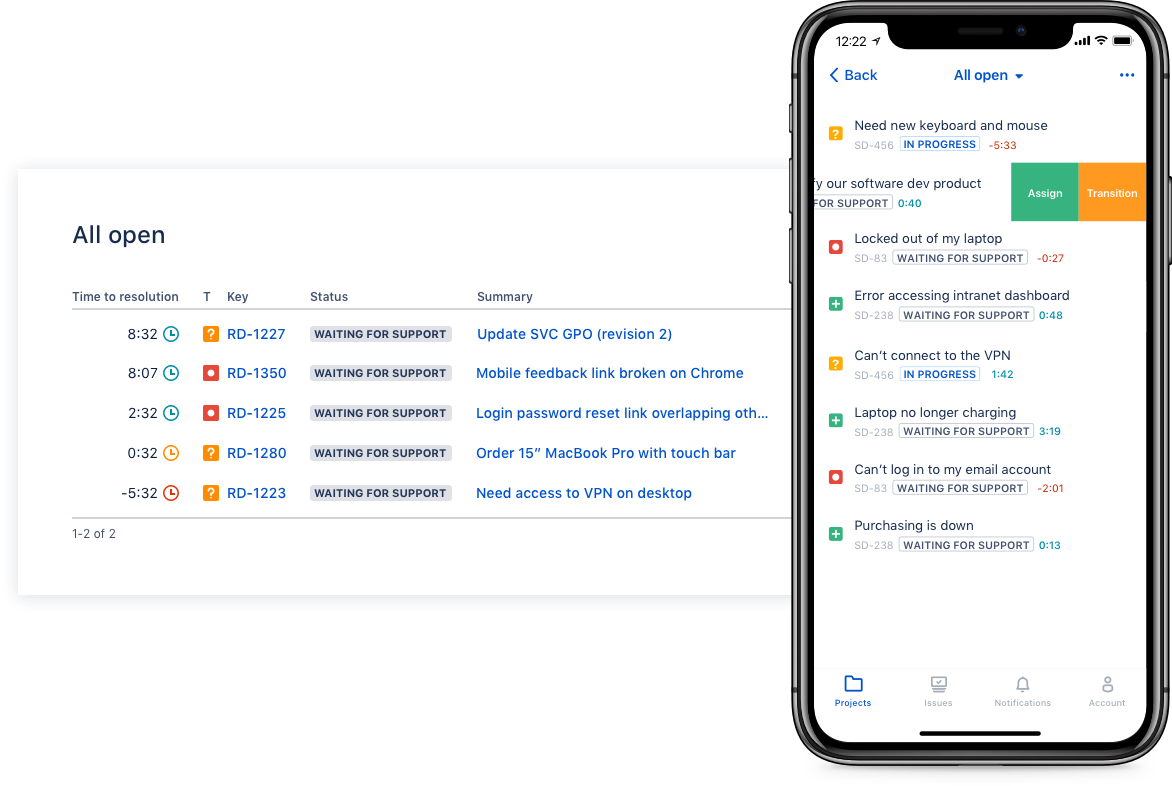
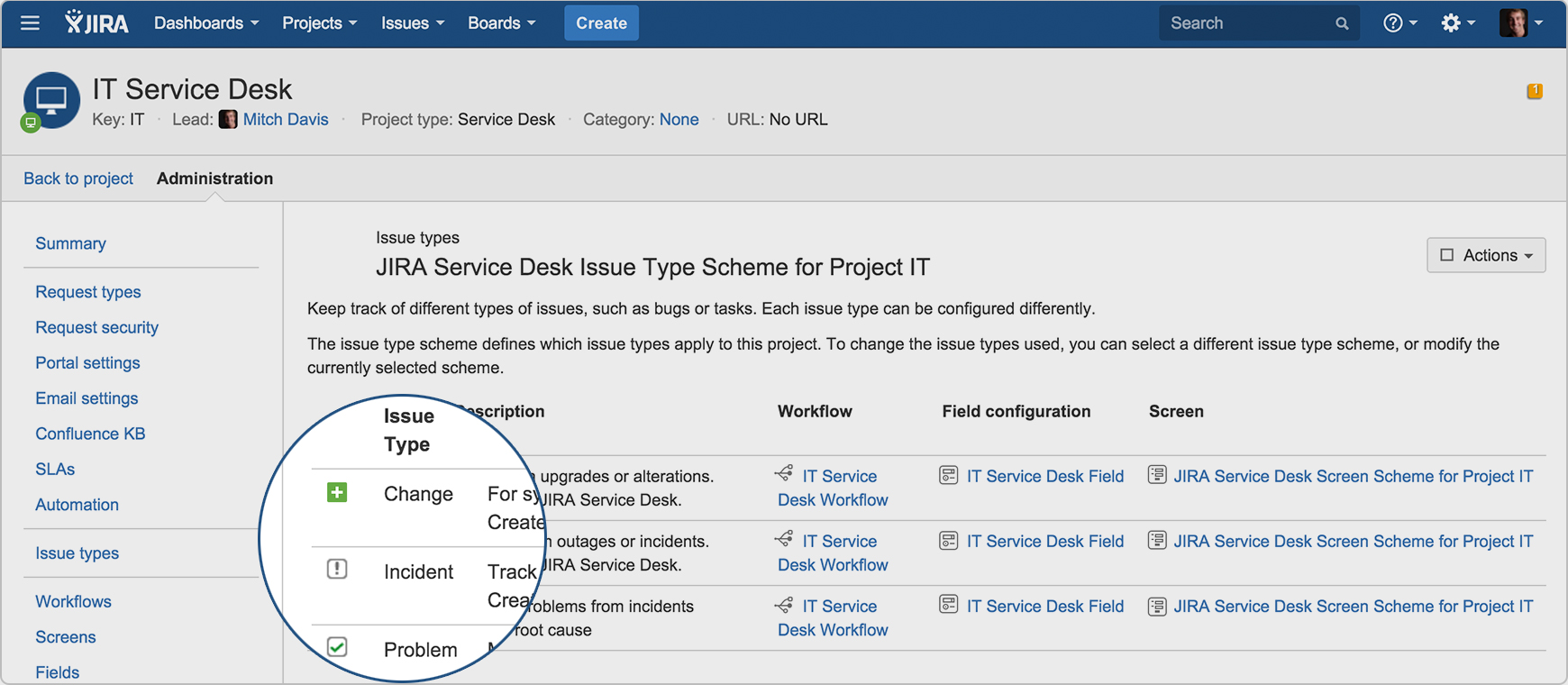
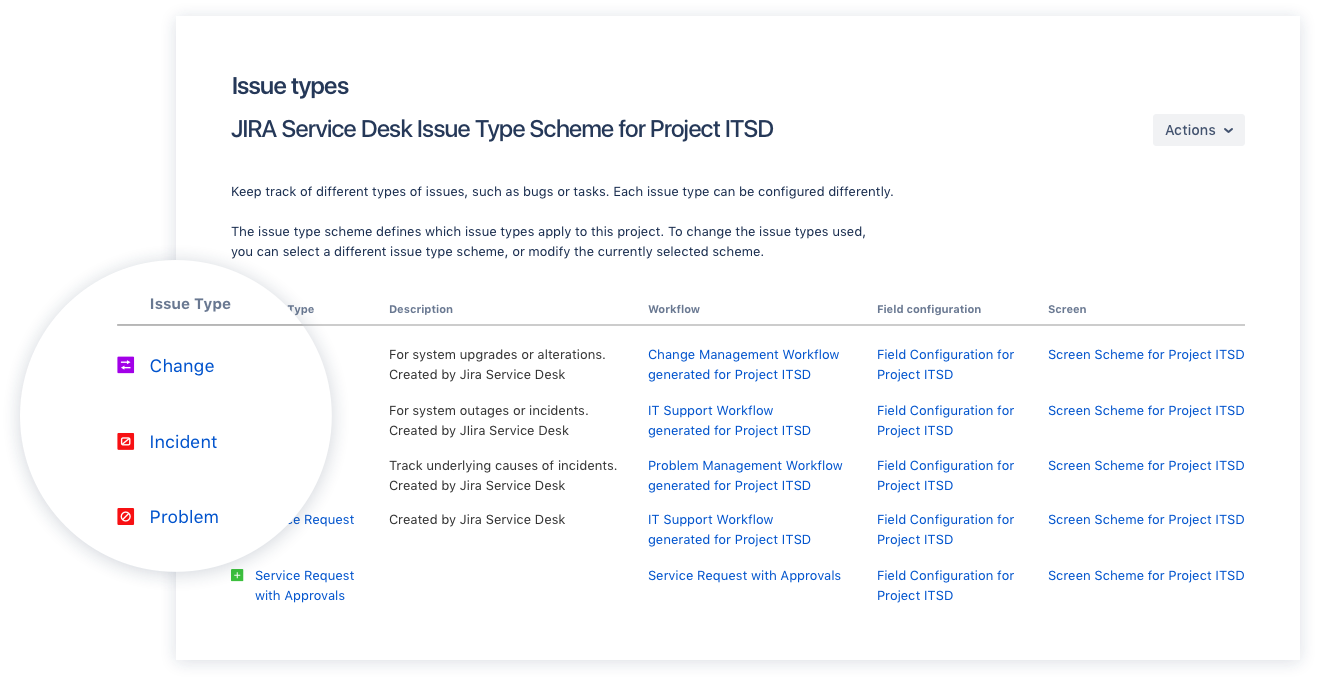
Screenshot of Drive IT best practices with ITIL-ready templates. Get everything your IT teams need out of the box for service request, incident, problem, and change management.Screenshot of Get an ITIL certified service desk. Everything your IT teams need out-of-the-box for service request, incident, problem, and change management. Jira Service Desk is PinkVERIFY™ certified.Screenshot of Deliver a better service experience. Customers or employees can submit requests with an easy-to-use help center and add Confluence to Jira Service Desk to get an integrated knowledge base. Machine learning intelligently recommends the right service and learns from every interaction, so answers are easy to find.Screenshot of Stay in the loop with developers. y linking Jira Service Desk with Jira Software, IT and developer teams can collaborate on one platform to fix incidents faster and push changes with confidence.Screenshot of Deliver on SLA's. Nail your Service Level Agreements, every time. Your agents get a simple queue so they get the important things done first. Configure and get going in minutes.Screenshot of Automate those repetitive tasks. Is your team stuck in gear with repetitive tasks or missing priority requests? Setup automations so your agents can focus on solving the important stuff and help lighten the workload.