Freshdesk (a product of Freshworks Inc.) is a customer service solution with enterprise capability. Freshdesk unifies channels, conversations, AI capabilities, customer insights, and advanced ticketing into the Freshdesk Command Center so agents are ready to resolve. With Freddy, People-first AI, customer service teams can take AI agents live in minutes to fully resolve complex and simple queries, get response and resolution assistance from AI copilot, and stay ahead with AI insights.…
$18
per month per user
Fin by Intercom
Score 8.7 out of 10
N/A
Fin is Intercom’s AI Agent for customer service, designed to deliver high-quality answers, even for complex queries. It works with any helpdesk, or it can be paired with Intercom’s next-generation Helpdesk to get the full Intercom Customer Service Suite.
$0.99
one-time fee per outcome
Jira Service Management
Score 7.9 out of 10
N/A
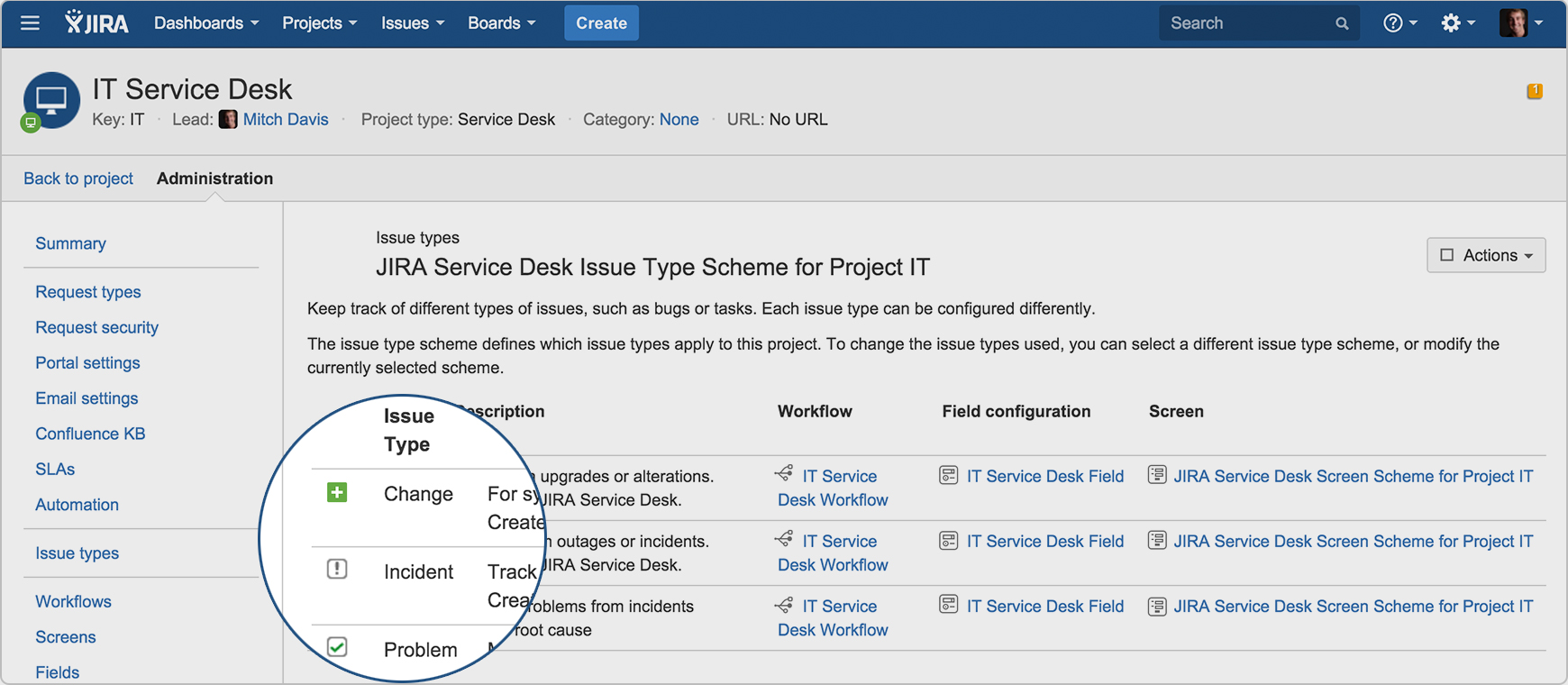
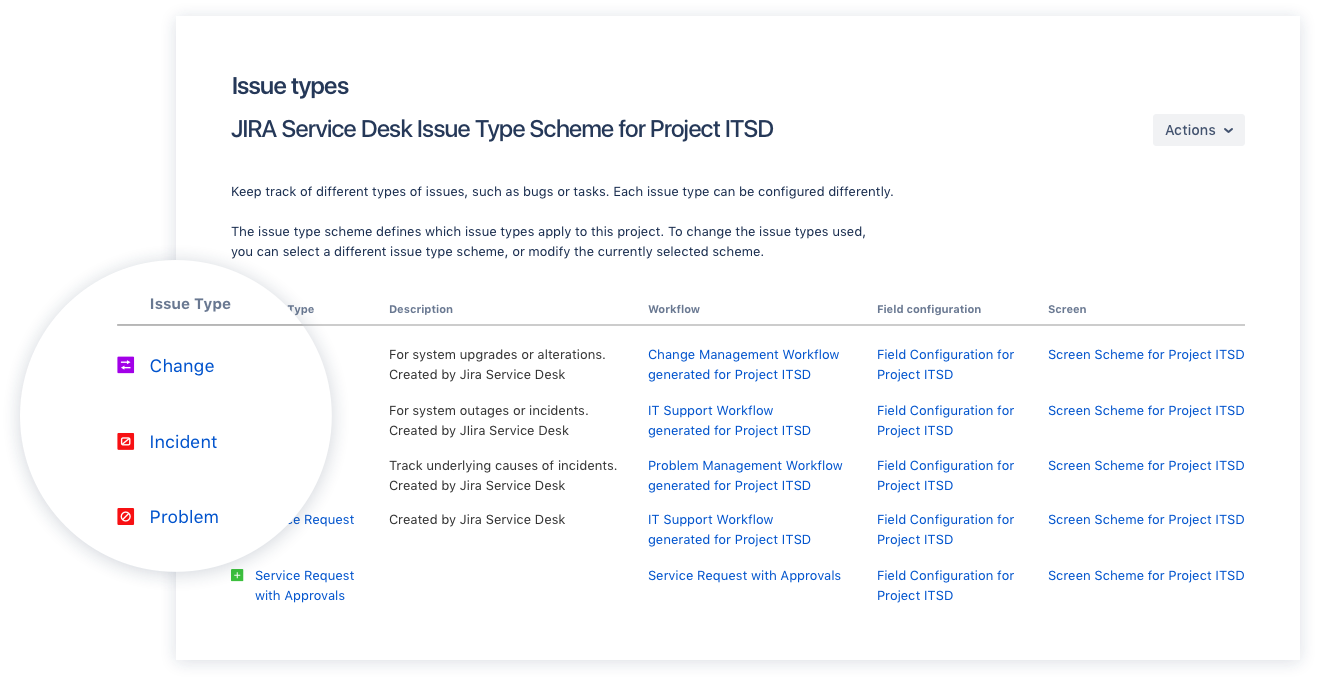
Jira Service Management (formerly Jira Service Desk, now including features from the former Mindville Insight, acquired by Atlassian in June 2020) is a service desk software that is purpose-built for IT, service, and support teams. The software provides everything IT and support teams need out-of-the-box for service request, incident, problem and change management. Jira Service Management integrates seamlessly with Jira Software so that IT and development teams can work better together. Users…
$0
per month
Pricing
Freshdesk
Fin by Intercom
Jira Service Management
Editions & Modules
Growth
$18
per month per agent
Pro
$59
per month per agent
Enterprise
$95
per month per agent
Fin with your current helpdesk
$0.99
one-time fee per outcome
Copilot add-on
$35
per month per user
Pro
$99
per month For analysis of 1,000 conversations
Fin with Intercom’s Helpdesk
from $39 + $0.99 per Fin outcome
per month per seat
Free
$0
per month
Standard
$20
per agent/per month
Premium
$40
per agent/per month
Enterprise
Contact sales team
Offerings
Pricing Offerings
Freshdesk
Fin by Intercom
Jira Service Management
Free Trial
Yes
Yes
Yes
Free/Freemium Version
Yes
No
No
Premium Consulting/Integration Services
Yes
No
Yes
Entry-level Setup Fee
No setup fee
No setup fee
No setup fee
Additional Details
—
Fin comes with a 90-day money-back guarantee. Here's how it works:
Intercom states that users who sign up for the Fin Guarantee Success Program and do not achieve at least a resolution rate of 65% will be paid $1M. This program is designed for high volume customers.
Eligibility criteria:
High volume customers (over 250k monthly conversions) in North America and Europe. Intercom states that phase one of this program will admit customers on Intercom Helpdesk or Zendesk.
It has a lot of the features you would need to run a support service but it doesn't have as much extensibility. It works out more cost effective to use Jira Service Management as customer and service management is included in one product
We use Intercom for 70% of our inbound, its a great tool that has many inbuilt and easy to use out the box features like their knowledge base, live chat, tool tips, product tours etc. We primarily use freshdesk for the customers that want to use our email to raise issues etc
- Zendesk vs Freshdesk is similar but FD is better than zendesk. - SF vs Freshdesk cost is almost ok but got better contacts in FD to begin with. - Siebel vs Freshdesk UI challenge are easier than Siebel. - Jira vs Freshdesk Cost effective than Jira.
Ultimately we ended up switching from Freshdesk to Zendesk, and then from zendesk to DevRev. We're still trying to find the right fit for us - Freshdesk covers the same options as Zendesk, if you use the whole suite it's probably a good option.
Good platform for organizing the tickets from different sources and making sure no single communication is missed in the cracks. Automations bring productivity. Customization is not easy unless you learn the SDKs/ APIs. but has a great deal to offer. Integrations with other …
FreshDesk was the best combination of ease of use and price. While inexpensive, even the lowest tier offered more functionality than the other guys, and the learning curve is almost nonexistent so it's easy to add new agents and get them up to speed quickly instead of having …
Jira Service Management Configuration was incredibly complicated and would have required significant time and effort to set up properly. Customer Portal customization is very limited compared to other solutions. No integrated voice solution is available, which was something …
The product that Freshdesk compares to the most on this list is Zendesk, which was considerably more expensive and was missing a server integration that we required. It did have a lot of great features, though, and its Support and Account Managers are located in the U.S. (vs. …
We're actually already using other systems to make up for the lack of things that Freshdesk can do. However, Freshdesk is easy to learn and easy to use. With everything going more digital, we need software that can keep up. Freshdesk is still a good project management tool. We …
Both Intercom and Drift are comparable in terms of their abilities. Although Intercom came into the market first, Drift has done well to keep up with Intercom's updates and offer similar services of its own. Intercom edges out Drift in terms of its abilities and wealth of …
The product tours in the Intercom were the reason for picking Intercom over Zendesk and Freshdesk. We are an end-to-end solution, almost an enterprise product - and that needs a bit of user training. We also keep releasing new features. It is not possible to train users in all …
Intercom sweeps the floor with Drift. Drift feel poorly made, less polished, and barely focused on customer support. Intercom is the exact opposite of this.
Freshdesk & Zendesk both offered a better experience for tickets in my opinion. Tickets on Intercom being mixed in with …
Odoo was, in my opinion, terrible - a jack of all trades and master of none, which is why all teams in the business moved away to bespoke software. Freshdesk - an easier and more organisable way of creating and managing tickets. Although Intercom now has tickets, we're still …
As explained previously, most of these platforms were focused on tickets, most reports only work with tickets, there is no way to postpone a service without turning it into a ticket, and since our response time target is a maximum of 2 minutes, these platforms were unable to …
Intercom as a tool is well suited to manage our key metrics with the help of its reports. We have evaluated a lot of tools but Intercom remains the best in terms of report. It helps us maintain OKR's for the support team and track whenever needed. FinAI also has the reporting …
All tools that we used in the past, have a lot of problems on the chat app, our the syncing data between integrations, Intercom has too, but is very less than others.
Intercom offers really good and consistent application for our clients to talk to us. Chat support is the fastest way to contact us and intercom has made it happen.
We evaluated a number of products before choosing to move forward with Intercom. No contest, Intercom provided us with the level of tools and support we needed to serve our own customers well. We've been with the company for 3 years now and are sticking around for the …
Compared to most of the competitive market, Intercom seems to be the most human/personable approach to customer success, customer service, and technical support. The alternatives are primarily built on an archaic approach - "take a ticket and wait in line" - that we worried …
We are now in the process of moving from Jira to Zendesk, however, I would assume that we would still be using Jira for the time being. Zendesk is a bit easier to understand and manage for the non-technical people, but Jira gave us the basics that we needed to have in order to …
Jira is the full-fledged task, bug and issue management tool. One can have his way with other tools, but there is going to have to be a whole lot of compromising. With Jira, one does not need to compromise, for as soon as its learning curve is achieved, one can have all he …
I believe Freshdesk is well-suited for companies that manage multiple accounts, such as those in the Business Process Outsourcing industry. It has all the necessary capabilities, such as ticket management that uses omnichannel to receive ticket requests from service requests (managed internally) in the system, emails, etc. There are also several workflow automations that can be built within the platform/system. What is lacking is the API documentation, which limits the possibilities for further automations. Overall, it is a highly recommended tool for managing employee productivity and timeliness.
Fin is great for using for first line support. We use Fin for conversations where customers have a standard question, and Fin is able to pull from our content to answer this accurately and go above and beyond to include some basic problem solving. This really helps us free up our Support Team's time for more complex queries. Fin isn't appropriate for us on technical issues or conversations which require human support. We've had to remove Fin from interacting on these conversations as customers were becoming frustrated with speaking to AI, or having Fin be unable to problem solve. However, this was easy to set up through Intercom, and now customers with complex questions/situations or bugs/technical issues do not engage with Fin and Fin only handles suitable conversations.
I think using a ticketing system is very easy to use and allows multiple teams to create help desks in the same portal. In terms of internal usage, I think this is a great option. However, suppose you're trying to keep internal items and external helpdesks in the same instance. In that case, this is not ideal, as there is no effective way to separate the two instances to protect internal data better.
No prior experience with similar platforms is required to use Freshdesk. I found its interface to be quite intuitive, at least for the end user.
It's easy to connect with other platforms, so you can sync and manage data from other platforms because the integrations work correctly.
Freshdesk's technical support is quite responsive, with short and effective response times. They have easily handled my questions and issues.
It has tools for customizing automated chats, answering frequently asked questions before transferring to an agent. Its configuration is extensive and highly customizable.
Integration with many of the most common tools companies are using (Slack, MS Teams, Salesforce, ... etc)
Natural workflow with Jira (as product development / project management tool) which makes the full fix and follow up of the tickets / issues very easy to follow
Allow multiple different entry points and work flows for as many different needs your teams / company have
It seems some users really struggle to figure out how to escalate to a human (especially through email).
Not excited about how "soft" resolutions still count as resolutions and are paid for. Though some abandoned cases appear to be able to be concluded as "the user got the answer they needed", there are others where they clearly didn't, because they just open up another chat (or even more), trying to get more info. This pads the resolution stats and makes it seem more effective than it actually is.
Cost -- Fin is quite expensive. It helps us with scaling coverage, but we're not really saving money.
New support agents can learn the system quickly, minimizing training time and maximizing productivity from day one. Agents are more willing to use a system that is simple, reducing resistance to change and ensuring all interactions are logged (a common problem with complex systems). The platform is known for being easy to set up and customize, allowing teams (especially smaller ones) to get started with minimal technical expertise.The platform makes it easy to set and monitor Service Level Agreements (SLAs), ensuring customers get timely responses and helping managers enforce performance standards.
We have been and will be continuing our journey with Intercom and nothing too concerning has happened that I have experienced or heard of that has us on the edge yet. If it ever happens it will be something along the lines of "Outgrowing" the use of need of the platform.
In the current contect the requirments is around having a tool that is focused and can handle large ticket volumes and tracking incident, problem and user requests concerning end users. Jira has built in functionality to address the above practice needs faily easily and has a substantial amount of customizable reports for generating the relevant intelligence.
Freshdesk is extremely easy to use as implemented it on our own with average technical skills. A lot of the options are straightforward and Freshdesk provides easy-to-understand explanations for some of the more complex-sounding ones. We recently onboarded new specialists and they were able to learn Freshdesk with minimal training.
From an administration standpoint, Fin is very easy to set up, train, and test. Having the ability to impersonate a user in our system to see how Fin responds is huge. It lets you test several situations and throw curveballs at it (as customers will) without the risk of setting Fin live and wondering what will happen. It's also easy to fine-tune. Some chatbots you can never quite get right without spending hours on, but Fin usually takes a few minutes to dial it in. From a customer standpoint, Fin couldn't be easier to engage with. We tell customers up front it's an AI bot and they're wow'd with the experience
If you're used to other tools in the Atlassian ecosystem, you'll feel right at home with JSM. It's also a platform that technical folk can easily pick up. However, I wouldn't recommend using JSM as a company's first jumping off point into Atlassian. There are a lot of other 'newer' tools that provide sleeker ITSM systems at a similar cost.
I have encountered a lot of errors in the Freshdesk, however, they tend to resolve it on priority or at least they will share the timeline by when this can be resolved. Most of the time the issue has been from the other partner's end. They take time to resolve their vendor issues and they don't have any timelines in case of developed app errors.
The reports take a lot of time to download if the time period is large. Also, the tickets take their sweet time to open and load. It is not fast as Zendesk. Only 30 tickets are visible in a single go and there isn't any option to select all. If we need to change the pages and dashboards it takes a lot of time to open.
Because I never worked with a company that responds so quickly to their customer! They are always fast at responding and very open to new ideas and quickly turning them around to include them in future releases. They walk us through when we need assistance and are very good at communicating. Overall top notch support
Intercom is the premier customer support/engagement model and it definitely has one of the top tier customer support teams as well. I don't think I have ever waited more than 5 minutes to get the information I need or get help with an issue. They are incredible and I aim to model our customer service department after them.
I gave JIRA a 9 rating since for me JIRA works according to its purpose. Since there is a customer portal, our clients can leave a comment or communicate with us using the PR ticket that way it is easier for us to also request any additional information we need for our investigation.
In-person training is provided to all the agents and it is very easy to learn the basics of the Freshdesk interface. Solving tickets via dashboards, replying to the guest queries in bulk via Freshdesk. The training which is a bit hard is creating the logic according to the ticket flow and intergeration.
This tool is no doubt easy to learn but in-person training is a lot better than online training. It takes time to grasp things in the online training, however, in pandemic we have done all the training online. Apart from a bit more time we haven't faced any issues with online training.
Was a fairly quick implementation for us. However, we are only doing email integration and not some of the more complex integrations that are possible. One clarification on an earlier question. I selected that Freshdesk doesn't have a given feature, but this is not true. I selected this because there wasn't a selection for I don't use the feature. This is a weakness in the survey.
Compared to Crisp, Freshdesk offers much more organization and is just much more helpful when it comes to having more than one region/team. Not that Crisp is bad, but with Freshdesk, internal communication and collaboration are much easier, which was quite important for our team to grow.
We only used the free live chat version from HubSpot, so Intercom is yards better! If I were just comparing an actual live chat between the two tools, HubSpot was often clunky and delayed, and it was hard to find past conversation information
Zendesk is a similar ticketing system that our organization used before JIRA Service Desk. The main drawback of Zendesk was that it can only be used as a cloud service. This means that our company data would be living on the internet at the hands of their security team. Another drawback of this is the price is significantly more expensive rather than hosting it yourself. Zendesk does have some additional features such as commenting on multiple tickets at once that JSD does lack. However, switching to JSD was significantly more cost effective because we have the ability and the infrastructure to host our own ticketing system, something that Zendesk could not provide. Ultimatley switching to JSD saved us money and allows the ability for integration with all of the other Atlassian Suite products that we use on a day to day basis.
I was not very involved with the purchase/contract (my company purchased Fresjdesk before I was brought on), but I will say that pricing per agent made it difficult to grow our support team. Additionally, we were kind of disappointed after our upgrade because it didn't solve our pain points as much as we expected.
My company had Freshdesk agents from support and success. It's generally difficult to customize permissions for different agent "roles." We were a fully distributed company, so "multiple sites" doesn't apply to us. We found Freshdesk features lacking as we grew our customer base, and adding agents wasn't easy because price steeply increases with number of agents.
New role opportunities — Using the “Fin-first” approach has reduced the workload for our Tier 1 team, giving them more time to focus on their own career growth. It’s also opened the door to a dedicated, AI-focused role, where a team member regularly reviews Fin’s answers and makes updates to help it perform even better.
Enabling Fin has also reduced our response time and allowed us to meet SLA's.